Buy the Hamilton Beach Power Elite. Under $50 it is for the kitchen that wants a proper jar: 40 oz of glass, which pours two glasses and does not cloud or hold onto smells, plus three yearsof US warranty — more than Ninja, NutriBullet or Magic Bullet give at any price in this catalog. The budget pick is the Magic Bullet 11-piece set, the cheapest machine in this catalog by a wide margin, and we are going to be blunt about what 250 watts means. Live prices and the date they were checked are in the table above; the under-$50 line is enforced by the price layer, never typed into this page.
Who each one is for, in one line
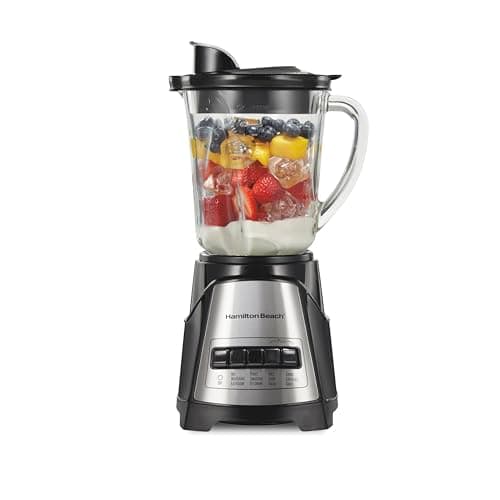
- Hamilton Beach Power Elite— for a real jar and a real warranty: 40 oz of glass and three years of cover.
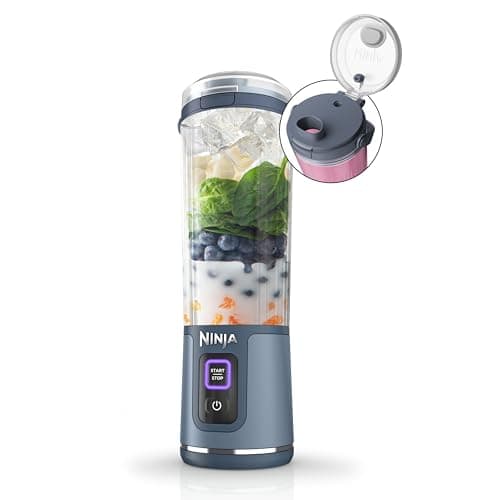
- Ninja Blast BC151— for blending away from a socket: an 18 oz cordless cup you drink from, from a brand with a service operation.
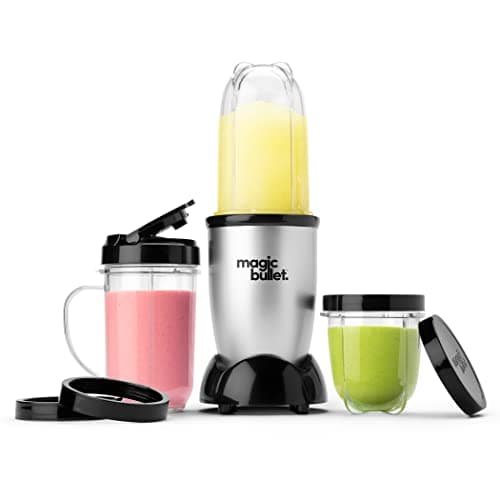
- Magic Bullet 11-piece set— the budget pick: for soft shakes, dressings and chopping, at the lowest price here and with the lowest power.
What fifty dollars genuinely does
A smoothie of banana, yogurt, milk, protein powder and a handful of soft frozen berries is well within all three of these machines. That is the drink most people actually make, and there is no honest reason to spend more for it.
What fifty dollars does not buy is a tamper, a fully variable dial, or the headroom to blend a jar packed with frozen fruit and no added liquid. That load forms a frozen plug above the blade and the motor spins air underneath it, and the response that works is more liquid and a smaller load rather than a longer run at full speed — running a stalled motor is how machines in this band die. Can you use a blender without liquid is the mechanism, and do you have to thaw frozen fruit before blending is the practical workaround.
The cheapest machine is also the most candid about its numbers
This is the fact that wins the page for the Hamilton Beach. It publishes 700 “peak” watts, then defines peak in its own manual as the draw during the first seconds of operation, and prints the rating plate next to it: 120 V, 60 Hz, 3.7 A max. That is 444 W of real continuous draw, and we use that number rather than the 700, because running cost and sustained capability depend on what the motor pulls for three minutes and not for the first second.
No premium brand in this catalog does that. Vitamix publishes no watt figure for the 5200 at all; NutriBullet publishes watts with no qualifier; Ninja publishes a zero on one machine. A $40 blender that shows you its nameplate is doing something the whole category should. Blender wattage explained is the full picture.
Three years, at the bottom of the market
Hamilton Beach writes three years on its blenders in the US and five in Canada. Both other machines on this page carry one year— and the Magic Bullet’s is administered under NutriBullet’s terms, which exclude cups and accessories. So the cheapest full-size jar in the catalog has triple the cover of machines costing several times more, which is the single most useful piece of arithmetic in this band. Blender warranties compared puts every term side by side.
About the 250-watt machine
The Magic Bullet is the budget pick because it is the cheapest thing here that does a job, and it does that job well: dressings, dips, chopping small quantities, a soft milkshake. Eleven pieces means a cup for most small tasks without washing in between.
It is also 250 watts, which is a quarter of a mainstream bullet blender and a sixth of a full-size machine. It will not crush ice and it will not blend frozen fruit, and buying it as a smoothie machine is the most common mistake in this entire category. Magic Bullet also publishes no ounce figure for any of its cups, which is unusual and unhelpful. If frozen fruit is in your smoothie, this is not your machine — our Magic Bullet review is the long version and NutriBullet vs Magic Bullet is what doubling the spend buys.
The cordless one, and its honest zero
The Ninja Blast is here because “away from a socket” is a real requirement and under $50 is a real constraint. It makes up to 18 oz, charges over USB-C rather than a proprietary brick, and the vessel is the cup you drink from. Ninja’s blade geometry handles soft frozen fruit better than the price suggests.
And SharkNinja’s own specification table lists its wattage as 0 watts and 0 peak watts. It reads like a data-entry failure, but it is accidentally the most honest entry on the page: a 7.4 V battery motor has no meaningful mains wattage, and most rivals invent one anyway. Any power figure you see quoted for this machine did not come from the manufacturer. Best portable blenders ranks the format properly.
What these cost to run for a year
At 18.16¢ per kWh and 3 minutes a day, 365 days a year, the Power Elite comes out at about $1.47 a year on its rating-plate draw and the Magic Bullet at about $0.83. The Blast has no published wattage, so it has no running-cost line — we would rather leave a gap than invent a number. What a blender costs to run shows the arithmetic.
Which to skip, and when to spend more
Skip the Power Elite if you blend frozen fruit without added liquid: at 3.7 amps that load stalls, and the glass jar is heavy. Skip the Blast if you want to compare it on power, or if you need more than 18 oz. Skip the Magic Bullet if there is frozen fruit in your smoothie, full stop.
The honest upgrade path: the next real step is the best budget blenders for smoothies at under $100, where a 1,000–1,200 W motor and a 64 oz jar come into range, and best blenders under $50 is this same band across every format rather than just the smoothie-shaped ones.
What we have not done
We own none of these machines and we have blended nothing. Every wattage, jar size, attachment and warranty term above is read off the manufacturer’s own product page, use-and-care manual or warranty document, cited below — including the zero-watt listing and the missing cup capacities, which we report rather than fill in. Prices come live from Amazon with the date they were checked, and that is also what enforces the under-$50 line on this page.
How to spend under $50 well
1. Decide jar or cup before anything else
Forty ounces of glass is a different purchase from an 18 oz cordless cup. Neither is better; they are for different mornings. Pick the format, then the machine.
2. Read the rating plate, not the box front
“Peak” watts are the draw in the first seconds. Hamilton Beach prints the real nameplate amperage in its manual, which is the only figure in this band you can plan around.
3. Treat frozen fruit as a technique problem
Add liquid, cut the load in half, let the fruit sit for five minutes, and pulse rather than holding full speed. Under $50 that is the difference between a smoothie and a burnt-out motor. Why does my blender smell like burning is what going the other way looks like.
4. Weigh three years against one
This band is the one place where the cheapest machine has the longest warranty. If you expect to keep it, that is worth more than any wattage difference between these three.
5. Glass is a feature here
No clouding, no retained garlic, dishwasher without anxiety. The costs are weight and breakage. Glass vs plastic blender jars is the honest comparison.
6. Know what to never put in it
Hot liquid in a sealed cup, hard spice or coffee in a smoothie blade, bone, or a dry load with no liquid at all. What you should not put in a blender is the list, and it matters most at this price because there is no headroom.