HUB 07 · Guides
Why Is My Blender Leaking?
A leaking blender is usually a five-dollar rubber ring, not a dead machine. Here is how to find where it is coming from, in the order worth checking - and the one leak that means stop using it.
We earn a commission if you buy through our links. It does not change the price you pay, and it does not decide our picks — our selection criteria are published in full. How this works.
If liquid is coming from the bottom of the jar, it is the gasket — the rubber ring between the blade assembly and the jar — and it is either dirty, misseated, or worn out. All three are fixed in minutes and the part costs a few dollars. If liquid is escaping past the lid instead, the jar is overfilled or the lid is not locked. If liquid has reached the motor base, stop and unplug it.
Liquid in the motor base is where this stops being a maintenance job. Unplug the machine, do not run it, and do not try to dry it out and carry on. Water in an electrical base is a shock and fire risk, and any assessment of whether it is salvageable belongs with the manufacturer or a qualified repairer, not with a website.
First: work out where it is actually coming from
Do this before you buy anything. Put a cup of plain water in the jar, stand it on a dry worktop off the motor base, and leave it for a couple of minutes.
- Water appears under the jar while it is standing still. That is the gasket, definitively. It is the most common case by a wide margin.
- Nothing while standing, but it leaks when running.Still most likely the gasket — pressure and vibration are what expose a marginal seal — but check the lid and the fill level first, because they are free to rule out.
- It comes over the top. Overfilled, or a lid not locked, or a hot load producing steam that lifts the lid. Not a fault.
- A crack in the jar. Look along the seam and around the base with the jar held up to a light. Replace the jar; do not repair it.
The gasket, in order of what to try
1. It is dirty
The gasket seals by being compressed against a flat face. Dried smoothie residue on that face — which is exactly where a self-clean cycle does not reach — holds the seal open by a fraction of a millimeter, and a fraction is enough. Unscrew the blade assembly, lift the gasket out, wash both by hand, dry them completely and reassemble. This fixes a large share of leaks and costs nothing. The routine that prevents it in the first place is in how to clean a blender.
2. It is misseated
Gaskets sit in a groove and can be reinstalled twisted, inside out, or half out of the recess — particularly after a dishwasher cycle has moved one. Take it off, look at which face is flat and which is profiled, seat it evenly all the way round, and screw the assembly back on hand-tight. Hand-tight is the instruction: over-tightening deforms the rubber and makes the leak worse.
3. It is worn out
Rubber hardens, flattens and cracks with heat and age. Take the gasket between your fingers — it should be soft and springy. If it feels stiff, looks shiny where it was matte, has a permanent flat where it was round, or shows nicks, replace it. Gaskets are consumables on a machine used daily, and a couple of years is a normal life.
4. The blade assembly itself is worn
If a new gasket does not fix it, the bearing the blade shaft turns in may have worn, which lets the shaft wobble and breaks the seal from the inside. The tell is play: with the assembly out of the jar, the blades should turn smoothly with no side-to-side movement. Replace the whole assembly rather than the gasket alone.
Bullet blenders leak differently
On a bullet blender the blade unit screws onto the cup and the whole thing is inverted, so gravity is holding liquid against the seal the entire time it runs. That is why these are the machines people most often describe as leaking, and why the gasket inside the blade unit is a genuine consumable.
Two habits extend its life a great deal: do not leave a full cup screwed onto the blade unit standing for hours, and do not over-tighten the cup onto the base. NutriBullet sells replacement cups, lids and blade assemblies, which is worth knowing because their warranty explicitly excludes cups and accessories — the parts most likely to need replacing are the parts not covered.
When it is time to replace the machine
Rarely, honestly. A gasket and a blade assembly together are a small fraction of a new blender, and a machine that leaks is otherwise usually fine. Replace it when the jar is cracked and no replacement jar is sold, when liquid has reached the motor base, or when the parts you need are not published anywhere.
That last one is worth taking seriously as a purchasingcriterion, not just a repair one. Several machines we cover have had their manufacturer product pages withdrawn entirely — the Oster Pro 1200 and the Ninja BL610 among them — which makes identifying the right replacement part harder over the life of the machine. Where a maker publishes its jars, pitchers, cups and blade assemblies as ordinary spare parts, that is a real and under-rated feature. It is also, quietly, most of the argument for a long warranty: our full tabulation is in blender warranties compared.
The short version. Leaking from the bottom means the gasket: clean it, reseat it, replace it, in that order. Leaking from the top means overfilled or unlocked. Liquid in the base means stop. And a leak is almost never a reason to buy a new blender.
The hardware
The hardware this guide is about
The products this guide refers to, with prices pulled live from Amazon and dated on every card. Full rankings live in the roundups linked above.
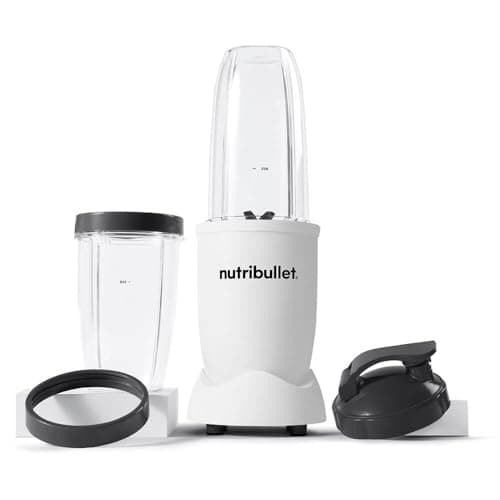
Everyday shakes
NutriBullet Pro (900 W)
The default bullet blender, and a good one. Note that NutriBullet's own product page contradicts itself about which cups are in the box.
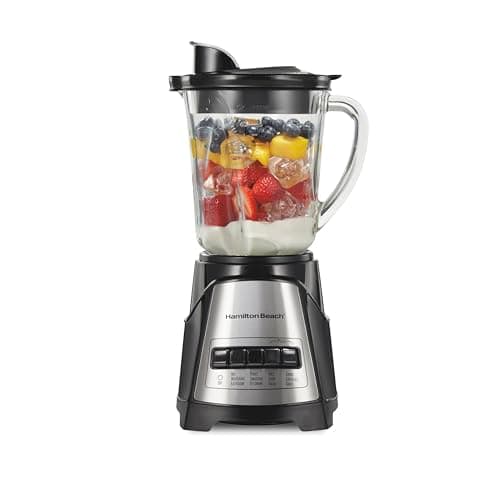
The smallest budget
Hamilton Beach Power Elite Wave Action
The cheapest machine here and the most honest about its own numbers: Hamilton Beach defines what its peak wattage means and prints the real nameplate amperage next to it.
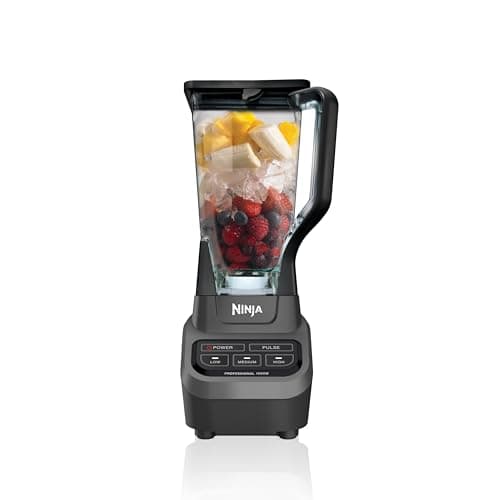
Spending as little as possible
Ninja Professional Blender BL610
The default budget recommendation of the last decade, and now a machine whose own manufacturer no longer publishes a spec page for it. Cheap and capable; poorly documented.
#ad · As an Amazon Associate we earn from qualifying purchases.
Questions
Frequently asked
Why is my blender leaking from the bottom?
The gasket between the blade assembly and the jar — dirty, misseated or worn. Unscrew the assembly, wash and dry both parts, reseat the gasket flat and reassemble hand-tight. If it still leaks, the gasket needs replacing; it is a few dollars.
Can you fix a leaking blender?
Nearly always, and cheaply. A gasket, or at worst a blade assembly, fixes the great majority of leaks. The exceptions are a cracked jar with no replacement available, and liquid that has reached the motor base — which is a stop-and-unplug situation, not a repair.
How often should a blender gasket be replaced?
On daily use, roughly every couple of years, or whenever it feels stiff rather than springy, looks shiny where it was matte, or has a permanent flat spot. Treat it as a consumable rather than a fault.
Why does my NutriBullet leak?
Because the cup is inverted, gravity holds liquid against the seal the whole time it runs. Avoid leaving a full cup attached to the blade unit for long periods, do not over-tighten it onto the base, and replace the blade unit’s gasket when it hardens — NutriBullet’s warranty excludes cups and accessories.
Is it safe to use a blender that leaks?
Not if any liquid has reached the motor base — unplug it and stop. A jar that weeps a little from the gasket onto the worktop is a maintenance job rather than a hazard, but fix it promptly, because the run-off ends up in the base eventually.
Keep reading
Related
- All blender guidesThe hub, with cost, safety and buying guides.
- How to clean a blenderThe routine that prevents most of these leaks.
- Blender warranties comparedWho covers what, and for how long, from the warranty documents.
- Best quiet blendersAnother page about a specification manufacturers decline to publish.
- How long do blenders last?The gasket is the first thing to go; here is the order of the rest.
Receipts
Sources
- NutriBullet — Pro product page
- NutriBullet — warranty terms
- Hamilton Beach — Power Elite blender product page
- Hamilton Beach — blender warranty terms
- SharkNinja — 72 oz pitcher replacement part, listing BL610 compatibility
- Vitamix — 7-Year Full Warranty terms
We do not run a testing lab and we do not pretend to. Specifications come from the manufacturer's own published documents and from published standards; prices come from the live Amazon API. Where a figure is not published, the page says “not published” rather than guessing. Read the full method.