HUB 05 · Smoothies & Frozen
How to Make Frozen Drinks in a Blender
Method first, hardware second. Most frozen-drink disappointment is a ratio, a batch size or a loading order, and all three are free to change. If technique solves your problem, you should not have to buy anything.
We earn a commission if you buy through our links. It does not change the price you pay, and it does not decide our picks — our selection criteria are published in full. How this works.
If your frozen drinks come out watery, or the blender roars while nothing moves, the problem is almost certainly not the machine. It is the ratio of liquid to ice, the size of the batch, or the order things went into the jar. All three are free to change, and any of them will improve the result more than a new blender will. This page gives the method first. The hardware is at the bottom, and if the method fixes your drink you should stop reading before you get there.
Start with the ratio
A frozen drink is ice suspended in a small amount of liquid. The liquid is what carries the ice into the blades, so if there is not enough of it, nothing circulates and the blades spin in an air pocket while the ice sits above them. That is cavitation, and it is the single most common frozen-drink failure.
Start from about two parts ice to one part total liquid by volume — total liquid meaning everything pourable, including spirits, juice, syrup and any liqueur. Blend, look at the surface, and adjust. If it is not moving after five seconds, add liquid an ounce at a time. If it pours like a juice instead of mounding on a spoon, add ice a few cubes at a time. Two or three adjustments and you will have a ratio for your ice, your glasses and your machine, which is worth more than any published recipe.
Batch size is the variable nobody adjusts
Blenders are bad at very small loads, because there is not enough volume to reach the blades and circulate — and they are bad at overfilled ones, because a full jar cannot form a vortex. Manufacturers publish a maximum liquid fill for exactly this reason and the figures are lower than most people assume: Ninja publishes 64 oz of maximum liquid in a 72 oz pitcher, and Blendtec publishes a maximum liquid fill of up to 36 oz for the WildSide+ jar. Treat those as ceilings.
Two to four drinks per run is the comfortable range on a full-size jar. If you are making eight, make two batches. The second batch takes ninety seconds and the alternative is one badly blended jug whose first half is melting while the second half is still chunky.
Ice: cubes, not crushed, and not from the bottom of the bag
Standard freezer cubes are the right input. Pre-crushed ice sounds helpful and is not: it has more surface area, so it melts faster and waters the drink down before the blend finishes. Very large cocktail cubes are the other extreme — they are made for slow melting in a glass and they punish the blades on the way to breaking up.
Two other things matter more than they should. Ice that has been in the freezer a long time picks up freezer odors and sublimates at the edges, so it is both smaller and worse tasting than it looks; use fresh cubes if the drink is the point. And ice straight from the freezer blends better than ice that has been sitting out, because a wet cube has already started melting and will thin the drink from the moment it goes in.
The loading order
Liquid first. Soft or syrupy ingredients next. Powders — if any — after that. Ice last, on top. Most manufacturer manuals specify this order, and the reason is mechanical: the blades need something fluid to move before they can pull anything down. Ice loaded first sits on the blades and wedges them; ice resting on top of liquid gets drawn into the vortex from above, which is the machine working with gravity rather than against it.
This applies to smoothies exactly as it does to cocktails, and it is the highest-value free change in this whole category. If you take one thing from this page, take the order.
Run it short, and pulse to start
Blades add heat. Every extra second of blending melts a little more ice, so a drink blended for ninety seconds to make it “really smooth” arrives thinner than the same drink blended for thirty. Start with two or three short pulses to break the cubes and get the mix circulating, then run continuously only until the surface is uniform — usually fifteen to thirty seconds on a full-size machine. Stop there.
If it is still chunky after thirty seconds, the answer is more liquid or a smaller batch, not more time. More time is how a frozen drink becomes a cold drink.
Why it separates, and what to do about it
Every blended frozen drink separates. The ice melts, the meltwater and the denser sweetened liquid sink, and the aerated foam rises — so within a few minutes you have slush on top and syrup at the bottom. That is physics and no blender prevents it.
What helps: pre-chill the glasses in the freezer, blend as the last thing before serving, pour immediately, and make a second batch later rather than one enormous jug at the start of the evening. A little more sugar or a syrup rather than plain juice also slows separation slightly, because a denser liquid holds the ice crystals in suspension for longer.
Sugar and alcohol change the texture before the blender does
Both dissolve into the liquid and lower its freezing point, which means a sweeter or boozier mix holds a frozen structure less willingly than a plain one. A heavy pour is the most common reason a frozen cocktail refuses to mound on the spoon, and the instinct to fix a disappointing drink by adding more spirit makes the texture worse every time.
Sugar cuts both ways. Too much and the drink slumps; too little and there is nothing holding the ice crystals in suspension, so it separates within a minute of pouring. A syrup-based mix generally stays together longer in the glass than one built on plain juice. If a drink is thin and you have already added ice, a spoonful of syrup is often the adjustment that actually works.
Fixing a drink that came out wrong
| What happened | Most likely cause | Fix |
|---|---|---|
| Too thin, watery | Blended too long, or too much liquid, or wet ice | Add ice a few cubes at a time and pulse briefly. Serve immediately. |
| Too thick, will not pour | Not enough liquid for the ice volume | Add liquid one ounce at a time, pulsing between additions. |
| Motor roaring, nothing moving | Cavitation - an air pocket around the blades | Stop. Add liquid, or scrape the sides down, or halve the batch. Do not hold the motor at stall. |
| Chunks at the top, liquid at the bottom | Overfilled jar, so no vortex can form | Pour half out and blend in two batches. |
| Separates within two minutes | Normal melting, made worse by warm glasses | Pre-chill the glasses, blend last, serve at once. |
| Tastes flat or stale | Old freezer ice carrying odors | Use fresh cubes. Ice is an ingredient. |
When the machine genuinely is the problem
There are two situations where technique will not save you. The first is a motor too small for the load: below roughly 400 to 500 watts of real continuous draw, a jar of ice and a little liquid will stall regardless of how carefully you load it, and repeatedly pulsing a stalled motor is how one fails. Check the nameplate amperage rather than the peak wattage on the box — Hamilton Beach, for example, prints 700 peak watts but a 3.7 A rating plate, which is 444 W of actual continuous draw.
The second is a mixture deliberately low on liquid, which is what a good frozen cocktail is. That mixture bridges above the blades constantly, and the tool that solves it is a tamper — a stick that pushes the bridge back down while the machine keeps running. Of the machines in our catalog, the Vitamix 5200 ships with one. The alternative on every other machine is stopping, scraping the sides down and restarting, which works but melts the drink as you go.
If either of those is genuinely your situation, the three machines below are the applicable ones, and the full ranking with the reasoning is in the frozen drinks roundup. If neither is your situation — and for most people neither is — go and fix the ratio instead. That is the honest advice and it costs nothing.
The hardware
The hardware this guide is about
The products this guide refers to, with prices pulled live from Amazon. Prices last checked October 18, 2026. Where we have no verified live price we show none rather than a stale number. Full rankings live in the roundups linked above.
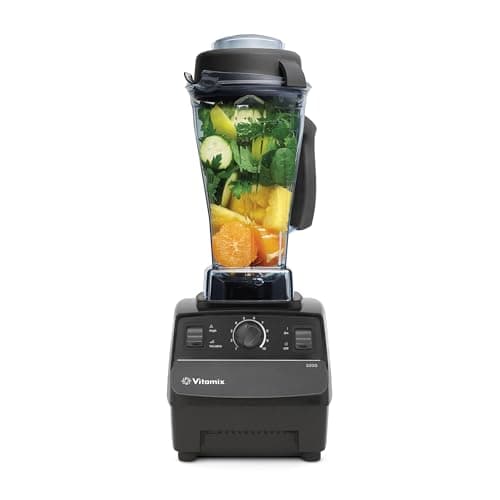
Buying once
Vitamix 5200
The seven-year warranty is the product. A machine with a fully variable dial, a tall narrow jar and a tamper, backed longer than almost anything else at any price.
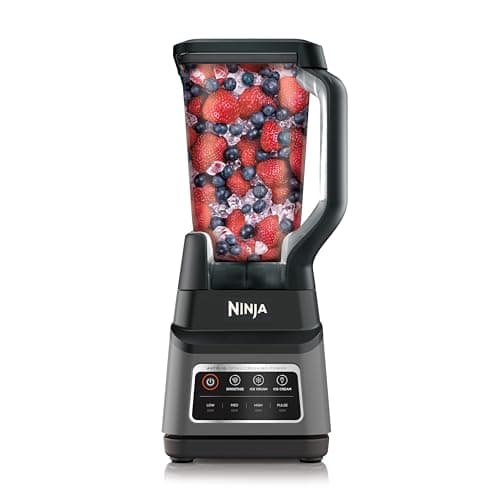
Most kitchens
Ninja Professional Plus BN701
The one brand here that publishes both a continuous and a peak wattage instead of only the flattering one. A large pitcher and real power for about a fifth of the premium price.
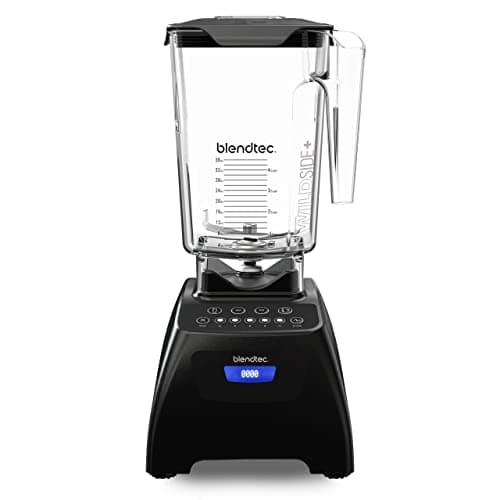
Cabinet clearance
Blendtec Classic 575
A 1,560-watt motor and a blunt, unremovable blade, in a jar short enough to fit under a cabinet. The warranty is two years, not the eight years the internet keeps repeating.
#ad · As an Amazon Associate we earn from qualifying purchases.
Questions
Frequently asked
What is the best ice-to-liquid ratio for a frozen cocktail?
Should I use crushed ice or cubes?
Why is my frozen drink watery?
Do I need a high-power blender for frozen drinks?
How full can I fill the jar?
Keep reading
Related
- Best blenders for frozen drinksThe ranked machines, if the method was not the problem.
- Best blenders for crushing iceWhat ice does to a blade and a coupling over time.
- The blender buying guideStarts from your cooking and is willing to end at a hundred dollars.
- Margarita machine vs blenderThe appliance question, once the technique is sorted.
Receipts
Sources
- SharkNinja — Ninja Professional Plus BN701 specification table
- Blendtec — Classic 575 product page
- Vitamix — 5200 product page and specification table
- Hamilton Beach — Power Elite use and care manual (PDF), rating plate and peak-power definition
We do not run a testing lab and we do not pretend to. Specifications come from the manufacturer's own published documents and from published standards; prices come from the live Amazon API. Where a figure is not published, the page says “not published” rather than guessing. Read the full method.