HUB 07 · Guides
What Does Pulse Do on a Blender?
Pulse is not a low speed and it is not a shortcut. It is a burst of full power followed by a deliberate stop, and the stop is the half that does the work.
We earn a commission if you buy through our links. It does not change the price you pay, and it does not decide our picks — our selection criteria are published in full. How this works.
Pulse runs the motor at full power for as long as you hold it, then lets it coast to a stop.That is the whole mechanism. What makes it useful is not the burst — any speed setting gives you a burst — it is the pause afterwards, during which gravity drops the load back down onto the blade instead of leaving it suspended above a spinning vortex. Use pulse for ice, for coarse chopping, and for any jar where the blade is spinning freely and nothing is happening. Do not use it to make something smooth, which is the mistake it most often gets put to.
Why the pause matters more than the power
Run a blender continuously and the contents organise themselves. A vortex forms, the load finds a stable circulation, and anything that floats stays above the blade while anything heavy gets flung outwards to the jar wall. On a well-behaved smoothie that is exactly what you want: everything passing through the blade over and over until it is uniform.
On a badly behaved load it is the problem. Ice cubes ride the wall. A frozen block spins as one piece. Thick mixtures form a cavity under the blade — the blade turns in air while the mass sits above it, which is the state most people describe as “my blender is running but not blending”. Continuous power does not fix any of those, because the stable arrangement reasserts itself the instant the motor comes back up to speed.
A pulse breaks the arrangement. The motor stops, the vortex collapses, the load falls, and the next burst hits a completely different distribution of ingredients. Do that six or eight times and the jar is mixed by repeated collapse rather than by circulation. That is why a sequence of one-second pulses often does in ten seconds what thirty seconds of continuous running will not do at all.
What pulse is good for
Ice and frozen blocks
Ice needs to be hit, not stirred. Short pulses let cubes fall back under the blade between strikes, which is the difference between crushed ice and a jar of ice rotating around a cavity. The dedicated ranking is on best blenders for crushing ice.
Coarse, non-uniform chopping
Salsa, a chunky soup garnish, nuts for a topping: you want pieces, not puree, and the enemy is the few seconds too many that turn one into the other. Pulse gives you a discrete number of strikes to count, which is far easier to stop at the right point than a continuous run. Best blenders for hummus and salsa leans on this.
Breaking a cavity in a thick mixture
If the blade is spinning in air, the fix is to stop and let the load collapse into it — either with pulses or, on a machine that has one, with a tamper. Those are the two tools for the same problem, and what a blender tamper is used for explains why the tamper is the better one when you have it.
Anything you do not want emulsified
Continuous high speed whips air in. If you are making something where that is a fault rather than a feature, pulse keeps the total blade time down — which is one of the levers on why smoothies come out foamy.
What pulse is bad for
A smooth result. Smoothness comes from total time at speed, with the load circulating through the blade repeatedly — which is the exact arrangement pulse exists to destroy. If you pulse a smoothie forty times you will get a worse texture than if you had run it continuously for thirty seconds, and you will have spent longer doing it.
It is also the wrong tool for dense starchy food, because every burst is a full-power burst. Mashed potato is the clearest case: the thing you need is less blade work, and a low continuous speed held briefly beats a series of maximum-power hits. Best blenders for mashed potatoes is the page where this whole site’s usual logic inverts.
Pulse, low speed and “ice crush” are three different things
Pulse is full power, momentary, with a coast-down. A low speed is reduced power, continuous, with the vortex intact. They are not interchangeable: running at speed 1 for ten seconds will not break up a block of frozen fruit, and ten one-second pulses will not make a silky smoothie.
A preset— an “ice crush” or “frozen drink” programme — is usually a pre-programmed pulse sequence that the machine runs for you and then stops. Ninja publishes Auto-iQ programs on the BN701 that do exactly that: fixed pulse-and-pause patterns, which is genuinely useful because you are not standing over it counting. The cost is that the pattern is fixed, and your load may not be the load it was written for.
Not every blender has one, and that is a documented difference
It is worth checking before you assume. In our own catalog:
- The Vitamix VX1has a pulse switch, a count-up timer and a self-cleaning program on the dial — three controls Vitamix explicitly does not put on the 5200.
- The Vitamix 5200 has no pulse button at all. It has a fully variable dial and an on/off switch, and the technique is to flick the switch while the dial is set high. That works, and it is also the kind of thing nobody mentions when they tell you to pulse.
- The Ninja BN701 has a pulse control alongside its Auto-iQ programs.
- The Hamilton Beach Power Elitehas pulse and fixed speeds — which is a sensible pairing on a machine whose rating plate says 3.7 A, because pulsing is how a lower-powered motor gets through a load it cannot push through continuously.
On a bullet blender there is usually no button at all: you press the cup down to run and release it to stop, which means everyaction is a pulse. That is the real reason bullet blenders are often told to be pulsed — it is not advice, it is the only mode they have.
Does pulsing damage the motor?
Repeated starting draws more current than steady running does, so a long series of pulses is harder on a motor than the same time spent at a constant speed. None of the manufacturers in our catalog publishes a duty cycle, a pulse limit or a maximum number of starts, so we cannot give you a threshold and will not invent one. What we can say is that the symptom to stop at is a hot base or a smell: why a blender smells like burning covers what that means and what to do.
The honest summary is that pulsing in the ordinary way — a handful of short bursts to break up a load, then continuous running to finish — is what pulse is for and is not something to worry about. Forty pulses because the machine will not blend the load is the machine telling you the load is wrong for it.
What to look for if pulse control matters to you
A real momentary switch, not a speed step
The useful version springs back when you let go, so the burst length is your decision and the coast-down is automatic. A “pulse” that latches on until you press it again is a speed setting with a different label.
A variable dial as well, so you are not stuck at full power
Pulse is always maximum power. The loads where maximum power is the wrong answer — starchy food, delicate herbs, anything you can over-work — need a low continuous speed instead, and that means a dial rather than preset buttons. A machine with both covers every case.
Presets, if you would rather not stand over it
A programmed pulse sequence that stops on its own is genuinely convenient and genuinely inflexible. Buy it if your loads are repetitive; skip it if they are not.
And check it is there at all
At least one widely recommended premium machine has no pulse button, which surprises people who bought it on the strength of advice that assumed one. The four machines below are the ones in our catalog whose control layout is documented, with what each one actually publishes.
The hardware
The hardware this guide is about
The products this guide refers to, with prices pulled live from Amazon. Prices last checked October 18, 2026. Where we have no verified live price we show none rather than a stale number. Full rankings live in the roundups linked above.
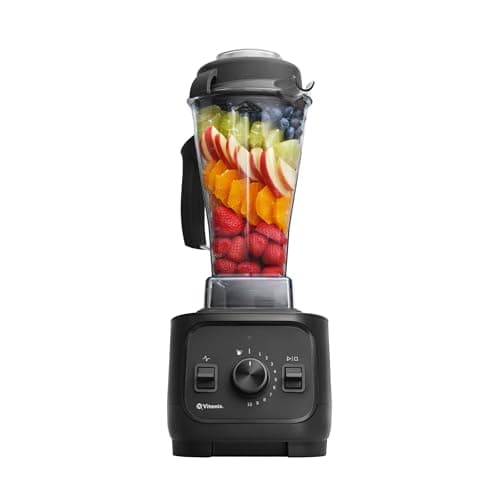
First Vitamix
Vitamix VX1
The 5200's 64 oz container and tamper on a base that finally publishes a watt figure, adds pulse and a self-clean program, and costs less. The trade is a five-year limited warranty instead of seven full.
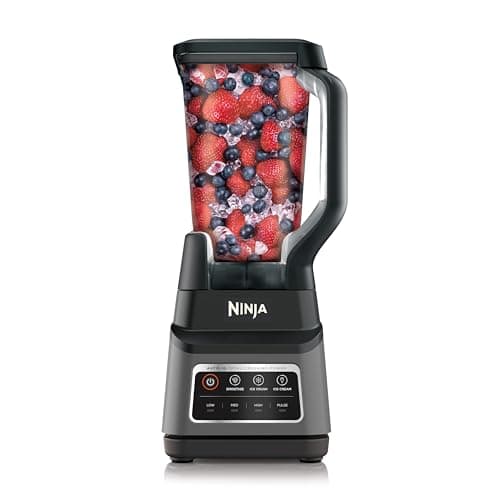
Most kitchens
Ninja Professional Plus BN701
The one brand here that publishes both a continuous and a peak wattage instead of only the flattering one. A large pitcher and real power for about a fifth of the premium price.
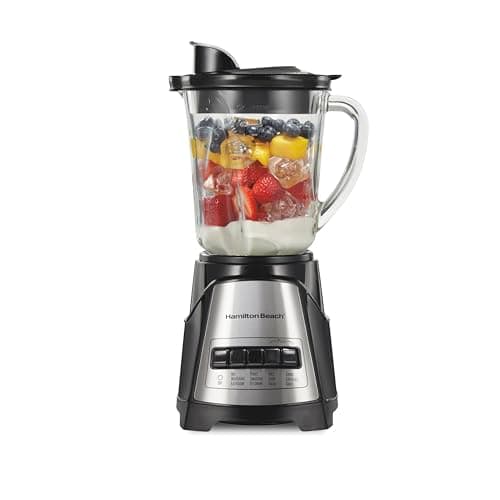
The smallest budget
Hamilton Beach Power Elite Wave Action
The cheapest machine here and the most honest about its own numbers: Hamilton Beach defines what its peak wattage means and prints the real nameplate amperage next to it.
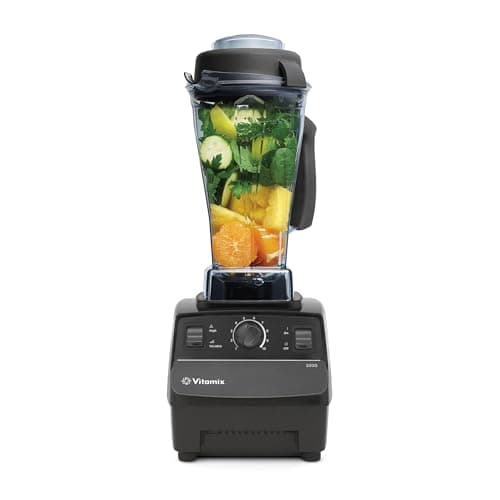
Buying once
Vitamix 5200
The seven-year warranty is the product. A machine with a fully variable dial, a tall narrow jar and a tamper, backed longer than almost anything else at any price.
#ad · As an Amazon Associate we earn from qualifying purchases.
Questions
Frequently asked
What does the pulse button do on a blender?
It runs the motor at full power for as long as you hold it and then lets it coast to a stop. The pause is the useful part: it lets the contents fall back onto the blade instead of circulating above it, which is how pulse gets through ice and thick mixtures that continuous running cannot move.
Is pulse the same as a low speed?
No, and they are not substitutes. Pulse is full power, briefly, with a stop. A low speed is reduced power, continuously, with the vortex intact. Use pulse to break a load up; use a low speed to work something gently without whipping air into it.
How long should each pulse be?
One to two seconds for ice and coarse chopping, with a full stop between each so the load actually falls. Longer than about three seconds and you are just running the blender, which defeats the purpose.
Should I pulse a smoothie?
Only at the start, to break up frozen fruit or ice, and then run it continuously to finish. Smoothness comes from total time at speed with the load circulating, which is the opposite of what pulse does.
My blender has no pulse button. What do I do?
Set the speed high and use the on/off switch, which gives you the same burst-and-coast behaviour by hand. The Vitamix 5200 has no pulse control at all and is used exactly this way. On a bullet blender, pressing and releasing the cup is already a pulse.
Does pulsing wear out a blender faster?
Repeated starts draw more current than steady running, so a very long series of pulses is harder on a motor. No manufacturer in our catalog publishes a duty cycle or a pulse limit, so there is no threshold we can honestly give you. Normal use — a few bursts, then continuous — is what the control is for.
Keep reading
Related
- All guidesThe hub this explainer sits in.
- What is a blender tamper used forThe other tool for the same cavitation problem.
- Best blenders for crushing iceThe load pulse exists for, ranked.
- Blender wattage explainedWhy a bigger number does not fix a cavitation problem.
- Best blenders for mashed potatoesThe one load where full-power pulses are the wrong answer.
- Why is my smoothie foamyTotal blade time is the lever, and pulse is how you shorten it.
Receipts
Sources
- Vitamix — VX1 product page and specification table (pulse switch, timer, self-clean)
- Vitamix — VX1 owner's manual (PDF): controls, specifications and care
- Vitamix — 5200 product page and specification table (variable dial; no presets, timer or pulse; noise not published)
- SharkNinja — Ninja Professional Plus BN701 specification table (Auto-iQ programs and pulse; noise not published)
- Hamilton Beach — Power Elite blender product page (pulse and fixed speeds, 40 oz glass jar)
- Hamilton Beach — Power Elite use and care manual (PDF): controls, rating plate and the manual's own definition of peak power
We do not run a testing lab and we do not pretend to. Specifications come from the manufacturer's own published documents and from published standards; prices come from the live Amazon API. Where a figure is not published, the page says “not published” rather than guessing. Read the full method.