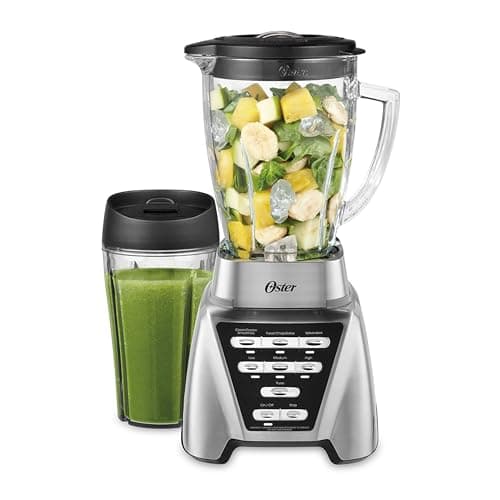
The case for the Oster Pro 1200 is a three-year warranty — triple Ninja’s, at a comparable or lower price — and a glass jar with a dishwasher-safe blade. The case against it is that Oster has delisted this exact model: its product page returns HTTP 410 Gone, so the “1200” in the name is not a figure we can trace to a live manufacturer document, and a delisted machine on a three-year term is a spare-parts gamble.
What this review is.Specification- and documentation-based, not hands-on. Nobody at Basket & Blade has used an Oster Pro 1200. This site’s whole authority claim is traceability to a manufacturer document, and this machine is the awkward case where that document has been withdrawn — so this review is unusually candid about what cannot be sourced. The method is on how we pick.
The warranty is the reason to consider it
Oster publishes a three-year warrantyon its kitchen blenders, and that is a genuinely strong term at this price — triple what Ninja and NutriBullet offer on machines that often cost more. There is one important nuance: Oster’s remedy under warranty is replacement rather than repair, so a failure means a different machine rather than yours fixed. A three-year replacement guarantee is still real value on a budget machine, but it is a different promise from Vitamix’s repair-and-return model. Every term in the category is tabulated on the warranty comparison.
The delisting, and why this site takes it seriously
Oster has withdrawn the product page for this exact model — it returns 410 Gone, the HTTP status that means a page is deliberately removed, not merely missing. That has a concrete consequence for how this review is written: the wattage and jar-capacity figures other sites quote for the Pro 1200 cannot be checked against a manufacturer document, so we leave those cells empty rather than repeat numbers we cannot source. On a site whose entire claim is traceability, printing a spec we cannot back would undermine the one thing we offer.
The practical risk of a delisted model is spare parts. Over a three-year warranty term, a jar or blade assembly for a discontinued machine is harder to find than for a current one, and a replacement-only warranty does not help if the replacement stock has also moved on. The machine is still widely stocked by retailers, but its manufacturer has moved past it.
The glass jar
The one spec that is not in question is the material: a glass jar with a dishwasher-safe blade assembly. Glass does not cloud, does not hold odors, and does not scratch the way plastic does, and it is usually the component most likely to outlive the motor. For a buyer who dislikes plastic jars, this is a real draw, and it is shared with the Hamilton Beach Power Elite at the budget end of the category.
Who should not buy this
Anyone who wants a machine whose manufacturer still publishes its specifications — this one’s page is gone, and if documented, checkable specs matter to you, that is a real mark against it. Anyone who wants a repair rather than a replacement under warranty. Anyone uncomfortable buying a discontinued model on a multi-year term, given the parts risk.
The decision rule
Buy the Oster Pro 1200 if the three-year warranty and the glass jar are what you want, you can find it at a good price, and you accept that its wattage is not sourceable and that a discontinued model is a parts gamble over three years. If documented specifications matter more, the high-power roundup has machines whose makers still publish their pages; if a long warranty and a glass jar at the lowest price is the goal, the Hamilton Beach on the under-$100 roundup is the alternative.
How we picked
Blenders we claim to have tested: 0
Every site in this category tells you they blended twenty smoothies. We have not blended any, and we say so. Here is what we do instead: read the manufacturer's manual and spec sheet, record the published motor rating, jar capacity and warranty term, verify the warranty against the manufacturer's own warranty document, work out what the machine costs to run for a year and show the arithmetic, and cite all of it so you can check the work. Prices come live from Amazon's API and disappear rather than go stale.
The scores above are judgments from that documented research — not test results. The full rubric, including what disqualifies a product, is published in full.