HUB 05 · Smoothies & Frozen
Why Is My Smoothie Foamy?
Your blender is doing two jobs at once: breaking the fruit down and whipping air in. The second one is a side effect of the vortex that makes the first one work, which is why the fixes are about technique rather than power.
We earn a commission if you buy through our links. It does not change the price you pay, and it does not decide our picks — our selection criteria are published in full. How this works.
Your smoothie is foamy because the blender put air in it, and something in the drink is holding the bubbles. Both halves matter. The air gets in because a spinning blade pulls a funnel down the middle of the jar and drags the surface under; the bubbles stay because soluble fibre, plant proteins and protein powders all stabilise a foam once it has formed. Reduce either half and the foam goes: fill the jar fuller, start slow, blend for less total time, and add the foam-prone ingredients last.
It is not a fault, and a more powerful blender will make it worse rather than better. Foam is the signature of a blender doing its job energetically.
How the air gets in
A blender works by circulation. The blade throws liquid outwards, it climbs the jar wall, falls back down the middle, and passes through the blade again. That circulation is what makes a smoothie uniform instead of just chopped.
The visible centre of that circulation is a funnel — the dip you can see in the middle of the jar when the blender is running. That funnel is the problem. Its surface is being continuously pulled downwards into the fastest-moving part of the liquid, and air goes with it. The faster the blade turns and the deeper the funnel, the more air is dragged under per second. Then the blade chops that air into small bubbles and distributes them through the whole drink.
Two consequences follow straight from that picture, and both are testable in your own kitchen:
- A less-full jar foams more.There is more headspace for the funnel to reach into, and the funnel is proportionally deeper relative to the liquid. A 32 oz cup with a 16 oz drink in it is close to the worst case, which is worth knowing if your machine ships only large cups.
- Higher speed foams more, and for longer. Speed sets the funnel depth, and total time sets how much air has been incorporated by the end.
Why the bubbles do not just pop
Plain water whipped in a blender foams and then collapses in seconds, because nothing is holding the bubble walls together. A smoothie is not plain water. Several of the things you put in it behave as foaming agents — they sit at the boundary between air and liquid and keep the bubble films from draining and bursting.
The usual suspects, in rough order of how often they are the answer:
- Protein powder.Proteins are the classic foam stabiliser — it is the same property that lets egg white hold a meringue. Whey-based powders are particularly good at it. If your smoothie only foams on the days you add powder, that is your answer.
- Leafy greens. Spinach and kale bring both soluble compounds and a lot of tiny cell fragments to the party, and green smoothies are reliably the foamiest thing most people make. Best blenders for green smoothies is the ranking for that load.
- Soluble fibre and pectin from fruit, which thicken the liquid and slow bubble drainage. Apple, citrus pith and berries all contribute.
- Banana and oats, which do the same thing by raising viscosity — a thicker liquid holds bubbles for much longer than a thin one, which is why the creamiest smoothies are often the foamiest.
Note what is not on that list: the machine. Nothing about a particular blender creates a foam stabiliser. The hardware controls how much air goes in; the recipe controls how long it stays.
Six fixes, in the order worth trying
1. Fill the jar fuller
The cheapest and most effective change, and the one nobody suggests. Scale the recipe up to suit the vessel, or blend in a smaller vessel. If your machine ships only a 32 oz cup and you make a 16 oz drink, that mismatch is doing most of the work — what size blender do I need covers sizing properly.
2. Start slow and bring the speed up
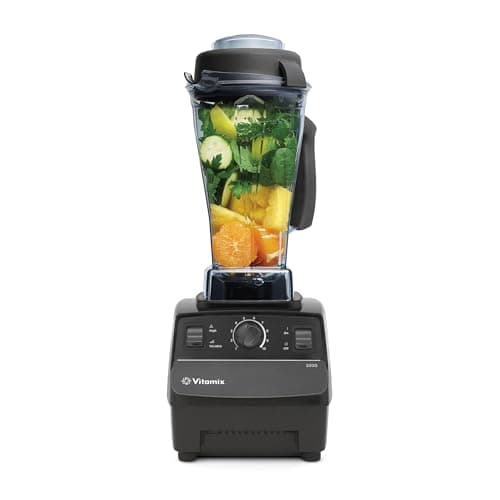
Breaking the ingredients down at a low speed, and only going high briefly at the end, produces far less air than running flat out from the first second. This is the one argument for a fully variable dial over preset buttons that applies to every single blend: the Vitamix 5200 is dial-only with no presets at all, which here is a feature.
3. Blend for less total time
Air accumulates. Most people blend a smoothie for considerably longer than it needs, usually because they are watching for a texture that arrived twenty seconds ago. Stop as soon as it is uniform.
4. Add the foamy things last, on a low speed
Blend the fruit and liquid first, then add protein powder or greens and run it just long enough to disperse them. This one change often settles the whole problem, and it is also the best way to avoid powder clumps — protein powder in a blender covers that in detail.
5. Use frozen fruit instead of ice, and more of it
A colder, thicker mixture resists being whipped, and the solids physically disrupt the funnel. This is also the main answer to the sibling question about making a smoothie thicker. Whether you have to thaw frozen fruit first is worth reading before you load a cup with it.
6. Let it stand for a minute, then stir gently
A good proportion of the foam will rise and collapse on its own if you simply leave it. Stirring with a spoon afterwards pops more; drinking through a straw from the bottom of the glass avoids the rest.
The one piece of hardware that bears on this
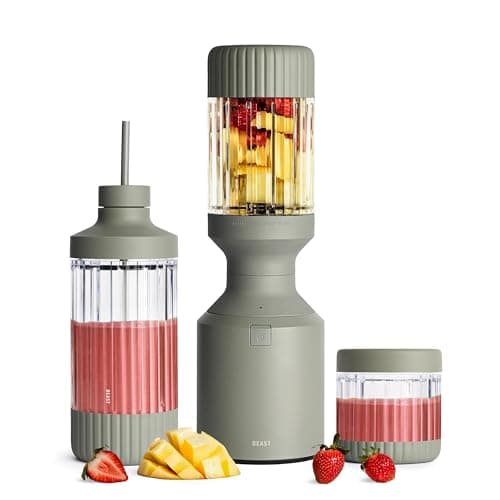
Most blender marketing is about power, which makes foam worse. One machine in our catalog publishes a design feature that is directly relevant: the Beast Mega 1200’s vessel is ribbed, and Beast states the ribs are there to disrupt the vortex. The intended benefit is blending efficiency — a smooth vessel lets the whole load spin as one body and do nothing — but disrupting the vortex also means a shallower funnel, and a shallower funnel entrains less air.
We are stating that as reasoning from a published design feature, not as a measured outcome: Beast publishes no foam figure, nobody does, and we have blended nothing. It is simply the only hardware claim in the catalog that points the right way. Everything else that helps is technique.
When foam is telling you something else
Three cases where foam is a symptom rather than a nuisance:
- Foam with a sour or fizzy quality in a smoothie that has been standing is fermentation rather than aeration. That is a storage question, and how long a smoothie lasts in the fridge deals with it from the FDA’s own guidance.
- Foam plus separation into layerswithin minutes usually means the drink is too thin — not enough solids or soluble fibre to hold the mixture together. Add banana, oats, yogurt or more frozen fruit rather than more blending.
- Foam that appears with a new noise or a hot base is not a foam problem at all; something is wrong with the machine. See why is my blender so loud.
And the case where foam is the goal
Worth noting, because it is the same mechanism pointed the other way: when you blend butter or oil into hot coffee, the pale foamy surface is the signal that the emulsion has formed and the drink is ready. Same vortex, same air, deliberately pursued. That one is on bulletproof coffee in a blender.
What we are not claiming
We publish no foam-volume measurement, no bubble-size figure and no before-and-after test, because we have no test kitchen and no manufacturer publishes anything of the kind. The explanation above is reasoning from how a vortex and a foam-stabilising compound behave, plus the published vessel and control designs of the machines named. We also make no health claim: nothing here says foam is good or bad for you, and we publish no oxidation, nutrient-loss or shelf-life figure. Our method is published in full.
What to look for if aeration bothers you
A fully variable speed dial, not presets only
A low start is the single most effective control you have over how much air goes in, and a preset programme starts at the speed it was written for. A dial lets you work the load up gently and finish high for a few seconds.
A vessel sized to the drink you actually make
Headspace is where the funnel reaches. A machine that ships only large cups will aerate a modest drink more than a machine with a smaller vessel, regardless of power. Check the published cup sizes rather than assuming “personal” means small.
A vessel designed to break the vortex, if you can get one
Ribbed or lobed vessels are published specifically to disrupt the spin. They are sold on blending efficiency; a shallower funnel is the side benefit.
A tamper, so the answer to a stuck load is not more speed
When a thick mixture stalls, the instinct is to turn the speed up, which deepens the funnel and whips in more air. A tamper lets you push the load into the blade instead — see what a blender tamper is used for. The four machines below are the ones in our catalog whose vessel design and speed control are documented, with what each maker actually publishes.
The hardware
The hardware this guide is about
The products this guide refers to, with prices pulled live from Amazon. Prices last checked October 19, 2026. Where we have no verified live price we show none rather than a stale number. Full rankings live in the roundups linked above.
Honest capacity figures
Beast Mega 1200
Two years of warranty in a class where one is standard, and the only brand here that publishes usable blending capacity separately from total vessel volume.
Buying once
Vitamix 5200
The seven-year warranty is the product. A machine with a fully variable dial, a tall narrow jar and a tamper, backed longer than almost anything else at any price.
Most kitchens
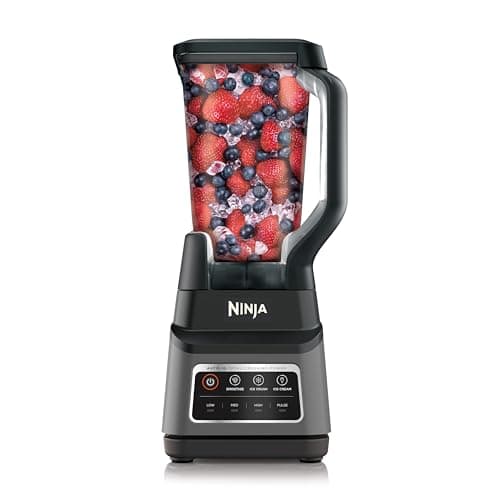
Ninja Professional Plus BN701
The one brand here that publishes both a continuous and a peak wattage instead of only the flattering one. A large pitcher and real power for about a fifth of the premium price.
Everyday shakes
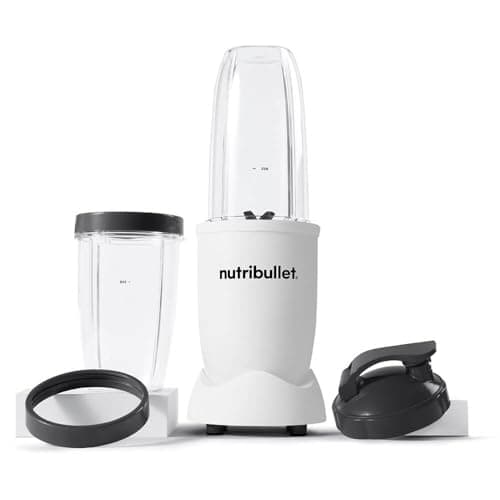
NutriBullet Pro (900 W)
The default bullet blender, and a good one. Note that NutriBullet's own product page contradicts itself about which cups are in the box.
#ad · As an Amazon Associate we earn from qualifying purchases.
Questions
Frequently asked
How do I stop my smoothie from being foamy?
Fill the jar fuller, start at a low speed and bring it up, blend for less total time, and add protein powder or greens at the end rather than the beginning. Then let it stand for a minute before pouring. Those five changes address the air going in and the bubbles staying, which are the two separate halves of the problem.
Why does my smoothie foam up with protein powder?
Proteins stabilise foams — the same property that lets egg white hold a meringue — and whey-based powders are especially good at it. Blend the fruit and liquid first, then add the powder and run the machine only long enough to disperse it. Protein powder in a blender has the rest.
Does a more powerful blender reduce foam?
No, it generally increases it. More power means a faster blade, a deeper funnel in the middle of the jar and more air dragged under per second. What helps is a low start, a fuller jar and less total time — all of which are technique rather than hardware.
How do I make a smoothie thicker instead?
More solids and less liquid: frozen fruit rather than fresh plus ice, half a banana, a spoon of oats, yogurt or nut butter. Avoid the instinct to blend longer, which thins a smoothie by breaking the structure down and aerating it. Start with less liquid than you think and add it a splash at a time.
Is foam in a smoothie bad for you?
We make no health claim either way, and we publish no nutrient or oxidation figure. Foam is air held in the drink by things already in it. If the foam tastes sour or fizzy the issue is storage rather than aeration — see how long a smoothie lasts in the fridge.
Why do green smoothies foam more than fruit ones?
Leafy greens contribute soluble compounds and a very large number of fine cell fragments, both of which stabilise bubbles. Blending the greens with the liquid first, then adding frozen fruit, usually produces a noticeably less airy result than doing it the other way round.
Keep reading
Related
- Smoothie blendersThe hub this explainer sits in.
- How to make a smoothieLoading order and ratios, which is where most of the fix lives.
- Best blenders for creamy smoothiesTexture as a ranking, once you have the technique right.
- Protein powder in a blenderThe single most common cause of a foamy drink.
- What does pulse do on a blenderHow to break a load up without running the blade for longer.
- Bulletproof coffee in a blenderThe one drink where the pale foamy surface is the goal.
Receipts
Sources
- Beast Health — Mega 1200 product page (1200 W, 1000 mL vessel, ribbed vessel designed to disrupt the vortex)
- Vitamix — 5200 product page and specification table (fully variable dial, 64 oz tall container, tamper included)
- SharkNinja — Ninja Professional Plus BN701 specification table (1,200 W continuous / 1,400 W peak, Auto-iQ programs and pulse, 72 oz pitcher with 64 oz max liquid)
- NutriBullet — Pro product page (900 W, two 32 oz cups)
We do not run a testing lab and we do not pretend to. Specifications come from the manufacturer's own published documents and from published standards; prices come from the live Amazon API. Where a figure is not published, the page says “not published” rather than guessing. Read the full method.