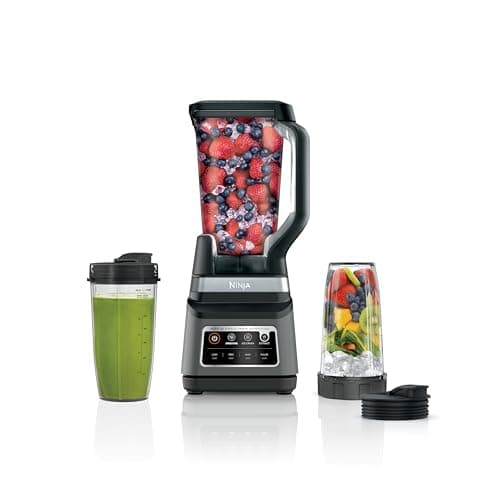
The Ninja Professional Plus DUO (BN751) is the BN701 with single-serve cups added: the same published 1,200 W continuous motor, the same 72 oz pitcher, the same one-year warranty, with Auto-iQ programs on both the pitcher and the cups. It replaces a full-size blender and a bullet blender with one base — and it is worth the premium over the plain BN701 only if you will genuinely use the cups.
What this review is.Specification-based, not hands-on — this site owns no blenders. Every figure is from SharkNinja’s own BN751 specification table or its warranty terms, and the running cost is computed and shown. Our method is published in full.
The motor Ninja actually documents
Ninja is the one brand in this catalog that publishes both a continuous and a peak wattage instead of only the flattering one: 1,200 W continuous and 1,400 W peak. That is what makes the machine genuinely comparable — the continuous figure is what the motor draws in use, and it is the one we use for cost and ranking. Nothing is given up on the full-jar side versus the BN701; it is the identical motor base.
Ninja Professional Plus DUO BN751 — 1200 W ÷ 1,000 = 1.200 kW
1.200 kW × 18.25 hours a year = 21.90 kWh
21.90 kWh × 18.34¢ per kWh = $4.02 a year
About $4.02a year to run, the same as any 1,200 W machine — a non-factor, as always.
What the cups add — and what they cost
The single-serve cups take a drinking lid, which is the entire reason to own a personal blender: you blend and drink from the same vessel, no pouring, no second thing to wash. With Auto-iQ running on both the pitcher and the cups, the DUO genuinely does two jobs from one footprint. The cost of that versatility is honest and small: more parts to store and wash than the single-pitcher BN701, and a price premium over it. If the cups end up in a cupboard, you have simply bought a BN701 at a markup.
The warranty, and the tamper it lacks
One year, like the rest of the Ninja line — the clearest expression in this category of what a lower price actually buys, set against Vitamix’s seven. And there is no tamper, so a thick low-liquid load in the big pitcher has to be managed by stopping and scraping; the stacked blade tower is also more surfaces to wash than a single fixed blade. The warranty table shows where one year sits against the field.
Who should buy the DUO
Buy it if you want one machine to make a family pitcher of smoothie and a single grab-and-go shake, and you will use both regularly. Buy the plain BN701 instead if you only need the pitcher — you get the identical motor for less. And if you already own a personal blender you like, the cups are not worth a whole new machine. The direct comparison against the NutriBullet version of this idea is in NutriBullet Combo vs Ninja DUO.
The only question that matters: will you use the cups?
Because the DUO is mechanically the BN701 with cups added — same motor, same pitcher, same warranty — the entire decision is whether the single-serve cups earn their premium. If you will make a family pitcher and a personal grab-and-go shake on the same base, they do, and one footprint replacing two machines is genuinely tidy. If you only ever reach for the pitcher, buy the plain BN701 and pocket the difference; the cups add storage and washing without adding use.
What it is, and is not, good at
The 1,200 W continuous motor and Auto-iQ programs make a standard frozen-fruit smoothie beautifully and stop on their own, which is the DUO’s real strength. What it lacks is a tamper, so thick, low-liquid loads mean stopping and scraping — for nut butter and spoon-thick bowls, a machine that ships a tamper is the right tool. And like the rest of the Ninja line, the warranty is one year; if buy-once durability matters more than versatility, a longer-warranted machine is the better spend.
Against the NutriBullet Combo, the DUO’s edge is presets and a bigger pitcher, while the Combo usually undercuts it on price — the head-to-head is in Combo vs DUO.
How we picked
Blenders we claim to have tested: 0
Every site in this category tells you they blended twenty smoothies. We have not blended any, and we say so. Here is what we do instead: read the manufacturer's manual and spec sheet, record the published motor rating, jar capacity and warranty term, verify the warranty against the manufacturer's own warranty document, work out what the machine costs to run for a year and show the arithmetic, and cite all of it so you can check the work. Prices come live from Amazon's API and disappear rather than go stale.
The scores above are judgments from that documented research — not test results. The full rubric, including what disqualifies a product, is published in full.