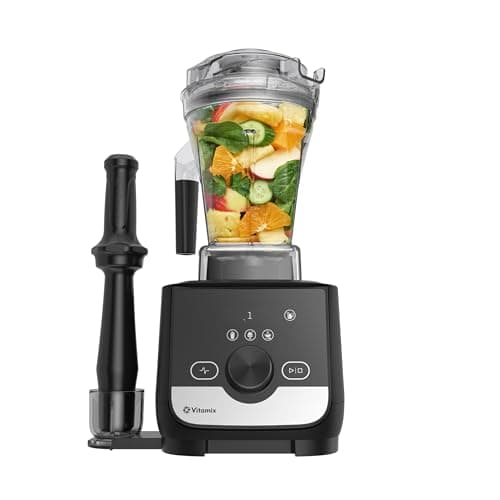
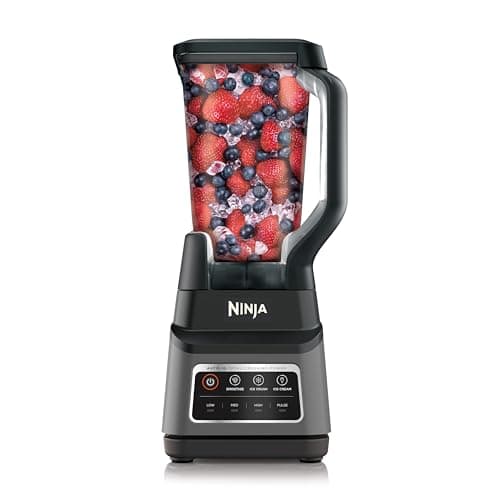
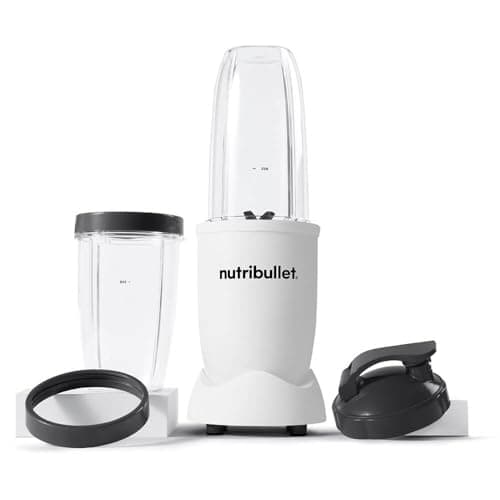
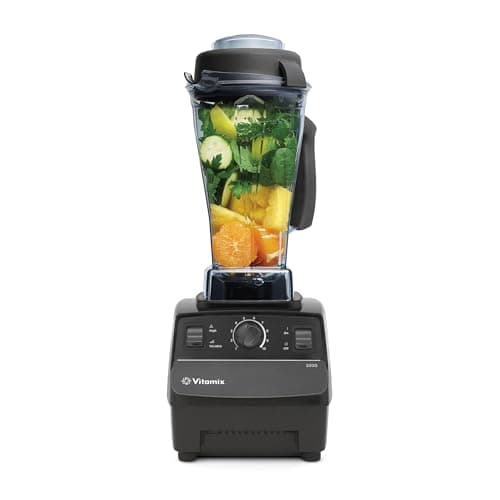
Buy the Vitamix 5200if you intend to make juice in a blender regularly. The reason is specific: a tall narrow 64 oz jar plus a tamper is what lets you break a dense load of greens and hard vegetables down completely in one pass, and how completely the pulp is broken down is exactly what decides how much liquid comes through the strainer. The Vitamix Ascent X3does the same thing with ten years of warranty and a smaller 48 oz jar. The Ninja BN701 is the value pick at 1,200 watts continuous, and the NutriBullet Pro is here for one or two glasses at a time. Before any of that, read the next paragraph.
A blender is not a juicer, and this page will not pretend otherwise.A juicer separates liquid from fibre mechanically and hands you juice. A blender pulverises everything and hands you a thick puree; you then push it through a nut-milk bag or a fine sieve to get juice out. That works, it costs far less than a juicer, and the machine does twenty other jobs — but the yield is lower, it takes an extra five minutes, and the result is more aerated. If you want the appliance comparison rather than the blender ranking, it is on blender vs juicer.
What actually decides strain yield
Complete breakdown, not just a smooth-looking blend
Plant juice sits inside cell walls. A blade that reduces a kale leaf to small pieces has not released much; a blade that ruptures the cell walls has. That is why strain yield tracks how hard and how completely a machine works a dense load, rather than how smooth the puree looks in the jar. It is also why wattage alone is a poor predictor: a powerful motor spinning a cavity in a wide jar is doing nothing to the half of the load that never reaches the blade.
Jar shape and a tamper, for the same reason
Juicing loads are low-liquid and dense by nature — that is the point, since added water is dilution rather than juice. Low-liquid and dense is the load a tall narrow jar handles well and a wide jar handles badly, and it is the load a tamper exists for. Two of the four machines here ship one.
Capacity, because you lose volume to pulp
A jar of pulp does not become a jar of juice. Expect to put considerably more in than you get out, which makes the 48 oz Ascent X3 a two-pass machine for a jug of juice where the 64 oz 5200 is a one-pass machine. On a personal blender it means one glass per cycle, honestly stated.
Cleaning, because pulp is the worst thing to leave
Wet pulp rinses out in seconds. Dry pulp becomes a varnish on the underside of the blade assembly, which is the part a brush cannot reach. Juicing in a blender makes the cleaning routine on how to clean a blender non-optional rather than good practice.
Who each pick is for
- Vitamix 5200 —for the person who will do this weekly and wants the best chance of a high yield per pass. 64 oz tall narrow jar, tamper in the box, a fully variable dial so you can start slow on a packed jar, and seven years of full warranty. Vitamix publishes no watt figure for it at all; the power is stated as 2 HP and an 11.5 A nameplate rating.
- Vitamix Ascent X3 —for the person who wants the same jar shape and tamper with ten years of full, transferable warranty, and who needs the machine to fit under a standard cabinet at 17 inches tall. The trade is a 48 oz jar: a jug of juice is two passes.
- Ninja Professional Plus BN701 —for the person who wants to try the method without committing premium money. 1,200 W continuous and 1,400 W peak — Ninja is the only brand here that publishes both — with a 72 oz pitcher holding 64 oz of liquid. No tamper, so a packed jar means stopping and scraping, and one year of warranty.
- NutriBullet Pro —for one or two glasses at a time, blended in the cup and strained straight out of it. 900 watts in a narrow 32 oz cup, where the inverted design puts gravity on the blade’s side. Not a batch machine, and NutriBullet’s warranty excludes the cups.
The four, side by side
Manufacturer figures only, with the qualifier each maker actually uses. We publish no juice-yield figure for any machine, because none is measurable from a document. | Published motor | Vessel | Tamper | Speed control | Warranty |
|---|
| Vitamix 5200 | 2 HP; 11.5 A at 120 V, no watt figure published | 64 oz, tall and narrow | Yes | Fully variable dial | 7 years, full |
|---|
| Vitamix Ascent X3 | 2.2 HP; 120 V, 1,500 W | 48 oz | Yes, S2 low-profile | Variable, plus 3 programs | 10 years, full |
|---|
| Ninja Professional Plus BN701 | 1,200 W continuous; 1,400 W peak | 72 oz total, 64 oz max liquid | No | Presets plus pulse | 1 year limited |
|---|
| NutriBullet Pro (900 W) | 900 W, no qualifier published | Two 32 oz cups | No | Single speed, press to run | 1 year; cups excluded |
|---|
The method, since the hardware is half of it
Put the liquid-rich items in first — cucumber, citrus, apple — and the leaves and hard roots on top. Start slow, bring the speed up, and use the tamper if you have one rather than adding water; added water is the easiest way to turn juice into a weak drink. Blend longer than you would for a smoothie, because the target is cell-wall breakdown rather than mouthfeel. Then strain through a nut-milk bag over a bowl and squeeze. A fine mesh sieve works and is slower.
Two things to expect. The first glass will be foamier than juicer juice, because a blender entrains air by design — that mechanism is explained on why smoothies come out foamy. The second is that the pulp left in the bag is most of the fibre, which is a nutritional trade you may not want to make at all; what the fibre question does and does not mean is on does blending destroy fiber.
What a year of this costs to run
At 18.34¢ per kWh (US EIA, Electric Power Monthly — average residential price, US total, retrieved September 2026) and 3 minutes a day, 365 days a year: about $4.62 for the 5200 on its derived figure, $5.02 for the Ascent X3, $4.02 for the BN701 and $3.01for the Pro. Juicing runs the motor longer than a smoothie does, so scale accordingly — and note that none of these differences is large enough to decide anything.
What we are not telling you
We have not juiced anything in any of these machines, and we publish no yield percentage, no millilitres-per-kilo figure and no clarity score, because no manufacturer publishes anything of the kind and we have no test kitchen. The cell-wall explanation above is stated as reasoning about what a blade and a plant cell do, not as a measurement. The ranking is built from published motor figures with the qualifier each brand actually uses, published jar dimensions and capacities, the tamper contents of each box, and each warranty document read in full. Our method is published in full.
Four checks before you buy a blender for juicing
1. Be honest about whether you want a juicer
If juice is the main thing you plan to make, most days, a juicer does it faster, with higher yield and less washing up. A blender wins when juice is occasional and the machine also has to make smoothies, soup, sauces and nut butter. Decide which of those describes you before you spend anything.
2. Buy jar shape and a tamper, not watts
A dense low-liquid load is the whole job here, and jar geometry plus a tamper does more for it than a few hundred watts. If you are choosing between a high-wattage wide pitcher and a lower-wattage tall jar with a tamper, take the second.
3. Size the jar for pulp, not for juice
You will put in more than you take out. If you want a jug of juice in one pass, 64 oz is the floor; 48 oz is a two-pass machine and a personal cup is a glass at a time.
4. Budget for a straining bag and a cleaning habit
A nut-milk bag costs very little and does the job better than any sieve. Rinse the jar and the blade assembly immediately — pulp left to dry is the single worst residue a blender gets, and it collects exactly where the gasket lives. The same strain-and-squeeze method is used in best blenders for nut milk, which is the closest thing on this site to a sibling of this page.