HUB 07 · Guides
Blending Hot Liquids Safely
The hazard is pressure, not temperature. Steam expands under a clamped lid until the lid leaves, taking the contents with it. Every claim on this page cites a manufacturer document, because this is a burn-risk topic.
We earn a commission if you buy through our links. It does not change the price you pay, and it does not decide our picks — our selection criteria are published in full. How this works.
You can blend hot soup in a countertop blender, but only if you fill it well below the maximum line, remove the lid’s center cap so steam can escape, cover the opening with a folded towel, and start on the lowest speed. In a sealed personal blender cup you should not do it at all. The risk is not the heat — it is the steam pressure that builds under a clamped lid.
Your machine’s manual takes precedence over this page, every time. Manufacturers set different maximum hot-fill levels and different venting instructions, and where a manufacturer prohibits something the prohibition governs, whatever general advice says. This guide describes the mechanism and the common rules; it does not replace the document that came in your box.
Why a sealed jar of hot soup is dangerous
When liquid at or near boiling is agitated, dissolved gas and water vapor come out of solution rapidly. In an open pan that steam simply leaves. Under a lid clamped onto a gasket, it cannot: the volume of the jar is fixed, so the pressure rises. Blending adds energy to the liquid, which makes more steam, which raises the pressure further.
The lid is the weakest point in that system and it is designed to be removable, so it is what gives way. The failure is not a slow leak. It is sudden, it happens at the moment the blades start, and it throws near-boiling liquid upward and outward — which is why the injuries from this are facial and to the hands.
A sealed personal blender cup is worse, not better. It has a smaller headspace and a lid designed to be watertight for carrying, so it has less room for the steam and a better seal holding it in. Most personal blender manuals prohibit hot liquids outright for exactly this reason.
The rules, and why each one exists
1. Fill to well below the maximum line
The maximum fill line on a blender jar is set for cold liquid. Hot contents need headspace for the steam to occupy, and they also expand and climb the jar wall once the blades start. Reducing the batch is the single most effective thing you can do, and it costs nothing but a second run.
2. Vent the lid
Nearly every full-size blender lid has a removable center cap, and it is there for this. Taking it out converts a sealed vessel into a vented one, which is the entire difference between a pressure problem and no pressure problem. Cover the opening with a folded towel held in place with your hand — the towel catches spatter while still letting steam out. Never substitute a hand flat on a closed lid; that is holding the safety valve shut.
3. Start on the lowest speed
A blender jumping straight to full speed releases the steam load all at once. Starting slow and increasing gradually lets the vapor escape as it forms. This is also why fully variable speed control is genuinely useful on a machine you will use for soup, rather than a set of fixed presets.
4. Let it cool first, if you can
Soup blends perfectly well at seventy degrees. The risk scales with how close the liquid is to boiling, so ten minutes off the heat removes most of it. Nothing about the result is worse for waiting.
The machine where this problem does not exist
An immersion blender has no sealed vessel. You blend in the open pan the soup is already in, so there is nothing for pressure to build inside. That single structural difference is why a stick blender is the right tool for hot food, and it is a stronger argument than any spec comparison between the two. It is also why a stick blender is the right tool for butter coffee, which is blended near boiling every morning.
The remaining hazards with a stick blender are ordinary ones: splashing, and putting your knuckles where the steam is. Keep the bell fully submerged before you switch on, keep it submerged until you switch off, and check that the shaft is long enough for the pot you actually own — a shaft too short for a stockpot puts your hand in the steam. Our immersion blender picks rank shaft length and bell design ahead of wattage for this reason.
What about the blenders sold as “soup makers”?
Some high-power blenders heat soup through friction alone — run long enough at high speed, the blades warm the contents to serving temperature. That is a genuine capability and it sidesteps the problem neatly, because the liquid was never boiling in the first place and the machine controls the process. It is not a reason on its own to buy an expensive machine, but if you make soup weekly it is a real convenience that the specification sheets undersell.
If it does go wrong
Cool the burn under cool running water for twenty minutes — not ice, which damages tissue — and remove anything tight near the area before it swells. Get medical attention for anything blistering, anything larger than the palm of a hand, and anything on the face or hands. Scald injuries from blender contents are common enough that emergency departments recognize the pattern.
The equipment lesson afterward is usually not “buy a better blender”. It is the vent cap.
The hardware
The hardware this guide is about
The products this guide refers to, with prices pulled live from Amazon. Prices last checked October 19, 2026. Where we have no verified live price we show none rather than a stale number. Full rankings live in the roundups linked above.
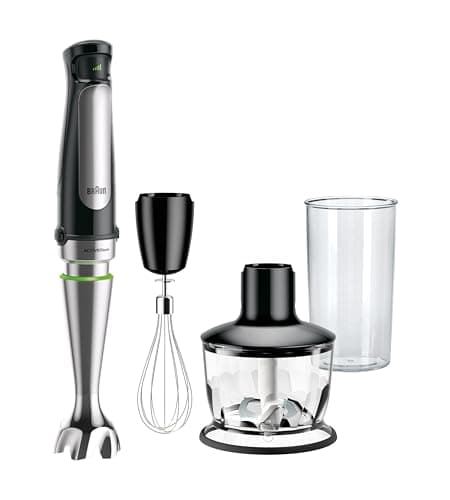
Soup, most weeks
Braun MultiQuick 7 MQ7035X
Three years of US warranty on a hand blender — triple what most rivals offer — and Braun publishes an input-power figure rather than a peak number.
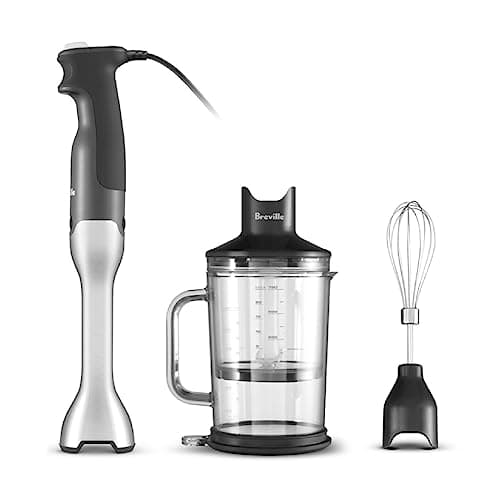
Not fighting the pan
Breville Control Grip BSB510XL
The bell has a vent designed to stop it suction-locking to the pan — the single most common complaint about stick blenders, engineered out. One year of warranty, though.
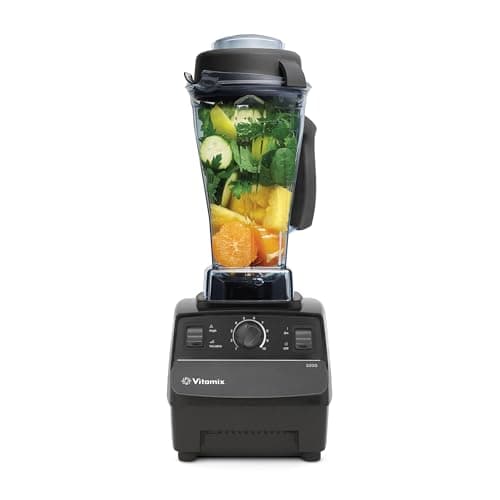
Buying once
Vitamix 5200
The seven-year warranty is the product. A machine with a fully variable dial, a tall narrow jar and a tamper, backed longer than almost anything else at any price.
#ad · As an Amazon Associate we earn from qualifying purchases.
Questions
Frequently asked
Can you put hot soup in a blender?
In a countertop blender, yes — if you fill well below the maximum line, remove the lid center cap so steam can vent, cover the opening with a folded towel, and start on the lowest speed. In a sealed personal blender cup, no. Your machine’s manual is the authority and takes precedence over any general advice.
Why does hot liquid lift the blender lid?
Because steam expands. A clamped lid on a gasket makes the jar a fixed-volume sealed vessel, and blending adds energy that turns more liquid into vapor. The pressure rises until the weakest part gives way, and the weakest part is the removable lid.
Is an immersion blender safer for hot soup?
Yes, structurally rather than marginally. There is no sealed vessel, so there is no pressure to build — you blend in the open pan. The remaining risks are splashing and steam near your hands, which are managed by keeping the bell submerged and by choosing a shaft long enough for your pot.
How hot is too hot?
The risk scales with how close the liquid is to boiling, so the practical answer is to let it come off the heat for ten minutes first. Soup blends perfectly well well below boiling, and nothing about the result is worse for waiting. Check your manual for a stated maximum — some manufacturers publish one and they differ.
Keep reading
Related
- The best immersion blenders for soupNo sealed vessel means no pressure — the structurally safer tool for hot food.
- Blender vs immersion blenderWhere the line falls between the two, job by job.
- Countertop and high-power blendersFully variable speed matters more than usual if you blend hot.
- Bulletproof coffee in a blenderThese rules applied to one near-boiling cup, every morning.
- What you should not put in a blenderWhere this hazard sits against everything else that merely costs you a jar.
Receipts
Sources
- Vitamix — 5200 owner documentation and specification page
- Hamilton Beach — Power Elite use and care manual (PDF)
- Braun Household — MultiQuick 7 product documentation
- Breville — Control Grip BSB510XL product page and manual
We do not run a testing lab and we do not pretend to. Specifications come from the manufacturer's own published documents and from published standards; prices come from the live Amazon API. Where a figure is not published, the page says “not published” rather than guessing. Read the full method.