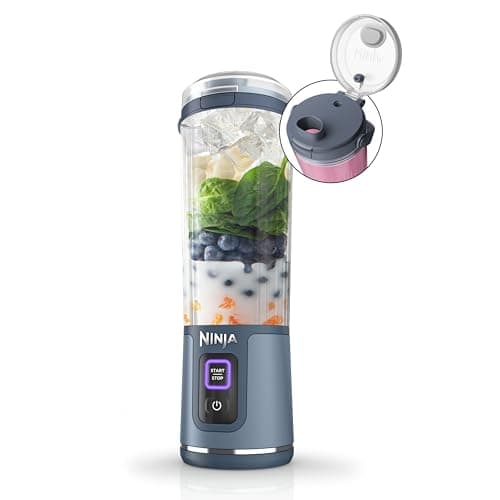
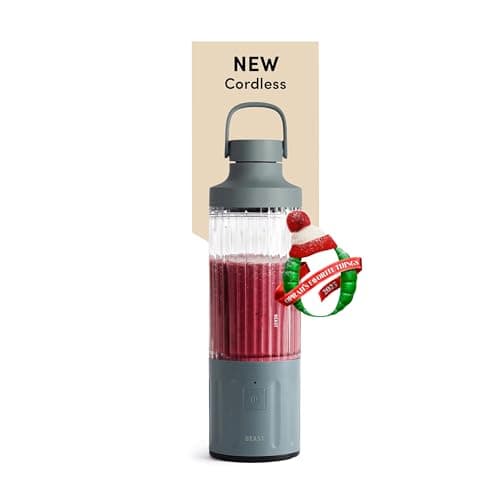
Two picks. The Beast GO Cordless wins on a two-year warranty and the only concrete battery figures anyone in this category publishes; the Ninja Blast BC151 is the cheaper way in from a brand with a real service operation behind it. The reason the list stops at two is the same reason this page exists: a portable blender is the worst-documented product in the entire blender market, and only these two are backed by manufacturer pages we could source line by line.
Two is not a short list. It is the list.
There are dozens of cordless blenders for sale. Padding this page to ten would mean publishing specifications we cannot trace to a manufacturer document, which is the one thing this site will not do. Most portable blenders on the market are sold by brands with no product page, no warranty page and no US service operation — the specification exists on the retail listing and nowhere else, and a retail listing is written by whoever is selling it. So: two.
Neither manufacturer publishes a usable wattage. Neither.
This is the genuinely striking thing about the category and it is almost never reported.
Beast publishes no wattage for the GO Cordless at all. The only electrical figure on the product page is a 3-cell, 11.1 V battery. There is no motor wattage, no peak wattage, no horsepower equivalent — nothing.
SharkNinja’s specification table for the Ninja Blast lists the wattage as 0 watts and the peak wattage as 0 watts. That is what the table says. It is obviously a data-entry failure rather than a claim about the motor, but the consequence is identical: SharkNinja publishes no usable power figure for this machine. The only electrical number given is a 7.4 V USB-C rechargeable base.
So where do the wattage numbers you have read come from? Not from these two manufacturers. If you have seen a specific watt figure quoted for either of these machines, it did not originate with the company that makes it. Treat it accordingly.
It is worth being precise about why a battery voltage does not rescue this. Power in watts is volts multiplied by amps. Both brands publish a voltage and neither publishes a current draw, so there is no arithmetic available to anyone — us included — that turns 11.1 V or 7.4 V into a watt figure. You can say that 11.1 V is higher than 7.4 V, which is a fact about the battery packs and a reasonable directional signal. You cannot say by how much more power one motor delivers, and nobody who says they can is reading a manufacturer document.
There is also a fair reading in which this is not evasion. A cordless motor running off a battery pack has no meaningful, stable wattage to publish in the way a mains motor does. The problem is not that these two brands are silent — it is that the rest of the category is loud, with numbers nobody sourced. Beast’s silence is at least accompanied by figures you can actually use, which is the next section.
What Beast publishes instead, and why it is better
Rather than a power figure, Beast publishes battery behavior as concrete, checkable numbers: 13 blending cycles of 30 seconds per charge, and under 2 hours to charge. That converts directly into something you can plan around:
13 cycles × 30 s = 390 s = 6 min 30 s of blending per charge
Recharge time: under 2 hours
Six and a half minutes of motor time per charge is roughly a working week of one drink a day at a sensible run length. That is a far more useful thing to know than a watt figure would be, and it is stated as a count of cycles at a stated duration rather than as a vague “up to 20 blends” claim at a serving size nobody defines. SharkNinja publishes no equivalent cycle count for the Blast.
Capacity, stated two different ways
Beast publishes the GO Cordless as 670 mL (22.6 oz) total volume and 500 mL (17 oz) blending capacity — two separate numbers, because you cannot fill a blender to the brim and expect a vortex. Publishing both is the honest way to do it and Beast is the only brand in this catalog that does it consistently.
SharkNinja states that the Blast makes up to 18 oz. That is a usable figure phrased as an output rather than a vessel volume, which is fine, but it means there is no published total volume to compare against the Beast’s 22.6 oz. The two capacity numbers you can actually set side by side are 17 oz of blending capacity against 18 oz made — near enough identical, and both firmly one drink.
| Machine | Published motor | Capacity | Battery | Warranty |
|---|
| Beast GO Cordless | Not published (11.1 V battery only) | 670 mL total / 500 mL blending | 13 × 30 s per charge; under 2 h to charge | 2 years |
|---|
| Ninja Blast BC151 | Not published (spec table reads 0 W / 0 peak W) | Makes up to 18 oz | 7.4 V USB-C; cycles per charge not published | 1 year |
|---|
Charging: the one thing both brands publish plainly
Both machines charge over USB-C rather than a proprietary brick, and that is worth more than it sounds. A portable blender with its own dedicated charger is a portable blender you cannot top up at a desk, in a car or from a power bank, and it becomes landfill the day the charger is lost. USB-C means the cable you already carry works.
Beast goes one step further and publishes a charge time: under 2 hours from flat. SharkNinja publishes no charge time for the Blast, and no cycles-per-charge figure either, so on the two questions a buyer of a cordless blender most wants answered — how many drinks per charge, and how long to fill it back up — one brand answers both and the other answers neither. That asymmetry is the honest reason the Beast leads this page even before the warranty is considered.
How to read a portable blender listing
Three habits will keep you out of trouble in a category this thinly documented. First, find the manufacturer’s own product page before you read a retail listing, and if there is no manufacturer page at all, treat every number in front of you as sales copy. Second, check whether the capacity quoted is total vessel volume or blending capacity — the difference on the Beast GO is 670 mL against 500 mL, which is a third of the number, and most brands quote whichever is larger without saying which it is. Third, ignore any wattage figure you cannot trace to the manufacturer, which on these two machines means ignoring all of them.
It is also worth checking what the vessel is for. On both of these the cup you blend in is the cup you drink from, which is the whole point of the format; a portable that requires you to decant into something else has quietly reintroduced the washing-up it was supposed to save you.
The warranty gap is the clearest difference between them
Beast covers the GO Cordless for two years in the US and Canada for household use. SharkNinja covers the Blast for one year. On a product with a battery in it, that gap is more meaningful than it would be on a mains machine: a lithium pack is a consumable that degrades on a schedule, and a second year of cover is a second year of the manufacturer carrying that risk. Neither brand publishes a cycle-life rating for the battery, so how much degradation to expect is not something anyone can tell you from a document.
What a cordless blender is genuinely for
Soft fruit, powder, liquid, and a modest amount of frozen fruit if there is enough liquid around it. That is the honest envelope. A battery-driven motor draws far less than a mains one, and neither of these is a machine for a cup packed with frozen mango or bar ice — asking one to do that is how the category earned its reputation. If frozen loads are the point, buy a corded machine; the protein-shake roundup covers the mains alternatives, and the ice guide explains why cordless is the weakest case of all for it.
The other thing worth saying plainly: neither of these replaces a blender at home. They replace carrying a shaker bottle, or making a drink at a desk, or blending in a hotel room. If the desk is in a dorm, the shared-sink, one-outlet version of the question is best blenders for a college dorm. Bought for that, both are reasonable. Bought as your only blender, both will disappoint, and no specification on either page suggests otherwise.
Cleaning, which decides whether you keep using it
Everything true of bullet blenders is true here and slightly worse, because a portable spends its life away from a sink. A blade assembly that sits with protein residue on it until you get home is the fastest route to a smell you cannot get out of the vessel. The practical routine is to rinse and run a few seconds of water and dish soap immediately after drinking, wherever you are, and to keep the seal out of a hot dishwasher. Neither brand publishes a gasket replacement part in the specifications we sourced, which is a gap worth checking before you commit.