HUB 07 · Guides
Can You Put a Blender in the Dishwasher?
The motor base never goes in. Everything else is a per-model answer, and the manufacturers disagree with each other - and in one case with themselves - often enough that the generic advice is worthless.
We earn a commission if you buy through our links. It does not change the price you pay, and it does not decide our picks — our selection criteria are published in full. How this works.
The motor base never goes in the dishwasher.Not on the top rack, not on a cool cycle, not ever — it is a sealed electric motor and water inside it is the end of the machine. The jar, lid and blade usually can, but “usually” is doing real work in that sentence: of the eight manufacturers whose care statements we pulled for this page, one says yes on one of its own containers and no on another, two explicitly forbid the sanitize cycle, one caps the jar at 176 °F, and three publish nothing at all. Find your machine below.
The one rule with no exceptions
Whatever the rest of your blender says, the part with the motor in it is hand-wipe only. Hamilton Beach prints it in capitals in the Power Elite manual — DO NOT IMMERSE BASE IN WATER— and tells you to wipe the base, control panel and cord with a damp cloth or sponge instead. Beast is blunter still on the GO Cordless, where the base and the blade are one unit: do not wash the motor base in the dishwasher, cover the charging port, and rinse the base and blade under running water.
That last one is worth pausing on, because cordless and bullet machines are where people get this wrong. On a bullet blender the blade screws onto the cup, so it is a jar part and it washes like one. On several cordless machines the blade is fixed to the base, so the thing that touched your smoothie is also the thing that must never be submerged. Look at which half your blade is attached to before you load anything.
What eight manufacturers actually say
Every cell below is quoted or closely paraphrased from the manufacturer’s own page or manual, all checked on 18 October 2026, and every one is linked in the sources at the foot of this page. Where a maker publishes nothing, the cell says so rather than filling the gap with a guess.
| Machine or part | Dishwasher? | What the maker actually says |
|---|---|---|
| Vitamix 48 oz SELF-DETECT container (ships on the Ascent X3) | Yes | The container and lid are both stated to be dishwasher-safe, and the specification list answers “Yes” to “Dishwasher Safe?” |
| Vitamix 64 oz Classic container (ships on the VX1 and the 5200) | No | The VX1 owner’s manual states the container is not dishwasher-safe. The self-cleaning program is the intended substitute. |
| Ninja Professional Plus BN701 | Yes | “The dishwasher-safe blender blades and pitcher make cleanup a breeze.” No rack position is published. |
| NutriBullet cups, lids, lip rings and blades | Top rack, with conditions | Listed as “top-rack and dishwasher-safe”, but the sanitize cycle should never be used, and NutriBullet still recommends hand washing over dishwashing because the heat can loosen the gaskets. |
| Hamilton Beach Power Elite jar, lid and blade assembly | Yes, with one ban | Marked DISHWASHER-SAFE in the manual, immediately followed by “DO NOT use the ‘SANI’ setting when washing in the dishwasher. ‘SANI’ cycle temperatures could damage your product.” |
| Blendtec jars (including the Classic 575’s) | Yes, with limits | The jar is stated dishwasher safe, top rack preferred. The bottom rack is allowed if the jar is not wedged between the tines, and then avoid heated dry. Never above 176 °F (80 °C), and never soak a jar more than five minutes. |
| Beast GO Cordless vessels, lids and caps | Top rack | The blending vessels, lids and caps are all top-rack dishwasher safe. The motor base must not be washed in the dishwasher. |
| Braun MultiQuick 7, Breville Control Grip, All-Clad immersion | Not published | Braun’s specification table carries a yes/no “list of dishwasher safe parts” row with no list behind it. Breville’s page defers to the instruction manual. All-Clad says only that the shaft detaches for easy cleaning and storage. |
Vitamix is the reason generic advice fails
Here is the finding that made this page worth writing. Two Vitamix machines sit in our catalog. The Ascent X3 ships the 48 oz SELF-DETECT container, and Vitamix states on that container’s own product page that the container and lid are both dishwasher-safe. The VX1ships the 64 oz Classic container, and the VX1 owner’s manual says that jar is not dishwasher-safe.
Same brand. Same company’s documents. Opposite answers, because they are different jars. Anyone who tells you “Vitamix containers are dishwasher safe” is right about one of them and wrong about the other, and the one they are wrong about is the jar on the best-known Vitamix of all — the 5200 uses the same 64 oz Classic container.
The practical consequence is that the question is never “is my brand dishwasher safe”. It is “is this containerdishwasher safe”, and the container is the part that gets bought separately, swapped, inherited with a used machine or replaced after a crack. Check the jar, not the badge on the base.
The settings that do the damage
Two of our eight sources volunteer a prohibition that has nothing to do with whether the part is dishwasher-safe and everything to do with how hot your dishwasher gets.
Sanitize cycles
Hamilton Beach: “DO NOT use the ‘SANI’ setting when washing in the dishwasher. ‘SANI’ cycle temperatures could damage your product.” NutriBullet, independently, says the sanitize cycle should never be used on its cups, lids and blades. Two unrelated companies, one instruction.
A sanitize cycle raises the final rinse well above a normal wash in order to kill bacteria, and that is exactly the condition a molded plastic jar is not designed for. If your dishwasher has the setting and you use it by habit, this is the single most likely way you will warp a jar that is genuinely labeled dishwasher-safe.
Heated dry, and the bottom rack
Blendtec allows the bottom rack when a tall jar will not fit above, with two conditions: do not wedge it between the tines, and skip the heated dry. The bottom rack sits nearest the heating element, and heated dry is the hottest, longest-dwelling heat in the whole cycle. Those two conditions are the same condition stated twice.
The temperature ceiling nobody quotes
Blendtec publishes an actual number — do not expose the jar to temperatures over 176 °F (80 °C)— which is the most useful figure on this page, because it is the only one that lets you check your own appliance rather than trust a label. It is also lower than most people assume a “dishwasher safe” rating implies. If your dishwasher publishes its wash temperatures, compare them before you decide the top rack is a formality.
The blade and its gasket are the part that quietly degrades
A blender blade assembly is not a solid piece of steel. It is a blade, a bearing and a rubber or silicone gasket that seals the jar, and the gasket is the component with a service life. NutriBullet says so directly: its blades are listed as top-rack dishwasher-safe and the company still recommends hand washing, because dishwasher heat can loosen the gaskets over time.
That is why a jar that never leaked starts weeping down the side of the base after a year of dishwasher cycles, and it is a repair rather than a write-off — why a blender leaks covers what to look at, and whether blender blades can be replaced covers which brands sell the part. The blade is also sharp enough to be worth racking purely on safety grounds if you have ever reached into a soapy jar; are blender blades sharp explains why the answer is more interesting than it sounds.
Glass jars are the easy case
Glass does not warp, does not cloud and does not absorb odor, which is why the glass-jarred machines in our catalog are the least anxious things here to load. Hamilton Beach’s 40 oz jar is glass, and its only dishwasher instruction is the SANI ban above. Plastic jars carry every other caveat on this page — heat, detergent etching, and the slow clouding that makes a five-year-old jar look worse than it performs.
That trade is not free: glass is heavy, and the catalog only offers it at the budget end. Glass vs plastic blender jars is the long version, and the blenders that publish a glass jar is the short list.
Immersion blenders are a different question
A stick blender has no jar, so the question becomes whether the shaftcan go in. On most models the shaft detaches from the motor body — All-Clad says exactly that and nothing more — and the motor body is handled like any other motor: wiped, never submerged, never racked.
What is striking is how little the three immersion brands in our catalog publish. Braun’s MultiQuick 7 page has a specification row literally named “list of dishwasher safe parts” which resolves to a yes/no flag with no list attached. Breville’s product page carries no care statement and points at the manual. All-Clad mentions detaching for cleaning and stops. If you own one of these, the printed manual in the box is the only authority, and that is not a failure of this page — it is a finding about the category. The same gap shows up in the immersion blender buying guide.
The 30-second alternative that makes the question mostly moot
Every full-size machine we cover can be cleaned without the dishwasher in less time than loading it takes: half-fill the jar with warm water, add a drop of dish soap, run it for about 30 seconds, rinse. Vitamix publishes that method for its own containers and sells several machines with a dedicated self-cleaning program on the dial for it — which is the manufacturer’s stated substitute on the one container it says must not go in the dishwasher. Blendtec publishes a hot-water-and-pulse version of the same routine.
Do it while the jar is still wet and nothing has dried on, and the dishwasher question disappears for everything except a jar you have let sit overnight. How to clean a blender has the full method including the stuck-on cases, and the easiest blenders to clean ranks the machines by how few parts there are to deal with in the first place.
What we have not done
We have not washed a blender jar in a dishwasher, measured a wash temperature, or tracked a gasket to failure. This page is a survey of what manufacturers publish, assembled because the answer genuinely differs by model and almost nobody checks. Where a maker publishes nothing, we have said so instead of inferring, and where two documents from the same company disagree, both are quoted. If your model is not listed, the instruction sheet in the box outranks everything here.
If dishwasher-safe is a buying criterion, check these five things
Which half the blade is attached to
A blade that screws onto the jar or cup is a washable part. A blade fixed to the motor base — common on cordless and some portable machines — can never be racked, which means every wash is a hand wash at the sink no matter what the rest of the spec sheet says.
Whether the statement names the container, not the brand
The useful sentence reads “this container is dishwasher-safe”. A brand-level reassurance is worth nothing, as the two Vitamix containers above demonstrate inside one company’s own catalog.
Whether there is a self-cleaning program
A machine with a self-clean cycle on the dial has a manufacturer-endorsed route that avoids the question entirely, and it is faster than the dishwasher for everyday use. It is also what you are expected to use on the one container here that is not dishwasher-safe.
Jar material, if you intend to rack it every day
Glass tolerates heat and detergent indefinitely and weighs more. Plastic is lighter, cheaper and carries every caveat on this page. Daily dishwasher use is the scenario where that difference compounds, and it is the one case where the heavier jar is the easier life.
And check your own machine’s cycle settings
Two of the eight makers surveyed here ban the sanitize cycle outright and a third publishes a 176 °F ceiling. If your dishwasher runs a sanitize or high-temperature program by default, that setting — not the blender — is the thing most likely to cost you a jar.
The hardware
The hardware this guide is about
The products this guide refers to, with prices pulled live from Amazon. Prices last checked October 19, 2026. Where we have no verified live price we show none rather than a stale number. Full rankings live in the roundups linked above.
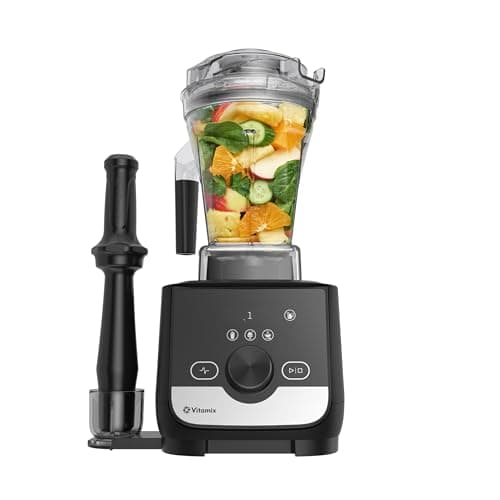
Buying once, under a cabinet
Vitamix Ascent X3
Ten years of full warranty, a tamper in the box, and the only full-size machine here that fits under a standard cabinet. The trade is a 48 oz jar instead of 64, at the highest price in the catalog.
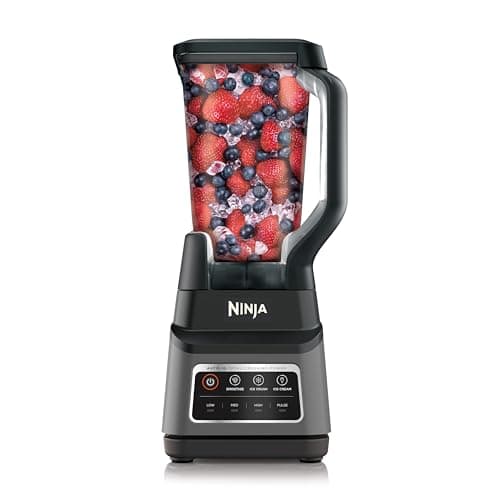
Most kitchens
Ninja Professional Plus BN701
The one brand here that publishes both a continuous and a peak wattage instead of only the flattering one. A large pitcher and real power for about a fifth of the premium price.
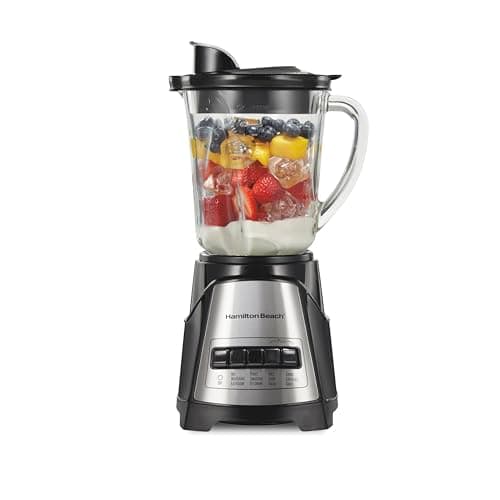
The smallest budget
Hamilton Beach Power Elite Wave Action
The cheapest machine here and the most honest about its own numbers: Hamilton Beach defines what its peak wattage means and prints the real nameplate amperage next to it.
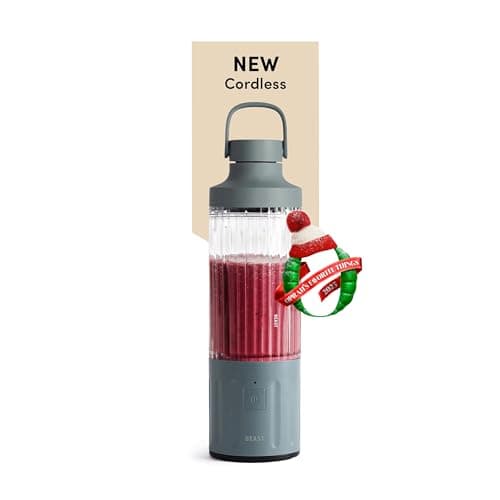
Blending away from a socket
Beast GO Cordless
A cordless blender that publishes no wattage at all — only a battery voltage. That is not evasion; there is no meaningful watt figure to publish, and most rivals invent one anyway.
#ad · As an Amazon Associate we earn from qualifying purchases.
Questions
Frequently asked
Can you put a Ninja blender in the dishwasher?
Ninja states on the Professional Plus BN701 product page that the blender blades and pitcher are dishwasher-safe. The base is not, and Ninja does not publish a rack position, so the top rack is the conservative choice for a pitcher that fits there. The full manufacturer table is above.
Can you put a Vitamix container in the dishwasher?
It depends entirely on which container. Vitamix states that the 48 oz SELF-DETECT container and its lid are both dishwasher-safe. The 64 oz Classic container — the jar on the VX1 and the 5200 — is not, per the VX1 owner’s manual, and Vitamix points you to the self-cleaning program instead. Check the jar, not the brand.
Can you put a NutriBullet cup and blade in the dishwasher?
Yes, on the top rack — cups, lids, lip rings and blades are all listed as top-rack dishwasher-safe. NutriBullet adds two conditions: never use the sanitize cycle, and it recommends hand washing anyway, because dishwasher heat can loosen the gaskets over time.
Is a Blendtec jar dishwasher safe?
Blendtec’s Use & Care page says the blender jar is dishwasher safe, with the top rack preferred. A tall jar may go on the bottom rack provided it is not wedged between the tines, in which case skip the heated dry. Blendtec also publishes a hard ceiling: never expose the jar to temperatures over 176 °F (80 °C), and do not soak it for more than five minutes.
Can the blender base go in the dishwasher?
No, on every machine, without exception. It houses a sealed electric motor and the electrical connections. Hamilton Beach prints DO NOT IMMERSE BASE IN WATER in its manual, and Beast spells it out for the GO Cordless, where the blade is part of the base and has to be rinsed under running water with the charging port covered.
Does the dishwasher ruin blender jars?
Not by itself, but the hot settings can. The two prohibitions that recur across manufacturers are sanitize cycles and heated dry, both of which push a plastic jar past what it was molded for. Blendtec’s published ceiling of 176 °F is the only figure in our sources you can check your own dishwasher against.
Glass or plastic jar - which handles the dishwasher better?
Glass, comfortably. It does not warp, cloud or absorb odor, and the only dishwasher instruction on the glass-jarred machine in our catalog is to avoid the sanitize setting. The cost is weight, and the fact that glass jars only appear at the budget end of the market.
Keep reading
Related
- All guidesThe hub this explainer sits in.
- How to clean a blenderThe 30-second method that makes the dishwasher question mostly moot.
- The easiest blenders to cleanRanked on part count and self-cleaning programs, not on dishwasher labels.
- Glass vs plastic blender jarsWhy the jar material decides how much the dishwasher question matters.
- Can you replace blender bladesThe gasket is the wear part, and this is what each brand sells to fix it.
- Vitamix Ascent X3 vs VX1The two Vitamix machines whose containers give opposite dishwasher answers.
- Best blenders with glass jarsThe short list of machines that publish a glass jar at all.
Receipts
Sources
- Vitamix — 48-ounce Container with SELF-DETECT (the Ascent X3's jar): the container and lid are both stated dishwasher-safe, and the specification list answers Yes to Dishwasher Safe?
- Vitamix — VX1 owner's manual (PDF): the 64 oz Classic container is not dishwasher-safe, and the self-cleaning program is the stated substitute
- Ninja — Professional Plus Blender with Auto-iQ (BN701) product page: the dishwasher-safe blender blades and pitcher make cleanup a breeze
- NutriBullet — how to clean your NutriBullet: cups, lids, lip rings and blades are top-rack dishwasher-safe; the sanitize cycle should never be used; hand washing is recommended over dishwashing
- Hamilton Beach — Power Elite use and care manual (PDF): parts marked DISHWASHER-SAFE, with DO NOT use the SANI setting when washing in the dishwasher, and DO NOT IMMERSE BASE IN WATER
- Blendtec — Use & Care: blender jar is dishwasher safe, top rack recommended, no heated dry on the bottom rack, never above 176 F (80 C), and no soaking beyond 5 minutes
- Beast Health — GO Cordless product page: the blending vessels, lids and caps are all top-rack dishwasher safe, and the motor base must not be washed in the dishwasher
- Braun — MultiQuick 7 MQ7035X product page: the specification table carries a yes/no list of dishwasher safe parts row and does not publish the list
- Breville — Control Grip BSB510XL product page: no dishwasher or care statement; the page defers to the instruction manual
- All-Clad — stainless steel immersion blender product page: the stainless steel shaft detaches for easy cleaning and storage, with no dishwasher statement
We do not run a testing lab and we do not pretend to. Specifications come from the manufacturer's own published documents and from published standards; prices come from the live Amazon API. Where a figure is not published, the page says “not published” rather than guessing. Read the full method.