Buy the NutriBullet Ultra. It is the only machine on this page that ships botha 24 oz and a 32 oz cup, so one blender covers a short easy-day drink and a long-run one without blending either in the wrong vessel; it publishes 1,200 watts, the most in the single-serve class here; and NutriBullet puts five years on the blade assembly against one on the machine, which is the right way round for something used most days of the week. The NutriBullet Pro is the cheaper 900 W route if 32 oz is your only size. The Beast Mega 1200 is for the biggest single serving, and the Beast GO Cordless is for blending at the car after a race.
One thing this page will not do: tell you what to put in the cup. We publish no carbohydrate ratio, no protein figure, no electrolyte guidance and no recovery timing, because we are not qualified to and because inventing that would be worse than saying nothing. Ask a dietitian about the contents. This page is about the hardware.
Why a runner’s drink is a different load
The site already has three pages about protein shakes, and they rank machines on how well a powder disperses in roughly a scoop and a cup of liquid. A drink made after a run tends to differ in three ways that each change the hardware answer.
It is bigger.You are usually replacing fluid as well as making a drink, which means the vessel is working near the top of its range rather than half full. A 24 oz cup you fill to 22 is a good blend; a 24 oz cup you want 30 oz out of is two cycles and a mess. Published capacity stops being a rounding detail at that point.
It is colder.Ice or frozen fruit goes into a post-run drink far more often than into a gym shake, and ice is the load that separates these machines. A narrow inverted cup helps — gravity is on the blade’s side, which is why bullet blenders handle frozen loads better than their wattage suggests — but only up to the point where the motor runs out. Can personal blenders handle ice is the honest answer for the whole class.
It travels. Post-run often means post-drive: a drink made at home and drunk at the trailhead, or made at the car and drunk straight away. That is a vessel-and-lid question, and for one of these machines it is a battery question.
Who each pick is for
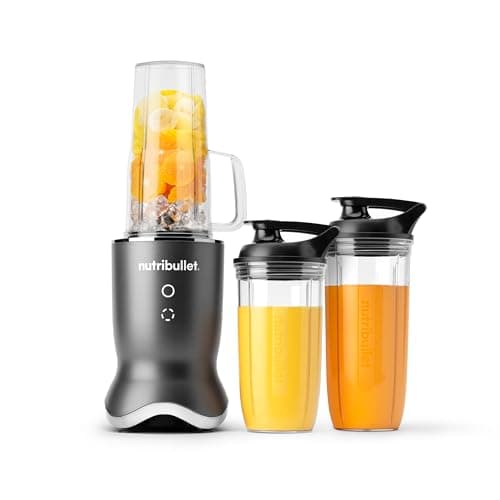
- NutriBullet Ultra —for the runner who blends most days and wants one machine for two drink sizes. 1,200 W published (unqualified, with no peak-or-continuous label — we note that rather than guessing), 24 oz and 32 oz cups in the box, and five years on the blade against one on the machine. It is marketed as NutriBullet’s quietest and publishes no decibel figure at all, so treat the quietness as unverified.
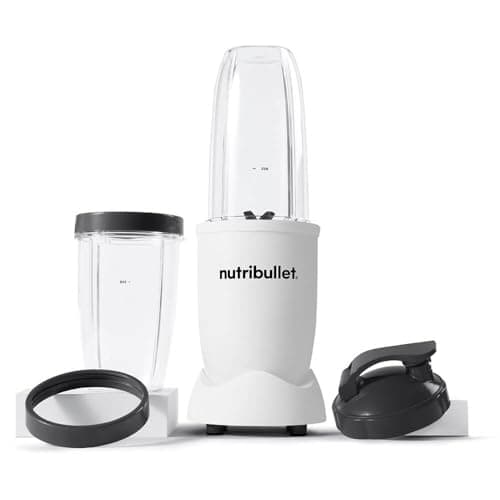
- NutriBullet Pro —for the runner who only ever makes the big one. 900 W and two 32 oz cups, at meaningfully less than the Ultra. The flip side is that 32 oz is the only size in the box, so a modest drink gets blended in a vessel bigger than it needs. One year, cups excluded.
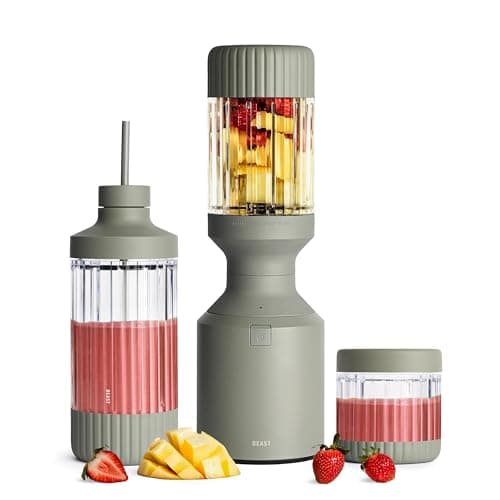
- Beast Mega 1200 —for the biggest single serving and the longest warranty in the single-serve class: two years, where NutriBullet and Ninja both give one. A 1000 mL (33 oz) vessel, 1,200 W stated alongside a 1.6 hp equivalent, and a ribbed vessel designed to disrupt the vortex — which is the mechanism that stops a smooth spin doing nothing to an icy load. Beast is the only brand in our catalog that publishes usable blending capacity separately from total volume.
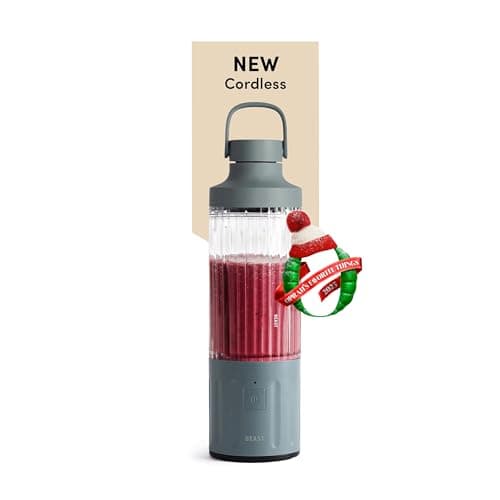
- Beast GO Cordless —for blending where there is no socket: the boot of a car at a trailhead, a race car park, a hotel the night before. Beast publishes 13 cycles of 30 seconds per charge, under two hours to recharge, a 500 mL (17 oz) blending capacity and two years of warranty. It publishes no wattage at all, only an 11.1 V battery, and it is not the machine for a cup of frozen fruit.
The four, side by side
Manufacturer figures only, with the qualifier each maker uses. We publish no frozen-load test result and no decibel figure, because no maker publishes either. | Published power | Vessels | Mains or battery | Warranty |
|---|
| NutriBullet Ultra (1200 W) | 1,200 W, no qualifier published | 24 oz and 32 oz cups | Mains | 1 year machine; 5 years blade |
|---|
| NutriBullet Pro (900 W) | 900 W, no qualifier published | Two 32 oz cups | Mains | 1 year; cups excluded |
|---|
| Beast Mega 1200 | 1200 W; Beast states a 1.6 hp equivalent | 1000 mL (33 oz) vessel | Mains | 2 years |
|---|
| Beast GO Cordless | Not published — 11.1 V 3-cell battery only | 670 mL total; 500 mL (17 oz) blending capacity | Battery, 13 cycles per charge | 2 years |
|---|
The warranty split worth understanding
A blender used most mornings is used harder than the buyer these warranties were written for, and the part that goes first is almost never the motor. It is the blade assembly and the gasket under it — which is why NutriBullet’s Ultra terms are more interesting than they look: one year on the machine, five on the blade. That is the long term on the part that actually fails.
It is also why NutriBullet’s standard exclusion matters. The brand’s warranty excludes cups and accessories, so on the Pro the vessel you use every day is outside the cover. Replacement cups and blade assemblies are widely sold for every NutriBullet, so the practical reading is that they are consumables rather than warranty items. Beast’s two years across the board is the simpler proposition. The whole category is compared on blender warranties compared, and what each maker actually commits to is on how long blenders last.
What a year of daily blending costs
At 18.34¢ per kWh (US EIA, Electric Power Monthly — average residential price, US total, retrieved September 2026) and 3 minutes a day, 365 days a year: about $4.02 a year for the Ultra and the Beast Mega, and $3.01for the Pro. No figure for the Beast GO, because with no published wattage there is nothing to multiply. These are rounding errors next to a pair of shoes, which is the point of publishing them — the arithmetic is on how much a blender costs to run.
The practical notes that are not specifications
Rinse the cup before you leave. A cup that sits in a warm car for an hour with residue in it is the one genuinely unpleasant failure mode of this whole habit, and it also attacks the gasket, which is the part that fails first. How to clean a blender covers the rest.
Put the liquid in first. Every machine on this page blends better with the liquid at the blade end, and on the inverted cups that means pouring liquid in before the solids so it ends up next to the blade when you turn the cup over. If frozen fruit is going in, read whether you have to thaw frozen fruit first — it is the difference between a blend and a stalled motor on the two smaller machines here.
Do not seal anything hot. None of these cups is for hot liquid, and the sealed-cup failure mode is pressure rather than heat: can personal blenders handle hot liquids explains why.
What we have not done, and what we will not claim
We have not blended a recovery drink in any of these machines, we publish no texture score and no seconds-to-smooth figure, and we have no test kitchen. We also make no nutrition, hydration or performance claim anywhere on this page — not a carbohydrate ratio, not a recovery window, not an electrolyte figure — because that is a dietitian’s subject and not a blender site’s. What this ranking is built from is four published specification pages, three warranty documents, and the vessel capacities each maker states. Our method is published in full.
Four checks before you buy
1. Measure the drink, then buy the next size up
Fill your usual bottle with water and measure it. A cup works best filled near its published capacity, so buy the cup that holds your drink comfortably rather than exactly. That is the single reason the Ultra leads this page: both sizes are in the box.
2. Decide whether ice is a regular ingredient
If it is, that is the load that sets the floor on power, and 600 W-class machines are below it. If it is not — if the drink is liquid, powder and soft fruit — you can spend much less and nothing on this page will disappoint you.
3. Work out where the blending happens
At home, buy mains and get a published wattage. At the car, buy cordless and accept that no battery blender in this class moves a frozen load. Best cordless blenders for protein shakes ranks that class in full.
4. Buy the warranty on the part that breaks
Blade assemblies and gaskets fail long before motors on daily-use machines, so a five-year blade term or a flat two-year term is worth more here than a headline wattage. Check whether the cups are covered at all — on one brand here they are explicitly not.