Almost every “best blender” list is built the same way: someone blends a smoothie in a dozen machines over a fortnight, ranks them by how the smoothie tasted, and publishes. We have not done that. We do not own these blenders, we have no test kitchen, and we are not going to pretend otherwise. What we do instead is compile the numbers the manufacturers already publish and that nobody bothers to put in one table.
The three numbers this ranking is built on
Warranty length is the single most decisive published fact in this category, and it is almost never tabulated. It is the manufacturer telling you, in a legally binding document, how long they expect their own motor to survive. When one brand writes a multi-year term into its warranty and another writes twelve months, that gap is not marketing — it is an actuarial judgment each company has made about its own product, and you can read both documents for free.
Annual running cost is the number nobody publishes at all. It is trivially computable — motor power, multiplied by how long you run it, multiplied by what you pay for electricity — and yet across the publishers surveyed for this site, not one showed the sum. The answer is usually small, and that is worth knowing too: it means power draw should almost never decide your purchase, and a page that says so plainly is more useful than one that implies otherwise. We show the full arithmetic on the running-cost guide so you can substitute your own rate and your own habits.
Today’s price— live, from Amazon, with the date it was checked printed next to it. Two of the highest-ranking blender publishers put their prices behind a paywall while ranking first for the exact search that people make because they want to know the price. Ours are free, dated, and they vanish rather than go stale: if our last check is more than 48 hours old, the number disappears and the button falls back to “check price”.
Why the price range in this category is so wide
You can buy a working blender for under fifty dollars and you can spend more than six hundred. The gap is real, but it is not a straight line of “more money, better smoothie”. Roughly, the money goes into four things: a bigger motor, a container shaped to keep food circulating back onto the blades, bearings and couplings built for repeated heavy loads, and a longer warranty backing all three. Everything above that — touchscreens, program presets, app connectivity, self-cleaning cycles — is convenience, and convenience is a legitimate thing to buy, but it is not durability and it should not be priced as if it were.
The practical consequence is that the interesting question is not “which blender is best” but “where on this curve does your actual cooking sit”. Someone making one banana-and-protein shake a day is buying a completely different machine from someone making nut butter and hot soup weekly, and a list that ranks them against each other on a single axis is not answering either person’s question.
The mistake almost everyone makes
Buying on peak wattage. Peak wattage is a number measured at the instant of maximum draw, under conditions the manufacturer chooses, and it is not comparable across brands — one company’s “1,400 peak watts” and another’s continuous rating are describing different things. It is also not what does the work. A well-shaped jar that keeps pulling frozen fruit down onto the blades will out-perform a more powerful motor stirring a cavity of air, which is why tamper design and container geometry matter more than the number on the box. There is more on this in the guide to what blender wattage actually means.
How to use this hub
The ranked list below is the general answer. If you already know your budget, the price-anchored roundups underneath it are faster — under $100 is where the most genuinely competent machines-per-dollar sit. If you know your job rather than your budget, go sideways: smoothies and frozen drinks for use-case-led picks, personal and portable if you drink from the cup you blended in, and immersion if most of what you blend is hot and already in a pot.
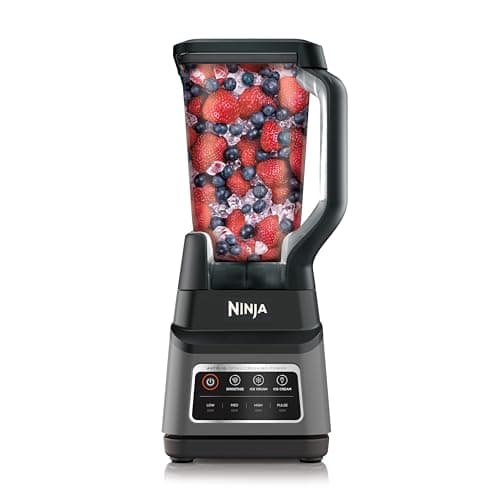
The Ninja Professional Plus BN701 is the best blender for the most people, and the reason is not power. It is the only machine on this page whose manufacturer publishes a continuous wattage next to its peak wattage, which means it is the only one you can honestly compare with anything else. It also gives you 64 oz of usable liquid capacity for roughly a fifth of what the premium machines ask. Its warranty is one year, and that single fact is what the rest of this page is really about.
Why a Ninja wins a list that contains a Vitamix
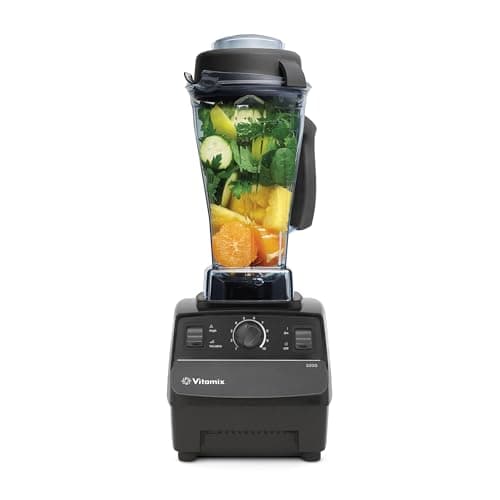
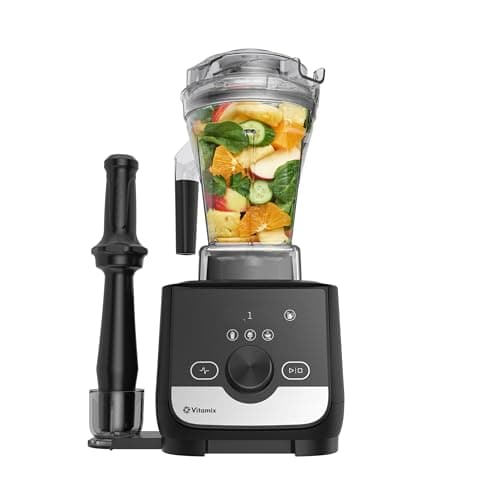
Because the question a ranking answers is not “which of these is the finest machine”. On that question the Vitamix 5200 wins and it is not close: a fully variable dial, a tall narrow 64 oz jar, a tamper in the box, and a seven-year full warranty covering parts, labor and shipping in both directions. Nothing else here is backed for that long. If you want the best blender in this list as an object, buy it and stop reading.
The question a ranking has to answer is which machine most people should put money on, and that turns on how often the extra capability gets used. The premium jar-and-tamper combination exists to defeat cavitation — the failure where a frozen mass bridges above the blades and the blades spin in a pocket of air. It solves that problem beautifully. It solves it on a smoothie bowl, on a nut butter session, on a low-liquid thick load. It does nothing extra on a banana, a scoop of powder, some yogurt and a handful of frozen berries, which is what the overwhelming majority of blender owners actually make, several times a week, for years.
So the BN701 is first because it does the common job to the same standard for a fraction of the outlay, and it is honest about its own numbers while doing it. The Vitamix is second because a seven-year warranty is a genuine, legally binding statement about expected life and it deserves to be near the top of any list that takes durability seriously — but you have to actually need the durability to be buying it well.
The flip condition. If you will make nut butter, smoothie bowls or hot soup in a jar more than a handful of times a year, or if you expect to still own this machine in a decade, the ranking inverts and the Vitamix is your first pick. If you will not, the extra spend buys you a longer warranty on capability you will not call on.
The table, with the two columns nobody else prints
Warranty length and annual running cost are the two most decisive published facts in this category, and across the publishers surveyed for this site neither was ever tabulated. The warranty is the manufacturer’s own actuarial judgment about its own motor, written into a document you can read for free. The running cost is trivial arithmetic on numbers that are already public. Both columns are below.
Running cost assumes 3 minutes a day, 365 days a year, at 18.34¢ per kWh (US EIA, Electric Power Monthly — average residential price, US total, retrieved September 2026). Motor figures are printed in each manufacturer’s own words, because peak watts, continuous watts and nameplate amperage are not interchangeable. Where a brand publishes no wattage at all, the cost cell reads “not published” rather than carrying a conversion.| Machine | Form factor | Published motor | Warranty | Est. cost / year |
|---|
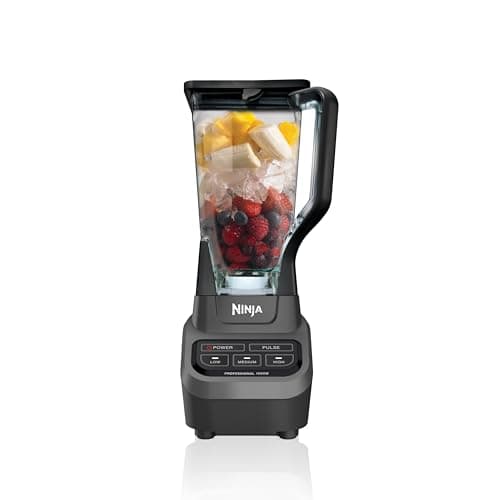
| Ninja Professional Plus BN701 | Full-size countertop | 1,200 W continuous; 1,400 W peak | 1 year limited | $4.02 |
|---|
| Vitamix 5200 | Full-size countertop | 2 HP; 11.5 A at 120 V, no watt figure published | 7 years, full | $4.62 |
|---|
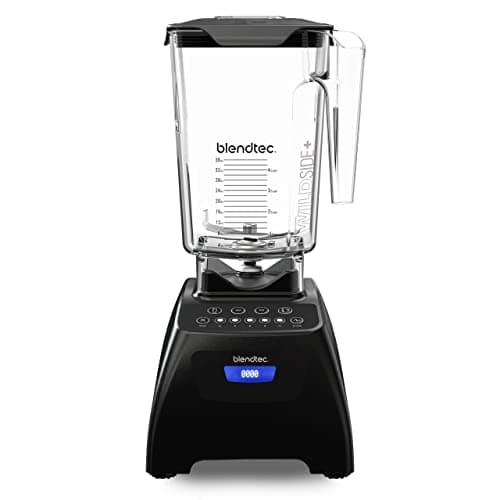
| Blendtec Classic 575 | Full-size countertop | 1,560 W, unlabeled | 2 years parts / 2 years labor | $5.22 |
|---|
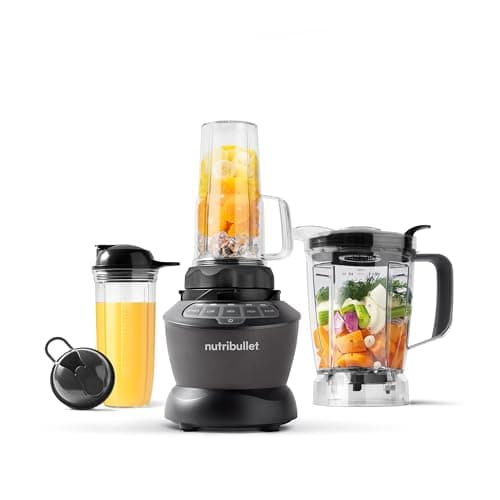
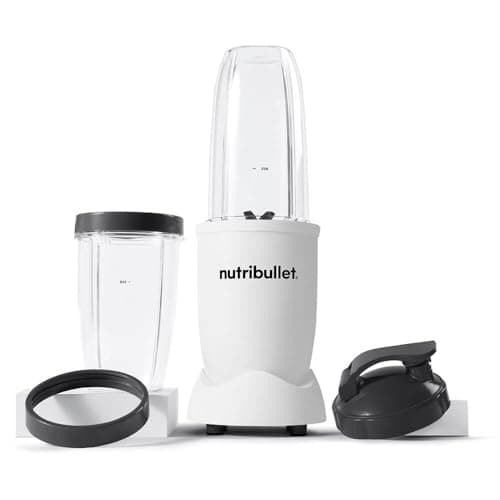
| NutriBullet 1200 W Blender Combo | Pitcher plus cups | 1,200 W, unlabeled | 1 year | $4.02 |
|---|
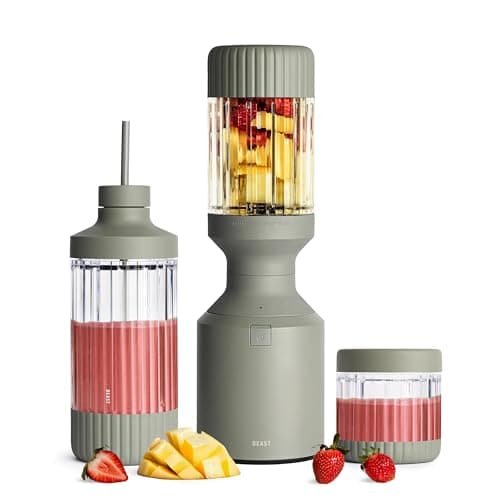
| Beast Mega 1200 | Personal / single serve | 1,200 W, stated as 1.6 hp equivalent | 2 years | $4.02 |
|---|
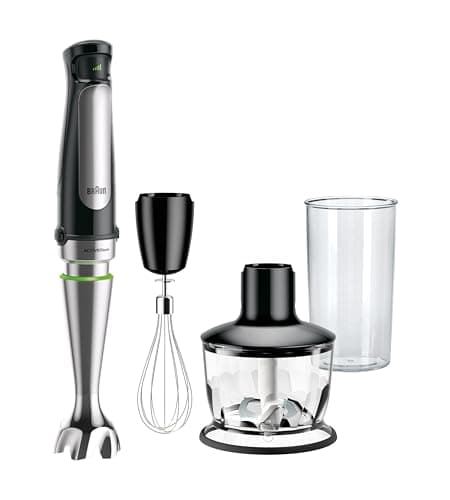
| Braun MultiQuick 7 MQ7035X | Immersion / hand | 500 W input power | 3 years (US) | $1.67 |
|---|
| NutriBullet Pro (900 W) | Personal / bullet | 900 W, unlabeled | 1 year, cups excluded | $3.01 |
|---|
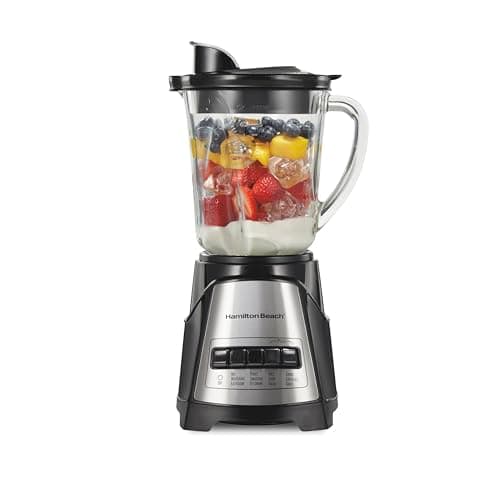
| Hamilton Beach Power Elite Wave Action | Full-size countertop | 700 W peak; 3.7 A on the rating plate | 3 years (US) | $1.49 |
|---|
| Ninja Professional Blender BL610 | Full-size countertop | 1,000 W, from the replacement motor base listing | Not published for this model | $3.35 |
|---|
Two cells in that table deserve a second look. The Vitamix cost figure is our arithmetic on Vitamix’s own nameplate rating, because Vitamix publishes horsepower and amperage but no watt number — 11.5 amps at 120 volts is 1,380 watts, and we show the working rather than quoting a figure Vitamix never printed. The Hamilton Beach figure uses the 3.7 amp rating plate from its manual rather than the 700 peak watts on its product page, because the manual defines peak power as the draw during the first seconds of operation, and your electricity bill is set by what the motor pulls for three minutes.
The ranking, pick by pick
1. Ninja Professional Plus BN701 — best overall
Publishing a continuous wattage alongside a peak one is a small act of candor and almost nobody else in this catalog performs it. It also happens to be the machine with the most usable liquid capacity here at 64 oz, on a 72 oz pitcher, with programs that stop by themselves. What you give up is the tamper and six years of warranty. Skip it if you make thick low-liquid mixtures regularly, because without a tamper that session becomes stop, scrape, restart.
2. Vitamix 5200 — the one to buy if you are buying once
Seven years, full, covering parts, labor and shipping both ways. Vitamix publishes and sells replacement parts, which means a failure in year eight is a repair rather than a write-off — the practical difference between a machine you own and a machine you rent from time. There are no presets, no timer and no self-clean cycle: the money buys a motor, a jar, a tamper and a warranty. Measure your worktop-to-cabinet gap before you commit, because the 64 oz jar is tall.
3. Blendtec Classic 575 — the cabinet-clearance answer
A short jar that clears a standard 18-inch gap, a blunt fixed blade that cannot be installed wrong and is safer to wash, and preset cycles that stop on their own. It also publishes an actual watt figure, 1,560 of them, rather than only a peak horsepower claim. It sits third rather than second for one reason: the warranty. Blendtec’s own schedule puts the Classic 575 at two years parts and two years labor. The eight-year term that circulates for this model belongs to the Designer and Professional lines, and it is repeated wrongly all over this category. Read the schedule before you buy it for the warranty, because the warranty is not what you think it is.
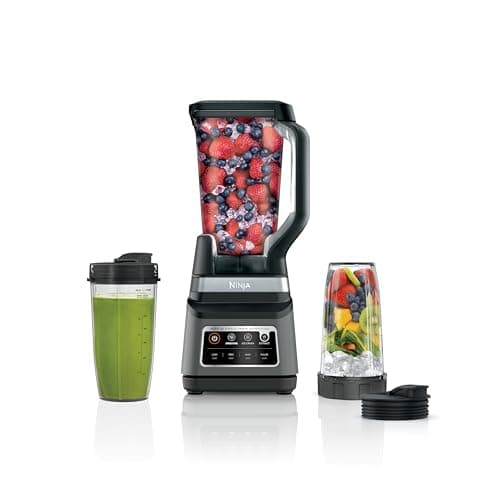
4. NutriBullet 1200 W Blender Combo — two jobs, one motor
A 64 oz pitcher, a 32 oz cup and a 24 oz handled cup on one 1,200 W base. If your household genuinely needs both a family batch and a grab-and-go cup, this is the cheapest honest way to cover both without owning two motors and two footprints. The warranty is one year and NutriBullet’s terms exclude the cups and accessories, which are the parts that actually fail. Skip it if you will only ever use the pitcher: you would be paying for cups destined for a cupboard.
5. Beast Mega 1200 — the personal blender with a real warranty
Two years in a class where one year is the norm, 1,200 W in a 33 oz vessel, and a ribbed vessel wall designed to disrupt the vortex rather than let a smooth spin do nothing. It is the most capable single-serve machine here and it costs accordingly. Thirty-three ounces is one generous serving, not a batch, so if you are feeding more than yourself this is the wrong shape of blender however good the motor is.
6. Braun MultiQuick 7 MQ7035X — the one for hot food
This is on the list because a countertop blender is the wrong tool for soup and a great many buying guides never say so. Blending hot liquid in a sealed jar is a pressure problem, not a heat problem, and an immersion blender removes the sealed vessel entirely. Braun backs this one for three years in the US — triple what most hand blenders carry — and publishes 500 W as input power rather than a peak marketing figure, which is the honest way round. It will not crush ice and it will not make nut butter. See the hot-liquid safety guide before you blend anything hot in anything.
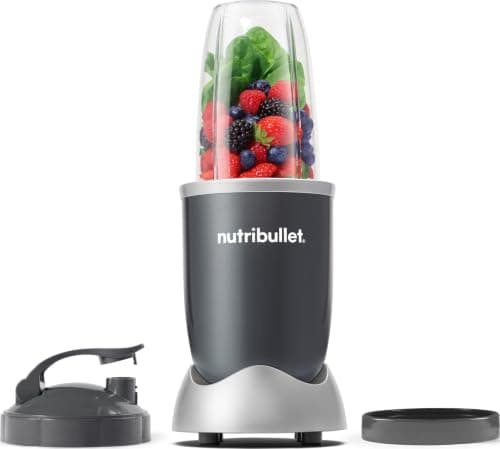
7. NutriBullet Pro — the default bullet blender
Nine hundred watts, two 32 oz cups, and the inverted-cup geometry that puts gravity on the blades’ side, which is the actual reason bullet blenders handle frozen fruit better than their wattage predicts. Replacement cups, lids and blade assemblies are widely sold, and that matters because the gasket is the usual failure. The warranty is one year and explicitly excludes the cups. Do not ask it for anything thick: a narrow cup gives a thick mixture nowhere to move and the motor nowhere to cool.
8. Hamilton Beach Power Elite — most candid, least powerful
The cheapest machine here and the most transparent about its own numbers: Hamilton Beach defines what its peak wattage means in its own manual and prints the true nameplate amperage next to it, which is more candor about wattage than any premium brand in this list offers. Three years of warranty at the bottom of the price range is remarkable. So is the honesty about power, and the honest reading is that 3.7 amps is genuinely low. A 40 oz glass jar packed with frozen fruit and no added liquid will stall it, and no amount of pulsing changes that arithmetic.
9. Ninja Professional Blender BL610 — the cheap one, with an asterisk
For a decade this was the default budget recommendation, and on capability it still earns it: a large pitcher, three speeds, nothing to learn, and it genuinely handles frozen fruit. It ranks last on a site built around sourcing because SharkNinja has withdrawn its product page. The 1,000 W figure comes from Ninja’s own listing for the model’s replacement motor base and the 72 oz pitcher figure from their replacement-pitcher listing — manufacturer sources, but not a spec sheet, and the same page says 71 oz in its in-box text. No warranty term is published for this model at all. That is a real mark against it and it is why it sits at nine rather than higher.
What the running-cost column is actually for
It is there to be dismissed, and that is the point of publishing it. Here is the full sum for the thirstiest machine in the list:
Blendtec Classic 575 — 1560 W ÷ 1,000 = 1.560 kW
1.560 kW × 18.25 hours a year = 28.47 kWh
28.47 kWh × 18.34¢ per kWh = $5.22 a year
And here is the same sum for the most frugal one:
Hamilton Beach Power Elite Wave Action — 444 W ÷ 1,000 = 0.444 kW
0.444 kW × 18.25 hours a year = 8.10 kWh
8.10 kWh × 18.34¢ per kWh = $1.49 a year
The entire spread across nine machines, from a 444 W countertop blender to a 1,560 W one, is a few dollars a year. A number that small should never break a tie, and now you can stop weighing it — which is worth more than a vague reassurance that blenders are cheap to run. Substitute your own electricity rate and your own habits on the running-cost guide, where the arithmetic is laid out in full.
The corollary is uncomfortable for the category: if power draw costs almost nothing, then a higher wattage is not costing you money, and it is also not doing the work that the marketing implies. Jar geometry, blade design and whether a tamper came in the box decide how a blender handles a frozen load. Wattage mostly decides how loud it is.
The warranty column is the one to read twice
Look at the spread. Seven years from Vitamix. Three from Hamilton Beach at the cheapest price on the page, and three from Braun on a hand blender. Two from Blendtec and two from Beast. One from Ninja and one from NutriBullet across their entire lines. Nothing published at all for the delisted BL610.
That is not a ranking of quality and it should not be read as one. It is a ranking of what each company is willing to commit to in writing, priced into what they charge, and the gaps are large enough to be the deciding factor between two machines that will make an identical smoothie. The most useful thing on this page may be that Hamilton Beach offers three times Ninja’s term at a lower price, which is a fact almost nobody puts in a table because it embarrasses the more heavily marketed brand.
The Blendtec correction is worth repeating because it is the clearest example of why we read the primary document. Phase-zero research for this site put the Classic 575 at eight to ten years, matching what most of the category prints. Blendtec’s own warranty schedule puts it at two. Every term in the table above was checked against the manufacturer’s own page, and all of them are tabulated together on the warranty comparison.
Who this list is wrong for
If you want to blend away from a socket.No cordless machine is ranked here, deliberately. The two portables in our catalog publish no usable wattage at all — one gives a battery voltage and nothing else, and the other’s own specification table lists its power as zero watts. They cannot carry a running-cost cell, so they cannot sit in this table honestly. They are covered on the portable roundup, where the missing numbers are the story rather than a gap.
If your budget is fixed. Go straight to under $100, which is where the best capability-per-dollar in this whole category sits, or under $200 if you want a tamper-free full-size machine with real capacity.
If you know your job rather than your budget. A ranking that spans form factors has to average across use cases, and averaging is exactly what makes a recommendation mediocre for a specific job. Ice, frozen drinks and soup each have their own page and their own winner, and in two of those three cases it is not the machine at the top of this one.
The numbers we refused to print
A ranking is partly defined by what it leaves out, and three cells in the table above are conspicuously thinner than what you will read elsewhere. Blendtec publishes a maximum liquid fill of 36 oz for the WildSide+ jar and no total capacity at all, so the 90 oz figure that circulates for that jar is not a manufacturer number and it does not appear here. Magic Bullet publishes no ounce figure for any of the cups it ships, which is unusual and unhelpful, so the cups are described rather than measured. And SharkNinja’s replacement-pitcher listing for the BL610 says 72 oz in its title and 71 oz in its in-box text on the same page, so we print the figure and the contradiction together rather than picking the flattering one.
None of those gaps are difficult to fill if you are willing to repeat what other sites print. They are difficult to fill honestly, which is the whole distinction. A spec cell on this site that cannot be traced to a manufacturer document fails the build rather than rendering — that is a mechanical rule, not a promise, and it is the reason a few cells here read thinner than the competition’s.
What we cannot tell you
Noise. Not one manufacturer in this catalog publishes a decibel figure for any model on this page, so every noise cell on this site reads “not published”. High-power blenders are loud and quiet running is a legitimate buying criterion in an apartment, but there is no published number to rank on and we will not print one we did not measure. NutriBullet markets the Ultra as its quietest single-serve blender and publishes no decibel figure behind the claim; that is exactly the kind of unverifiable claim this site exists to flag rather than repeat.
Nor have we blended anything. There is no test kitchen behind this page and no bench comparison. What is behind it is every manufacturer’s published specification, manual and warranty document, read, tabulated and cited, with the arithmetic shown so you can check it or disagree with the conclusion while accepting the facts. The full method, including what disqualifies a product from a list, is on the methodology page.
How to choose, in the right order
Almost every blender buying guide starts with budget. That is the wrong first question, because the biggest mistake in this category is not overspending — it is buying the wrong shape of machine and then blaming the motor.
Step one: pick the form factor, not the price
A full-size countertop blenderis for batches, frozen fruit and anything thick. It is the only form factor that will make nut butter, and the only one with the jar volume for a family’s worth of smoothie in one go. It is also the biggest thing to store and the most parts to wash.
A personal or bullet blenderis for one serving that you drink from the vessel you blended it in. That is the entire value proposition and it is a real one. The inverted cup puts gravity on the blades’ side, which is why a 900 W bullet handles frozen fruit better than a 900 W pitcher would. It is bad at thick mixtures, bad at batches, and prohibited for hot liquid by most manuals, because the sealed cup is a pressure vessel.
An immersion blender is for anything hot and already in a pot. It is the safest way to blend soup, the easiest blender in the house to clean, and the cheapest of the three. It will not crush ice and it will not make nut butter, whatever its wattage suggests.
If two of those descriptions fit your kitchen, a combo machine that puts a pitcher and cups on one motor base is usually cheaper than two machines and always smaller. If none of them fit, you may be shopping for a food processor, which is a different tool for a different problem — a blender moves food through liquid, a processor cuts food in air. That comparison settles it.
Step two: three things that genuinely justify a premium machine
Sustained thick loads. Nut butter, low-liquid smoothie bowls, dough, thick dips. This is the single most demanding thing a domestic blender is ever asked to do: the motor runs near stall for minutes at a time, cooling airflow is at its worst, and cheaper machines have a thermal cut-out that stops the job halfway. The fix is not more watts. It is a tall narrow jar plus a tamper, and machines sold with a tamper are being honest about needing one. If you do this monthly, buy the expensive machine.
Hot work in a jar.If you insist on blending hot soup in a countertop blender rather than in the pot with a stick blender, the machine’s design matters for safety rather than for texture: vented lids, published maximum fill levels and jar materials that tolerate thermal shock. This is a real reason to spend more, and it is also a real reason to consider spending far less on a hand blender instead.
A decade-long horizon. If you intend to still own this machine in ten years, the warranty term is not a bonus, it is the product. A seven-year full warranty covering parts, labor and shipping, from a manufacturer that publishes and sells spare parts, is a fundamentally different proposition from a one-year limited warranty on a machine with no parts channel. The second is disposable and the manufacturer has told you so in writing.
Step three: three things that do not matter
Peak wattage.A peak figure is measured at the instant of maximum draw under conditions the manufacturer chooses, and it is not comparable across brands. One company’s peak number and another’s continuous rating describe different things, and a third publishes horsepower and amperage instead. A well-shaped jar pulling frozen fruit onto the blades beats a bigger motor stirring a cavity of air, every time. The wattage guide takes this apart properly.
Preset count. Programs that stop by themselves are a genuine convenience and worth something. Twelve of them are not worth twelve times as much as one. A preset is a timer and a speed curve; it is not a capability the machine would otherwise lack, and no preset makes an underpowered motor move a frozen load.
Running cost. We publish an estimated annual electricity cost for every machine on this site specifically so you can stop considering it. At 3 minutes a day, 365 days a year and 18.34¢ per kWh, the whole range across the machines on this page is a few dollars a year. A machine that draws twice the power for half the time costs about the same to run. Nothing in that column should move a decision, and knowing a number is small is as useful as knowing it is large.
The decision rule
Buy the cheapest machine in the right form factor that has a warranty you can live with, unless you will do sustained thick work or expect to own it for a decade — in which case buy the longest warranty you can afford and treat everything else as noise. If that leaves you undecided, the tiebreaker is the tamper, not the wattage. There is a longer version of this on the buying guide, written to be willing to end at a hundred dollars.