HUB 07 · Guides
What You Should Not Put in a Blender
Most lists of this kind mix a genuine hazard in with a dozen things that merely give a disappointing result. This one is sorted by consequence: what can injure you, what breaks the machine, and what simply does not work.
We earn a commission if you buy through our links. It does not change the price you pay, and it does not decide our picks — our selection criteria are published in full. How this works.
There is exactly one item on this list that can injure you, and it is not the one most articles lead with: hot liquid in a sealed vessel. Everything else here costs you a blade, a jar, a motor or a disappointing breakfast. We have sorted the list that way, because a page that files “boiling soup in a bullet cup” next to “dried fruit” is not helping anyone decide what to be careful about.
Dangerous: hot liquid in a sealed vessel
Hot liquid releases steam. In a closed container, steam has nowhere to go, so pressure builds — and the moment the seal gives or you unscrew the lid, the contents come out fast and they are hot. The worst version is a bullet-style cup, where a blade base is screwed on tight and the whole vessel is designed to be airtight. The NutriBullet Pro (900 W) is a sealed-cup machine and this prohibition applies to it directly.
This is the one entry worth reading a whole page about, and we wrote two: the general case on blending hot liquids safely, and the single-serve case on can personal blenders handle hot liquids. The short version: never fill past a third, never seal it, vent the lid, and if you blend hot food often, use a stick blender in the pan instead — the Braun MultiQuick 7 MQ7035X scores highest in our catalogue on hot liquids for exactly this reason.
Damaging: four things that cost you hardware
Bones, pits and stones
Peach and cherry pits, olive stones, chicken bones. Harder than the blade and harder than the jar, so something has to give and it will not be the pit. This is the clearest case of “do not” on the list after hot liquid, and unlike hot liquid the consequence is a repair bill rather than a burn.
A full jar of anything frozen, with no liquid, on a low-amperage machine
Not inherently damaging — damaging when you hold the switch down against a load that is not moving. The motor is working at full draw and doing no work, which is how heat builds. The Hamilton Beach Power Elite Wave Actionpublishes a 3.7 A rating plate in its own manual and its skip line says outright that a dry frozen jar will stall it. The fix is liquid, not persistence: do you have to thaw frozen fruit before blending.
Dry grain, spice and coffee in a wet jar
Not a motor problem — a jar problem. Hard dry particles at blade speed are abrasive, and the haze they leave in a plastic container does not polish out. It is one of the few genuine arguments for glass. Dry work belongs in a container built for it, and which maker publishes one is on best blenders for grinding grains and spices.
Anything above the maximum fill line
The line is there because a blender needs headroom to circulate and because liquid climbs when it spins. Over it, you get a leak past the lid at best and no circulation at all at worst. The Ninja Professional Plus BN701is a useful example of the distinction: SharkNinja publishes 72 oz total and 64 oz maximum liquid as two separate numbers, which is the honest way to state it, since the brim is not the capacity.
Pointless: six things that just give a bad result
- Potatoes, if you want fluffy mash. The blade ruptures the starch granules and you get paste. It is a texture failure rather than a hardware one, and it is almost impossible to undo. The least-bad powered approach is on best blenders for mashed potatoes.
- Coffee beans, if you pull espresso.A blender chops rather than mills, so the output is a mixture of dust and chunks that cannot be dialled in. Fine for cold brew, useless for espresso — can you grind coffee in a blender goes brew method by brew method.
- Dough and thick batter. A blender has no low-speed torque and no hook; it will climb the walls, stall, and load the motor while doing nothing. This is a stand mixer or a food processor job, and the division of labour is on blender vs food processor.
- Dried fruit on its own. Dates, raisins and apricots are sticky rather than hard: they ball up around the blade and stop moving. Soak them first, or add them to a mixture that already has liquid in it.
- Whole fibrous stalks.Celery strings, kale ribs and the woody end of ginger survive blending as recognisable threads, which is where most “why is my smoothie gritty” complaints come from. Chop them, or leave them out.
- Anything you want to keep whole. A blender has one setting conceptually: smaller. If you want chopped rather than pureed, that is a food processor, and a pitcher blender will overshoot every time. The ranking for machines that genuinely do both is on blender and food processor combos.
Things on other people’s lists that we think are fine
Ice. Routinely listed as forbidden and routinely sold as a feature. Every full-size machine we rank is marketed as handling it; what varies is how well, and the ranking is best blenders for crushing ice.
Frozen fruit. Softer than ice. Fine on anything with real power, and the whole point of a smoothie.
Nuts.Fine, and nut butter is one of the jobs premium machines exist for — with a tamper. Without one it is tedious rather than forbidden.
Hot soup in an open, vented, properly-filled pitcher.Fine, and some machines are sold on it. The hazard is the seal and the fill level, not the temperature in itself — which is why we separated the dangerous version out at the top of this page rather than banning the whole category.
What we are not going to tell you
We have not broken a blender to find out where the line is, and we publish no torque figure, no maximum particle hardness and no temperature limit, because no manufacturer publishes them. Everything above is either a published limit read off a maker’s own document — a rating plate, a maximum liquid figure, a stated prohibition — or reasoning about how a blade interacts with a given load, stated as reasoning. Your own machine’s use-and-care document outranks this page every time. Our method is published in full.
Four habits that prevent most of this list
1. Read your own manual once, for the fill lines
Two numbers are worth knowing: maximum liquid, and maximum hot liquid, which is usually much lower. Most of the damaging entries above are fill-level problems in disguise, and the figures are model-specific in a way no general article can cover.
2. If it is not moving, stop
A blender spinning in an air pocket is drawing full power and doing no work, which is the condition that heats a motor. The instinct to hold the switch down longer is the wrong one every time. Stop, add liquid, scrape, or use the tamper if you have one.
3. Match the tool to the job before you buy
Half the entries above are really “this is a different appliance’s job”. Dough is a mixer. Chopping is a processor. Mash is a ricer. Grinding is a burr grinder. Buying a blender to do all of them is how people end up disappointed in a perfectly good blender: blender vs food processor draws the line.
4. If you blend hot food regularly, buy the right form factor
A stick blender in the pan removes the entire hot-liquid hazard, because there is no sealed vessel. That is the real answer for a daily soup cook, and the ranking is on best immersion blenders for soup.
The hardware
The hardware this guide is about
The products this guide refers to, with prices pulled live from Amazon. Prices last checked October 19, 2026. Where we have no verified live price we show none rather than a stale number. Full rankings live in the roundups linked above.
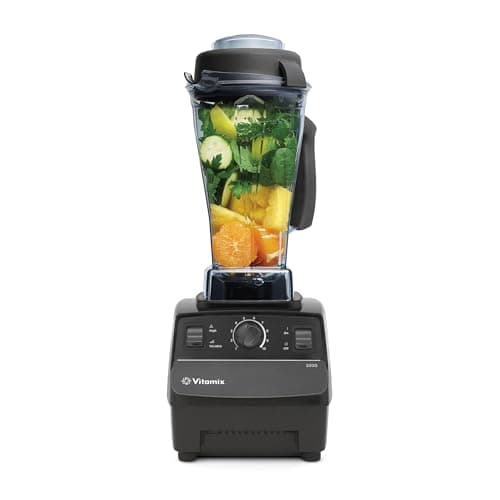
Buying once
Vitamix 5200
The seven-year warranty is the product. A machine with a fully variable dial, a tall narrow jar and a tamper, backed longer than almost anything else at any price.
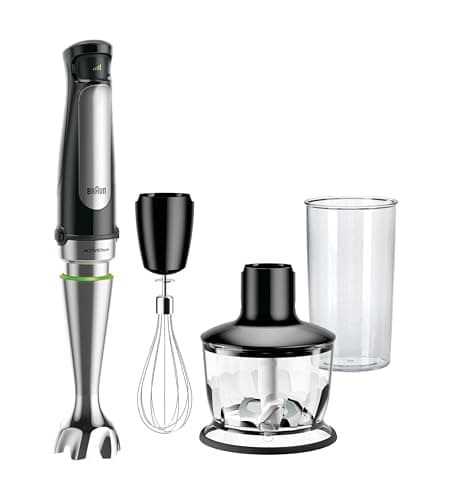
Soup, most weeks
Braun MultiQuick 7 MQ7035X
Three years of US warranty on a hand blender — triple what most rivals offer — and Braun publishes an input-power figure rather than a peak number.
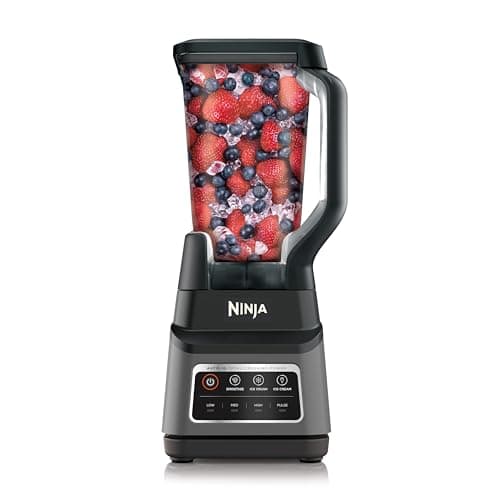
Most kitchens
Ninja Professional Plus BN701
The one brand here that publishes both a continuous and a peak wattage instead of only the flattering one. A large pitcher and real power for about a fifth of the premium price.
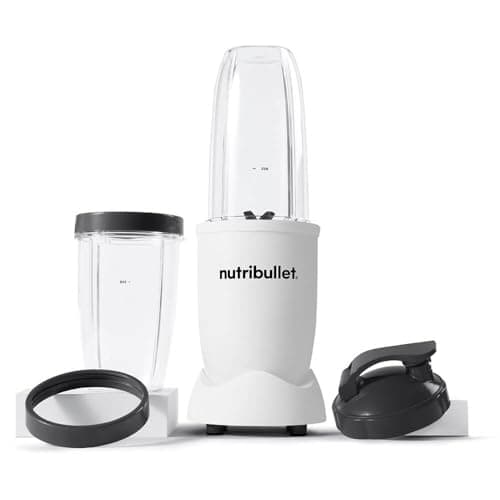
Everyday shakes
NutriBullet Pro (900 W)
The default bullet blender, and a good one. Note that NutriBullet's own product page contradicts itself about which cups are in the box.
#ad · As an Amazon Associate we earn from qualifying purchases.
Questions
Frequently asked
What is the one thing you should never put in a blender?
Hot liquid in a sealed vessel — above all a screw-on bullet cup. Steam cannot escape, pressure builds, and it releases when the lid moves. It is the only entry on this list that can injure you rather than cost you money, and it has its own page: blending hot liquids safely.
Can you put ice in a blender?
Yes. Every full-size machine we rank is sold as able to crush it, and the variation is in how well rather than whether. Low-amperage machines struggle with ice and no liquid, which is a stalling problem rather than a prohibition. The ranking is best blenders for crushing ice.
Will a blender break if you put something hard in it?
Pits, stones and bones can chip a blade or crack a jar, because they are harder than both. Nuts, ice and frozen fruit are softer than the blade and are normal use. No manufacturer in our catalogue publishes a hardness limit, so there is no threshold we can give you — the practical rule is that anything you could not bite through does not belong in there.
Why shouldn't you blend potatoes?
Because the blade ruptures the swollen starch granules and releases free starch, which with water behaves like paste. It is a texture failure, not a machine hazard, and it cannot be fixed by blending more. A ricer is the correct tool, and the least-bad powered options are ranked on best blenders for mashed potatoes.
Can you make dough in a blender?
No, usefully. A blender has no low-speed torque and nothing shaped to knead; thick dough climbs the walls, stalls, and leaves the motor drawing power against a load that is not moving. A stand mixer or a food processor is the tool, and blender vs food processor covers where each line falls.
Can you put hot soup in a Ninja or a Vitamix?
In an open, vented, properly-filled pitcher, yes, and some machines are sold on it — the hazard is a sealed vessel and an over-filled one, not heat in itself. Never in a screw-top single-serve cup. The per-machine detail, including the fill fractions, is on blending hot liquids safely.
Keep reading
Related
- GuidesThe hub this explainer sits in.
- Blending hot liquids safelyThe one entry on this list that can actually hurt you.
- Can personal blenders handle hot liquids?The sealed-cup version of the same prohibition.
- Blender vs food processorWhere half of this list is really a different appliance's job.
- Do you have to thaw frozen fruit before blending?The stalling problem, and the fix that is not persistence.
- How to clean a blenderFor when something on this list already went in.
Receipts
Sources
- NutriBullet — Pro product page
- NutriBullet — warranty terms
- Hamilton Beach — Power Elite blender product page
- Hamilton Beach — Power Elite use and care manual (PDF), rating plate and peak-power definition
- SharkNinja — Ninja Professional Plus BN701 specification table
- Braun Household — MultiQuick 7 MQ7035X product page
- Vitamix — 5200 product page and specification table (64 oz container, tamper included)
We do not run a testing lab and we do not pretend to. Specifications come from the manufacturer's own published documents and from published standards; prices come from the live Amazon API. Where a figure is not published, the page says “not published” rather than guessing. Read the full method.