HUB 07 · Guides
Why Is My Blender So Loud?
The noise is mostly air and resonance rather than the motor, which is why the fixes are about the jar and the load. And there is a second answer worth knowing: no manufacturer here publishes a number you could check.
We earn a commission if you buy through our links. It does not change the price you pay, and it does not decide our picks — our selection criteria are published in full. How this works.
Most of a blender’s noise is not the motor.It is a blunt blade moving through air and liquid at high tip speed, and a stiff jar amplifying that like the body of a drum. That is why the things that actually quieten a blender are a fuller jar, more liquid, a softer surface and a lower speed — and why the thing that does not help is buying a machine whose box says quiet. We will come to that: no manufacturer in our catalog publishes a decibel figure for any machine in it.
The four sources of the noise
1. Blade tip speed
Noise from a spinning blade scales steeply with how fast the tip is moving, and tip speed is rotational speed multiplied by blade radius. A full-size jar blender has a bigger blade than a bullet blender, so at the same rpm its tips are moving faster and it is louder. This is also why the first second of spin-up is the loudest moment: the jar is still mostly air, and air offers the blade almost nothing to work against.
2. Air, which is most of it at the start
A blade in air behaves like a small, badly designed fan: it makes broadband noise and does no useful work. A blade in liquid is loaded, turns more slowly for the same power, and is much quieter. The practical consequence is counter-intuitive — a blender working harder is often quieter than the same blender running empty.
3. The jar as a resonator
Whatever noise is made inside the jar has to get out, and the jar’s walls radiate it. A stiff, thin-walled vessel radiates sound well, which is exactly what you do not want. This is where glass and plastic genuinely differ in character rather than in volume: glass is stiffer and rings, plastic is more damped and rattles. Neither manufacturer publishes a figure for it, so we are describing a mechanism rather than measuring an outcome. Glass vs plastic blender jars covers the rest of that trade.
4. Structure-borne sound through the worktop
A motor base bolted hard to a rigid stone worktop couples vibration into a very large, very stiff panel, which then radiates it into the room. This is the one source you can cheaply and substantially reduce, and almost nobody does.
What actually reduces it
- Put a folded towel or a rubber mat under the base. It breaks the path between the motor and the worktop. This is the single highest-value change available to you and it costs nothing.
- Fill the jar properly and add liquid. A loaded blade is a quieter blade. Half a cup of water in a jar that is struggling is a noise fix as well as a blending fix.
- Start slow, then bring the speed up. The loudest phase is a fast blade in air. On a machine with a variable dial you can skip most of it; on a preset machine you cannot, which is a real argument for a dial.
- Do not blend ice dry.Dry ice-crushing is the loudest thing a domestic blender does, because hard objects are striking steel with nothing damping them. Add liquid and use pulses — what pulse does on a blender explains why that is also the better technique.
- Move it away from a corner. Two hard walls meeting behind a blender reinforce the sound back into the room. Half a metre out makes a difference you can hear.
What does not work: a cardboard box over the top (it muffles the top and radiates from the sides, and it blocks the base’s cooling), or running it at a lower speed for longer on a load that needs power — which just extends the noise.
The uncomfortable part: nobody publishes a decibel figure
Our catalog holds twenty machines from ten brands, spanning roughly ten to one in price. Every single one of them has the same entry in its noise specification cell: not published. Not Vitamix, not Blendtec, not Ninja, not NutriBullet, not Hamilton Beach, not Oster, not Beast, not Braun, not Breville, not All-Clad.
That is not an oversight on our part. It is the actual state of the category, and it has a consequence worth stating plainly: nobody can rank blenders by quietness in a way you can check. Any site that gives you a decibel number for a domestic blender either measured it themselves in a room you know nothing about, or got it from someone who did. Both may be honest and neither is comparable, because the figure depends on the load, the worktop, the microphone distance and the room.
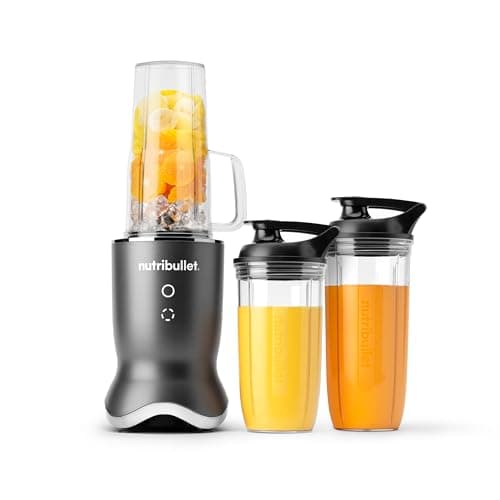
The sharpest illustration in our catalog is the NutriBullet Ultra. NutriBullet markets it as its quietest single-serve blender, and publishes no decibel figure behind the claim at all. We recorded that as a caution rather than a feature, because paying a premium for an unverifiable claim is exactly the thing this site exists to talk people out of. Our commercial page on the subject, best quiet blenders, is built around mechanism and design choices for the same reason — there is no number to rank.
“Why is my blender suddenly louder than it used to be?”
A change in noise is a different question from a high baseline, and it is worth taking seriously. New noise usually means one of four things:
- A worn blade bearing. The sound is a grinding or rumbling that rises with speed, often with a wobble you can feel. Unplug it and turn the blade by hand: grating or play means the assembly. See can you replace blender blades.
- A failing drive coupling. A rattling or clattering under load, sometimes with a loss of power. The plastic dog between motor and blade is a wear part.
- Something loose or lost. A missing non-slip foot, a jar not seated properly, a lid insert rattling in its socket. Check the simple things first.
- The motor itself. A screech or a whine that is new, especially with any smell, is the one to stop on. Read why a blender smells like burning before using it again.
Is a loud blender dangerous to your hearing?
We publish no exposure figure and give no hearing advice, because we have measured nothing and that is a medical and occupational-health subject rather than a kitchen-appliance one. If the noise genuinely bothers you, the honest hardware answers are the mat, the fuller jar, the slow start, and a stick blender for the jobs that do not need a jar at all — the immersion blender buying guide covers that class, which is quieter mostly because the blade is small.
What to look for if noise is your constraint
A fully variable speed dial
The loudest phase of any blend is a fast blade in air, and a dial lets you skip it. Preset-only machines start at the speed the programme says, which is the wrong speed for the first second.
A smaller blade, if the job allows
Tip speed scales with blade radius, so a personal blender is quieter than a full-size one at the same rpm. If your loads are single servings, the small machine is both the cheaper and the quieter purchase.
Non-slip feet and a jar that seats positively
Both are about not coupling vibration into the worktop and not letting parts rattle. They are cheap to check and visible in the product photographs.
And treat every quietness claim as unverified
Until a brand publishes a decibel figure with a stated test method, a quietness claim is marketing copy. At least one machine below is sold on exactly such a claim with no number attached, and we say so on its card. These four are the catalog machines whose control layout, jar material and published noise position are documented — which in every case means the same thing: not published.
The hardware
The hardware this guide is about
The products this guide refers to, with prices pulled live from Amazon. Prices last checked October 18, 2026. Where we have no verified live price we show none rather than a stale number. Full rankings live in the roundups linked above.
A quieter morning
NutriBullet Ultra (1200 W)
More power, a longer blade warranty, and a quietness claim with no number behind it. NutriBullet markets it as their quietest and publishes no decibel figure at all.
Buying once
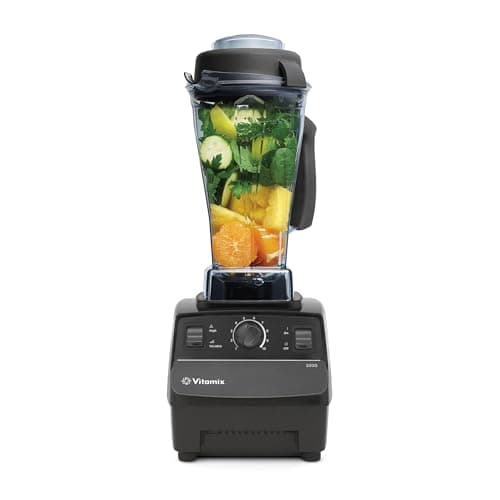
Vitamix 5200
The seven-year warranty is the product. A machine with a fully variable dial, a tall narrow jar and a tamper, backed longer than almost anything else at any price.
The smallest budget
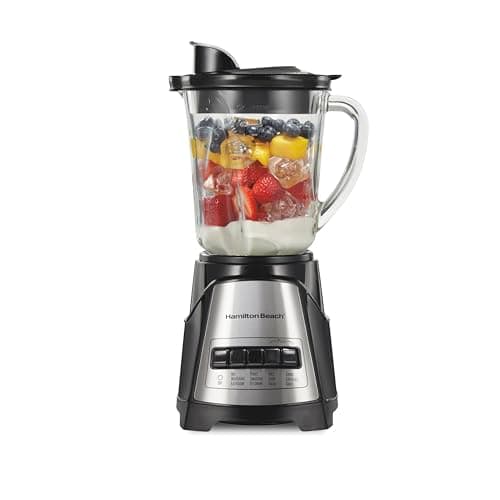
Hamilton Beach Power Elite Wave Action
The cheapest machine here and the most honest about its own numbers: Hamilton Beach defines what its peak wattage means and prints the real nameplate amperage next to it.
Cabinet clearance
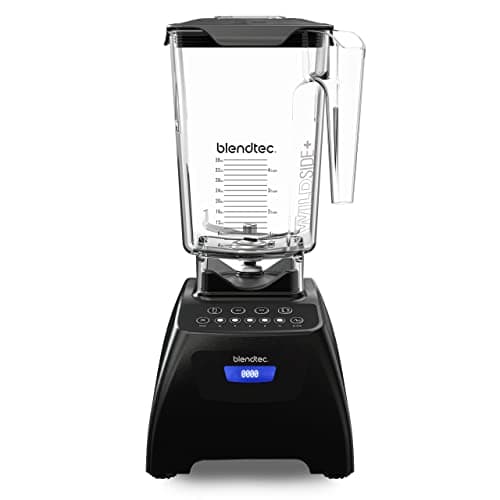
Blendtec Classic 575
A 1,560-watt motor and a blunt, unremovable blade, in a jar short enough to fit under a cabinet. The warranty is two years, not the eight years the internet keeps repeating.
#ad · As an Amazon Associate we earn from qualifying purchases.
Questions
Frequently asked
How many decibels is a blender?
We cannot tell you, and nor can the manufacturers. All twenty machines in our catalog have the same noise specification: not published. Any decibel figure you find for a domestic blender came from a third party measuring in conditions you cannot reproduce, so it is not comparable between machines.
Are expensive blenders quieter?
There is no published evidence either way, and the mechanism cuts both directions: premium machines have more powerful motors and bigger blades, which is louder, and better bearings and mountings, which is quieter. We will not rank them on it, because no brand publishes a number.
Why is my Ninja blender so loud now when it used to be quieter?
A change in noise points at a worn blade bearing, a failing drive coupling, or something loose or badly seated — not at the motor getting louder. Unplug it and turn the blade by hand: grating or wobble means the blade assembly. A new screech with any smell is the one case to stop and read why a blender smells like burning.
Does a glass jar make a blender louder?
Glass is stiffer than plastic, so it radiates sound differently — the character is brighter and more ringing. Whether it is louder overall is not something any manufacturer publishes and not something we have measured, so we describe the mechanism and stop there.
What is the quietest way to use the blender I already own?
Put it on a folded towel, fill the jar properly with enough liquid, start at the lowest speed and bring it up, keep it out of a corner, and never crush ice dry. Those five changes cost nothing and address the four actual sources of the noise.
Are immersion blenders quieter than jar blenders?
Generally, yes, and mostly because the blade is much smaller, so tip speed is lower, and there is no resonant jar for the sound to radiate from. No maker publishes a decibel figure for those either. The class is covered on the immersion blender buying guide.
Keep reading
Related
- All guidesThe hub this explainer sits in.
- Best quiet blendersThe commercial ranking, built on mechanism because there is no number.
- What does pulse do on a blenderWhy pulsing ice is quieter as well as better.
- Can you replace blender bladesWhen new noise means a worn bearing in the assembly.
- Why does my blender smell like burningThe one new noise you should stop for.
- Glass vs plastic blender jarsWhy the two materials ring differently.
Receipts
Sources
- NutriBullet — Ultra product page: marketed as the quietest single-serve blender, with no decibel figure published; 5-year Ultra Rapid Extractor blade
- NutriBullet — warranty terms (1 year machine, 5 years Ultra blade; cups excluded)
- Vitamix — 5200 product page and specification table (variable dial; no presets, timer or pulse; noise not published)
- Hamilton Beach — Power Elite blender product page (pulse and fixed speeds, 40 oz glass jar)
- Hamilton Beach — Power Elite use and care manual (PDF): controls, rating plate and the manual's own definition of peak power
- Blendtec — Classic 575 product page (1,560 W; blunt, unremovable blade; noise not published)
We do not run a testing lab and we do not pretend to. Specifications come from the manufacturer's own published documents and from published standards; prices come from the live Amazon API. Where a figure is not published, the page says “not published” rather than guessing. Read the full method.