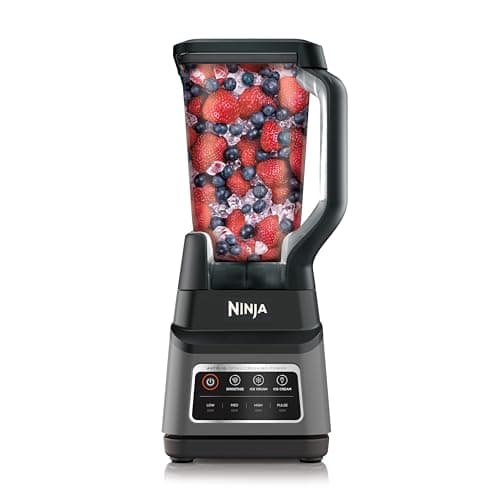
The Ninja Professional Plus BN701 is the pick, and it beats a machine that costs several times as much. For the specific job of turning frozen fruit, liquid and powder into a drinkable smoothie, Ninja publishes a 1,200-watt continuous motor and 64 oz of usable liquid capacity, which is as much jar as the Vitamix 5200 offers. What the extra money buys on the Vitamix is seven years of warranty rather than a better smoothie — a real thing to want, but a different thing from the one this page is ranking.
The five, side by side
Every figure in this table is the manufacturer’s own, in their own words. Where a brand publishes no watt figure — Vitamix does not — the cell says so and the running-cost column uses the nameplate amperage instead, with the sum shown further down. Where a brand publishes a peak figure and a continuous figure, both are printed, because they are not the same number and a table that silently picks one is doing you no favors.
Estimated running cost assumes 3 minutes of blending a day, 365 days a year, at the US average residential rate of 18.34 cents per kWh (US EIA). The Vitamix figure uses the nameplate rating Vitamix publishes, 11.5 A x 120 V, because Vitamix publishes no watt figure; the Hamilton Beach figure uses the 3.7 A rating plate in its manual rather than the 700 peak watts on the box.| Machine | Published motor | Usable capacity | Warranty | Est. cost to run |
|---|
| Ninja Professional Plus BN701 | 1,200 W continuous / 1,400 W peak | 64 oz max liquid (72 oz jar) | 1 year | $4.02 / yr |
|---|
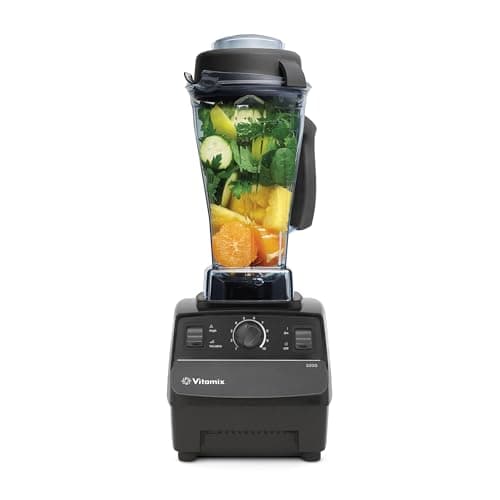
| Vitamix 5200 | 2 HP; 11.5 A at 120 V, no watts published | 64 oz | 7 years | $4.62 / yr |
|---|
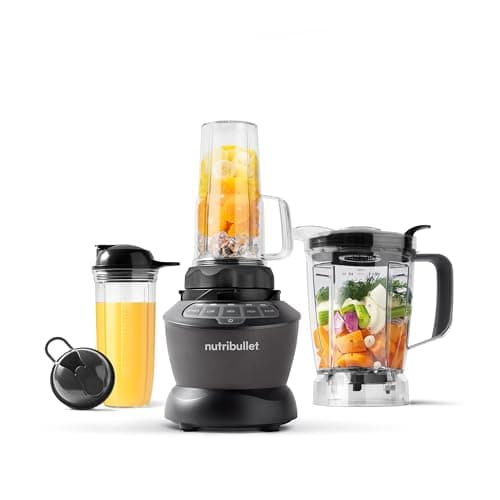
| NutriBullet 1200 W Blender Combo | 1,200 W, unqualified | 64 oz pitcher + 32 oz + 24 oz cups | 1 year | $4.02 / yr |
|---|
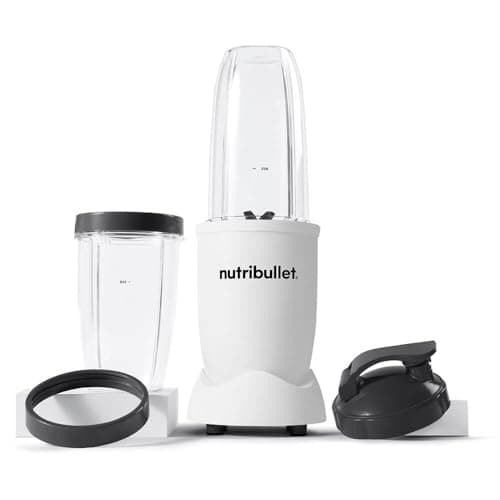
| NutriBullet Pro | 900 W, unqualified | Two 32 oz cups | 1 year | $3.01 / yr |
|---|
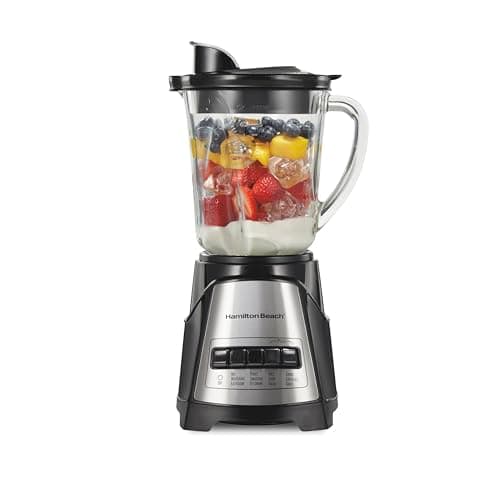
| Hamilton Beach Power Elite | 700 W peak; 3.7 A rating plate | 40 oz glass jar | 3 years (US) | $1.49 / yr |
|---|
1. Ninja Professional Plus BN701 — the value call
Two published facts carry this pick. The first is that Ninja states a continuous wattage alongside its peak wattage — 1,200 W continuous, 1,400 W peak — which almost nobody else in this catalog does. Peak wattage is measured at the instant of maximum draw under conditions the manufacturer chooses; continuous wattage is what the motor sustains while it is actually doing the job. A brand that prints both is handing you the less flattering number voluntarily, and that is worth something on a page built out of spec sheets.
The second is capacity. Ninja publishes 72 oz total and 64 oz maximum liquid for the pitcher, which is the same usable liquid volume as the Vitamix 5200’s 64 oz container. A smoothie for a family of four fits in one run in either machine. On the two specifications that decide whether a smoothie gets made — enough motor to move a frozen load, enough jar to hold the batch — these two are not separated by their documents.
The negative is unambiguous and it is the warranty. One year, against seven. Ninja is telling you, in the only legally binding document either company publishes about durability, how long it expects to stand behind this motor. There is no tamper in the box either, so a thick low-liquid mixture means stopping, scraping the sides down and restarting. If your smoothies are really smoothie bowls, that will annoy you every single time.
2. Vitamix 5200 — buy it for the seven years, not for the smoothie
Ranking the Vitamix second on a smoothie page is a defensible call rather than a contrarian one, and the case for it is short: a smoothie is the easiest job a full-size blender is asked to do. Liquid, soft fruit, powder and frozen fruit, blended for sixty seconds. The Vitamix does it beautifully. So does a machine at a fifth of the price. Where the 5200 pulls away is on loads that barely move — nut butter, low-liquid bowls, thick batters — and on the length of time it is guaranteed to keep doing any of it.
Seven years of full coverage, including parts, labor and shipping in both directions, is the longest term on anything in this list bar the Ascent line. It also comes with a tamper and a fully variable speed dial, which is the combination that actually beats cavitation: the frozen mass bridges above the blades, the blades spin in a pocket of air, and a tamper is how you push the bridge back down. No amount of extra wattage substitutes for that.
Vitamix publishes no watt figure at all for the 5200 — only 2 HP and a nameplate of 11.5 A at 120 V. We use 11.5 x 120 = 1,380 W for the running-cost sum and say so wherever the number appears, because a figure whose derivation is hidden is not a figure you can check. The jar is also tall: measure the gap from your worktop to the underside of your cabinets before you buy, because a $500 machine that lives in a cupboard gets used half as often.
3. NutriBullet 1200 W Blender Combo — the two-jobs machine
One 1,200 W base, a 64 oz pitcher, a 32 oz cup and a 24 oz handled cup. If the household contains one person making a single-serve shake on weekday mornings and someone making a jug of smoothie at the weekend, this covers both without buying two motors or surrendering two patches of worktop. NutriBullet publishes a plain unqualified 1,200 W rather than a peak number, which is a small point of candor worth noting.
It ranks third rather than first because of what the warranty document says. One year, and NutriBullet’s terms explicitly exclude cups and accessories — which is to say, they exclude the parts that actually fail. The gasket in a blend-and-go cup is the single most common failure in this whole category, and it is outside the warranty from day one. Buy this knowing that the cups are consumables.
4. NutriBullet Pro — the shake machine, honestly labeled
900 W and two 32 oz cups. The reason a bullet blender handles frozen fruit better than its wattage suggests is geometry rather than power: the cup inverts onto the base, so gravity is pulling the load onto the blades instead of away from them. That is a genuine mechanical advantage and it is why a 900 W bullet will out-blend a 900 W pitcher machine on a single serving.
The limits are equally mechanical. A narrow cup gives a thick mixture nowhere to move, so smoothie bowls and anything low-liquid will jam it. Both cups in the box are 32 oz, so a modest single shake is blended in a vessel considerably bigger than it needs to be. And the cup is sealed, which means hot liquid is prohibited — the manual says so, and that is a pressure problem, not a fussiness problem. If you want the single-serve format examined properly, the protein-shake roundup ranks this class on cup design and cleaning rather than on watts.
5. Hamilton Beach Power Elite — the cheapest, and the most candid
Last on this list, and included deliberately. Hamilton Beach prints 700 peak watts on the box, then defines peak in its own use-and-care manual as the draw during the first seconds of operation, then prints the actual rating plate right there in the same document: 120 V, 60 Hz, 3.7 A max. That is 444 W of real continuous draw. No premium brand in this catalog is that specific about the gap between its marketing number and its nameplate.
It also carries three years of US warranty at the lowest price here — triple what Ninja and NutriBullet offer at several times the cost — and a 40 oz glass jar that will not cloud or hold odors. What you give up is power and capacity, and you give up a lot of both. At 3.7 A, a jar packed with frozen fruit and little liquid will stall it. Forty ounces is one or two servings, not four. This is the right machine for a banana, yogurt, juice and a handful of berries, and the wrong one for anything more ambitious.
Load the jar in this order. It is free, and it works better than more watts.
Liquid first. Soft ingredients — yogurt, banana, spinach — next. Powders after that. Frozen and hard items last, resting on top. Most manufacturer manuals in this category specify some version of that order, and almost no review page mentions it.
The reason is mechanical rather than mystical. A blade has to be moving something fluid before it can pull anything else down. Load the jar the other way round and the frozen fruit sits directly on the blades, wedging them, while the liquid floats uselessly above the jam; the motor either stalls or spins a cavity of air. Load it in order and the liquid starts a vortex immediately, the vortex drags the frozen layer down from above, and the machine is working with gravity instead of against it. Powders go in the middle because powder added first and dry packs into a paste under the blades — the clumping that gets blamed on the blender is nearly always a loading-order problem.
This single habit will do more for your smoothie than another 300 watts. It is worth being blunt about that, because 300 watts is roughly the entire difference between two price tiers in this category, and the loading order is free and available on every machine you already own.
What a year of daily smoothies costs to run
Nobody in this category publishes this figure, which is odd, because the inputs are all public and the arithmetic is one line. Here it is for the winner, at three minutes of blending a day, every day, at the US average residential electricity rate:
3 min/day x 365 days = 18.25 hours a year
1,200 W / 1000 x 18.25 h = 21.9 kWh
21.9 kWh x 18.34 cents = $4.02 a year
The most power-hungry machine on this page, the Vitamix at its 1,380 W nameplate figure, comes to $4.62 a year. The least, the Hamilton Beach at 444 W, comes to $1.49. The entire spread across the whole list is about three dollars a year, which is the useful conclusion: electricity is not a reason to choose or reject any blender, and anyone implying otherwise is selling something. Substitute your own rate and your own habits on the running-cost guide, which shows every step.
What we cannot tell you
Noise. It is a genuine buying criterion in an apartment or a house with someone asleep at 6am, and it is the worst-documented specification in the category: not one machine on this page has a decibel figure published by its manufacturer. Every noise cell in our catalog reads “not published”, and it will keep reading that until somebody publishes something. We have no test lab and we are not going to invent a dB reading.
We also cannot tell you how any of these feels to use over two years, because we have not used them. What this page is built from is documents — spec tables, use-and-care manuals and warranty schedules — read carefully and put in one table. Our full method is published, including what would get a product removed from a list.
Who should skip all five
If your honest use is one shake a day that you want to drink out of the vessel you blended it in, none of the pitcher machines here is the right purchase and the personal-blender hub is a better place to start. If your budget is the deciding factor rather than the job, the under-$100 roundup is faster. And if what you actually want is a frozen cocktail rather than a smoothie, that is a different problem with a different answer — start with the frozen drinks method, because it is usually a ratio issue and not a hardware one.