Skip to content
BasketBlade

HUB 01 · Best Blenders

The Best Ice Crushing Blenders Under $100

Crushed ice is the hardest thing you can ask a cheap blender to do, and it is the exact load the budget market advertises on. Ranked on the numbers that survive contact with a jar of cubes: continuous draw, where the blades sit, and how much headroom the jar leaves.

By Stephen V.Updated How we pick
#ad

We earn a commission if you buy through our links. It does not change the price you pay, and it does not decide our picks — our selection criteria are published in full. How this works.

The short answer

Quick picks

#ProductBest forScorePrice
01
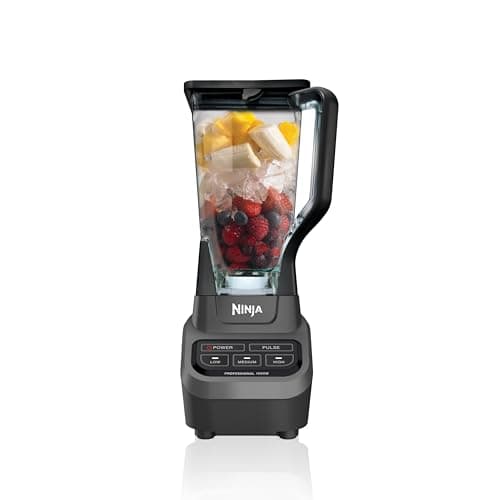
Ninja Ninja Professional Blender BL610
Ninja Professional Blender BL610

The default budget recommendation of the last decade, and now a machine whose own manufacturer no longer publishes a spec page for it. Cheap and capable; poorly documented.

Spending as little as possible
6.2
$79.99Amazon
02
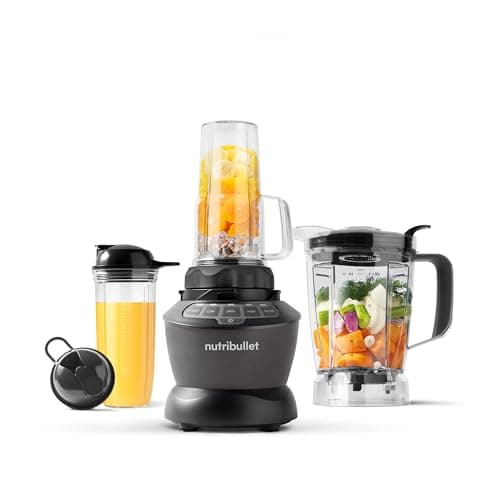
NutriBullet NutriBullet 1200 W Blender Combo
NutriBullet 1200 W Blender Combo

A 64 oz pitcher and two single-serve cups on one 1200 W base — the cheapest honest way to cover both jobs with one motor.

Pitcher and cups, one base
7.5
$89.99Amazon
03
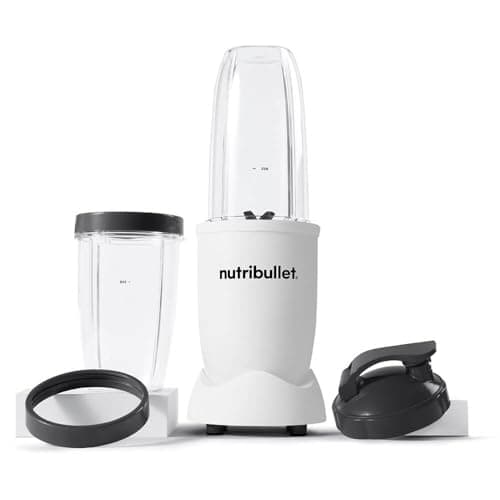
NutriBullet NutriBullet Pro (900 W)
NutriBullet Pro (900 W)

The default bullet blender, and a good one. Note that NutriBullet's own product page contradicts itself about which cups are in the box.

Everyday shakes
7.4
$79.99Amazon
04
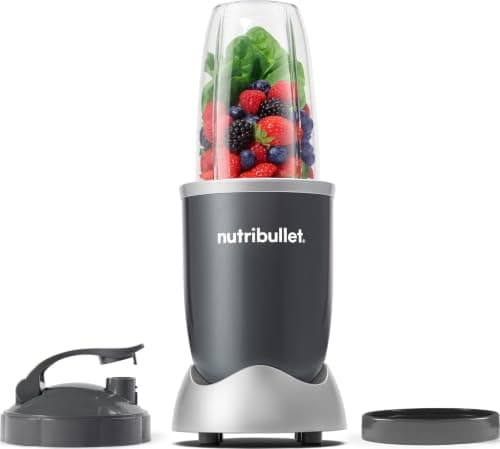
NutriBullet NutriBullet 600
NutriBullet 600

The entry point, and the only machine here that ships a genuinely small cup. 600 watts is enough for the job it is actually bought for.

One modest shake
7.1
$59.96Amazon
05
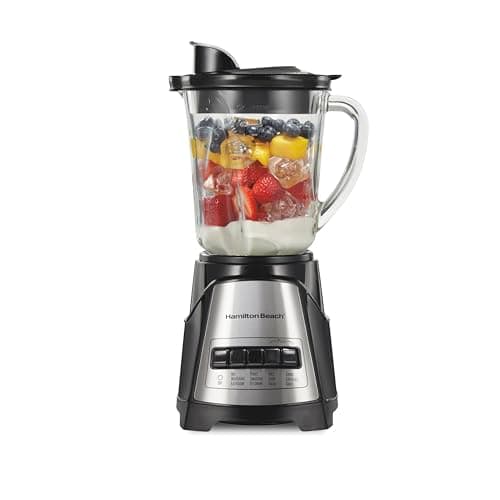
Hamilton Beach Hamilton Beach Power Elite Wave Action
Hamilton Beach Power Elite Wave Action

The cheapest machine here and the most honest about its own numbers: Hamilton Beach defines what its peak wattage means and prints the real nameplate amperage next to it.

The smallest budget
7.0
$39.95Amazon

#ad · Prices pulled live from the Amazon Product API, last checked October 19, 2026. Where we have no verified live price we show none — we would rather leave a gap than print a number that has gone stale. Scores are our own, compiled from published specs; they are not test results.

Buy the Ninja Professional Blender BL610. At the bottom of this market it is the only machine that combines a published four-figure wattage with a full-size pitcher and a blade assembly that reaches up the jar rather than sitting on the floor of it, and those three things are what crushed ice actually requires. The NutriBullet 1200 W Blender Combo is the alternative if you want cups as well as a pitcher. The Hamilton Beach Power Elitefinishes last here despite carrying the longest warranty and the lowest price on the page — and the reason is the most interesting thing in this category.

About the $100 in the title. Our prices come live from Amazon and they move, sometimes several times a week. We cannot promise that every machine below is under $100 at the moment you read this, and any page that promises it is either checking by hand every morning or quietly lying. The live price beside each pick is the authority; if it disagrees with the heading, believe the price. Our prices also carry the time they were last checked, and if that check is more than 48 hours old the number disappears entirely rather than go stale.

Why ice is the load that decides a cheap blender

Every other job a blender does is forgiving. A banana gives way. Yogurt gives way. Even frozen fruit is mostly water bound up in soft cell walls, and it softens the moment it starts to move. A cube of ice does none of that: it is hard, it is slippery, and it is lighter than the liquid around it, so it rides up the jar wall and orbits the blade instead of meeting it.

That combination is why ice is the single best diagnostic load in the category. It punishes a motor that cannot hold its speed under a shock, it punishes a jar that is too wide at the base, and it punishes a blade that sits too low to reach anything floating. A machine that crushes ice well will do everything else on your list; a machine that stalls on ice will disappoint you in half a dozen other ways you have not thought of yet.

The criteria, in the order they matter

1. Continuous power, not peak power

This is the whole game under $100, and one manufacturer on this page is candid enough to explain why. Hamilton Beach defines peak power in its own Power Elite manual as the measure of the motor wattage during the first seconds of operation, and then names the load that demands it: this is when a blender requires the most power to crush ice, frozen fruit, etc.

Read that twice, because it is an admission the rest of the budget market does not make. The big number on the box is measured during a burst, and ice is the load that forces the burst. The useful question is what the motor draws for the nextninety seconds, and the only machine here that publishes an answer is the same one that defined the term: its rating plate says 120 V, 3.7 A max, which is 444 W of real continuous draw. The arithmetic behind peak-versus-continuous claims across the whole catalog is on blender wattage explained.

2. How high the blades reach

A single blade on the floor of a jar can only cut what sinks. Ice floats. That is the entire mechanical argument for the stacked blade tower on the Ninja, which puts cutting edges at several heights in the pitcher so that cubes riding the wall still meet steel. It is also why a bullet blender does better on ice than its wattage suggests: the cup is narrow enough that nothing can orbit out of reach in the first place.

3. Jar shape, and the headroom you leave in it

A wide, shallow jar is the worst shape for ice, because cubes have somewhere to go. A narrow jar, or a big jar filled only a third full, keeps the load circulating through the blade instead of around it. The counter-intuitive consequence: on ice, a 64 oz pitcher half-empty outperforms the same pitcher filled to the line, and a 32 oz cup can beat both.

4. Pulse, because ice has to be struck rather than stirred

Continuous running lets a jar of cubes settle into a stable orbit around a cavity. Pulsing collapses it: the motor stops, the load falls back onto the blade, and the next burst meets a completely different arrangement. Six one-second pulses do more to a jar of ice than thirty seconds of continuous running, and that is true on every machine here. What pulse does on a blender is the mechanism in full.

5. Jar material, because ice is what scars a jar

Dry-crushing ice is abrasive, and plastic jars cloud and scuff from it faster than from anything else you will put in them. Glass does not, which is a genuine point in the Hamilton Beach’s favor even though it loses this ranking on power. Glass vs plastic blender jars is the longer argument, and it cuts both ways: glass is also the heaviest jar to lift when it is full of ice water. If you plan to rack the jar rather than rinse it, what each manufacturer says about the dishwasher matters more than it looks — two of the brands on this page publish restrictions.

6. Warranty, because ice is the duty that kills budget motors

Shock loading is hard on a motor, and a machine used mostly for frozen drinks works harder than one used for smoothies. That makes warranty length a more meaningful number here than it is on a page about soup. It is also where the ranking gets uncomfortable, because the machine with by far the best warranty term on this page is the machine least able to do the job. Blender warranties compared puts every term in one table.

Why the Hamilton Beach finishes fifth

It carries three years in the US and five in Canada, it has a glass jar, it is the cheapest thing on this page, and we rank it last. That deserves an explanation rather than a shrug.

The reason is in Hamilton Beach’s own documentation, and it is a two-part finding. First, the rating plate: 3.7 A at 120 V is 444 W continuous, which is less than half what the Ninja’s base is rated at and roughly a third of the NutriBullet Combo’s published figure. Second — and this is the part nobody quotes — the Processing Foods chart in that same manual lists coffee beans, parmesan, baking chocolate, nuts, chopped vegetables, cookie crumbs and superfine sugar, with quantities and blending times for each. It never lists ice.

Hamilton Beach names ice once, in the paragraph explaining why peak wattage is quoted at all, and then declines to put it in the chart that tells you how to do things. We are not going to read a prohibition into that silence, and we are not going to pretend it is an endorsement either. What we will say is that the machine’s own catalog entry already warns that it will stall on frozen fruit blended without added liquid, and crushed ice is that problem with the liquid taken away. Buy it for milkshakes, soft fruit and sauces, where it is genuinely good value for what it costs. Do not buy it to make frozen margaritas every Friday.

The pick we will not rank

The Magic Bullet is a legitimate recommendation on our under $100 roundupand it has no business on this one. Its published motor is a 250 W base — a quarter of the Ninja’s figure — and the cups are designed around chopping, single shakes and small sauces. Asking it for crushed ice is not a question of patience; it is a question of whether you want to hear a motor work that hard. We have left it off the ranking rather than list it fifth with a warning attached, because a rank implies a recommendation and this is not one.

The same logic applies to the smallest machine we didrank. The NutriBullet 600 is here at number four because its narrow cup genuinely helps on ice and because 600 W is enough for a cup of cubes with liquid in it, not because it is a frozen-drinks machine. Whether personal blenders can handle ice is the full answer to that, and it is more nuanced than either yes or no.

What a year of ice costs to run

Almost nothing, and it is worth saying so plainly because wattage is the number this whole page turns on and it is easy to leave a reader thinking the big motor is expensive to own. At 18.34¢ per kWh (US EIA, Electric Power Monthly — average residential price, US total, retrieved September 2026) and 3 minutes a day, 365 days a year, the Ninja’s 1,000 W works out at about $3.35 a year, the NutriBullet Combo’s 1,200 W at $4.02, and the Hamilton Beach’s real 444 W continuous draw at $1.49.

The gap between the most and least powerful machine on this page is a few dollars a year. Electricity is never the reason to choose between blenders, and anyone selling you a low-wattage machine on running cost is selling you a rounding error. The full arithmetic, with the rate and the usage assumption both stated, is on how much a blender costs to run.

Where the documentation runs out

Two warnings about the winner, because the site’s whole claim is that the numbers trace to a manufacturer document and the BL610’s barely do.

SharkNinja has withdrawn the product page for the BL610. The 1,000 W figure above comes from the company’s own listing for the model’s replacement motor base, and the 72 oz pitcher figure from its replacement-pitcher listing — both manufacturer sources, and both weaker evidence than a spec sheet. No warranty term is published for the model at all: Ninja states one year on every current blender page and nothing on this one.

That cuts both ways. A withdrawn page is a real mark against a machine on a site built around sourcing. But the fact that SharkNinja still sells a replacement motor base and a replacement pitcher for it is also the best evidence on this page that a budget blender can be repaired rather than replaced — which parts you can actually replace goes brand by brand.

If the ceiling is flexible

Ice is the one load where the next price bracket buys something you can feel rather than something you can only read about: more continuous torque, a tamper to push a thick frozen mixture back into the blade, and in the premium case a container designed to be run dry. If $100 is a preference rather than a wall, the ranking without a price ceiling is the best blenders for crushing ice, and the frozen-cocktail version of the same question is the best blenders for frozen drinks.

If it is a wall, buy the Ninja and pulse it. That is the honest short answer, and the three paragraphs of caveats above are what we owe you for giving it.

What we have not done

We have not crushed ice in these machines, timed a jar of cubes, or measured a stall. We own no blenders and we do not pretend otherwise. This ranking is built from what the manufacturers publish — rating plates, wattage figures, vessel sizes, warranty documents and, in Hamilton Beach’s case, a food chart and the absence of an entry in it — combined with the ordinary physics of why a floating solid behaves the way it does in a spinning liquid. Where a figure is not published, the cell says so.

In detail

The picks, in full

01
Ninja Ninja Professional Blender BL610

Spending as little as possible

Ninja Professional Blender BL610

Cheapest capable full-sizeManufacturer page withdrawn
6.2/10

The default budget recommendation of the last decade, and now a machine whose own manufacturer no longer publishes a spec page for it. Cheap and capable; poorly documented.

Warranty
4
Documentation
3
Frozen
7.5
Value
9.5
Convenience
7

What it gets right

  • Consistently the least you can spend on a full-size machine that genuinely handles frozen fruit
  • Simple three-speed control with no programs to learn
  • Very widely sold, so replacement jars and blade assemblies are easy to find

What it doesn't

  • SharkNinja has withdrawn the product page, so the capacity and other figures circulating for it cannot be confirmed against a manufacturer source — we will not repeat them as specs
  • One-year warranty
  • No tamper, and the stacked blade tower makes washing fiddly

What it costs to run

About $3.35 a year in electricity, at 3 minutes a day, 365 days a year and 18.34¢ per kWh.

SharkNinja no longer publishes a product page for the BL610. The 1,000 W figure comes from their own listing for the model's replacement motor base, which is a manufacturer source even though it is not a spec sheet. Treat it as weaker evidence than the BN701's published table. The full arithmetic is published.

Skip this if…

…you want documented specifications — this is the one machine in our list whose manufacturer no longer publishes a page for it, and on a site built around sourcing that is a real mark against it.

$79.99on Amazon

$109.9927% off

Price last checked October 19, 2026. Prices move constantly — Amazon's at checkout is the one that counts.

#ad · we may earn a commission from this link to Ninja Professional Blender BL610

02
NutriBullet NutriBullet 1200 W Blender Combo

Pitcher and cups, one base

NutriBullet 1200 W Blender Combo

Pitcher + two cups1-year warranty
7.5/10

A 64 oz pitcher and two single-serve cups on one 1200 W base — the cheapest honest way to cover both jobs with one motor.

Warranty
3.5
Versatility
9
Frozen
7.5
Capacity
8.5
Value
9

What it gets right

  • One 1200 W base covers a family pitcher and two single-serve cups, at less than the price of most standalone full-size machines
  • 64 oz pitcher is genuine batch capacity, not a token one
  • NutriBullet publishes a plain unqualified watt figure rather than a peak number
  • Cups and blades are the standard NutriBullet parts, which are easy to replace

What it doesn't

  • One-year warranty, and NutriBullet's terms exclude cups and accessories
  • No tamper, so thick low-liquid mixtures in the big pitcher mean stopping and scraping
  • Two vessel systems is more to store than a single-jar machine

What it costs to run

About $4.02 a year in electricity, at 3 minutes a day, 365 days a year and 18.34¢ per kWh.

NutriBullet publishes 1200 W with no peak or continuous qualifier. The full arithmetic is published.

Skip this if…

…you will only ever use the pitcher — you are paying for cups you will store in a cupboard, and a single-jar machine at the same price gives you a longer warranty.

$89.99on Amazon

$129.9931% off

Price last checked October 19, 2026. Prices move constantly — Amazon's at checkout is the one that counts.

#ad · we may earn a commission from this link to NutriBullet 1200 W Blender Combo

03
NutriBullet NutriBullet Pro (900 W)

Everyday shakes

NutriBullet Pro (900 W)

Blend-and-go cupCups not covered by warranty
7.4/10

The default bullet blender, and a good one. Note that NutriBullet's own product page contradicts itself about which cups are in the box.

Warranty
3.5
Frozen
7.5
Convenience
9.5
Cleaning
8
Value
8.5

What it gets right

  • Inverted cup design puts gravity on the blades' side, which is genuinely why bullet blenders handle frozen fruit better than their wattage suggests
  • You drink from the vessel you blended in — the entire reason to own one
  • Replacement cups, lids and blade assemblies are widely sold, which matters because the gasket is the usual failure
  • 900 W is real power for a single serving

What it doesn't

  • One-year warranty, and it explicitly excludes the cups and accessories — the parts that actually fail
  • Two 32 oz cups and nothing smaller, so a single modest shake is blended in a vessel bigger than it needs
  • Sealed cup: not for hot liquid, and the manual says so

What it costs to run

About $3.01 a year in electricity, at 3 minutes a day, 365 days a year and 18.34¢ per kWh.

NutriBullet publishes '900 watts of power' with no peak or continuous qualifier, and lists a 900 W motor base in the box contents. We take it at face value and note the absence of a qualifier. The full arithmetic is published.

Skip this if…

…you make anything thick — nut butter, low-liquid smoothie bowls, dough. The narrow cup gives a thick mixture nowhere to move and the motor nowhere to cool.

$79.99on Amazon

$99.9920% off

Price last checked October 19, 2026. Prices move constantly — Amazon's at checkout is the one that counts.

#ad · we may earn a commission from this link to NutriBullet Pro (900 W)

04
NutriBullet NutriBullet 600

One modest shake

NutriBullet 600

18 oz cup — genuinely small1-year warranty
7.1/10

The entry point, and the only machine here that ships a genuinely small cup. 600 watts is enough for the job it is actually bought for.

Warranty
3.5
Frozen
5.5
Convenience
9
Cleaning
8.5
Value
9

What it gets right

  • The 18 oz short cup is the only properly single-serving vessel in this list; everything else starts at 22 oz and goes up
  • 600 W is enough for banana, yogurt, powder and a handful of frozen berries, which is what most people actually make
  • Cheapest way into the NutriBullet accessory ecosystem, where replacement cups and blades are easy to find
  • Small enough to leave out on a worktop without it dominating

What it doesn't

  • 600 W is the least power here and it shows on a cup packed with frozen fruit
  • One-year warranty
  • No variable speed — it runs at one speed and you control it by how long you press

What it costs to run

About $2.01 a year in electricity, at 3 minutes a day, 365 days a year and 18.34¢ per kWh.

NutriBullet publishes 600 W with no peak or continuous qualifier. The full arithmetic is published.

Skip this if…

…you blend mostly frozen fruit with little liquid — at 600 watts in a narrow cup, that load stalls, and pulsing it repeatedly is how the motor gets cooked.

$59.96on Amazon

Price last checked October 19, 2026. Prices move constantly — Amazon's at checkout is the one that counts.

#ad · we may earn a commission from this link to NutriBullet 600

05
Hamilton Beach Hamilton Beach Power Elite Wave Action

The smallest budget

Hamilton Beach Power Elite Wave Action

3-year warrantyGlass jarPeak watts, defined
7.0/10

The cheapest machine here and the most honest about its own numbers: Hamilton Beach defines what its peak wattage means and prints the real nameplate amperage next to it.

Warranty
7.5
Candor
9
Frozen
4.5
Capacity
5
Value
9

What it gets right

  • Three years of warranty at the lowest price in this list — triple what Ninja and NutriBullet offer at several times the cost
  • Hamilton Beach defines 'peak power' in its own manual and prints the true nameplate amperage, which is more candor about wattage than any premium brand here shows
  • Glass jar rather than plastic: no clouding, no odor retention, dishwasher-safe without anxiety
  • The jar pours without dripping down the side, which sounds trivial until you own one that does

What it doesn't

  • Genuinely low power — 3.7 A is a fraction of what the premium machines draw, and it shows on a full jar of frozen fruit
  • The glass jar is heavy, and 40 oz is small for a family batch
  • No tamper, no variable dial

What it costs to run

About $1.49 a year in electricity, at 3 minutes a day, 365 days a year and 18.34¢ per kWh.

Hamilton Beach publishes 700 'peak' watts and defines peak in its own manual as the draw during the first seconds of operation. The rating plate in that manual says 3.7 A max, so the real continuous draw is 3.7 A x 120 V = 444 W. We use the plate figure, because the running cost depends on what the motor draws for three minutes, not for the first second. The full arithmetic is published.

Skip this if…

…you blend frozen fruit without added liquid — at 3.7 amps this machine will stall, and no amount of pulsing changes the arithmetic.

$39.95on Amazon

Price last checked October 19, 2026. Prices move constantly — Amazon's at checkout is the one that counts.

#ad · we may earn a commission from this link to Hamilton Beach Power Elite Wave Action

Buying for ice under $100: what to check on the box

Find the continuous figure, or treat the big one as marketing

A wattage with no qualifier is not a continuous rating. If the packaging says “peak”, it is telling you about the first few seconds. If it gives an amperage on the rating plate, multiply by 120 and you have the real number. One manufacturer on this page does both, and it is the cheapest one.

Look at where the blades sit, not how many there are

Blade count is a marketing number. Blade height is a mechanical one: edges at several levels in the jar meet floating cubes, and a single blade on the floor does not. This is the one visible feature that correlates with real ice performance at this price.

Match the vessel to the batch, and then under-fill it

A big pitcher is not an advantage on ice unless you are making a big batch. If you make one or two drinks, a 24 to 32 oz cup keeps the load trapped against the blade, which is worth more than several hundred watts. If you have the pitcher, fill it a third full and pulse.

Check whether pulse is a real momentary switch

The useful kind springs back when you let go, so you control the burst and the coast-down is automatic. A latching button labeled “pulse” is a speed setting with a nice name, and it will not do the collapse-and-fall trick that actually breaks a jar of cubes apart.

Decide whether you want glass

Ice scuffs plastic faster than any other load, so glass stays clear for longer and takes detergent and heat without complaint. The costs are weight and, at this price point, motor power — the glass-jarred option here is also the least capable. Pick the constraint you care about; you cannot have both under $100.

Add liquid, whatever the machine

Dry-crushing a full jar of cubes is the harshest thing you can do to any of these motors. A splash of water or juice gets the load circulating and turns a stall into a blend. Every machine on this page works better that way, and the cheapest one only works that way.
How we picked

Blenders we claim to have tested: 0

Every site in this category tells you they blended twenty smoothies. We have not blended any, and we say so. Here is what we do instead: read the manufacturer's manual and spec sheet, record the published motor rating, jar capacity and warranty term, verify the warranty against the manufacturer's own warranty document, work out what the machine costs to run for a year and show the arithmetic, and cite all of it so you can check the work. Prices come live from Amazon's API and disappear rather than go stale.

The scores above are judgments from that documented research — not test results. The full rubric, including what disqualifies a product, is published in full.

Questions

Frequently asked

What is the best ice crushing blender under $100?

The Ninja Professional Blender BL610, on the combination of a published 1,000 W motor base, a 72 oz pitcher and a blade assembly with edges at several heights in the jar. The NutriBullet 1200 W Blender Combo is the alternative if you want single-serve cups as well as a pitcher. Both sit at the top of this price band rather than the bottom of it.

How many watts do you need to crush ice?

There is no published threshold, and we will not invent one. What the documents support is narrower and more useful: the advertised number is usually a peak figure measured in the first seconds, and the continuous draw is what gets you through a jar. The only machine here that publishes its continuous rating is the Hamilton Beach, at 3.7 A - about 444 W - and it is also the one we rank last for this job.

Can a personal or bullet blender crush ice?

Better than its wattage suggests, because the cup is narrow enough that cubes cannot orbit out of the blade’s reach. It is still a cup-sized job with liquid in it rather than a pitcher of dry cubes. Can personal blenders handle ice is the full answer.

Why is the cheapest blender on this page ranked last?

Because of its own manual. The Hamilton Beach Power Elite’s rating plate says 3.7 A max - 444 W continuous - and the Processing Foods chart in the same manual gives instructions for coffee beans, parmesan, chocolate, nuts, vegetables, crumbs and sugar while never listing ice. It is good value for softer loads and a three-year warranty; it is not a frozen-drinks machine.

Should I crush ice dry or with liquid?

With liquid, on every machine at this price. A splash of water or juice gets the load circulating through the blade instead of sitting in a cavity above it, which is the difference between crushed ice and a stalled motor. Dry-crushing a full jar is the harshest thing you can ask a budget blender to do.

Does crushing ice damage a blender?

It is the hardest duty a domestic blender takes, and no manufacturer in our catalog publishes a duty cycle or a limit, so there is no threshold we can honestly give you. What we can say is that shock loading is what warranty terms exist for, which is why warranty length carries more weight on this page than it would on one about soup. If the base gets hot or smells, stop - what a burning smell means covers what to do next.

Is crushed ice the same job as blending frozen fruit?

No, and the difference matters when you are choosing. Frozen fruit is mostly water in soft cell walls and starts giving way as soon as it moves. Ice stays hard, stays slippery and floats, so it orbits the blade instead of meeting it. A machine that handles frozen fruit will not necessarily handle cubes.

Keep reading

Receipts

Sources

We do not run a testing lab and we do not pretend to. Specifications come from the manufacturer's own published documents and from published standards; prices come from the live Amazon API. Where a figure is not published, the page says “not published” rather than guessing. Read the full method.