HUB 02
Countertop and High-Power Blenders
The $60-to-$650 category, where the price gap is enormous and the marketing is loudest. We rank on the four things manufacturers actually publish: power, capacity, warranty and what a year of use costs in electricity.
We earn a commission if you buy through our links. It does not change the price you pay, and it does not decide our picks — our selection criteria are published in full. How this works.
Start here
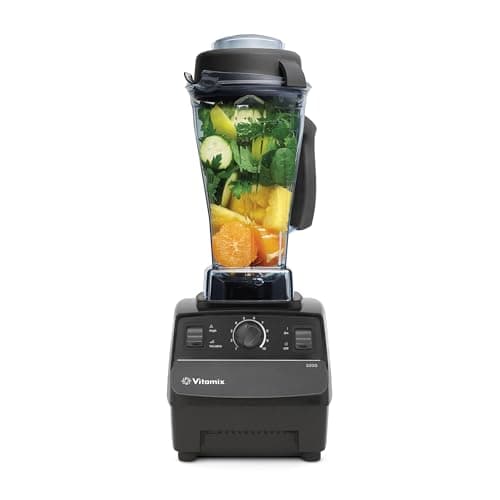
The Best High-Power Blenders
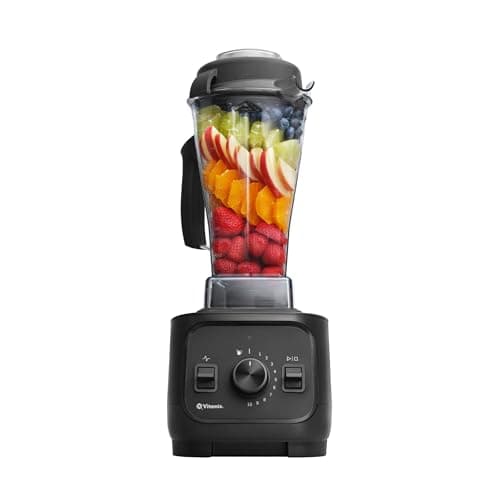
Our top pick: Vitamix 5200 — The seven-year warranty is the product. A machine with a fully variable dial, a tall narrow jar and a tamper, backed longer than almost anything else at any price.
A countertop blender is a motor, a coupling, a blade assembly and a jar, and the entire price range of this category comes down to how seriously each of those four is built. This is the hub for full-size machines — the ones that live on the worktop with a jar big enough for a family batch. Personal blenders are a different purchase with different logic, and they live over here.
What you are actually paying for
The motor and its rating. Brands do not describe motor power the same way. Some publish continuous watts, some publish peak watts measured at stall, and some — Vitamix being the well-known example — publish horsepower and a nameplate amperage instead of a watt figure at all. These are not interchangeable, and any comparison table that lists them in a single column without saying which is which is quietly misleading you. Where a manufacturer publishes a figure we print it in their own words, and where they do not, we say so.
The jar. The most underrated component in the category. A tall narrow jar creates a vortex that pulls ingredients down onto the blades; a wide low one is better for big batches but tends to cavitate — the blades spin in a pocket of air while frozen fruit sits above them, untouched. This is why a tamper exists, and why a machine sold with one is usually being honest about needing it. It is also why the same motor performs very differently in two different containers from the same brand.
The coupling. The drive dog between motor and jar is the part that typically fails first on cheap machines, and it is almost never mentioned in a review. Metal couplings outlast plastic ones. Warranty length is the closest thing to a public signal about how confident the manufacturer is here.
Where the money genuinely stops mattering
Above roughly the mid-hundreds, additional spend mostly buys convenience and warranty rather than capability: presets, timers, quieter housings, app control, self-cleaning. Those are real benefits and some people should buy them. But if your honest use is smoothies with frozen fruit four times a week, a competent hundred-dollar machine will do it, and the difference you will notice most is not smoothie texture — it is how long the machine lasts, which is exactly what the warranty comparison is for.
Running cost is not a reason to buy or avoid anything
We publish an estimated annual electricity cost for every machine here because nobody else does, and because the honest conclusion is useful: for a blender running a few minutes a day, the figure lands in low single-digit dollars a year, whatever you buy. That is worth knowing precisely so you can stop weighing it. A machine that draws twice the power for half the time costs about the same to run, and neither number should move your decision. The full arithmetic, with the electricity rate we used and where it came from, is published in full.
Noise: what we can and cannot tell you
High-power blenders are loud, and quiet operation is a genuine buying criterion in an apartment or an early-morning household. It is also the spec with the thinnest published data in this entire category: most manufacturers publish no decibel figure at all, and of the publishers surveyed for this site, only one had measured noise, and only on a fraction of its line-up. We will not invent a dB reading we did not take. Where a manufacturer publishes one, we print it and attribute it; where they do not, the cell says “not published”, and that is the honest state of the information.
Before you buy
Measure the gap between your worktop and the underside of your wall cabinets. Full-size blenders are commonly 17 to 20 inches tall assembled, and standard US cabinet clearance is 18 inches — which is how people end up storing a $500 machine in a cupboard and using it half as often. Check the jar height with the lid on, not the base height. If the clearance is tight, a low-profile jar or a shorter machine is worth more to you than another two hundred watts.
Everything in this hub
All of Countertop Blenders
Roundup
The Best High-Power Blenders
The Vitamix 5200 wins on a seven-year warranty rather than on power. The interesting result is that the cheapest machine here has the most honest spec sheet.
Top pick: Vitamix 5200 · 5 ranked, 5 with live prices
$474.99on Amazon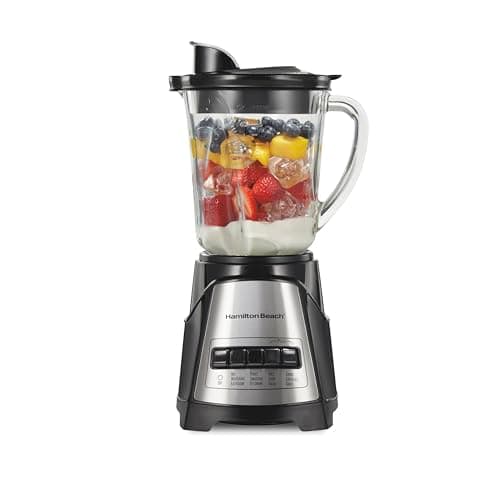
Roundup
The Best Quiet Blenders (and the Number Nobody Publishes)
No maker publishes a dB figure, so this page reasons from published power and vessel design instead of quoting a fake number. Ranked by likely quietness against real capability.
Top pick: Hamilton Beach Power Elite Wave Action · 5 ranked, 5 with live prices
$39.95on AmazonRoundup
The Best Blenders for Hot Soup
Venting, speed control and jar material decide this, not watts. The Vitamix 5200 leads the countertop machines - and a stick blender beats all of them.
Top pick: Vitamix 5200 · 5 ranked, 5 with live prices
$474.99on Amazon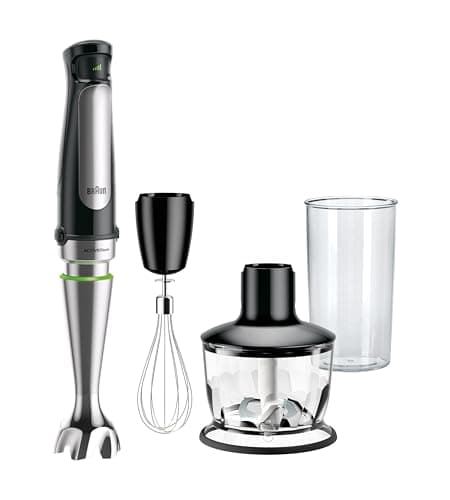
Roundup
The Best Blender and Food Processor Combos
Most combos are a blender with extra cups, not a processor. What each type really does, and the one that genuinely chops as well as blends.
Top pick: Braun MultiQuick 7 MQ7035X · 5 ranked, 5 with live prices
$109.95on AmazonRoundup
The Best Blenders for Baby Food
Small, hot and thick is the hardest combination for a big jar. Ranked on batch size, staining and hot-fill safety - not on watts.
Top pick: Braun MultiQuick 7 MQ7035X · 5 ranked, 5 with live prices
$109.95on AmazonRoundup
The Best Blenders for Nut Milk and Oat Milk
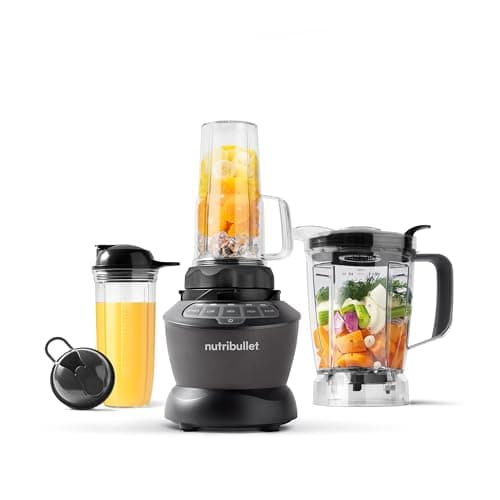
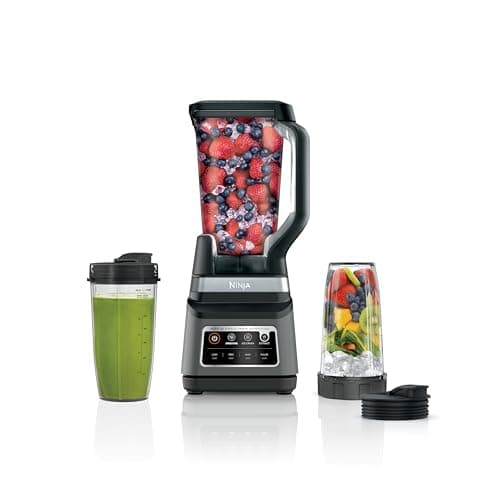
The Vitamix 5200 takes it on grind fineness and a 64 oz container that does a full batch. The Ninja BN701 is the value pick for the same batch size; the NutriBullet Ultra makes a single glass without a pitcher to wash.
Top pick: Vitamix 5200 · 5 ranked, 5 with live prices
$474.99on Amazon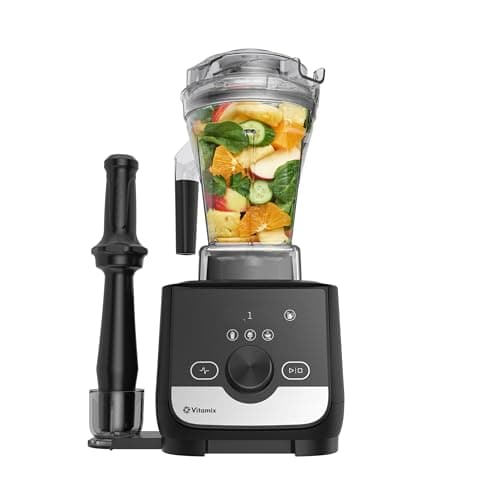
Review
Vitamix Ascent X3 Review
Ten years full warranty, a 48 oz container with the S2 tamper in the box, three programs with a self-clean, and 17 inches of height that clears a standard cabinet. The jar is a third smaller than the 5200's, at the highest price in the catalog.
Top pick: Vitamix Ascent X3
$374.99on AmazonRoundup
The Best Blenders for Grinding Grains, Spices and Coffee
Flour, spices, coffee and wheat berries ask the opposite of a blender than a smoothie does. Five machines ranked on dry work, led by the one with a manufacturer-published dry container behind it.
Top pick: Vitamix 5200 · 5 ranked, 5 with live prices
$474.99on AmazonRoundup
The Best Blenders With Glass Jars
Glass jars are a budget-blender feature, not a premium one, and the catalogue proves it. The two machines that publish one, ranked, plus the plastic answer for each reason people ask.
Top pick: Hamilton Beach Power Elite Wave Action · 5 ranked, 5 with live prices
$39.95on AmazonRoundup
The Easiest Blenders to Clean
The machine you will actually keep using is the one you do not dread washing. Five ranked on part count, blade geometry and published cleaning programs - not on power.
Top pick: Braun MultiQuick 7 MQ7035X · 5 ranked, 5 with live prices
$109.95on Amazon
Filed elsewhere, written for you
Also worth reading
These live under a different section of the site but answer the same question a countertop blenders buyer is actually asking.
Comparisons
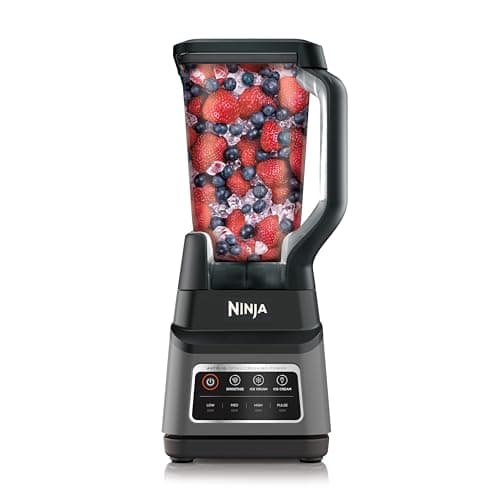
Ninja BN701 vs Vitamix 5200
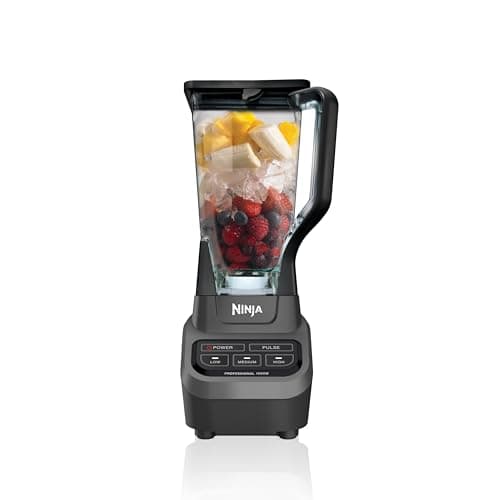
Ninja publishes 1,200 watts continuous and 1,400 watts peak. Vitamix publishes no watt figure at all for the 5200 — only 2 HP and an 11.5 amp nameplate. The decisive published difference is the warranty: one year against seven.
Top pick: Ninja Professional Plus BN701
$89.99on Amazon