Skip to content
BasketBlade

HUB 03 · Personal Blenders

The Best Personal Blenders for Smoothies

A smoothie is the load that separates these machines. Frozen fruit, ice and fibrous greens are what a 600-watt cup cannot move and what dulls a blade, so this page ranks on power, vessel shape and what the warranty document actually covers.

By Stephen V.Updated How we pick
#ad

We earn a commission if you buy through our links. It does not change the price you pay, and it does not decide our picks — our selection criteria are published in full. How this works.

The short answer

Quick picks

#ProductBest forScorePrice
01
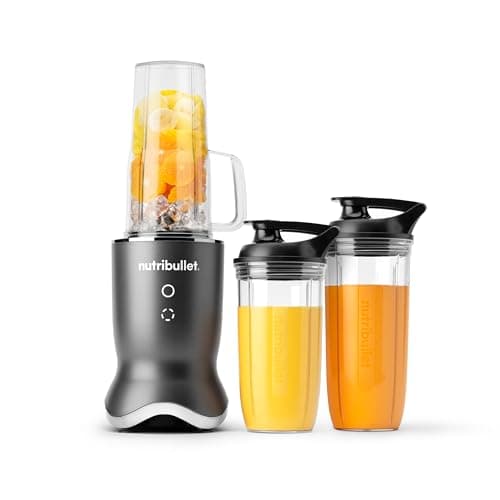
NutriBullet NutriBullet Ultra (1200 W)
NutriBullet Ultra (1200 W)

More power, a longer blade warranty, and a quietness claim with no number behind it. NutriBullet markets it as their quietest and publishes no decibel figure at all.

A quieter morning
7.3
$140.99Amazon
02
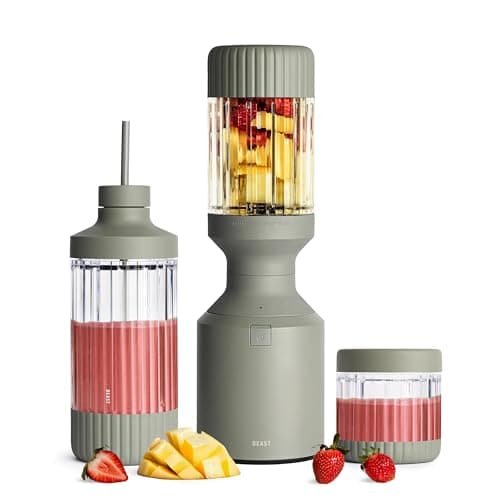
Beast Health Beast Mega 1200
Beast Mega 1200

Two years of warranty in a class where one is standard, and the only brand here that publishes usable blending capacity separately from total vessel volume.

Honest capacity figures
7.7
$219.00Amazon
03
NutriBullet NutriBullet 1200 W Blender Combo
NutriBullet 1200 W Blender Combo

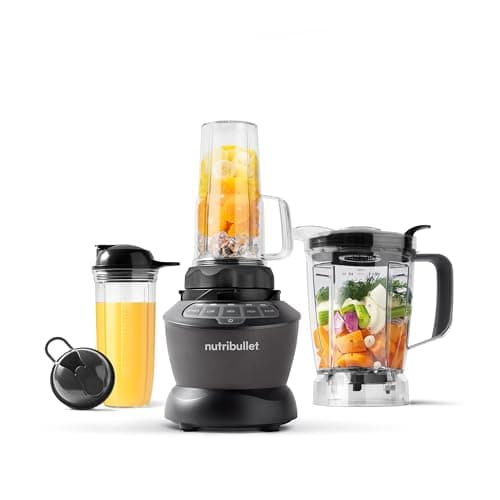
A 64 oz pitcher and two single-serve cups on one 1200 W base — the cheapest honest way to cover both jobs with one motor.

Pitcher and cups, one base
7.5
$89.99Amazon
04
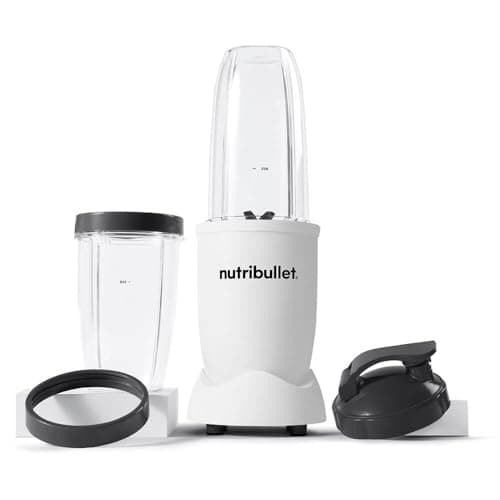
NutriBullet NutriBullet Pro (900 W)
NutriBullet Pro (900 W)

The default bullet blender, and a good one. Note that NutriBullet's own product page contradicts itself about which cups are in the box.

Everyday shakes
7.4
$78.00Amazon
05
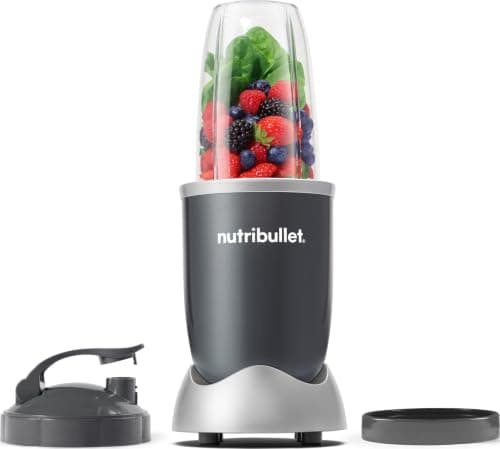
NutriBullet NutriBullet 600
NutriBullet 600

The entry point, and the only machine here that ships a genuinely small cup. 600 watts is enough for the job it is actually bought for.

One modest shake
7.1
$59.96Amazon

#ad · Prices pulled live from the Amazon Product API, last checked Sep 4, 2026. Where we have no verified live price we show none — we would rather leave a gap than print a number that has gone stale. Scores are our own, compiled from published specs; they are not test results.

The NutriBullet Ultra is the pick for smoothies: 1,200 published watts, the most in this class, and five years of warranty on the blade assembly against one year on the machine. Frozen fruit is what dulls a blade, so that split is the most relevant warranty fact in the category. The Beast Mega 1200 is the better piece of hardware for roughly twice the money.

A smoothie is not a protein shake, and the ranking changes because of it. Our protein-shake ranking says plainly that wattage is close to the wrong question there, because powder in liquid is nearly the easiest load in blending. Put frozen banana, ice and a fistful of kale in the same cup and the opposite is true. Every machine below is ranked for the harder job, which is why the order is different from that page.

Why a smoothie is a harder load than a shake

Three things in a smoothie are difficult, and none of them is the powder. The first is frozen fruit, which has to be fractured rather than stirred. A frozen banana or a cup of frozen berries is effectively a solid, and a motor that copes fine with whey in milk will bog down against it, especially in the first two seconds before anything has broken loose.

The second is low liquid. The thicker you like a smoothie, the less liquid there is to carry ingredients into the blades, and the more the mixture behaves like a solid plug that simply rotates with the cup instead of passing through the cutting zone. This is why a smoothie bowl is harder than a drinkable smoothie, and why the honest answer to a stalled blend is usually more liquid rather than more watts.

The third is fiber. Kale, spinach, celery and berry seeds do not dissolve; they are cut, and how finely they are cut is the whole difference between a smooth drink and a gritty one. Grittiness in a finished smoothie is almost always un-blended fiber or seed rather than a fault in the machine, which is covered in the green-smoothie ranking.

Put those together and the criteria for a smoothie machine are simply not the criteria for a shake machine. Power stops being decorative. Vessel shape starts to matter more than the watt figure printed on the base. And the blade assembly, which is the part that meets the ice, becomes the component whose warranty you should actually read.

How this page is ranked.Published motor ratings quoted exactly as each manufacturer words them, with the qualifier noted when there is one and its absence noted when there is not. Cup and vessel capacity as published. Warranty terms from each manufacturer’s own warranty document, read for what is covered rather than what is advertised. Where a figure is not published, the cell says so rather than carrying an estimate. We own none of these machines and have blended nothing in any of them. The full method.

Running cost assumes 3 minutes a day, 365 days a year at 17.45¢ per kWh (US EIA, Electric Power Monthly — average residential price, US total, retrieved July 2026). Every motor figure below is the manufacturer’s own published number, reproduced with its qualifier or with a note that none was given.
MachinePublished motorVesselsWarrantyCost / year
NutriBullet Ultra (1200 W)1,200 W, no qualifier24 oz and 32 oz cups1 year machine, 5 years blade$3.82
Beast Mega 12001200 W; stated as 1.6 hp equivalent1000 mL (33 oz) vessel2 years$3.82
NutriBullet 1200 W Blender Combo1200 W, no qualifier64 oz pitcher, 32 oz and 24 oz cups1 year, excludes cups$3.82
NutriBullet Pro (900 W)900 W, no qualifierTwo 32 oz cups1 year, excludes cups$2.87
NutriBullet 600600 W, no qualifier24 oz and 18 oz cups1 year, excludes cups$1.91

The ranking

1. NutriBullet Ultra — the blade warranty is the reason

At 1,200 watts it is tied for the most power in this class, and NutriBullet publishes that figure plainly, with no peak or continuous qualifier attached. For a frozen load that matters more than it does anywhere else in the single-serve category: the first seconds against a solid block of fruit are exactly where a smaller motor gives up.

What puts it first, though, is the warranty split. NutriBullet covers the machine for one year and the Ultra Rapid Extractor blade for five. On a page about ice and frozen fruit, that is the single most relevant piece of warranty documentation in our catalog, because the blade is the component the load acts on and dulling is the failure people actually report. Two cup sizes in the box, 24 oz and 32 oz, also means a thick smoothie can be made in a vessel that suits it rather than in a 32 oz cup filled a third of the way.

The honest deductions: one year on the machine itself is short, and NutriBullet markets the Ultra as its quietest single-serve blender without publishing a decibel figure anywhere, so that claim cannot be checked against anything. If quietness is what you are paying the premium for, you are paying for an unverifiable claim. Full detail in the Ultra review.

2. Beast Mega 1200 — better hardware, roughly twice the money

The same 1200 watts, stated by Beast as the equivalent of 1.6 horsepower, and two years of warranty on the whole machine in a class where one year is the norm. For someone running frozen loads every morning, doubling the cover on the motor is a real argument and not a marketing one.

Its smoothie-specific advantage is the vessel. The Beast vessel is ribbed, and the ribs exist to disrupt the vortex — the smooth rotating column that forms in a plain cylindrical cup and lets a thick mixture spin as one mass without ever passing through the blades. That is the exact failure mode of a low-liquid smoothie, and it is addressed by shape rather than by watts.

It is second because of price and capacity, not performance. It costs substantially more than the mainstream bullet blenders it competes with, and 33 oz total is one generous serving rather than a batch — if two people want smoothies you are blending twice. Beast publishes no decibel figure either, and a 1200 W motor in a small vessel is not quiet. See the Mega 1200 review.

3. NutriBullet Blender Combo — if the smoothies are not just yours

Every other machine on this page makes one smoothie at a time. This one puts a 64 oz pitcher and two single-serve cups on the same 1200 W base, which is the cheapest honest way to cover both jobs with one motor. If you make smoothies for a household in the morning and a single cup at the weekend, the arithmetic favors this over owning a bullet blender and later buying a pitcher machine as well.

The trade-offs are real. The warranty is one year and NutriBullet’s terms exclude cups and accessories, which are the parts that fail. There is no tamper, so a thick low-liquid mixture in the big pitcher means stopping the machine and scraping down rather than pushing the mass into the blades while it runs. And two vessel systems is more to store. Detail in the Combo review.

4. NutriBullet Pro — the one most people should actually buy

900 watts is less than the three machines above it and more than enough for the smoothie most people actually make: frozen berries, a banana, some yogurt or milk, a handful of greens. The inverted cup design is why it copes better than the watt figure suggests — the vessel screws onto the base upside down, which puts gravity on the blades’ side and keeps feeding the load into the cutting zone instead of letting it ride above it.

It is the value pick rather than the compromise. The deductions are the one-year warranty that explicitly excludes cups and accessories, and the fact that the box contains two 32 oz cups and nothing smaller, so a modest smoothie is blended in a vessel larger than it needs. Skip it if you make genuinely thick smoothie bowls or nut butter — a narrow cup gives a thick mixture nowhere to move and the motor nowhere to cool. Full write-up in the Pro review.

5. NutriBullet 600 — the floor, and where it stops

600 watts, a 24 oz tall cup and an 18 oz short cup, at the lowest price here. The 18 oz cup is the only properly single-serving vessel on this page, and for a smoothie built on soft fruit, yogurt and liquid it is entirely sufficient. It is also the cheapest way into the NutriBullet accessory ecosystem, where replacement cups and blades are easy to find.

Its limit is specific and worth stating before you buy rather than after: at 600 watts in a narrow cup, a load of frozen fruit with little liquid will stall, and pulsing repeatedly at a stalled load is how a small motor gets cooked. It also has no variable speed — it runs at one speed and you control it by how long you press. If frozen fruit is in most of your smoothies, buy one of the four above instead. See the 600 review.

The short version. Frozen fruit most mornings, one serving: NutriBullet Ultra. The same job with a bigger budget and a preference for hardware over price: Beast Mega 1200. Smoothies for more than one person: the Blender Combo. Soft fruit and the occasional frozen handful: the Pro, and you will not feel short-changed. A tight budget and no ice: the 600.

Related reading

If a single-serve cup is not actually a requirement, the full-size ranking at best blenders for smoothies buys more machine for the same money. The same class of machine judged on the easier load is at best personal blenders for protein shakes, and the hard limit that decides several of these picks is set out in can personal blenders handle ice.

In detail

The picks, in full

01
NutriBullet NutriBullet Ultra (1200 W)

A quieter morning

NutriBullet Ultra (1200 W)

5-year blade warrantyQuietness claim, no dB
7.3/10

More power, a longer blade warranty, and a quietness claim with no number behind it. NutriBullet markets it as their quietest and publishes no decibel figure at all.

Warranty
5
Frozen
8
Convenience
9
Cleaning
8
Value
6.5

What it gets right

  • 1,200 W is the most power in the personal-blender class here
  • Five years on the blade assembly, against one on the machine — an unusual and genuinely useful split, since the blade is a common failure point
  • Two cup sizes in the box, and NutriBullet's page is consistent about it, unlike the Pro's
  • Takes the standard NutriBullet accessory ecosystem

What it doesn't

  • The 'quietest' claim is unaccompanied by any published decibel figure, so there is nothing to verify or compare it against
  • One year on the machine itself
  • Costs roughly double the Pro for a power increase most single servings will not use

What it costs to run

About $3.82 a year in electricity, at 3 minutes a day, 365 days a year and 17.45¢ per kWh.

NutriBullet publishes '1200 watts of power' with no peak or continuous qualifier. The full arithmetic is published.

Skip this if…

you bought it for the quietness — with no published decibel figure from NutriBullet or from anyone else, that claim is unverifiable, and paying a premium for an unverifiable claim is exactly what this site exists to talk you out of.

$140.99on Amazon

Price last checked Sep 4, 2026. Prices move constantly — Amazon's at checkout is the one that counts.

#ad · we may earn a commission from this link to NutriBullet Ultra (1200 W)

02
Beast Health Beast Mega 1200

Honest capacity figures

Beast Mega 1200

2-year warrantyPublishes usable capacity
7.7/10

Two years of warranty in a class where one is standard, and the only brand here that publishes usable blending capacity separately from total vessel volume.

Warranty
6.5
Candor
9
Frozen
8.5
Convenience
8.5
Value
6

What it gets right

  • Two years of warranty against the one year that NutriBullet, Ninja and Magic Bullet all offer in this class
  • Beast is the only brand in this catalog that publishes BLENDING capacity separately from total vessel volume — the honest way to state it, since you cannot fill a blender to the brim
  • 1200 W is the top of the personal-blender range and enough for frozen loads a 600 W machine will not move
  • Ribbed vessel is designed to disrupt the vortex, which is the mechanism that stops a smooth spin doing nothing

What it doesn't

  • Substantially more expensive than the mainstream bullet blenders it competes with
  • 33 oz is one generous serving, not a batch — this does not replace a full-size jar
  • No decibel figure published, and a 1200 W motor in a small vessel is not quiet

What it costs to run

About $3.82 a year in electricity, at 3 minutes a day, 365 days a year and 17.45¢ per kWh.

Beast publishes a 1200 W motor and separately states the horsepower equivalent, rather than quoting a peak figure. No peak or continuous label is used. The full arithmetic is published.

Skip this if…

you need to blend for more than one person — 33 oz total is a single serving and refilling a personal blender three times is worse than owning a pitcher.

$219.00on Amazon

Price last checked Sep 4, 2026. Prices move constantly — Amazon's at checkout is the one that counts.

#ad · we may earn a commission from this link to Beast Mega 1200

03
NutriBullet NutriBullet 1200 W Blender Combo

Pitcher and cups, one base

NutriBullet 1200 W Blender Combo

Pitcher + two cups1-year warranty
7.5/10

A 64 oz pitcher and two single-serve cups on one 1200 W base — the cheapest honest way to cover both jobs with one motor.

Warranty
3.5
Versatility
9
Frozen
7.5
Capacity
8.5
Value
9

What it gets right

  • One 1200 W base covers a family pitcher and two single-serve cups, at less than the price of most standalone full-size machines
  • 64 oz pitcher is genuine batch capacity, not a token one
  • NutriBullet publishes a plain unqualified watt figure rather than a peak number
  • Cups and blades are the standard NutriBullet parts, which are easy to replace

What it doesn't

  • One-year warranty, and NutriBullet's terms exclude cups and accessories
  • No tamper, so thick low-liquid mixtures in the big pitcher mean stopping and scraping
  • Two vessel systems is more to store than a single-jar machine

What it costs to run

About $3.82 a year in electricity, at 3 minutes a day, 365 days a year and 17.45¢ per kWh.

NutriBullet publishes 1200 W with no peak or continuous qualifier. The full arithmetic is published.

Skip this if…

you will only ever use the pitcher — you are paying for cups you will store in a cupboard, and a single-jar machine at the same price gives you a longer warranty.

$89.99on Amazon

Price last checked Sep 4, 2026. Prices move constantly — Amazon's at checkout is the one that counts.

#ad · we may earn a commission from this link to NutriBullet 1200 W Blender Combo

04
NutriBullet NutriBullet Pro (900 W)

Everyday shakes

NutriBullet Pro (900 W)

Blend-and-go cupCups not covered by warranty
7.4/10

The default bullet blender, and a good one. Note that NutriBullet's own product page contradicts itself about which cups are in the box.

Warranty
3.5
Frozen
7.5
Convenience
9.5
Cleaning
8
Value
8.5

What it gets right

  • Inverted cup design puts gravity on the blades' side, which is genuinely why bullet blenders handle frozen fruit better than their wattage suggests
  • You drink from the vessel you blended in — the entire reason to own one
  • Replacement cups, lids and blade assemblies are widely sold, which matters because the gasket is the usual failure
  • 900 W is real power for a single serving

What it doesn't

  • One-year warranty, and it explicitly excludes the cups and accessories — the parts that actually fail
  • Two 32 oz cups and nothing smaller, so a single modest shake is blended in a vessel bigger than it needs
  • Sealed cup: not for hot liquid, and the manual says so

What it costs to run

About $2.87 a year in electricity, at 3 minutes a day, 365 days a year and 17.45¢ per kWh.

NutriBullet publishes '900 watts of power' with no peak or continuous qualifier, and lists a 900 W motor base in the box contents. We take it at face value and note the absence of a qualifier. The full arithmetic is published.

Skip this if…

you make anything thick — nut butter, low-liquid smoothie bowls, dough. The narrow cup gives a thick mixture nowhere to move and the motor nowhere to cool.

$78.00on Amazon

$99.9922% off

Price last checked Sep 4, 2026. Prices move constantly — Amazon's at checkout is the one that counts.

#ad · we may earn a commission from this link to NutriBullet Pro (900 W)

05
NutriBullet NutriBullet 600

One modest shake

NutriBullet 600

18 oz cup — genuinely small1-year warranty
7.1/10

The entry point, and the only machine here that ships a genuinely small cup. 600 watts is enough for the job it is actually bought for.

Warranty
3.5
Frozen
5.5
Convenience
9
Cleaning
8.5
Value
9

What it gets right

  • The 18 oz short cup is the only properly single-serving vessel in this list; everything else starts at 22 oz and goes up
  • 600 W is enough for banana, yogurt, powder and a handful of frozen berries, which is what most people actually make
  • Cheapest way into the NutriBullet accessory ecosystem, where replacement cups and blades are easy to find
  • Small enough to leave out on a worktop without it dominating

What it doesn't

  • 600 W is the least power here and it shows on a cup packed with frozen fruit
  • One-year warranty
  • No variable speed — it runs at one speed and you control it by how long you press

What it costs to run

About $1.91 a year in electricity, at 3 minutes a day, 365 days a year and 17.45¢ per kWh.

NutriBullet publishes 600 W with no peak or continuous qualifier. The full arithmetic is published.

Skip this if…

you blend mostly frozen fruit with little liquid — at 600 watts in a narrow cup, that load stalls, and pulsing it repeatedly is how the motor gets cooked.

$59.96on Amazon

Price last checked Sep 4, 2026. Prices move constantly — Amazon's at checkout is the one that counts.

#ad · we may earn a commission from this link to NutriBullet 600

Four things decide a personal blender for smoothies, and only one of them is the number on the front of the base.

Published watts, and the qualifier that should follow them

A watt figure is only comparable when you know what kind of figure it is. Some brands publish peak watts, some publish continuous, some publish an input-power figure, and some publish a number with no qualifier at all. Every machine on this page falls into the last group: NutriBullet states 600, 900 and 1,200 watts plainly, and Beast states 1200 watts with a separate horsepower equivalent. None of them attaches a peak or continuous label, so the figures are at least comparable with each other — which is not something you can assume across brands. The broader problem is set out in blender wattage explained.

Vessel shape, which decides whether the watts reach the food

A blender only cuts what passes through the blades. In a plain cylindrical cup a thick mixture forms a vortex and rotates as a single mass, so the motor spins freely while the smoothie stays lumpy. Two design answers appear on this page: the inverted bullet cup, which uses gravity to keep feeding the load down onto the blades, and Beast’s ribbed vessel, which breaks the rotating column up mechanically. Both are addressing the same problem, and either beats an extra 300 watts in a badly shaped cup.

What the warranty actually covers

One year is the class norm and it is short. Read past the headline term: NutriBullet’s warranty excludes cups and accessories, which is to say it excludes the parts most likely to fail, while separately covering the Ultra’s blade assembly for five years. Beast covers the whole machine for two. On a machine you intend to run frozen loads through, the blade and the gasket are the components that matter, so a headline year count that ignores them tells you less than it appears to. The category-wide comparison is in blender warranties compared.

Capacity, stated honestly

A cup size is a brim measurement, and you cannot fill a blender to the brim — a smoothie needs headroom to move. Treat every figure on this page as a maximum rather than a serving size, which in practice means a 24 oz cup makes a smaller drink than the number implies. It is also the reason a single-serve machine does not replace a pitcher: if you regularly make smoothies for two people, refilling a cup twice is worse than owning the Combo’s 64 oz jar. The size question in general is covered in what size blender do I need.

One thing that does not decide it

Noise. Not one manufacturer on this page publishes a decibel figure, including the machine marketed as the quietest of them. A quietness claim with no number behind it cannot be compared with anything, so we do not rank on it and neither should you. If a quiet kitchen genuinely matters, read best quiet blenders, which is about how little anyone in this category publishes.
How we picked

Blenders we claim to have tested: 0

Every site in this category tells you they blended twenty smoothies. We have not blended any, and we say so. Here is what we do instead: read the manufacturer's manual and spec sheet, record the published motor rating, jar capacity and warranty term, verify the warranty against the manufacturer's own warranty document, work out what the machine costs to run for a year and show the arithmetic, and cite all of it so you can check the work. Prices come live from Amazon's API and disappear rather than go stale.

The scores above are judgments from that documented research — not test results. The full rubric, including what disqualifies a product, is published in full.

Questions

Frequently asked

What is the best personal blender for smoothies?

The NutriBullet Ultra, on published figures. It is tied for the most power in the class at 1,200 watts, and NutriBullet covers its blade assembly for five years against one year on the machine — the blade being the part a frozen load acts on. The Beast Mega 1200 is better hardware, with two years on the whole machine and a ribbed vessel, at roughly twice the price.

How many watts do you need for frozen fruit in a personal blender?

There is no published threshold, and we will not invent one. What is documented is the behavior at the bottom of the range: NutriBullet’s 600 W machine stalls on a cup packed with frozen fruit and little liquid. The 900 W Pro handles the everyday frozen smoothie, and the 1,200 W machines have headroom above it. Adding liquid solves more stalls than adding watts.

Can a personal blender crush ice for smoothies?

The mains-powered ones on this page can, within reason — the inverted cup helps by keeping ice on the blades. It is still the load that most exposes a small motor, and the 600 W machine should not be asked to do it. Cordless personal blenders are a different case and largely cannot; that limit is covered in can personal blenders handle ice.

Why is my smoothie gritty?

Almost always un-blended fiber or seeds rather than a fault in the machine. Kale stems, celery strings and berry seeds have to be cut rather than dissolved. Blending longer fixes more of it than buying a bigger motor does, and adding liquid so the mixture actually circulates fixes most of the rest.

Is a personal blender or a full-size blender better for smoothies?

A personal blender wins on convenience — you drink from the vessel you blended in and there is no jar to wash. A full-size machine wins on capacity, on thick low-liquid mixtures where a tamper matters, and usually on warranty. If a single serving is the whole job, buy the cup; otherwise compare against the full-size smoothie ranking.

Can you put hot ingredients in a personal blender cup?

No. A blend-and-go cup is a sealed vessel with a lid designed to be watertight for carrying, which is the worst possible container for anything hot, and most personal blender manuals prohibit it outright. The mechanism is set out in can personal blenders handle hot liquids.

Keep reading

Receipts

Sources

We do not run a testing lab and we do not pretend to. Specifications come from the manufacturer's own published documents and from published standards; prices come from the live Amazon API. Where a figure is not published, the page says “not published” rather than guessing. Read the full method.