HUB 02 · Countertop Blenders
What Blender Wattage Actually Means
Four manufacturers, four incompatible definitions of the same word - all of them published, all of them checkable. This is why a wattage column that lists them side by side is quietly misleading you.
We earn a commission if you buy through our links. It does not change the price you pay, and it does not decide our picks — our selection criteria are published in full. How this works.
Wattage is not a comparable number across blender brands, and you can prove it in about five minutes using nothing but the manufacturers’ own published documents. Ninja publishes two figures for the same motor. Hamilton Beach publishes a peak figure, defines what it means, and prints a rating plate that implies a much lower real draw. Blendtec publishes a large number with no label and a disclaimer elsewhere on its site warning against reading too much into that class of figure. Vitamix publishes no watt figure at all. Those four conventions cannot share a column.
What a watt is, and what it is not
A watt is a unit of electrical power — volts multiplied by amps. It describes what the motor draws from the wall, not what the blade does to the food. Between those two sits the motor’s efficiency, the drive coupling, the blade geometry and the shape of the jar, and each of those loses or gains you more than a couple of hundred watts ever will.
This is why the single most common purchasing mistake in the category is buying on the number printed largest on the box. A well-shaped jar that keeps pulling frozen fruit back onto the blades will out-perform a more powerful motor spinning in a pocket of air. There is no wattage that fixes cavitation; a tamper and a narrow jar do.
The four conventions, side by side
Here is what each manufacturer actually publishes for the machines this site tracks. Every cell is quoted from a live manufacturer document, linked in the sources at the bottom.
| Machine | Published figure | How it is labeled | What you can do with it |
|---|---|---|---|
| Ninja Professional Plus BN701 | 1,200 W / 1,400 W | Continuous and peak, both stated | Usable. The continuous figure is what the motor draws while working. |
| Hamilton Beach Power Elite | 700 W | “Peak blending power”, defined in the manual | Usable once you read the definition — and the rating plate says 3.7 A max. |
| Blendtec Classic 575 | 1,560 W | No qualifier published | Uninterpretable on its own. Blendtec separately disclaims peak-horsepower readings. |
| Vitamix 5200 | Not published | 2 HP and an 11.5 A nameplate instead | Convertible to a ceiling figure, but not to a continuous one. |
Ninja is the honest case: two numbers, both labeled
SharkNinja’s specification table for the BN701 states 1,200 watts continuous and 1,400 watts peak. Publishing both is the exception in this category, and it is worth rewarding, because it is the only presentation that lets you compare anything. Continuous power is what the motor sustains while it is grinding through a jar of frozen fruit; peak is a momentary figure, typically measured at or near stall.
Notice the size of the gap even within one brand’s own honest disclosure: 1,400 against 1,200, or about 17 percent. A manufacturer that publishes only the peak number is quoting you a figure roughly a sixth larger than the working one, and if the competing machine publishes only its continuous rating, the comparison is wrong before you start. Ninja’s own cheaper BL610 is the counter-example — the only live figure for it is an unlabeled 1,000 W on a replacement-parts listing, from the same manufacturer.
Hamilton Beach is the most candid, and it looks like the weakest
The Power Elite is advertised at 700 watts of peak blending power. Hamilton Beach’s own use and care manual then does something no premium brand on this site does: it defines peak power as the draw during the first seconds of operation, and it reproduces the rating plate, which reads 120 V, 60 Hz, 3.7 A max.
Advertised figure: 700 W peak, defined as the first seconds of operation
Difference: the marketing number is about 58% higher than the plate
Read that the wrong way and Hamilton Beach looks like the villain of this page. Read it the right way and it is the opposite: this is the only manufacturer here that publishes the definition and the plate together, so you can do the correction yourself. Every other brand in the table publishes a number and leaves you to guess which kind it is. Candor that makes a spec sheet look worse is the most trustworthy kind.
The practical consequence is real, though, and the page should say so: 444 watts of continuous draw is a fraction of what the premium machines pull, and a full jar of frozen fruit with no added liquid will stall it. Low power, honestly labeled, is still low power.
Blendtec publishes a big number and disclaims the category
Blendtec’s Classic 575 page states a 1,560 watt motor. It does not say whether that is peak or continuous. Elsewhere Blendtec publishes a sitewide disclaimer that peak horsepower does not denote operational horsepower — an unusually direct admission that this class of figure oversells, sitting on the same site as an unqualified figure.
The honest handling is the one this site uses everywhere: quote the number in the manufacturer’s own words, note the absence of a qualifier, and refuse to convert it into a comparison it cannot support. 1,560 is the largest number on this page. It is also the least informative one.
Vitamix publishes no watts at all
The 5200 specification table lists a 2 HP motor and a nameplate of 120 V, 50/60 Hz, 11.5 amps. There is no watt figure anywhere on it. The most expensive machine this site tracks simply declines to participate in the metric everyone else is competing on.
This is our arithmeticon Vitamix’s nameplate — not a Vitamix figure, and a ceiling rather than a working number
A nameplate amperage is the maximum the appliance is rated to pull, which is a legitimate upper bound and not a continuous operating figure. So the 1,380 W above is not comparable to Ninja’s 1,200 W continuous rating, and it is not comparable to Hamilton Beach’s 444 W plate figure either, because they answer different questions. It appears on this site with its basis printed next to it precisely so nobody mistakes it for something Vitamix published.
Horsepower does not rescue the comparison
The usual response to a missing watt figure is to reach for the horsepower rating instead. It does not help. Horsepower is a unit of mechanical power delivered by the shaft; watts, as published by everyone else here, is electrical power drawn from the wall. Converting between them requires the motor’s efficiency, which none of these manufacturers publishes, so any conversion you see quoted has silently assumed a figure it was not given.
Blendtec makes the point better than this page can: its sitewide disclaimer states that peak horsepower does not denote operational horsepower. That is a manufacturer telling you that the horsepower number in this category is measured in a way that overstates working output. When the brand publishing the number warns you about the number, the sensible response is to stop ranking on it.
The one place a watt figure genuinely helps
Within a single brand’s own line, using the same convention. SharkNinja publishing 1,200 W continuous for the BN701 is directly comparable to SharkNinja publishing a continuous figure for another Ninja machine, because one company measured both the same way. That is a real and useful comparison, and it is the only kind a watt figure supports without further information.
The moment you cross a brand boundary, you are comparing two measurement conventions rather than two motors — and as the table above shows, the conventions differ by more than the motors plausibly do.
What to use instead
Four things, roughly in order of how much they decide the outcome.
Jar geometry and whether a tamper is included. This is the single largest determinant of whether a thick or frozen load actually gets blended. A tall narrow jar creates a vortex; a wide low one cavitates. A manufacturer that ships a tamper is telling you something true about physics.
Warranty length.The most informative published number in the category, and the one this site weights most heavily, because it is a company’s own written estimate of how long its motor will last. It is all tabulated on the warranty comparison, and the ranking it produces looks nothing like a wattage ranking.
Whether the figure is labeled at all.A brand that publishes “continuous” next to its number has given you something to work with. A brand that publishes a bare number has given you a marketing asset.
Not running cost. The entire wattage range on this page — 444 W to 1,560 W — spans about $3.74 a year in electricity at three minutes a day. Power draw is a rounding error on your bill, which is worth knowing so you can stop weighing it. The running-cost guide shows the full sum with a substitution for your own tariff.
The short version
If you take one rule from this page: never compare a wattage figure to another wattage figure unless both are labeled the same way by their manufacturers. In this category that condition is almost never met, which means the number that sells the most blenders is the number that should influence your decision least. Start from the buying guide instead, which begins from what you cook rather than from a spec sheet.
The hardware
The hardware this guide is about
The products this guide refers to, with prices pulled live from Amazon. Prices last checked October 19, 2026. Where we have no verified live price we show none rather than a stale number. Full rankings live in the roundups linked above.
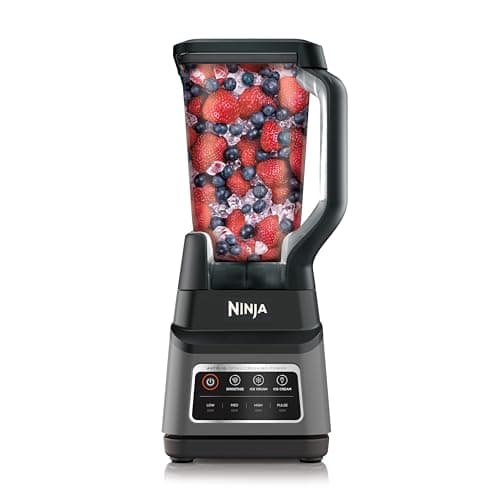
Most kitchens
Ninja Professional Plus BN701
The one brand here that publishes both a continuous and a peak wattage instead of only the flattering one. A large pitcher and real power for about a fifth of the premium price.
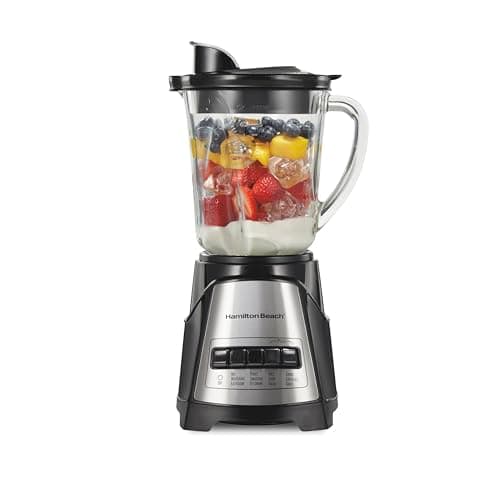
The smallest budget
Hamilton Beach Power Elite Wave Action
The cheapest machine here and the most honest about its own numbers: Hamilton Beach defines what its peak wattage means and prints the real nameplate amperage next to it.
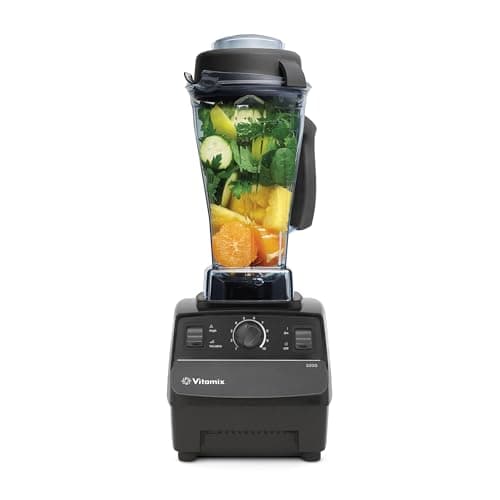
Buying once
Vitamix 5200
The seven-year warranty is the product. A machine with a fully variable dial, a tall narrow jar and a tamper, backed longer than almost anything else at any price.
#ad · As an Amazon Associate we earn from qualifying purchases.
Questions
Frequently asked
Is 1,000 watts enough for a blender?
What is the difference between peak watts and continuous watts?
Why does Vitamix not publish a wattage?
Does higher wattage cost more to run?
What matters more than wattage?
Keep reading
Related
- Every blender warranty, in one tableThe number that is actually comparable across brands, tabulated and sourced.
- What a blender costs to runThe arithmetic in full, with the electricity rate cited and a substitution for yours.
- The best high-power blendersFive machines ranked on what their makers publish, not on the biggest number.
- The blender buying guideStarts from what you cook, and is willing to end at a hundred dollars.
Receipts
Sources
- SharkNinja — Ninja Professional Plus BN701 specification table (1,200 W continuous, 1,400 W peak)
- SharkNinja — 1000W Motor Base replacement part for the BL610
- Hamilton Beach — Power Elite blender product page (700 peak watts)
- Hamilton Beach — Power Elite use and care manual (PDF), peak-power definition and 3.7 A rating plate
- Blendtec — Classic 575 product page (1,560 watts, unqualified)
- Vitamix — 5200 product page and specification table (2 HP, 11.5 A nameplate, no watt figure)
- US EIA — Electric Power Monthly, average residential price (retrieved September 2026)
We do not run a testing lab and we do not pretend to. Specifications come from the manufacturer's own published documents and from published standards; prices come from the live Amazon API. Where a figure is not published, the page says “not published” rather than guessing. Read the full method.