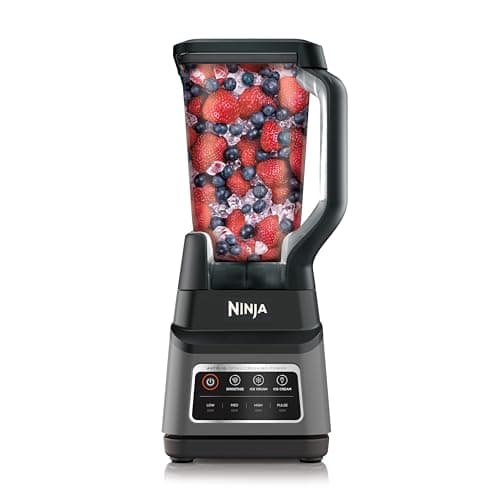
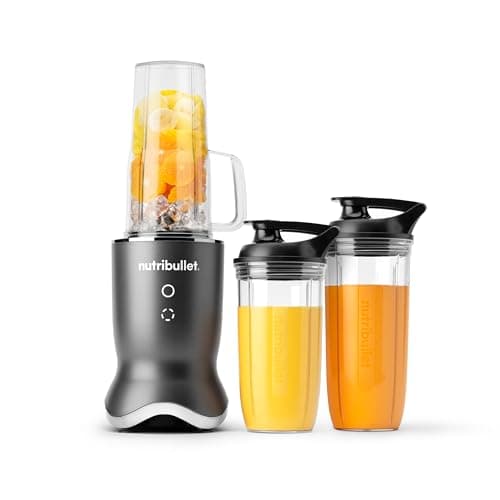
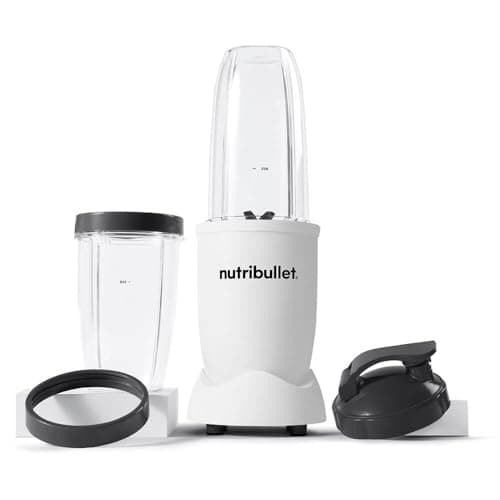
Buy the NutriBullet Profor frozen coffee. A blended coffee is one serving, and a sealed single-serve cup is the only vessel on this list where one serving actually reaches the blade — you blend in the cup, twist the lid off and drink from it. If you make two or three at a time, buy the Ninja Professional Plus BN701instead: 1,200 published continuous watts and a 72 oz pitcher do the batch in one pass. Before anything else on this page, one rule: never put hot coffee in a sealed cup.
The sealed-cup rule, first, because it matters most
A bullet blender works by sealing a cup against a blade assembly and inverting it. That seal is the whole design — and it is also why hot liquid in one is dangerous. Heat expands the air inside, blending adds more, and a sealed container with nowhere to vent can force the lid off and throw its contents. People try this exactly when making blended coffee, because the coffee is fresh out of the machine and still hot.
Chill the coffee first.Brew it, cool it, refrigerate it, or brew it the night before. Better still, freeze it — see the coffee-ice trick below. Hot coffee belongs in a vented pitcher at low speed, not a twist-on cup, and the full version of this argument lives on can personal blenders handle hot liquids and blending hot liquids safely. If what you actually want is a hot blended coffee, that is a different drink and a different page: bulletproof coffee in a blender.
What a frozen coffee actually asks of a blender
Three things, and only one of them is power.
It is one drink.Twelve to sixteen ounces, finished. Put that in a 64 oz jar and most of it sits on the walls while the blade spins in a puddle: too little volume to form a vortex, so you stop, scrape, restart, and end up with something half-melted. This is the single reason the ranking here inverts against our full-size pages.
It is ice plus liquid, which is easy.Ice with coffee and milk around it is one of the simplest loads in blending — the liquid carries the cubes back into the blade every revolution. Any machine on this page manages it. You do not need a premium blender for a frappé, and anyone selling you one for that reason is selling you the wrong thing. The ranked ice page is best blenders for crushing ice, and the cheapest machines that still manage it are on best budget blenders for smoothies. There is a floor, mind: a 250 W machine is a different proposition from a 900 W one on a cup of ice, which is the gap measured on Ninja vs Magic Bullet.
Texture is the whole point. What separates a good blended coffee from a bad one is whether it is uniform or granular, and that is decided by how long you can run the machine before the drink warms, and by whether you can hold a steady speed rather than hammering it on full. A short, powerful burst gives a smoother drink than a long slow grind does, because the drink is melting the entire time.
Who each pick is for
- NutriBullet Pro (900 W) — for the person making one blended coffee most mornings and drinking it out of the cup they blended it in.
- Ninja Professional Plus BN701 — for the household making two or three at once, or anyone who wants one machine for coffee and everything else.
- NutriBullet Ultra (1200 W) — for the person who wants the single-serve format with the most motor behind it in its class. NutriBullet also markets it as its quietest machine, with no decibel figure published anywhere, so treat that part as a claim rather than a fact.
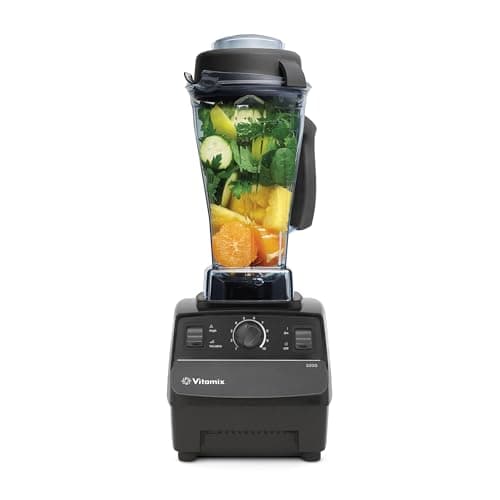
- Vitamix 5200 — for the person who wants a genuinely silky, no-granules texture and already wants a premium machine for other reasons.
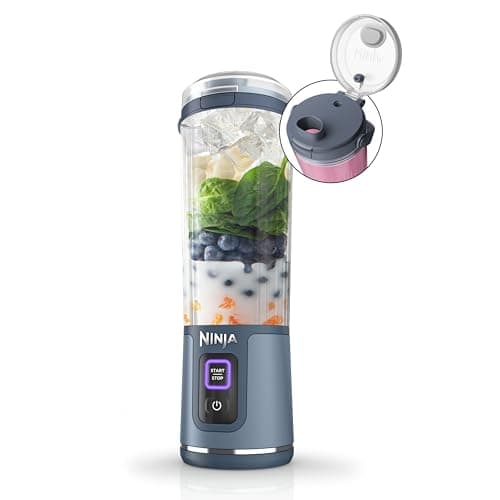
- Ninja Blast BC151 —for the person making it somewhere there is no socket — a desk, a dorm, a van.
The five, side by side
Manufacturer figures only, from the pages listed at the foot of this page. “Drink from the vessel” is a design fact about the container, not a performance claim. | Published motor | Vessel | Drink from the vessel? | Warranty |
|---|
| NutriBullet Pro (900 W) | 900 W | Sealed single-serve cup | Yes | 1 year |
|---|
| Ninja Professional Plus BN701 | 1,200 W continuous; 1,400 W peak | 72 oz pitcher, 64 oz max liquid | No | 1 year |
|---|
| NutriBullet Ultra (1200 W) | 1,200 W | Sealed single-serve cup | Yes | 1 year |
|---|
| Vitamix 5200 | 2 HP; 11.5 A at 120 V. No watt figure published | 64 oz, tall and narrow | No | 7 years, full |
|---|
| Ninja Blast BC151 | Not published — the spec table reads 0 watts; a 7.4 V USB-C base is all it gives | Sealed cordless cup | Yes | 1 year |
|---|
The Ninja Blast row is worth pausing on: SharkNinja’s own specification table lists its wattage as zero, so there is no usable power figure to print and we leave the cell saying so rather than filling it. That is not a knock on the machine — it is a cordless blender and the honest figure would be a battery rating, not a watt figure — but it does mean nobody can compare it on power, including us. The same gap is recorded on its own review.
The coffee-ice trick, which beats buying a better blender
The most common complaint about homemade blended coffee is that it tastes weak and watery. The cause is almost never the machine: it is that plain ice melts into the drink and dilutes it. Freeze leftover brewed coffee in an ice tray and use those cubes instead. The drink gets colder and thicker without getting weaker, and a modest motor now produces something that tastes like it came from a counter with a tip jar on it.
Two more things that do more than wattage. Load liquid first in a pitcher, last in a cup— a bullet cup is inverted onto the blade, so the order reverses, which we explain on how to make a smoothie. And blend briefly at full speed rather than slowly for a long time: every second the machine runs, the drink warms, so a 20-second blend at speed beats a careful minute.
What we do not claim
We have not made a frappé in any of these machines, and we publish no texture score, blend-time figure or taste test for any of them, because we have no test kitchen and nobody in this industry publishes those numbers either. What this ranking is built from: the published motor rating or its absence, the vessel size and whether it is the drinking vessel, the warranty document, and the physics of a 12 oz load in a given container. The full method is published, including what disqualifies a product.
Buying for blended coffee: four checks
1. Does a single serving fit the vessel?
This is the whole question, and almost nobody asks it. A 12 oz drink needs a vessel in which 12 oz reaches the blade. A single-serve cup clears that trivially; a 72 oz pitcher does not. If a blended coffee for one is the main job, buy the smaller machine on purpose — see best personal blenders for smoothies.
2. Is the cup the cup you want to drink from?
Bullet blenders turn the blending container into a travel cup with a twist-on lid. For a drink you make on the way out of the door, that removes a washing-up step and a transfer. It is a genuine daily convenience, and it is the reason two of the five picks here are cup machines rather than pitcher machines.
3. Can it handle ice without added liquid, in case you forget?
A blended coffee always has liquid in it, so this is a safety margin rather than a requirement. Still, the cheapest machines can stall on a cup packed with ice and only a splash of coffee. If you like your drink thick, more motor earns its place. How much, and which machines manage it, is on can personal blenders handle ice.
4. How loud is it at 6 a.m., and does anyone publish that?
Nobody does. Not one manufacturer in our catalogue publishes a decibel figure for any machine in it, so any site telling you which blender is quietest is guessing. What can be said is that a smaller motor in a sealed cup for twenty seconds is less disruptive than a 1,200 W pitcher machine for a minute. Our best honest attempt at the question is best quiet blenders.
What this is not
It is not an espresso decision — a blender does not brew. It is not a grinder decision either, though people often ask both questions at once; if you are hoping to grind your beans in the same machine, read can you grind coffee in a blender first, because the answer depends entirely on how you brew.