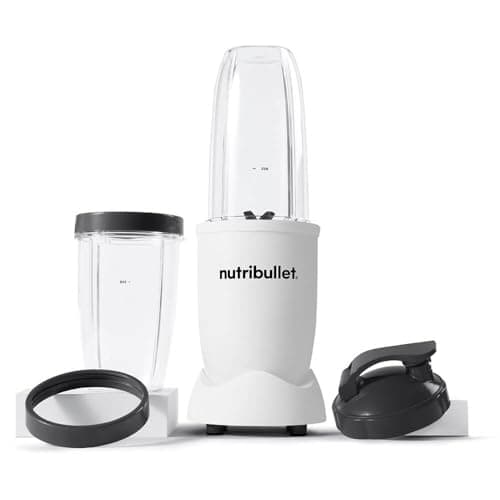
Buy the NutriBullet Pro (900 W). For a two-person household it is the machine whose box contents match the problem: two 32 oz cups, so you blend one drink, swap the cup, blend the second, and wash nothing in between — on a motor NutriBullet publishes at 900 watts. The budget pick is the Hamilton Beach Power Elite: the cheapest machine on this page, with a 40 oz glass jar that pours two glasses in one go and three years of warranty against everything else here at one. Live prices with the date they were checked sit in the table above.
Who each one is for, in one line
- NutriBullet Pro (900 W)— for two people who drink the same thing at the same time and want a cup each.
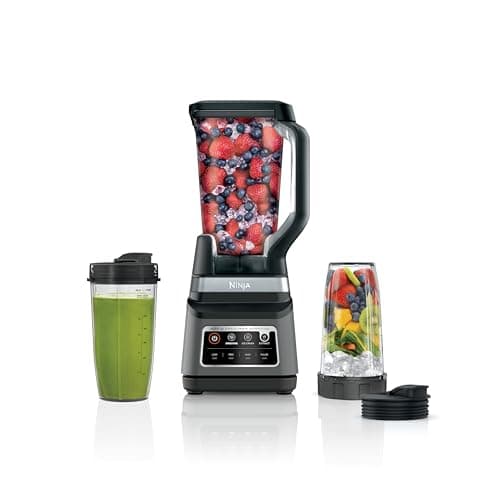
- Ninja Professional Plus DUO BN751— for two people who sometimes cook for six: a 72 oz pitcher and cups on one base.
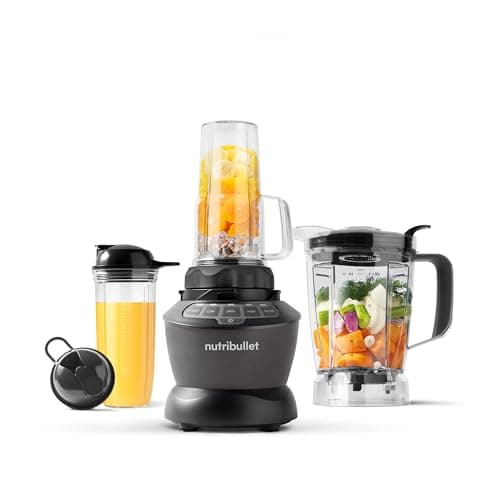
- NutriBullet 1200 W Blender Combo— for the same two jobs at the lowest price: a 64 oz pitcher plus a 32 oz and a 24 oz cup.
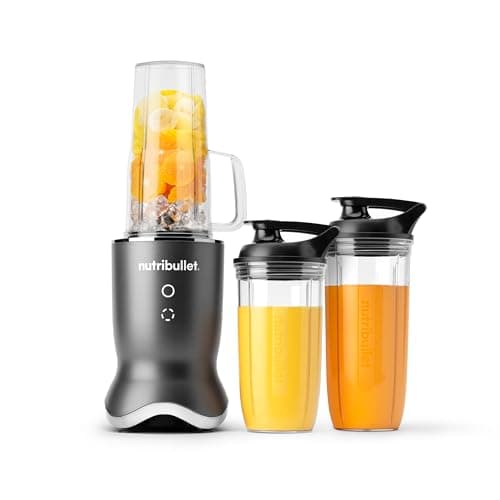
- NutriBullet Ultra (1200 W) — for two people who want different sizeddrinks: 24 oz and 32 oz cups, plus five years on the blade.
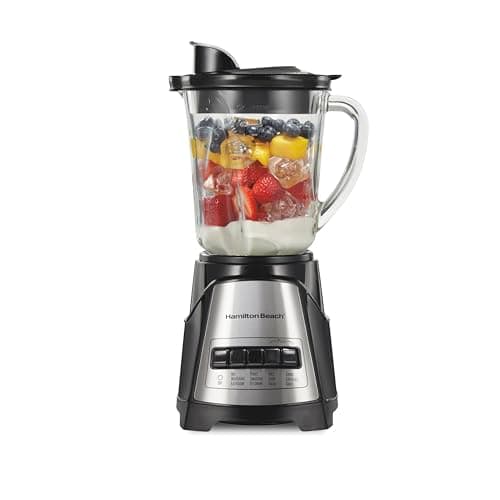
- Hamilton Beach Power Elite— the budget pick: a 40 oz glass jar, three years of cover, and the least money by a wide margin.
Two cups or one jar: this is the whole decision
At one serving, a bullet blender is obviously right. At four or five, a pitcher is. Two is the only size where both answers are genuinely defensible, and the thing that decides it is not capacity but sequence.
If the two of you drink different things — one with protein powder, one without; one with spinach, one not — two cups wins outright, because a jar means blending twice and rinsing in between. If you drink the same thing, a 40 oz jar is faster, cheaper and washes once. Nobody in a review tells you this; the capacity number on the box cannot, because both answers are the same number of ounces.
Best blenders for one person is the single-serving version of this question, and best blenders for family smoothies is where the jar stops being optional.
What “two servings” is in ounces
Real numbers, from the manufacturers’ own pages. The Pro ships two 32 oz cups and nothing smaller— generous for one drink, which is exactly why two of them suits two people. The Ultra ships 24 oz and 32 oz, so the sizes are deliberately different. The Combo gives a 64 oz pitcherplus a 32 oz and a 24 oz handled cup. The BN751 is a 72 oz pitcher rated to 64 oz of liquid plus single-serve cups. The Power Elite is 40 oz of glass, which is the only vessel on this page actually sized for two rather than for one or for six.
That 40 oz figure is worth sitting with. A 64 oz jar blends two servings badly: too little volume for the blade to form a vortex, so you get a tall jar with a puddle spinning at the bottom. What size blender do I need explains the floor as well as the ceiling, and can you use a blender without liquid is the mechanism behind it.
One year, and the cups are not covered
Four of these five carry one year, and the NutriBullet terms exclude cups and accessoriesin writing — the parts that actually fail on a two-cup machine, because they are the parts that get dropped. If you buy a two-cup machine, assume you will buy a cup and a gasket again inside a couple of years and price it in.
There are two bright spots. The Ultra splits its warranty: one year on the machine and five years on the Ultra Rapid Extractor blade, which is an unusual and genuinely useful term because the blade assembly is a common failure point. And the budget pick carries three years US, five in Canada, on the whole machine. Blender warranties compared has every term, and why is my blender leaking is about the gasket that goes first.
The quietness claim nobody can verify
The Ultra is marketed as NutriBullet’s quietest single-serve blender, and NutriBullet publishes no decibel figure for it— nor does anyone else in this catalog, for any machine. That matters more in a two-person household than a one-person one, because one of you is probably still asleep. We will not price a claim we cannot check, so the Ultra is ranked here on its vessel sizes and its blade warranty, not on the quiet. Best quiet blenders explains why the whole category behaves this way, and why is my blender so loud covers what actually makes the noise.
What these cost to run for a year
At 18.16¢ per kWh and this site’s standard assumption of 3 minutes a day, 365 days a year: the 1,200 W machines — the BN751, the Combo and the Ultra — come out at about $3.98 a year each, the 900 W Pro at about $2.98, and the Power Elite at about $1.47on the 3.7 A rating plate printed in its own manual rather than on the 700 “peak” watts on its box. Hamilton Beach defines what peak means in that manual, which is more candor about wattage than any premium brand here offers. What a blender costs to run shows the arithmetic.
Which to skip
Skip the Pro if either of you wants a smalldrink: 32 oz is its smallest cup, and a modest shake in it is a lot of cup to wash. Skip the BN751 if the pitcher will not get used — it is the BN701 with cups at a premium. Skip the Combo if you will only ever use the pitcher. Skip the Ultra if you bought it for the quietness, because there is no figure behind that claim. Skip the Power Elite if you blend frozen fruit with no added liquid: at 3.7 amps that load stalls, and pulsing it is how the motor gets cooked.
And if what you really want is one machine that covers two people now and a household later, best blenders with cup attachments is that format ranked on its own, and best blenders under $200 is the band most of these sit in.
What we have not done
We own none of these machines and we have blended nothing in any of them. Every wattage, cup size, jar size and warranty term above comes from the manufacturer’s own product page, manual or warranty document, cited below. Where nobody publishes a figure — decibels on all five, a peak-or-continuous qualifier on the three NutriBullets — this page says so instead of borrowing a number. Prices come live from Amazon with the date they were checked.
How to buy for two
1. Answer the sequence question first
Same drink, same time? One jar. Different drinks, or different times of morning? Two cups. Everything else follows from that and nothing on a spec sheet will tell you which you are.
2. Watch the floor of the jar, not the ceiling
A 64 oz pitcher with two servings in it struggles to form a vortex. Forty ounces is the size that blends two servings properly, which is why the cheapest machine here is also the best-sized one.
3. Count the cups in the box, then count the lids
Two cups is only two cups if both take a drinking lid. The point of the format is leaving the house with the vessel you blended in, and a cup without a lid is just a cup.
4. Budget for a replacement cup and gasket
NutriBullet’s warranty document excludes cups and accessories. Both brands here sell replacements widely and cheaply, which is a real argument for sticking to brands with an accessory ecosystem.
5. Do not pay for a quietness claim with no number behind it
Nobody in this category publishes decibels. If quiet genuinely matters because of sleeping schedules, the lever that works is timing and a smaller load, not a marketing adjective.
6. Check the clearance if you choose a pitcher
A 72 oz jar on a motor base is tall, and the worktop-to-cabinet gap is the measurement people forget. Best blenders for small kitchens is that question across the catalog.