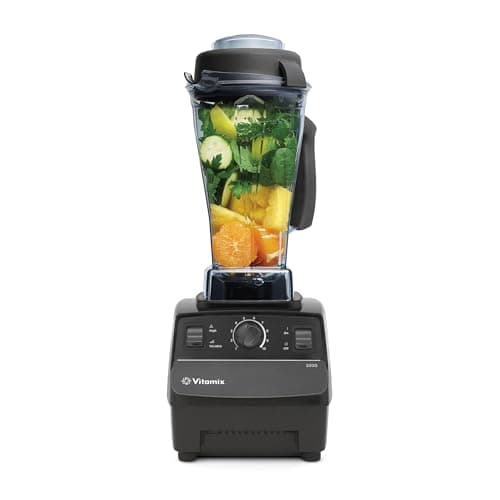
Buy the Vitamix 5200. For hot sauce it is for the person who makes it in batches and strains it, and it wins on two things that are not power: a fully variable speed dial and a tamper, which is the combination that turns a thick chili mash into a pourable sauce without adding so much liquid that you have made vinegar soup — and Vitamix publishes and sells replacement parts, which matters more here than anywhere else on this site, because an acidic sauce is hard on a gasket. The budget pick is the Hamilton Beach Power Elite: the cheapest machine on this page, with a 40 oz glass jar and three years of warranty. Live prices with the date they were checked are in the table above.
Who each one is for, in one line
- Vitamix 5200— for a thick mash taken to a fine, strainable sauce: variable dial, tamper, and parts you can buy.
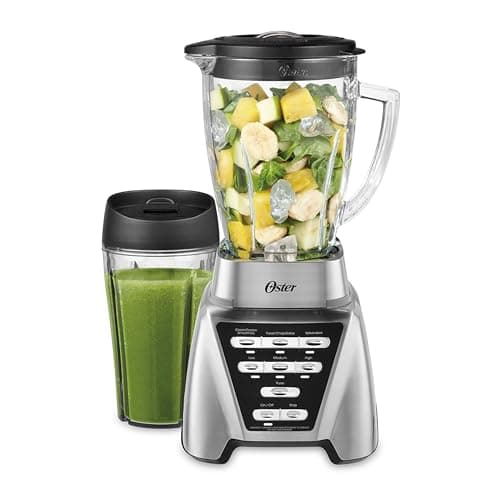
- Oster Pro 1200 with glass jar— for the glass-jar answer at a mid price, with three years of warranty.
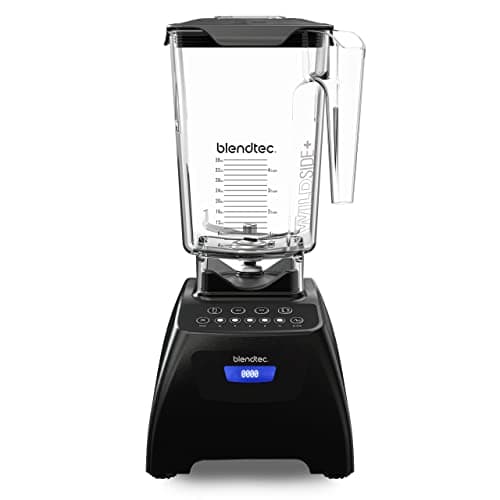
- Blendtec Classic 575— for a blade you never remove: nothing to take apart and de-chili after a batch, on a published 1,560 W motor.
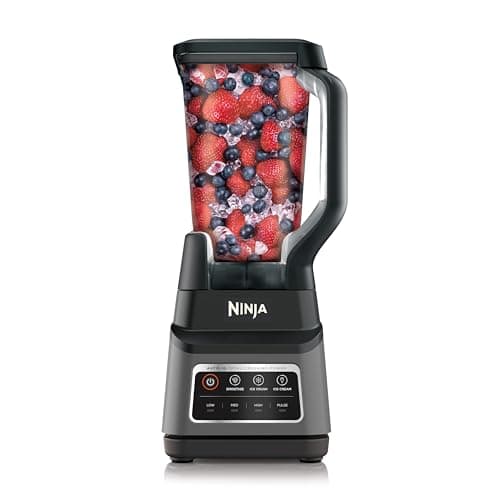
- Ninja Professional Plus BN701— for the biggest batch: a 72 oz pitcher and the only published continuous wattage here.
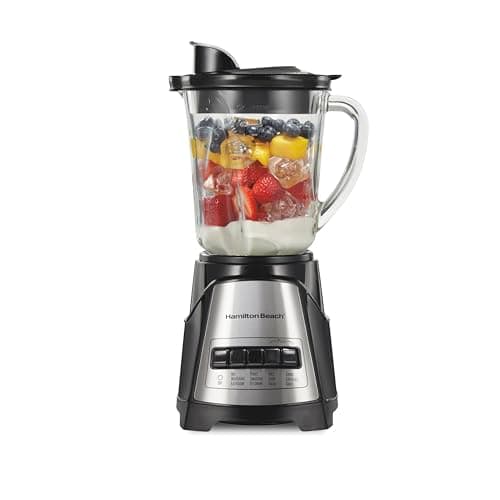
- Hamilton Beach Power Elite— the budget pick: glass, three years of cover, and the least money, for a thinner vinegar-forward sauce.
Why the jar decides this and the motor does not
Capsaicin is oil-soluble, not water-soluble. That is why water does not help when you have eaten too much of it, and it is also why a plastic blender jar that has had a habanero mash in it is a habanero jar from then on: the oil migrates into the polymer and rinsing does not retrieve it. Chili pigment stains the same surfaces. Blend a mild smoothie in that jar next week and you will taste the difference.
Glass does not do this. It does not take up the oil, it does not stain, and it goes through a dishwasher cycle without anxiety. Two machines on this page have a glass jar — the Oster Pro 1200 and the Hamilton Beach Power Elite — and both happen to be the two with three-year warranties rather than one. Glass vs plastic blender jars weighs the whole trade, and best blenders with glass jars is the roundup if glass has already won the argument.
If your machine is plastic and you are not replacing it, the workable answer is a dedicated jar for chili work rather than a technique. Nothing in how to clean a blender removes capsaicin from a Tritan jar, and we would rather say so than sell you a trick.
Acid is the second problem, and it is a parts problem
A vinegar-forward or fermented sauce sits at a low pH, and the part that meets it longest is the blade gasket. That makes replaceability a specification on this page. Vitamix publishes and sells replacement parts, so a failure is a repair rather than a write-off, and its seven-year full warranty covers parts, labor and shipping both ways. Both Ninja and the Blendtec sell parts widely too.
Read Oster’s warranty carefully if that machine attracts you: its remedy is replacement rather than repair, so a failure in year two means a different machine arrives, not yours fixed — and Oster has delisted this exact model, so what arrives is not certain. On the same point, Oster’s page for this Pro 1200 returns HTTP 410 Gone, which means the “1200” in its name is not a figure we can trace to a manufacturer document at all, and we leave that cell empty rather than repeat what other sites quote. Can you replace blender blades is the parts question in full, and blender warranties compared has every term in this catalog.
The mash is a thick, low-liquid load
Before the vinegar goes in, a chili mash is roasted or fermented pepper flesh with skins and seeds and almost no free liquid. That is the same problem as any thick blend: the mixture forms a plug above the blade and the motor spins air underneath it. The fix is mechanical rather than electrical.
The Vitamix answer is a tamper plus a dial you can hold at the speed the load needs. The Blendtec answer is a jar shaped to fold a thick load back onto a blunt fixed blade with no tamper at all — genuinely a different design philosophy, and a real convenience here, because a blade you never remove is a blade you never have to wash chili oil off. Blendtec publishes a plain 1,560 W figure with no peak qualifier, and separately disclaims its own peak-horsepower ratings as not denoting operational horsepower, which is more candor than this category usually manages. What a blender tamper is used for explains the tool, and can you use a blender without liquid is the mechanism.
One warranty correction while the Blendtec is on screen, because it is the most repeated wrong fact in this category: the Classic 575 is two years parts and two years labor, residential use onlyin Blendtec’s own schedule — not the eight years commonly attributed to it, which belong to other lines. Its residential cover also presumes commercial use above roughly 3,000 cycles a year, which a hot-sauce side business could genuinely reach.
If you are making it hot, blend it cold
The safety point on this page is not about chili. It is that people roast peppers and then blend them straight off the heat, and a sealed blender jar full of steam is the one thing in this category that can actually injure you. Let a roasted mash cool, fill the jar no more than two-thirds, vent the lid, and start slow.
A second, smaller warning: blending capsaicin aerosolizes it. A blender lid lifted off a habanero mash in a small kitchen will clear the room. Open a window and keep your face away from the jar when you vent it. Blending hot liquids safely is the full method, and best blenders for hot soup ranks the machines built for heat if that is a bigger part of your cooking.
Batch size, and the one honest limit of the budget pick
A hot sauce batch is usually bigger than a smoothie. The BN701 is the capacity answer: a 72 oz pitcher rated to 64 oz of liquid, on the one motor here whose maker publishes 1,200 watts continuous alongside 1,400 peak. It ships no tamper and carries one year, which is the trade.
The Hamilton Beach is the budget pick and it has a real ceiling. Hamilton Beach publishes 700 “peak” watts, defines peak in its own manual as the first-seconds draw, and prints the rating plate beside it: 120 V, 60 Hz, 3.7 A max. That is 444 W of real continuous draw, which is enough for a thin vinegar-forward sauce and not enough for a dense roasted mash with no added liquid. We say that plainly rather than letting the 700 do the talking, and publishing the plate at all is more candor about wattage than any premium brand in this catalog shows. Blender wattage explained is why those two numbers are not the same thing.
What these cost to run for a year
At 18.16¢ per kWh and this site’s standard assumption of 3 minutes a day, 365 days a year: the Blendtec at about $5.17 a year, the Vitamix 5200 at about $4.57on its 11.5 A nameplate arithmetic, the Ninja at about $3.98 on its published continuous figure, and the Hamilton Beach at about $1.47on its rating plate. The Oster has no sourceable wattage, so it has no running-cost line — we would rather leave a gap than invent one. What a blender costs to run shows the sum.
Which to skip
Skip the Vitamix 5200 if you make one batch a summer — most of what you are paying for is the seven-year warranty. Skip the Oster if you want a machine whose maker still publishes its specifications, or if replacement-not-repair on a delisted model worries you. Skip the Blendtec if the long warranty was the reason you shortlisted it, because it is two years and not eight. Skip the BN701 if you want a glass jar, because it is Tritan and chili oil stays in it. Skip the Hamilton Beach for a thick roasted mash.
And if what you are really making is a chunky salsa or a thick dip rather than a pourable sauce, best blenders for hummus and salsa is the page for pulse control, and best blenders for sauces and dressings is the small-batch emulsion page, which a stick blender leads.
What we have not done
We have not made hot sauce in any of these machines. We own none of them, we have run no trials, and we claim no tests. Every wattage, jar material, capacity and warranty term above is read off the manufacturer’s own product page, manual or warranty schedule, cited in full below — including the two cases where the maker’s page has been withdrawn, which we report rather than paper over. The capsaicin and acidity points are chemistry, not a product claim, and no manufacturer here documents or endorses this particular use. Prices come live from Amazon with the date they were checked.
How to choose for chili work
1. Pick the jar material first
Glass if this machine will also make smoothies. Plastic only if it is a dedicated chili jar, because capsaicin is oil-soluble and it is not coming back out of the polymer.
2. Buy speed control, not peak watts
A fine pourable sauce needs you to hold a speed while the mash breaks down. A fixed preset cannot do that and a peak-watt figure does not tell you whether the machine can.
3. Check whether you can buy a gasket
Acid works on seals. A brand that publishes and sells replacement parts turns that into a repair; a brand that does not turns it into a new machine.
4. Cool the mash before it goes in
Roasted peppers come off the heat at well over a safe blending temperature, and a sealed jar of steam is the only genuinely dangerous thing in this hobby. Cool it, fill two-thirds, vent the lid, start slow.
5. Plan the strain, and size the jar for it
Most hot sauce gets pushed through a sieve or a chinois after blending, and the finer the blend the less you lose on the way through. That is an argument for the tamper machines and for a jar big enough to take the whole batch in one run. What size blender do I need is the sizing question.
6. Expect to wash it immediately
Chili oil sets into every surface it is left on, and a stacked blade tower has more of those than a single fixed blade. Easiest blenders to clean ranks on exactly that, and can you put a blender in the dishwasher is the per-part answer.