Skip to content
BasketBlade

HUB 03 · Personal Blenders

The Best NutriBullet Blenders, Ranked

NutriBullet names its machines after their wattage and sells them on power, but the numbers that decide which one you should own are the size of the cup in the box and whether the model is still made. Two of the four best-known ones are not.

By Stephen V.Updated How we pick
#ad

We earn a commission if you buy through our links. It does not change the price you pay, and it does not decide our picks — our selection criteria are published in full. How this works.

The short answer

Quick picks

#ProductBest forScorePrice
01
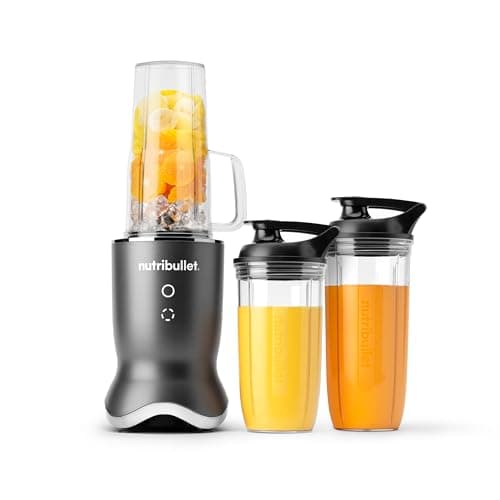
NutriBullet NutriBullet Ultra (1200 W)
NutriBullet Ultra (1200 W)

More power, a longer blade warranty, and a quietness claim with no number behind it. NutriBullet markets it as their quietest and publishes no decibel figure at all.

A quieter morning
7.3
$119.99Amazon
02
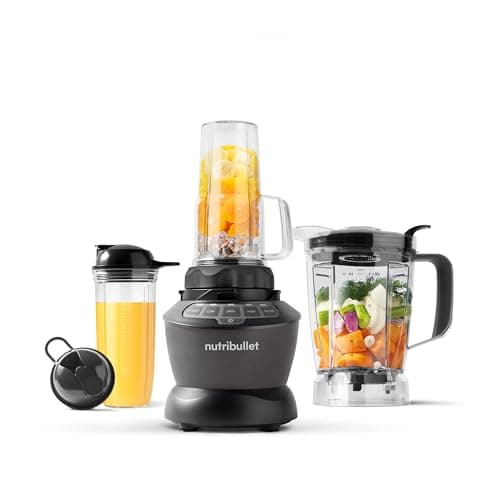
NutriBullet NutriBullet 1200 W Blender Combo
NutriBullet 1200 W Blender Combo

A 64 oz pitcher and two single-serve cups on one 1200 W base — the cheapest honest way to cover both jobs with one motor.

Pitcher and cups, one base
7.5
$85.49Amazon
03
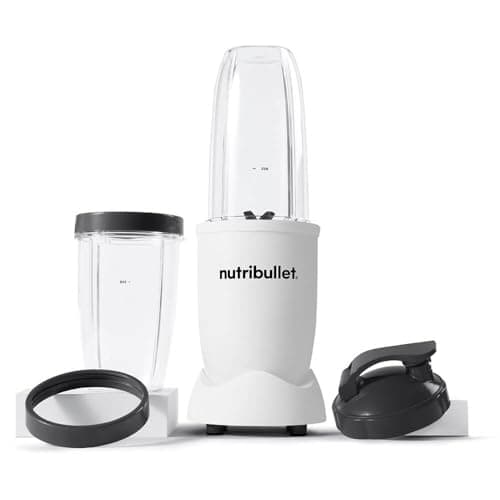
NutriBullet NutriBullet Pro (900 W)
NutriBullet Pro (900 W)

The default bullet blender, and a good one. Note that NutriBullet's own product page contradicts itself about which cups are in the box.

Everyday shakes
7.4
Check priceAmazon
04
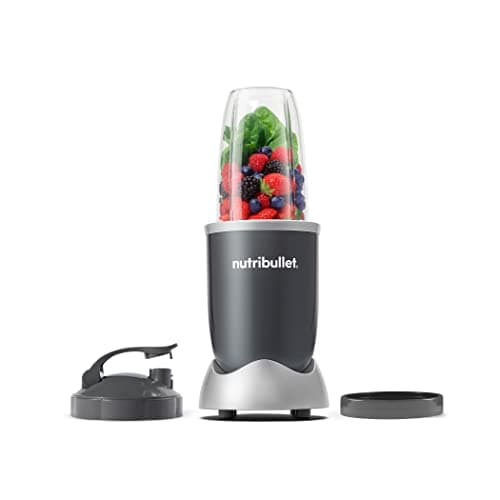
NutriBullet NutriBullet 600
NutriBullet 600

The entry point, and the only machine here that ships a genuinely small cup. 600 watts is enough for the job it is actually bought for.

One modest shake
7.1
$47.00Amazon

#ad · Prices pulled live from the Amazon Product API, last checked November 10, 2026. Where we have no verified live price we show none — we would rather leave a gap than print a number that has gone stale. Scores are our own, compiled from published specs; they are not test results.

Buy the NutriBullet Ultra. It is the most machine in the single-serve class at 1,200 watts, it ships a 24 oz cup as well as a 32 oz one, it is the only model in the range with a long warranty on the part that actually breaks — five years on the Ultra Rapid Extractor blade — and it is still in production, which two of the machines below are not. If the price is the obstacle, the budget pick is the NutriBullet 600: the cheapest way in, and the only machine in the range that ships a genuinely small 18 oz cup, which matters more for most drinks than the 600 watt difference does.

Two of the four machines on this page are discontinued by their own manufacturer. nutribullet.com’s Pro page reads “The nutribullet Pro® has been discontinued” and names the 1000 W nutribullet Turbo as its replacement; the 600’s page reads “This model of the original nutribullet® has been discontinued”, says it went in Autumn 2026, and names the new nutribullet Personal Blender in its place. Both are still stocked and still priced, which is why they are still ranked — a discontinued model is often the best value on the shelf, because the replacement carries the new price. But cups, lids and blade assemblies for a retired line get harder and dearer over the life of the machine, and NutriBullet’s one-year warranty excludes exactly those parts. The Ultra’s and the Blender Combo’s pages carry no replacement notice, which is why they rank first and second.

Who each one is for, in one line

  • NutriBullet Ultra (1200 W)— for a daily single-serve habit you intend to keep: the most power, the only five-year blade term, two cup sizes, still made.
  • NutriBullet 1200 W Blender Combo— for the household that needs a 64 oz pitcher and single-serve cups, and would rather own one motor base than two machines.
  • NutriBullet Pro (900 W)— for the best power per dollar in the format, if you can live with a discontinued model and two 32 oz cups and nothing smaller.
  • NutriBullet 600— the budget pick: one modest shake a day in the only properly single-serving cup here, also discontinued.

Why this page ranks on cup size and warranty wording, not on watts

NutriBullet is unusually straightforward about power. It publishes a plain, unqualified watt figure for every machine in this list — 600, 900, 1,200 — with no “peak” or “continuous” label attached, which is more candor than most of this category manages. We take those numbers at face value and note the absence of a qualifier rather than converting them into something they are not.

What the watt figure does not tell you is whether the machine suits your drink, because in a bullet blender the vessel does half the work. The cup screws onto the blade assembly and blends upside down, so gravity pushes the load into the blades instead of away from them — which is the real reason a 600 W bullet handles frozen fruit better than a 600 W pitcher machine. A narrow cup also means a thick mixture has nowhere to move and the motor nowhere to cool. So the specification that decides your purchase is the one printed in the box contents:

  • Ultra:24 oz and 32 oz — two sizes, and the brand’s page is consistent about it.
  • Blender Combo:a 64 oz pitcher, a 32 oz cup and a 24 oz handled cup on one 1200 W base. That is a different product category wearing the same badge.
  • Pro:two 32 oz cups and nothing smaller in the box contents, so a modest shake gets blended in a vessel bigger than it needs.
  • 600:a 24 oz tall cup and an 18 oz short cup. That 18 oz is the only genuinely single-serving vessel shipped with any machine here.

The second thing we rank on is the warranty document, because it contains a clause that almost nobody quotes: NutriBullet’s one-year term excludes the cups and the accessories. The cups and the blade gasket are the parts that actually fail on this format. So the warranty covers the motor base — the part that usually outlives everything else — and not the parts you will be replacing. That is not a reason to avoid the brand; replacement cups, lids and blade assemblies are widely and cheaply sold, which is one of the format’s real strengths. It is a reason to read the paperwork before you believe the year, and it is why a retired model carries more risk here than it would on a pitcher machine, where the jar is a spare you buy once a decade.

Our full method, including what disqualifies a pick, is on how we pick. If you want the warranty terms across every brand rather than within this one, blender warranties compared puts the documents side by side.

The one place NutriBullet writes a longer warranty

The Ultra is the exception, and it is a genuinely useful one. NutriBullet covers the machine for one year like everything else in the range, but the Ultra Rapid Extractor blade carries five years. Given that the blade assembly and its gasket are the usual failure point on a bullet blender, a five-year term on exactly that part is the most meaningful difference between any two models here — more meaningful than the 300 watt step up from the Pro, which a single serving will rarely use. Combined with the fact that it is still in production, that is the whole case for ranking it first.

What the Ultra does not come with is a decibel figure. NutriBullet markets it as the brand’s quietest single-serve blender and publishes no number behind that claim, from this model or any other. If a quieter morning is the reason you are considering it, there is nothing to verify and nothing to compare it against — best quiet blenders sets out why nobody in this category publishes a number, and why is my blender so loud covers what actually changes the noise in your kitchen.

The Magic Bullet is not the cheapest NutriBullet

It is the most common swap people make inside this brand family, and it is worth being precise about. The original Magic Bullet’s product page is published on nutribullet.com, under the same brand family and administered under the same warranty terms — so it looks, from the outside, like the entry-level model in this range. It is not. Its motor base is 250 W: roughly a quarter of a mainstream bullet blender, and Magic Bullet publishes no ounce figure for any of the cups it ships. It is a genuinely good chopper and shake-maker and a poor blender, which is why it is not ranked on this page. Full reading in our Magic Bullet review and NutriBullet vs Magic Bullet.

What a NutriBullet costs to run for a year

Pennies, which is the answer every power argument in this category reaches once you do the arithmetic. At 18.16¢ per kWh and this site’s standard assumption of 3 minutes a day, 365 days a year, the 600 works out at about $1.99 a year, the Pro at about $2.98, and both 1,200 W machines at about $3.98. Doubling the wattage across this range costs you roughly the price of a single coffee per year, so running cost is not a reason to buy the smaller machine — cup size is. What a blender costs to run shows the full sum and how to substitute your own electricity rate.

Which NutriBullet to skip

Skip the whole range if what you make is thick: nut butter, low-liquid smoothie bowls, anything approaching a dough. The narrow cup that makes this format good at frozen fruit is what makes it bad at a paste, and no wattage figure in this list changes that geometry. Best blenders for nut butter is the page for that job. Skip the Ultra specifically if you are buying it for quietness, for the reason above. Skip the Blender Combo if you will only ever use the pitcher — you would be paying for cups to store in a cupboard, when a single-jar machine at the same money comes with a longer warranty. And skip both discontinued models if you expect to own the machine for years rather than months, because the consumable parts are the risk and they are not covered.

If you want this format without this brand, alternatives to a NutriBullet names four machines that compete with it on a stated strength, and best bullet blenders ranks the format across every brand we stock.

What we have not done

We have not tested any of these machines. We own none of them, we have blended nothing, and we have run no timed trials. Every watt figure, cup size, warranty term and discontinuation notice above is read off NutriBullet’s own product page or warranty document, cited in full below and re-checked on the date this page was published. Prices come live from Amazon and carry the date they were checked; where there is no verified live price, you see none.

In detail

The picks, in full

01
NutriBullet NutriBullet Ultra (1200 W)

A quieter morning

NutriBullet Ultra (1200 W)

5-year blade warrantyQuietness claim, no dB
7.3/10

More power, a longer blade warranty, and a quietness claim with no number behind it. NutriBullet markets it as their quietest and publishes no decibel figure at all.

Warranty
5
Frozen
8
Convenience
9
Cleaning
8
Value
6.5

What it gets right

  • 1,200 W is the most power in the personal-blender class here
  • Five years on the blade assembly, against one on the machine — an unusual and genuinely useful split, since the blade is a common failure point
  • Two cup sizes in the box, and NutriBullet's page is consistent about it, unlike the Pro's
  • Takes the standard NutriBullet accessory ecosystem

What it doesn't

  • The 'quietest' claim is unaccompanied by any published decibel figure, so there is nothing to verify or compare it against
  • One year on the machine itself
  • Costs roughly double the Pro for a power increase most single servings will not use

What it costs to run

About $3.98 a year in electricity, at 3 minutes a day, 365 days a year and 18.16¢ per kWh.

NutriBullet publishes '1200 watts of power' with no peak or continuous qualifier. The full arithmetic is published.

Skip this if…

…you bought it for the quietness — with no published decibel figure from NutriBullet or from anyone else, that claim is unverifiable, and paying a premium for an unverifiable claim is exactly what this site exists to talk you out of.

$119.99on Amazon

$129.998% off

Price last checked November 10, 2026. Prices move constantly — Amazon's at checkout is the one that counts.

#ad · we may earn a commission from this link to NutriBullet Ultra (1200 W)

02
NutriBullet NutriBullet 1200 W Blender Combo

Pitcher and cups, one base

NutriBullet 1200 W Blender Combo

Pitcher + two cups1-year warranty
7.5/10

A 64 oz pitcher and two single-serve cups on one 1200 W base — the cheapest honest way to cover both jobs with one motor.

Warranty
3.5
Versatility
9
Frozen
7.5
Capacity
8.5
Value
9

What it gets right

  • One 1200 W base covers a family pitcher and two single-serve cups, at less than the price of most standalone full-size machines
  • 64 oz pitcher is genuine batch capacity, not a token one
  • NutriBullet publishes a plain unqualified watt figure rather than a peak number
  • Cups and blades are the standard NutriBullet parts, which are easy to replace

What it doesn't

  • One-year warranty, and NutriBullet's terms exclude cups and accessories
  • No tamper, so thick low-liquid mixtures in the big pitcher mean stopping and scraping
  • Two vessel systems is more to store than a single-jar machine

What it costs to run

About $3.98 a year in electricity, at 3 minutes a day, 365 days a year and 18.16¢ per kWh.

NutriBullet publishes 1200 W with no peak or continuous qualifier. The full arithmetic is published.

Skip this if…

…you will only ever use the pitcher — you are paying for cups you will store in a cupboard, and a single-jar machine at the same price gives you a longer warranty.

$85.49on Amazon

$129.9934% off

Price last checked November 10, 2026. Prices move constantly — Amazon's at checkout is the one that counts.

#ad · we may earn a commission from this link to NutriBullet 1200 W Blender Combo

03
NutriBullet NutriBullet Pro (900 W)

Everyday shakes

NutriBullet Pro (900 W)

Blend-and-go cupCups not covered by warranty
7.4/10

The default bullet blender, and a good one. Note that NutriBullet's own product page contradicts itself about which cups are in the box.

Warranty
3.5
Frozen
7.5
Convenience
9.5
Cleaning
8
Value
8.5

What it gets right

  • Inverted cup design puts gravity on the blades' side, which is genuinely why bullet blenders handle frozen fruit better than their wattage suggests
  • You drink from the vessel you blended in — the entire reason to own one
  • Replacement cups, lids and blade assemblies are widely sold, which matters because the gasket is the usual failure
  • 900 W is real power for a single serving

What it doesn't

  • One-year warranty, and it explicitly excludes the cups and accessories — the parts that actually fail
  • Two 32 oz cups and nothing smaller, so a single modest shake is blended in a vessel bigger than it needs
  • Sealed cup: not for hot liquid, and the manual says so

What it costs to run

About $2.98 a year in electricity, at 3 minutes a day, 365 days a year and 18.16¢ per kWh.

NutriBullet publishes '900 watts of power' with no peak or continuous qualifier, and lists a 900 W motor base in the box contents. We take it at face value and note the absence of a qualifier. The full arithmetic is published.

Skip this if…

…you make anything thick — nut butter, low-liquid smoothie bowls, dough. The narrow cup gives a thick mixture nowhere to move and the motor nowhere to cool.

Check price on Amazon →

No buyable offer at the last price check (November 10, 2026). We show nothing rather than a stale number.

#ad · we may earn a commission from this link to NutriBullet Pro (900 W)

04
NutriBullet NutriBullet 600

One modest shake

NutriBullet 600

18 oz cup — genuinely small1-year warranty
7.1/10

The entry point, and the only machine here that ships a genuinely small cup. 600 watts is enough for the job it is actually bought for.

Warranty
3.5
Frozen
5.5
Convenience
9
Cleaning
8.5
Value
9

What it gets right

  • The 18 oz short cup is the only properly single-serving vessel in this list; everything else starts at 22 oz and goes up
  • 600 W is enough for banana, yogurt, powder and a handful of frozen berries, which is what most people actually make
  • Cheapest way into the NutriBullet accessory ecosystem, where replacement cups and blades are easy to find
  • Small enough to leave out on a worktop without it dominating

What it doesn't

  • 600 W is the least power here and it shows on a cup packed with frozen fruit
  • One-year warranty
  • No variable speed — it runs at one speed and you control it by how long you press

What it costs to run

About $1.99 a year in electricity, at 3 minutes a day, 365 days a year and 18.16¢ per kWh.

NutriBullet publishes 600 W with no peak or continuous qualifier. The full arithmetic is published.

Skip this if…

…you blend mostly frozen fruit with little liquid — at 600 watts in a narrow cup, that load stalls, and pulsing it repeatedly is how the motor gets cooked.

$47.00on Amazon

Price last checked November 10, 2026. Prices move constantly — Amazon's at checkout is the one that counts.

#ad · we may earn a commission from this link to NutriBullet 600

How to choose a NutriBullet without buying the biggest number

1. Pick the cup, then accept whatever motor comes with it

Decide how much drink you actually make. If it is 12 to 16 oz, the 600’s 18 oz short cup is the right vessel and the rest of the range is oversized for you. If it is 20 to 28 oz, you want a 32 oz cup, which means the Ultra or the Pro. A cup run a third full blends worse than a smaller cup run two-thirds full, because the load needs to sit in the blades rather than above them.

2. Do not pay for watts a single serving cannot use

The step from 600 to 900 W is worth paying for if frozen fruit is a regular part of your drink; at 600 W a cup packed with frozen fruit and little liquid will stall, and pulsing a stalled load repeatedly is how a motor gets cooked. The step from 900 to 1,200 W is much harder to justify on a single serving. Buy the Ultra for its blade warranty, its 24 oz cup and its production status, not for the extra 300 watts.

3. Read the warranty exclusion, not the warranty length

One year, excluding cups and accessories, applies across the range. The exception is the Ultra’s five-year blade term. Since the gasket and blade are the parts that fail, the practical question is not “how long is the warranty” but “how cheap and available are the replacement cups” — which is also the question a discontinued model answers worse every year it stays out of production.

4. If you need a pitcher, buy the pitcher machine once

The Blender Combo puts a 64 oz pitcher and two cups on one 1200 W base, which is cheaper and takes less worktop than a bullet plus a full-size blender. The trade is no tamper, so thick low-liquid mixtures in the big pitcher mean stopping and scraping. NutriBullet Combo vs Ninja DUO settles the only other machine in this catalog that does the same trick.

5. Nothing in this range takes hot liquid

These are sealed cups screwed onto a blade base. Hot liquid in a sealed vessel builds pressure, and the manuals say not to do it. Can personal blenders handle hot liquids goes through what each maker actually states, and blending hot liquids safely covers the pitcher-machine version of the same problem.

6. Treat a discontinued model as a price play, not a long-term buy

The Pro and the 600 are the two cheapest machines here and they discount independently of each other, so the gap between them moves week to week — which is what the live table above is for, and why the prices in it carry the date they were checked. Buying either one at a steep discount is a perfectly sensible decision if you accept what you are buying: a retired line whose consumable cups and blades are excluded from the warranty and will get scarcer. If you want the machine to still be supportable in five years, pay the extra for one of the two that are still made.
How we picked

Blenders we claim to have tested: 0

Every site in this category tells you they blended twenty smoothies. We have not blended any, and we say so. Here is what we do instead: read the manufacturer's manual and spec sheet, record the published motor rating, jar capacity and warranty term, verify the warranty against the manufacturer's own warranty document, work out what the machine costs to run for a year and show the arithmetic, and cite all of it so you can check the work. Prices come live from Amazon's API and disappear rather than go stale.

The scores above are judgments from that documented research — not test results. The full rubric, including what disqualifies a product, is published in full.

Questions

Frequently asked

Which NutriBullet should I buy?

For most people the Ultra: 1,200 watts, a 24 oz cup as well as a 32 oz one, five years on the blade, and no discontinuation notice on its product page. If you also want a family pitcher, the 1200 W Blender Combo covers both jobs on one base. The Pro and the 600 are cheaper and both discontinued by NutriBullet — good buys at a discount, weaker buys for the long term.

Is the NutriBullet Pro discontinued?

Yes. NutriBullet’s own Pro page states that the nutribullet Pro has been discontinued and names the 1000 W nutribullet Turbo as its replacement. The same is true of the 600, whose page says the original model was discontinued in Autumn 2026 and replaced by the new nutribullet Personal Blender. Both remain widely stocked and priced, which is why they are still ranked here — but parts for a retired line get scarcer, and the one-year warranty excludes cups and accessories.

What is the difference between the NutriBullet Pro and the Ultra?

The Ultra publishes 1,200 W against the Pro’s 900 W, ships a 24 oz cup as well as a 32 oz one, and carries five years on its Ultra Rapid Extractor blade where the Pro’s blade falls under the standard one-year term. It is also marketed as NutriBullet’s quietest single-serve blender, with no published decibel figure behind the claim, and it is the one of the two still in production. The full head-to-head is here.

Is the NutriBullet warranty one year or five?

One year on the machine, and NutriBullet’s terms explicitly exclude the cups and accessories. The five-year figure belongs to one part on one model — the Ultra Rapid Extractor blade on the Ultra. Everything else in this range is a one-year machine, which is why we rank partly on how cheaply you can buy a replacement cup.

How many watts is a NutriBullet?

It depends on the model, and NutriBullet states it plainly: 600 W for the 600, 900 W for the Pro, and 1,200 W for both the Ultra and the full-size Blender Combo. None of those figures carries a “peak” qualifier, which is unusual in this category — blender wattage explained covers why peak numbers should be discounted before you compare anything.

Can a NutriBullet crush ice?

The 900 W and 1,200 W machines will handle ice in a cup with liquid in it; the 600 is marginal and will stall on a cup packed with ice and nothing else. The format helps here — blending inverted puts the load into the blades — but it does not make a single-serve cup into an ice crusher. Can personal blenders handle ice is the longer answer.

Is a Magic Bullet just a small NutriBullet?

No. Its product page sits on nutribullet.com and the warranty is administered the same way, but the motor base is 250 W — roughly a quarter of a mainstream bullet blender — and Magic Bullet publishes no capacity figure for any of its cups. It is a chopper that also makes shakes. Buying it expecting a cheap NutriBullet is the most common mistake in this category.

Keep reading

Receipts

Sources

We do not run a testing lab and we do not pretend to. Specifications come from the manufacturer's own published documents and from published standards; prices come from the live Amazon API. Where a figure is not published, the page says “not published” rather than guessing. Read the full method.