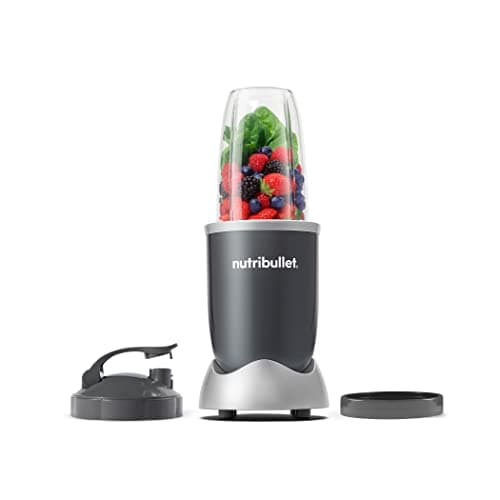
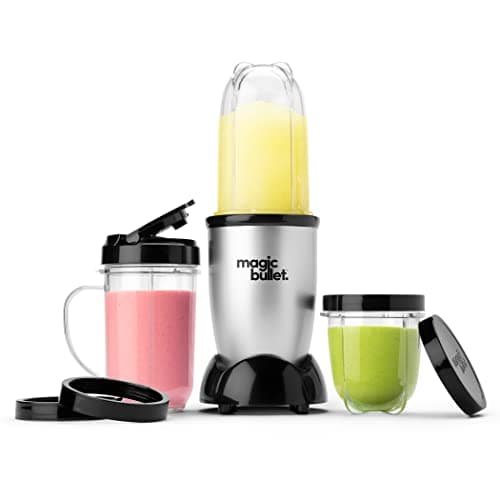
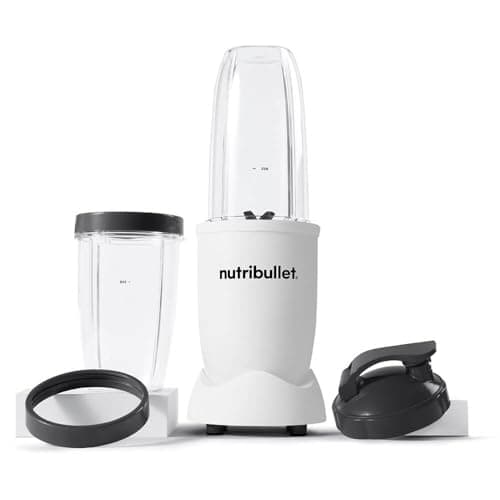
Buy the NutriBullet Pro. It is for the person who wants one machine for a daily shake and does not want to think about it again: a published 900 W driving two 32 oz cups, which is the most power per dollar available under $100 in this format. The budget pick is the Magic Bullet 11-piece setat 250 W — the cheapest machine here that still does small jobs well, and the right buy if what you make is dressings, dips and soft fruit rather than frozen smoothies.
Who each one is for, in one line
- NutriBullet Pro— for a daily shake: the most published watts under $100, in two 32 oz cups.
- NutriBullet 600— for one modest drink a day, with an 18 oz short cup as well as a 24 oz tall one.
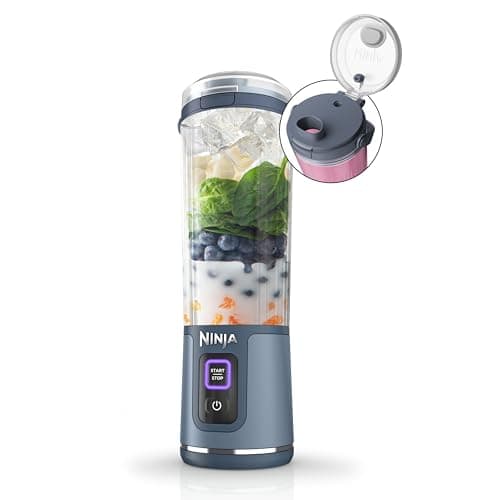
- Ninja Blast BC151— for blending nowhere near a socket: cordless, 18 oz, 2.4 lbs.
- Magic Bullet 11-piece set— the budget pick: 250 W for small jobs, at the lowest price in the catalog.
What $100 actually buys in a personal blender
A one-year warranty, between 250 and 900 published watts, and a cup you serve out of. Nothing on this page has a variable speed dial, a glass vessel, a published decibel figure or more than twelve months of cover. That is the honest shape of the bracket, and it is why the ranking here runs on two numbers rather than five:
- Published watts per cup.900 W into a 32 oz cup (the Pro) is a different machine from 600 W into a 24 oz cup (the 600), which is a different machine again from 250 W (the Magic Bullet). That spread is a factor of 3.6 inside a $60 price range, and it is the one thing in this bracket that changes what the machine can blend.
- Whether the maker still makes it.nutribullet.com’s pages state that both the Pro and the 600 are discontinued — replaced by the nutribullet Turbo and the 700 W Personal Blender respectively. They are still stocked and still priced, and still good buys for that reason. But the warranty is one year and it excludes cups and accessories, so on a format where the cup is the vessel, a discontinued line is a real consideration rather than a footnote.
One machine here publishes no wattage at all. SharkNinja’s own specification table for the Ninja Blast lists both wattage and peak wattage as 0, giving only a 7.4 V USB-C rechargeable base. We will not reverse-engineer a figure from a battery voltage, so it is ranked on what it is: a 2.4 lb cordless machine that makes up to 18 oz.
Why the prices on this page are not written in the text
Because they would be wrong by the time you read it. Every price on this site comes from Amazon’s API at the moment the page is served, with the date it was checked printed under the table, and it disappears rather than going stale if the refresh stops. Which means two things for a page with a dollar figure in its title: the picks here were all under $100 when their prices were last verified, and the table above is the authority rather than this paragraph.
Two machines sit just outside the cap and are worth knowing about if the table shows movement. The NutriBullet 1200 W Combohovers right on the line and brings a 64 oz pitcher as well as cups — it is ranked on the best blenders under $100 instead. The Beast GO Cordless sits a little above it and is the better cordless machine of the two, covered in best portable blenders. And the NutriBullet Ultra, the strongest machine in the format, is above the cap entirely — the bullet blender roundup ranks it at the top.
What these cost to run for a year
At 18.16¢ per kWh and this site’s standard assumption of 3 minutes a day, 365 days a year: about $2.98 for the 900 W Pro, $1.99 for the 600, and $0.83for the 250 W Magic Bullet. The Blast has no figure because none is published. The difference between the dearest and the cheapest to run is well under a dollar a year, which is the honest answer every time this question comes up in this category — the full arithmetic is here, including how to redo it with your own electricity rate.
What to spend the $100 on instead, if this is not the right format
If you blend for two people, buy a pitcher — a single-serve cup caps you at about 24 oz of drink and no amount of power changes that. The best blenders under $100 ranks the full-size machines in the same bracket on warranty and published power, and budget blenders for smoothies is the same money aimed specifically at smoothies. If the real constraint is weight rather than price, lightweight blenders under $100 ranks this bracket on published mass, which is a criterion nobody else in the category bothers to publish.
What we have not done
We have not tested any of these machines, blended anything in them, or timed anything. Every wattage, cup size, weight and warranty term above is read off the manufacturer’s own published specification, cited in full below; where a manufacturer publishes nothing — as SharkNinja does for the Blast’s wattage — the page says so rather than filling the gap.
How to spend $100 on a personal blender
1. Decide the drink size first, then the wattage
A 32 oz cup yields roughly 24 oz of drink once blades and headroom are allowed for; an 18 oz cup yields about 14. If your smoothie is 12 oz, the smaller cup blends it better and the bigger one just means more washing. Size is the decision; power is the tie-breaker.
2. Ask whether frozen fruit is a habit or an occasion
This is the only question in the bracket that 600 watts answers differently from 900. If you blend frozen fruit most days, buy the most published power you can — and if you do it occasionally, ten minutes of thawing costs nothing and closes most of the gap.
3. Check the model is still in production
Half of this bracket is not. It is not a reason to walk away — discontinued stock is often the best value on the shelf — but it tells you how easy a replacement cup or gasket will be in three years, and the warranty here excludes both.
4. Count the pieces, not the accessories
“Eleven-piece” is a marketing figure. What you need is two cups and a lid; the rest is cupboard space. A machine that comes with two good cups beats one that comes with eight mediocre ones.
5. Do not buy cordless unless you need cordless
A battery machine under $100 publishes no wattage, caps out at 18 oz and has to be charged. That is the right trade in a gym bag or a hotel room and the wrong one on a kitchen worktop, where a corded 900 W machine costs the same.
6. Do not put hot liquid in any of them
The format screws a sealed cup onto a blade base. Steam needs somewhere to go, and in a sealed cup it goes into pressure. Can personal blenders handle hot liquids sets out what the manufacturers themselves say about it.
How we picked
Blenders we claim to have tested: 0
Every site in this category tells you they blended twenty smoothies. We have not blended any, and we say so. Here is what we do instead: read the manufacturer's manual and spec sheet, record the published motor rating, jar capacity and warranty term, verify the warranty against the manufacturer's own warranty document, work out what the machine costs to run for a year and show the arithmetic, and cite all of it so you can check the work. Prices come live from Amazon's API and disappear rather than go stale.
The scores above are judgments from that documented research — not test results. The full rubric, including what disqualifies a product, is published in full.