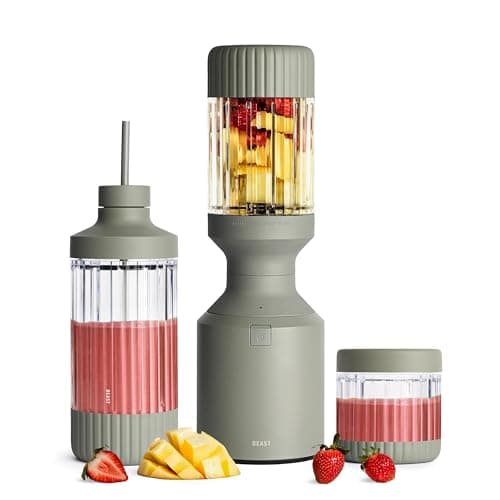
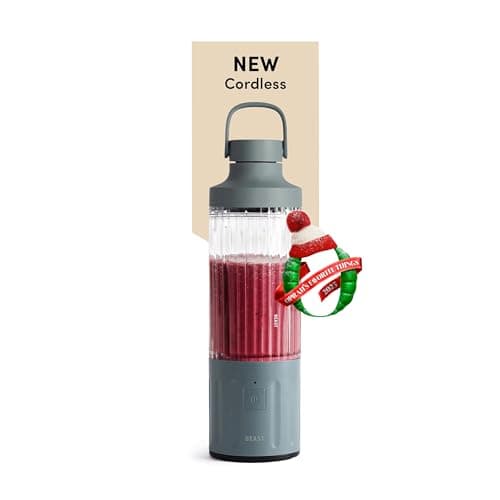
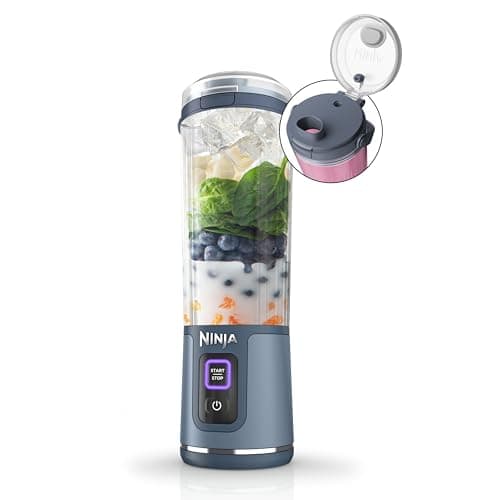
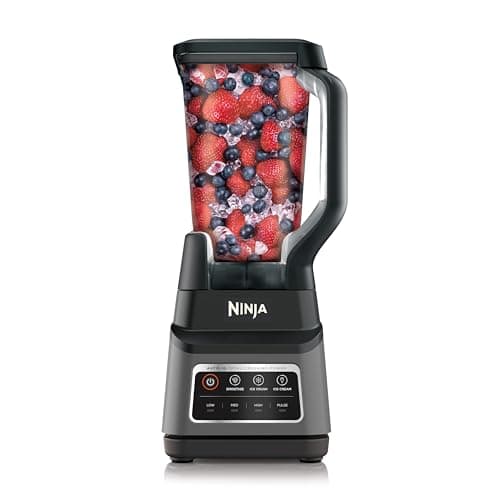
For most kitchens, buy the Ninja Professional Plus BN701: 64 ounces of usable liquid, a published continuous wattage, and a price that is a fraction of the Beast’s. Buy the Beast Mega 1200 if you blend for one person, want two years of warranty instead of one, and would rather have a machine that tells you what it can actually hold. On the cordless side the Beast GO has double the battery voltage and double the warranty of the Ninja Blast, and the Blast costs considerably less.
The real difference: each brand is candid where the other is silent
This is not the comparison we expected to write. Both of these brands do something in public that most of this category avoids, and they do it in different places — which makes the choice between them a question of which honesty you need.
Ninja publishes a continuous wattage.The BN701’s specification table gives 1,200 watts continuous and 1,400 watts peak, side by side. Almost nobody in this catalog does that. Peak is a burst figure measured in the first seconds of a run; continuous is what the motor actually draws while it works, and it is the number you can compare between machines and use for running-cost arithmetic. Blender wattage explained is why that distinction decides most of the power claims you will read.
Beast publishes a blending capacity. The Beast GO’s page states 670 mL total, 500 mL blending capacity— two numbers, not one — and the Mega states a 1000 mL vessel. Beast is the only brand in this catalog that separates what the vessel holds from what you can usefully fill it to, which is the honest way to state it, because nobody fills a blender to the brim. Ninja gets close on the BN701 with 72 oz total, 64 oz max liquid, and then publishes nothing comparable for the Blast.
And on cordless, both of them stop talking.Beast publishes no wattage for the GO at all — only a 3-cell, 11.1 V battery. SharkNinja’s specification table for the Blast lists the wattage as 0 watts and the peak wattage as 0 watts. One is a decision and the other looks like a data-entry failure, but the practical effect is identical: no cordless machine from either brand can be compared on power with any mains machine here, and any wattage you read for one of them came from somewhere other than the manufacturer.
Counter machines: Ninja BN701 vs Beast Mega 1200
Capacity is not close
The Ninja takes 64 ounces of liquid in a 72-ounce pitcher. The Beast Mega is a 33-ounce vessel. That is not a difference of degree, it is a difference of purpose: one is a family batch and the other is one generous serving. If anyone else in the house drinks smoothies, this comparison is already over. If you are blending for yourself, the Beast’s format — blend in the vessel, drink from the vessel — removes a washing-up step the Ninja cannot.
Power, on the numbers each one publishes
Beast states 1200 W and separately says it delivers the equivalent of 1.6 horsepower; no peak figure, no continuous label. Ninja states 1,200 W continuous and 1,400 W peak. Taking each maker at its word, these are comparable motors, and the Ninja is the one you can actually check, because it names which kind of watt it is talking about. Running them both at the site’s standard assumption of 3 minutes a day, 365 days a year, at 18.16¢ per kWh, each costs about $3.98a year in electricity — which is the real lesson of every wattage argument in this category: the gap is not where the money goes.
Warranty is where Beast earns its price
Two years against one. Beast covers both of its machines for two years in the USA and Canada for household use; Ninja covers the BN701 and the Blast for one year limited. In a class where one year is the norm, Beast doubling it is a genuine and checkable advantage, and it is most of the reason the Beast can ask what it asks. Blender warranties compared puts both against the seven- and ten-year terms higher up the market.
Where the vortex goes
Beast’s ribbed vessel wall is a design answer to the problem of a smooth spin doing nothing: the ridges disrupt the rotation so the load keeps folding back into the blade instead of orbiting. Ninja’s answer in the BN701 is a stacked blade assembly with edges at several heights in the pitcher, plus Auto-iQ programs that pulse and pause on their own. Both are real solutions to the same mechanical problem, and if you have ever watched a blender run while nothing moves, that is what too little liquid looks like.
Cordless: Beast GO vs Ninja Blast
Neither machine publishes a wattage, so the comparison has to run on the figures that do exist, and there are only three that matter.
Battery voltage.The Beast GO runs a 3-cell, 11.1 V pack. The Ninja Blast runs a 7.4 V base. That is not a power rating, and we are not going to convert it into one, but it is a real and published difference in the same direction as the price.
What the maker will commit to. Beast publishes 13 blending cycles of 30 seconds per charge and a charge time under two hours. Ninja publishes makes up to 18 ozand nothing else of that kind. A cycles-per-charge figure is a claim a buyer can hold the maker to; “long-lasting battery” is not.
What neither will do.Frozen fruit. Every cordless blender trades power for portability, and both of these are for soft fruit, powder and liquid. If a cup of frozen berries is the job, buy a corded machine — can personal blenders handle ice explains why the narrow cup helps and the battery does not.
So which brand?
Ninja, if you are buying one machine for a household.The capacity gap is decisive, the price gap is large, and Ninja publishes the one number — continuous watts — that lets you compare it with anything else on this site.
Beast, if you are buying for one person and intend to keep it. Two years of warranty against one is the clearest reason, the drink-from-the-vessel format genuinely removes a chore, and the published blending capacity means you will not be surprised by how little of it you can fill.
Neither, if the honest answer is a third brand. We have run this matchup against the other two brands people cross-shop it with: Beast vs NutriBullet is the same money against a cheaper incumbent, and Beast vs Vitamix is the warranty argument taken to its conclusion. If the question is really about cup-versus-pitcher rather than brand, bullet blender vs Ninja is the form-factor version of this page.
What we have not done
We have not blended anything in any of these four machines. We own none of them, we have run no timed tests and we have measured no noise — neither brand publishes a decibel figure for any machine here, and we are not going to supply one. Everything above is read off the manufacturers’ own specification pages, with the running-cost arithmetic shown so it can be checked. How we pick is the full method.