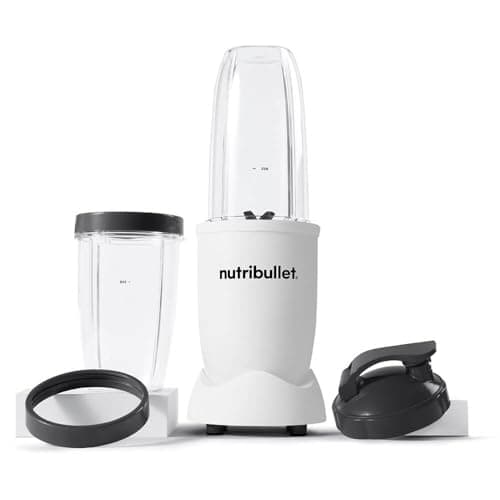
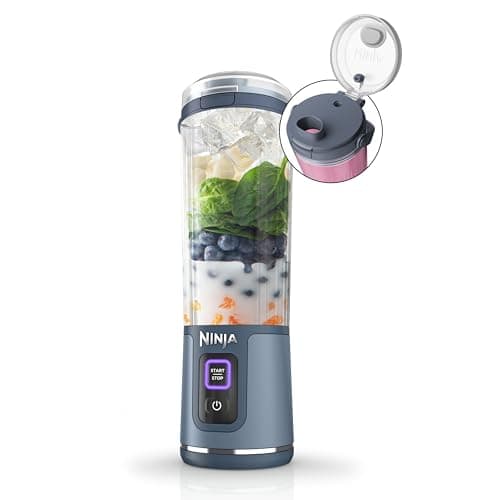
Buy the NutriBullet 600if the blender will live on a worktop next to a socket, which is where almost every single-serve blender actually lives. It publishes 600 watts, it ships the only genuinely small cup in our catalog — an 18 oz short cup alongside a 24 oz tall one — and it is the cheapest way into the NutriBullet parts ecosystem. Step up to the NutriBullet Proat 900 watts if you routinely add frozen fruit. Buy the Ninja Blast only if you need to blend somewhere there is no plug, because SharkNinja publishes no usable wattage for it at all.
“NutriBullet” is not one machine, which is why this page carries two of them. The query treats the brand as a single rival to the Blast; the brand sells a 600 W machine and a 900 W machine at meaningfully different prices, and which one you want depends on whether frozen fruit is in the cup.
The fact that decides this: a specification table that reads zero
SharkNinja’s own specification table for the Ninja Blast BC151 lists the wattage as 0 watts and the peak wattage as 0 watts. The only power-related figure published for the machine is a 7.4 V USB-C rechargeable base. That is almost certainly a data-entry failure rather than a statement about physics — but it is the published figure, and it means there is no manufacturer number to compare the Blast against anything on.
We treat that as accidentally honest. A battery blender genuinely cannot be compared with a mains one on watts, because the constraint is what a small cell can deliver rather than what the socket can. Every power claim you read about the Blast came from somewhere other than SharkNinja. NutriBullet, by contrast, publishes 600 W for the 600 and 900 W for the Pro — both unqualified, with no peak-versus-continuous label, which we note and take at face value.
Cup sizes are the second real difference
The Blast makes up to 18 oz, which is a sensible single serving and the vessel you drink from. The NutriBullet 600 ships an 18 oz short cup and a 24 oz tall cup, so it covers the same serving and a larger one. The Pro ships two 32 oz cups and nothing smaller — which sounds generous and is actually its main annoyance, because a modest shake is then blended in a vessel far bigger than it needs, and a narrow cup with a lot of empty air in it is exactly where a blend goes nowhere.
If a small drink is what you make, the 600 is the better-specified machine at the lower price. If you want 32 oz, the Pro is the only one of the three that offers it.
The three, side by side
Manufacturer figures only. Where a maker publishes nothing usable, the cell says so rather than carrying a number from a review site. | Published power | Vessels | Power source | Warranty |
|---|
| NutriBullet 600 | 600 W, no qualifier published | 24 oz tall cup and 18 oz short cup | Mains | 1 year |
|---|
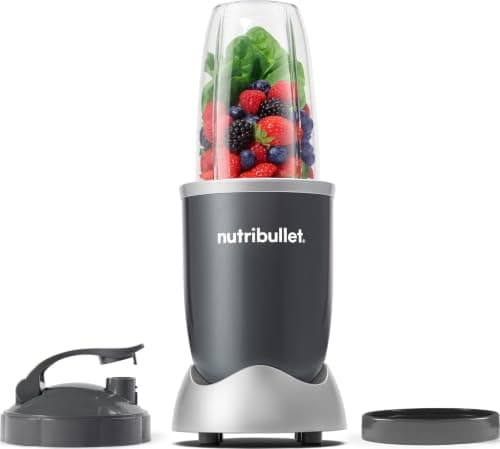
| NutriBullet Pro (900 W) | 900 W, no qualifier published | Two 32 oz cups | Mains | 1 year, cups and accessories excluded |
|---|
| Ninja Blast BC151 | Not published — spec table reads 0 W and 0 peak W | Makes up to 18 oz | 7.4 V USB-C rechargeable base | 1 year limited |
|---|
Running cost, where it can be calculated at all
At 18.34¢ per kWh (US EIA, Electric Power Monthly — average residential price, US total, retrieved September 2026) and 3 minutes a day, 365 days a year, the 600 W machine costs about $2.01 a yearand the 900 W Pro about $3.01. We publish no figure for the Blast, because with no wattage published there is nothing to multiply — and a battery machine’s draw is set by its charger rather than its motor anyway. Both numbers are small enough to be irrelevant to the decision, which is the honest conclusion of our running-cost guide.
Where the cordless machine genuinely wins
There is a real case for the Blast, and it is not about blending. It is about the socket you do not have: a desk in a shared office, a hotel room, a campsite, a boat, a gym bag. In those places a mains bullet blender is not a worse option, it is not an option. The Blast is among the cheapest ways to get a blender into them from a brand with a real service operation behind it, and it charges over USB-C rather than a proprietary brick.
What it will not do is a cup packed with frozen fruit. No battery blender will — the trade is structural, not a failure of this particular model, and our portable blender ranking makes the same point about the whole class. If you want cordless with more documentation behind it, the Beast GO publishes a battery voltage, a blending capacity and a cycles-per-charge figure, and carries two years rather than one; best cordless blenders for protein shakes ranks that class properly.
The warranty detail worth reading twice
All three carry one year, so the term is not a differentiator. The condition is. NutriBullet’s warranty excludes cups and accessories — and on a bullet blender the cup gasket is the usual failure point, which means the part most likely to go is the part not covered. Ninja’s one year is limited but is not stated to carve out the vessel. Neither brand publishes a decibel figure for any of these machines. The full cross-brand picture is on blender warranties compared.
What we have not done
We have not blended a smoothie in any of these three cups. No test, no timing, no texture score, no award. What this page is built from is three manufacturer specification tables read in full — including the one that reads zero — two warranty documents, and the published cup capacities. Our method is published in full, including what disqualifies a pick.
Three checks before you choose
1. Is there a socket where you will use it?
This is the whole decision. If yes, buy mains and get a published wattage for your money. If genuinely no — not “it would be nice” but no plug — buy cordless and accept the power trade.
2. Is frozen fruit going in the cup?
Frozen fruit is what separates these machines. At 600 W with a little liquid it works; at 900 W it works better; on a battery it is the load to avoid. If frozen fruit is most of what you blend, read whether you have to thaw frozen fruit first before you buy the smallest machine here.
3. What size drink do you actually make?
18 oz, 24 oz and 32 oz are real differences in a narrow cup, because a blender works best when the vessel is appropriately full. Buying a 32 oz cup for a 16 oz drink is a worse blend, not a more flexible one. What size blender do I need works through it.