HUB 07 · Guides
Does Blending Destroy Fiber?
No. The federal definition of dietary fiber is a chemical one, and a blade does not do chemistry - it does particle size. That distinction answers the question completely, and it is also where the honest caveats live.
We earn a commission if you buy through our links. It does not change the price you pay, and it does not decide our picks — our selection criteria are published in full. How this works.
No. Blending does not destroy, remove or ruin fiber, and the clearest way to see why is to read how the fiber on a nutrition label is actually defined. The US FDAdefines dietary fiber as “non-digestible soluble and insoluble carbohydrates (with 3 or more monomeric units), and lignin that are intrinsic and intact in plants; isolated or synthetic non-digestible carbohydrates (with 3 or more monomeric units) determined by FDA to have physiological effects that are beneficial to human health.” That is a definition about molecules. Nothing in it refers to particle size, grinding, chopping or processing of any kind.
A blender changes particle size. It cannot change how many monomeric units a carbohydrate chain has, so it cannot move a carbohydrate out of that definition and into some other category. Blend an apple and you still have every gram of apple fiber you started with, in the glass, in smaller pieces. If you want a source you can check rather than our word for it, the FDA page is linked at the foot of this page.
Where the confusion comes from: juicing is a different machine
Almost everyone who worries about this has heard, correctly, that juicingloses fiber. It does — but not by destroying it. A juicer physically separates the liquid from the pulp and puts the pulp in a bin. The fiber is not damaged; it is thrown away in a different container.
A blender has no second container. There is one vessel, everything that went in is still in it, and you drink all of it. That single mechanical difference is the whole distinction, and it is why the two machines produce such different drinks from identical fruit. We lay the appliance choice out properly on blender vs juicer— this page is about what happens to the fiber a blender keeps.
The second source of the confusion is the word “intact” in the FDA definition, which reads naturally as “physically whole”. It is worth being precise about this, because it is the one place the definition could be misread into supporting the myth. In that sentence, “intrinsic and intact in plants” distinguishes fiber that is naturally present in a plant food from fiber that has been isolated or synthesised and added to a product — the second half of the same definition covers that added kind separately, and subjects it to an extra test. It is a sourcing distinction, not a particle-size one. We are reading the FDA’s sentence here, not interpreting its intent beyond what it says.
What blending genuinely does change
Three things, and none of them is the fiber content. We are describing mechanism here, not publishing outcomes — see the limits section below.
Particle size and cell walls
A blade ruptures plant cell walls and cuts fibrous structures into shorter lengths. The fiber is all still present; it is finely divided rather than in the long strands you would chew. This is also the mechanical reason a smoothie is smooth and a chewed apple is not.
How quickly you drink it
This is the change people actually notice. Chewing an apple takes minutes; drinking a blended apple takes seconds, and you can comfortably put three pieces of fruit in one glass when you would not sit down and eat three apples. The portion and the speed change, and both are entirely within your control — that is a sentence about behaviour, not biochemistry.
Oxidation and separation, over time
Once blended, a smoothie starts to brown and to separate. Neither is a fiber problem — it is enzymatic browning and the solids settling out of suspension. If you are blending ahead, that is a different question and it has its own page: how long a smoothie lasts in the fridge.
The specific versions of this question, answered
| The question | Short answer |
|---|---|
| Does blending destroy fiber? | No. Fiber is defined by molecular structure; a blade changes particle size. |
| Does blending remove fiber from fruit? | No. Nothing leaves the jar. Juicing removes it, by binning the pulp. |
| Does blending turn insoluble fiber into soluble fiber? | Not by our reading — both are defined by structure, not size. We publish no measurement either way. |
| Is a smoothie as good as whole fruit? | Outside what we can source. Same fiber, different particle size and drinking speed; the health comparison is not ours to make. |
| Does a more powerful blender destroy more fiber? | No. More power means finer particles, not less fiber. Watts cannot do chemistry. |
| Does blending for longer make it worse? | Finer, warmer and more oxidised, with the same fiber content. Blend to the texture you want and stop. |
Does the machine make any difference at all?
To the fiber content, no — and that is worth saying plainly on a site that sells blenders. A $40 machine and a $600 machine put the same grams of fiber in the glass from the same apple. Anyone telling you a particular blender “preserves more nutrients” is making a claim they cannot show you a document for, and we are not going to join them.
What the machine changes is texture, and texture is a real reason to care, because it decides whether you drink the thing. Tough, fibrous ingredients — kale ribs, celery strings, the woody end of ginger, berry seeds — survive a weak blender as recognisable threads and grit. That is the entire practical difference, and it is a mouthfeel difference rather than a nutritional one. The machines that handle fibrous greens without leaving threads are ranked on best blenders for green smoothies, and the texture argument in general is on best blenders for creamy smoothies.
If grit is the problem you actually have, the fix is usually technique rather than hardware: chop the fibrous stalks before they go in, blend the greens with the liquid first before adding anything frozen, and give it longer than feels necessary. The ingredient order that does most of that work is on how to make a smoothie.
What we are not going to tell you
We are a blender site. We have no laboratory, we have measured no fiber content, and we are not qualified to tell you what a smoothie does to your blood sugar, your digestion, your satiety or your weight. So we have not. Everything above is either a verbatim quotation of the FDA’s labeling definition and what follows logically from it, or a description of the mechanism by which a blade acts on plant tissue, stated as mechanism.
Specifically, we publish nofigure for fiber grams before and after blending, no glycemic claim, no satiety claim, no “nutrient retention” percentage, and no comparison of smoothies against whole fruit as a health outcome. Those are clinical questions and the honest answer to “what does your blender site think” is that our opinion on them is worth nothing. If they matter to your situation, that is a conversation for a doctor or a registered dietitian, not a product page. Our method, and what disqualifies a claim, is published in full.
If fiber is why you are buying a blender
1. Buy the blender, not the juicer
This is the one decision on this page that genuinely changes what ends up in the glass. A blender keeps everything; a juicer separates the pulp out and discards it. If keeping the whole fruit is the point, the format question is settled before you compare any models — and the full argument is on blender vs juicer.
2. Buy for texture, and be honest about your ingredients
Fibrous greens and seedy berries are what separate machines, because they are what gets left as threads and grit by an underpowered one. If your smoothie is banana, yogurt and protein powder, almost anything will do it and you should spend the money elsewhere. If it is kale, celery and frozen berries, texture is a real constraint.
3. Ignore every “nutrient preserving” claim on a box
No manufacturer in our catalogue publishes a document supporting one, which is why no such claim appears anywhere on this site. Low-speed starts, vacuum functions and “cold-press” branding on a blender are features you can judge on their own merits; none of them changes the fiber content of an apple.
4. Match the vessel to the portion
Since blending makes it easy to drink more fruit at once than you would eat, the size of the vessel quietly sets your portion. A sealed single-serve cup makes one drink and stops; a 64 oz pitcher makes four. That is a genuinely useful reason to choose a form factor, and what size blender do I need works through it.
The hardware
The hardware this guide is about
The products this guide refers to, with prices pulled live from Amazon. Prices last checked October 19, 2026. Where we have no verified live price we show none rather than a stale number. Full rankings live in the roundups linked above.
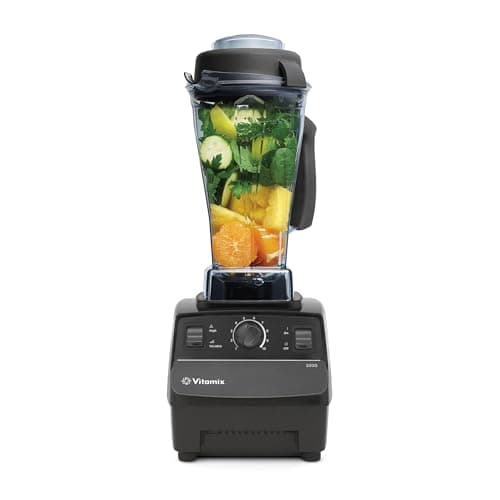
Buying once
Vitamix 5200
The seven-year warranty is the product. A machine with a fully variable dial, a tall narrow jar and a tamper, backed longer than almost anything else at any price.
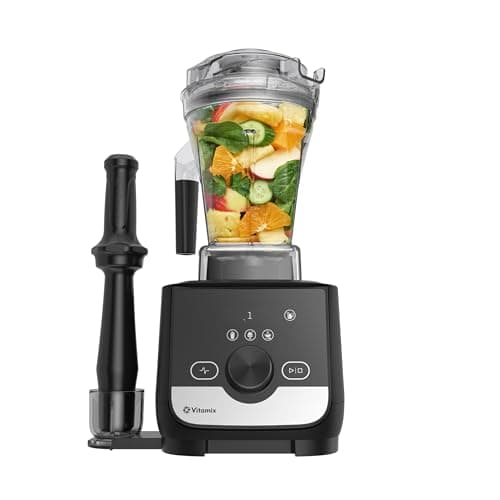
Buying once, under a cabinet
Vitamix Ascent X3
Ten years of full warranty, a tamper in the box, and the only full-size machine here that fits under a standard cabinet. The trade is a 48 oz jar instead of 64, at the highest price in the catalog.
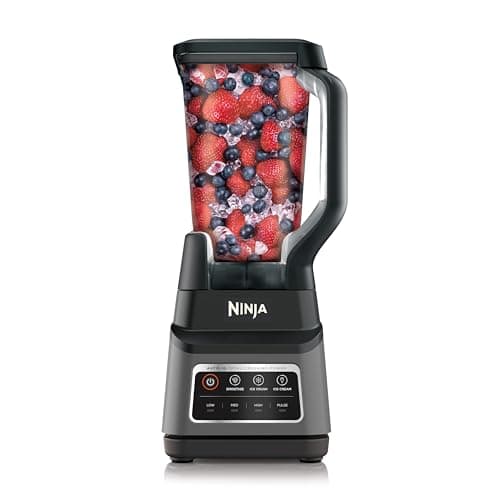
Most kitchens
Ninja Professional Plus BN701
The one brand here that publishes both a continuous and a peak wattage instead of only the flattering one. A large pitcher and real power for about a fifth of the premium price.
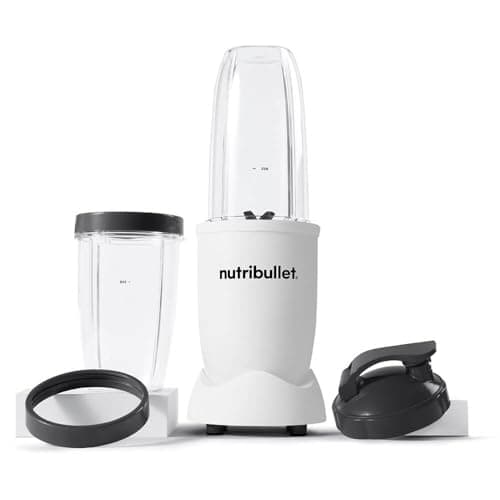
Everyday shakes
NutriBullet Pro (900 W)
The default bullet blender, and a good one. Note that NutriBullet's own product page contradicts itself about which cups are in the box.
#ad · As an Amazon Associate we earn from qualifying purchases.
Questions
Frequently asked
Does blending destroy fiber in fruits and vegetables?
No. The FDA defines dietary fiber as non-digestible carbohydrates with three or more monomeric units, plus lignin — a definition about molecular structure that makes no reference to particle size, grinding or processing. A blender cuts things smaller; it cannot change the number of units in a molecule. The full definition is quoted on this page and the FDA source is linked at the foot of it.
Does blending remove fiber from fruit?
No, because nothing leaves the jar. This is where juicing gets confused with blending: a juicer separates the liquid from the pulp and discards the pulp, so the fiber is binned rather than damaged. A blender has one vessel and you drink all of it. The appliance comparison is on blender vs juicer.
Is a smoothie as healthy as eating whole fruit?
We will not answer that, because we are a blender site with no lab and no clinical expertise, and an honest site says so rather than guessing. What we can tell you is the mechanical part: the fiber content is unchanged, and the particle size and how fast you drink it are not. The health comparison belongs to a doctor or a registered dietitian.
Does a high-powered blender destroy more nutrients?
Not as far as fiber goes: more power produces finer particles, not fewer grams. No manufacturer in our catalogue publishes any nutrient-retention document for any machine, so no such claim appears anywhere on this site — including in favour of the expensive models we rank first for other reasons.
Why does my smoothie still feel gritty if the fiber is intact?
Because grit is a particle-size problem, not a fiber problem — and it is usually caused by specific ingredients: kale ribs, celery strings, woody ginger and berry seeds. Chop the fibrous stalks first, blend greens with the liquid before adding anything frozen, and run it longer than feels necessary. The machines that cope best are on best blenders for green smoothies.
Should I blend for less time to protect the fiber?
There is no fiber reason to. Longer blending gives you finer particles, a slightly warmer mixture and more oxidation, with the same fiber content throughout. Blend to the texture you want and stop. If the drink is sitting around afterwards, the thing that changes is covered on how long a smoothie lasts in the fridge.
Keep reading
Related
- GuidesThe hub this explainer sits in.
- Blender vs juicerThe machine that genuinely does remove the fiber, and when you might want it to.
- How long does a smoothie last in the fridge?What actually changes after blending, with the FDA rules that apply.
- Best blenders for green smoothiesFibrous greens are a texture problem, and this is the hardware ranking for it.
- How to make a smoothieThe ingredient order that fixes most grit without new hardware.
- What size blender do I need?Why the vessel quietly decides your portion size.
Receipts
Sources
- US FDA — Questions and Answers on Dietary Fiber: the labeling definition of dietary fiber, quoted in full
- Vitamix — 5200 product page and specification table
- Vitamix — 7-Year Full Warranty terms
- Vitamix — Ascent X3 product page, specification list and in-box contents
- SharkNinja — Ninja Professional Plus BN701 specification table
- NutriBullet — Pro product page
- NutriBullet — warranty terms
We do not run a testing lab and we do not pretend to. Specifications come from the manufacturer's own published documents and from published standards; prices come from the live Amazon API. Where a figure is not published, the page says “not published” rather than guessing. Read the full method.