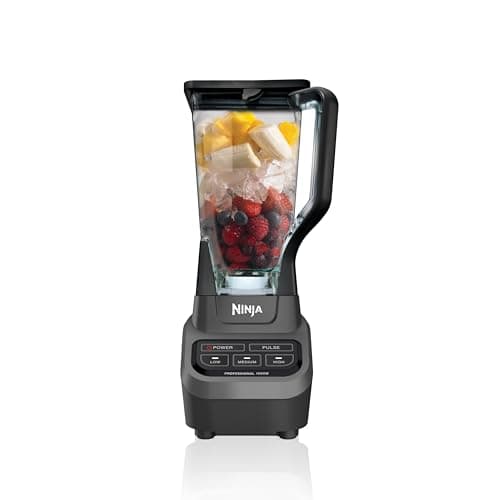
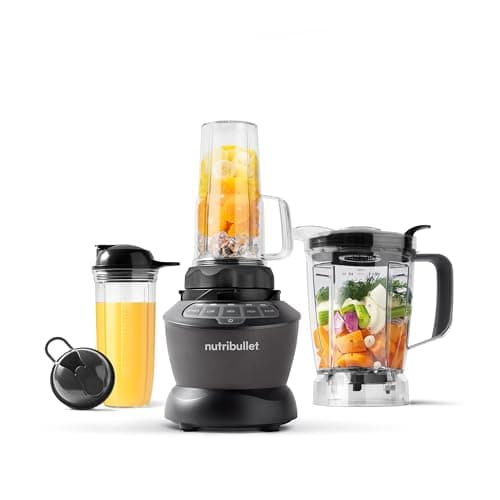
The NutriBullet 1200 W Blender Combois the pick, and not because it is the cheapest thing here. It publishes 1200 watts with no peak-versus-continuous game attached to the figure, which is the most power anyone documents under $100, and it puts a 64 oz pitcher and two blend-and-go cups on that one base. A smoothie is the blend most people make in ones and twos and drink immediately, so the cup is not a bonus feature on this page — it is the vessel. If a jar is all you want, the Ninja Professional BL610 costs about the same and gives you more of one.
$100 is a line we drew, not a promise we can keep. Our prices come live from Amazon and they move constantly. Every machine below was verified in stock and under $100 on the day this page was published, but we cannot promise that is still true at the moment you are reading, and we would rather say so than pretend a page title can control a retailer. The live price beside each pick is the one that counts.
Which of our three smoothie pages you actually want
Three pages on this site rank overlapping machines for overlapping reasons, and thirty seconds spent landing on the right one will save you an hour of second-guessing.
Best blenders for smoothies ranks the same job with the budget open. Its winner is the Ninja BN701 and the Vitamix 5200 is on it. That is the page to read if the cap is negotiable.
Best blenders under $100ranks the same price band for general kitchen work, on warranty and published power across all jobs. Its winner is a bigger jar than ours, and the 250 W Magic Bullet is ranked sixth on it — a defensible call for dressings, dips and a soft shake, and an indefensible one for frozen fruit. That machine is deliberately not on this page.
This page is the intersection of the two: what a smoothie actually asks a machine to do, with the money capped. That is why the order comes out different from both of them rather than being a re-sorted copy of either.
Three things a smoothie asks for, and which of them $100 buys
Frozen fruit has to be fractured rather than stirred.A frozen banana or a cup of frozen berries is effectively a solid, and the first two seconds — before anything has broken loose and started circulating — are where a small motor gives up. This is the one criterion on the list that money genuinely buys, and it is the one the price cap actually costs you. The gap between the 1200 W machine at the top of this page and the 444 W machine at the bottom is real, and it shows up on exactly this load.
A thick smoothie is a circulation problem, not a power problem. The less liquid you use, the more the mixture behaves like a solid plug that rotates with the vessel instead of passing through the blades. Expensive machines solve this with a tamper. Not one machine in this price band has one, so the two answers available here are the inverted bullet cup, which uses gravity to keep feeding the load onto the blades, and simply adding more liquid. Both are free. Neither improves if you spend another $40.
Fiber is cut, not dissolved. Kale stems, celery strings and berry seeds are what make a finished smoothie gritty, and the fix is blade sharpness and blending time rather than wattage. No manufacturer in this band publishes anything useful about blade steel, so it is not something you can compare and not something we will pretend to rank on. What is comparable is how long you are willing to run the machine, which costs nothing.
Two of those three survive the price cap intact. That is the whole argument of this page: under $100 the ranking is set by the first criterion and by which vessel suits the smoothie you actually make, and almost everything else is technique.
How this page is ranked.Published motor ratings quoted exactly as each manufacturer words them, with the qualifier noted when there is one and its absence noted when there is not. Vessel capacities as published, treated as brim figures rather than serving sizes. Warranty terms read from each manufacturer’s own warranty document for what they exclude, not for what they advertise. Where a figure is not published, the cell says so rather than carrying an estimate. We own none of these machines and have blended nothing in any of them. The full method.
Running cost assumes 3 minutes a day, 365 days a year at 18.34¢ per kWh (US EIA, Electric Power Monthly — average residential price, US total, retrieved September 2026). Every motor figure is the manufacturer’s own published number, reproduced with its qualifier or with a note that none was given.| Machine | Published motor | Vessels | Warranty | Cost / year |
|---|
| NutriBullet 1200 W Blender Combo | 1200 W, no qualifier | 64 oz pitcher, 32 oz and 24 oz cups | 1 year, excludes cups | $4.02 |
|---|
| Ninja Professional Blender BL610 | 1,000 W, from a replacement-part listing | 72 oz pitcher | Not published for this model | $3.35 |
|---|
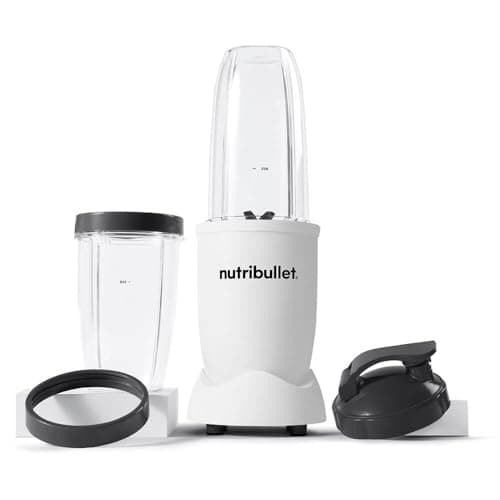
| NutriBullet Pro (900 W) | 900 W, no qualifier | 32 oz cups; box contents stated inconsistently | 1 year, excludes cups | $3.01 |
|---|
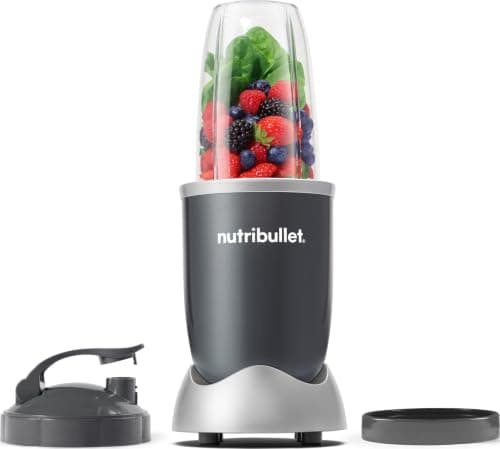
| NutriBullet 600 | 600 W, no qualifier | 24 oz and 18 oz cups | 1 year | $2.01 |
|---|
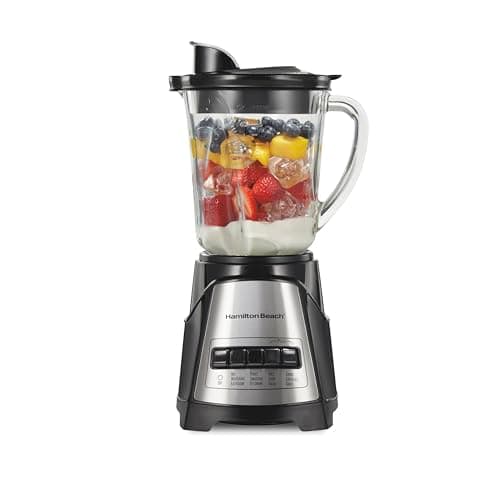
| Hamilton Beach Power Elite Wave Action | 700 W peak, defined; 3.7 A plate = 444 W | 40 oz glass jar | 3 years US, 5 years Canada | $1.49 |
|---|
One machine sits right on the line
The Ninja Professional Plus BN701 carries a list price above this page’s cap and is discounted below it often enough that it was under $100 on the day we published. We have not ranked it here, because a budget page built on a discount stops being true the moment the discount ends, and a ranking with a hidden expiry date on it is not worth writing.
The buyer-first version, though, is this: if the live price on the BN701 review is under your cap when you look, it is the most machine available in this band. Ninja publishes 1,200 watts continuous and1,400 watts peak as separate figures, which almost nobody in this category does, plus 64 oz of maximum liquid capacity. It is the winner of our open-budget smoothie ranking for exactly those reasons. Check the number, then decide.
The ranking
1. NutriBullet Blender Combo — the most documented power under $100, and both vessels
1200 watts, published plainly by NutriBullet with no peak or continuous qualifier attached, which makes it the highest power figure in this band that you can take at face value. On the one criterion the price cap genuinely costs you — getting frozen fruit moving in the first seconds — that headroom is where the money goes.
What puts it first rather than second, though, is that it is the only machine here that covers both smoothie shapes. A 64 oz pitcher handles a weekend batch for a household; the 32 oz and 24 oz cups screw onto the same base for the weekday cup you drink on the way out. Every other machine on this page does one of those two things. Buying a bullet blender now and a pitcher machine later costs more than this does today.
The honest deductions are real. The warranty is one year, and NutriBullet’s terms exclude cups and accessories — which is to say they exclude the parts that actually fail, since the gasket and the cup thread are the usual complaints in this category. There is no tamper, so a thick low-liquid mixture in the big pitcher means stopping the machine and scraping down rather than pushing the mass into the blades while it runs. And two vessel systems is simply more to store. Skip it if you will only ever use the pitcher: you would be paying for cups that live in a cupboard, and a single-jar machine at the same money gives you more jar. Full write-up in the Combo review.
2. Ninja Professional BL610 — the most jar, and the least documentation
This is the machine that has been the default budget recommendation for a decade, and for the specific job of putting a lot of frozen fruit through a big pitcher it is still hard to argue with. A 72 oz jar and three plain speeds with no programs to learn, at roughly the same money as the Combo. If your smoothie habit is a full pitcher on Sunday rather than a cup on Tuesday, buy this one.
It is second because of what we cannot check. SharkNinja has withdrawn the product page for the BL610, so the 1,000 W figure in our table comes from their own listing for the model’s replacement motor base rather than from a specification sheet, and the 72 oz capacity comes from the replacement-pitcher listing — whose in-box text says 71 oz on the same page. Ninja states one year on every current blender page and publishes nothing at all for this delisted one. On a site whose entire authority claim is traceability to a manufacturer document, that costs it the top spot, and it should cost it something with you too.
The other deductions: no single-serve cups, so there is a jar to wash every time; the stacked blade tower is more surfaces to clean than a single fixed blade; and there is no tamper here either. Skip it if you want documented specifications — this is the one machine on the page whose maker no longer publishes a page for it. See the BL610 review, or the batch-first ranking at best blenders for family smoothies.
3. NutriBullet Pro — the one most single people should actually buy
900 watts is less than the two machines above it and more than enough for the smoothie most people genuinely make: frozen berries, a banana, yogurt or milk, a handful of greens. The reason it copes better than its watt figure suggests is the inverted cup. The vessel screws onto the base upside down, which puts gravity on the blades’ side and keeps feeding the load into the cutting zone instead of letting it ride above it — the same circulation problem a tamper solves on an expensive machine, solved here by geometry and for free.
It is the value pick of the page rather than a compromise, and it is the cheapest route to the thing a single-serve machine is uniquely good at: you drink from the vessel you blended in, and there is no jar to wash.
The deductions. A one-year warranty that explicitly excludes cups and accessories. Cup sizes stated inconsistently — NutriBullet’s own product page and the retail listing do not agree about what is in the box, so treat the cup count as unconfirmed until you open it, and note that we are not going to resolve a contradiction by quoting the more flattering half of it. The cup is sealed and is not for hot liquid; the manual says so and so do we, at can personal blenders handle hot liquids. Skip it if you make genuinely thick smoothie bowls or nut butter: a narrow cup gives a thick mixture nowhere to move and the motor nowhere to cool. Detail in the Pro review.
4. NutriBullet 600 — the floor that still makes a real smoothie
600 watts, a 24 oz tall cup and an 18 oz short cup, well under the cap. The 18 oz cup is the only properly single-serving vessel on this page, and for a smoothie built on soft fruit, yogurt, powder and a handful of frozen berries it is entirely sufficient. It is also the cheapest way into the NutriBullet accessory ecosystem, which matters more than it sounds: replacement cups, lids and blade assemblies are easy to find, and the gasket is the part that goes.
Its limit is specific and worth knowing before you buy rather than after. At 600 watts in a narrow cup, a load of frozen fruit with little liquid will stall, and pulsing repeatedly at a stalled load is how a small motor gets cooked. It also has no variable speed — it runs at one speed and you control it with how long you press — and the warranty is one year. Skip it if frozen fruit is in most of your smoothies and buy one of the three above instead. See the 600 review and the published limits in can personal blenders handle ice.
5. Hamilton Beach Power Elite — three years, a glass jar, and a hard ceiling
The cheapest machine on this page and the most honest about its own numbers. Hamilton Beach publishes 700 watts of peak blending power, then defines peak in its own manual as the draw during the first seconds of operation, and prints the real rating plate next to it: 120 V, 3.7 A maximum. That works out at 444 W of actual continuous draw, which is the figure our running-cost column uses. No premium brand in this category shows that much candor about wattage.
It also carries three years of warranty in the US and five in Canada, which is triple what the NutriBullet machines above it offer at twice the price, and a 40 oz glass jar that will not cloud, will not hold onto the smell of last week’s garlic, and goes in the dishwasher without any anxiety about it.
Then the ceiling, stated plainly, because it is the whole reason this is fifth rather than first. 3.7 amps is a fraction of what the machines above it draw and it shows on a full jar of frozen fruit. The glass jar is heavy. 40 oz is small for a family batch. There is no tamper and no variable dial. Skip it outright if you blend frozen fruit without added liquid: at 3.7 amps this machine will stall, and no amount of pulsing changes the arithmetic. Buy it for soft fruit, yogurt, powder and liquid, and for a warranty that will outlast every machine above it on this page. Full detail in the Power Elite review and the category-wide comparison at blender warranties compared.
The short version. Frozen fruit, and sometimes for more than one person: the NutriBullet Blender Combo. A big pitcher and nothing else, if you can live with a withdrawn spec sheet: the BL610. One person, one cup, most mornings: the NutriBullet Pro. The same job on a tighter budget with softer ingredients: the 600. The longest warranty and the lowest price, as long as there is liquid in the jar: the Hamilton Beach Power Elite.
What is not on this page, and why
The Magic Bullet. It is under $100 by a wide margin and it is ranked on our general under $100 page, correctly, because it is genuinely good at dressings, dips, chopping small quantities and a soft shake. It is a 250 W motor base. That is a quarter of a mainstream bullet blender, it will not crush ice and it will not blend frozen fruit, and buying it as a smoothie machine is the most common mistake in this category. Ranking it here to pad the list to six would be exactly the thing this site exists not to do.
Cordless portables.The Ninja Blast BC151 sits comfortably under the cap and is sold for smoothies, but SharkNinja’s own specification table lists its wattage as 0 watts and its peak wattage as 0 watts. No usable power figure is published for it at all, so it cannot be compared with anything on this page, and battery machines are already the weakest category in the niche for frozen loads. If cordless is the actual requirement, read best portable blenders, which ranks them against each other rather than against mains-powered machines.
Machines above the line. The NutriBullet Ultra and the Beast Mega 1200 are both better single-serve machines than anything here and both sit above $100; they lead the personal-blender smoothie ranking. The Oster Pro 1200 and the Ninja DUO BN751 were also above the cap when we checked. None of them was excluded on merit — only on price.
Related reading
If the budget is more flexible than the page title suggests, the open-budget ranking at best blenders for smoothies is the one to read. If the smoothie is specifically a thick, low-liquid one, the vessel argument above becomes the whole decision and best blenders for smoothie bowls covers it properly. And if you are trying to work out whether the wattage on the box means anything at all, that is blender wattage explained.
Four checks decide a smoothie blender under $100, and a fifth thing costs nothing and beats all of them.
Published watts, and what the figure is worth in this band
A watt figure is only comparable when you know what kind of figure it is. Brands publish peak watts, continuous watts, input power, horsepower equivalents and nameplate amperage more or less interchangeably, and the flattering one is usually the one on the box. On this page NutriBullet publishes 1200, 900 and 600 watts with no qualifier at all, so those three are at least comparable with each other. Hamilton Beach publishes a peak figure, then defines it and prints the rating plate, which is better practice than any premium brand here manages. Ninja publishes nothing current for the BL610, and the figure we quote comes from a replacement-part listing. Treat those as three different qualities of evidence rather than as numbers on one scale. The broader problem is set out in blender wattage explained.
The vessel, which is where budget machines actually differ
A blender only cuts what passes through the blades. In a plain jar a thick mixture forms a vortex and rotates as a single mass, so the motor spins freely while the smoothie stays lumpy. Expensive machines fix this with a tamper you push down through the lid while it runs. Nothing in this price band has one. What is available instead is the inverted bullet cup, which uses gravity to keep the load on the blades, and that is a genuine engineering answer rather than a cost-cutting one — it is why a 900 W cup can out-blend a bigger jar on a thick single serving. Choose the vessel that matches the smoothie you actually make, then look at the watts. Sizing in general is covered in what size blender do I need.
The warranty is the line item budget machines cut
One year is the norm at this price and it is short. Read past the headline term for two things. First, exclusions: NutriBullet’s warranty covers the machine but excludes cups and accessories, which are the components most likely to fail on a machine whose vessel is the thing you carry around. Second, whether a term is published at all: nothing is published for the delisted BL610, and an unstated warranty is not the same thing as a one-year warranty. The outlier on this page is the cheapest machine, which carries three years, and that is not a coincidence — a lower-powered motor is a motor under less stress. The category-wide reading is at blender warranties compared.
What $100 does not buy, stated plainly
No tamper, on any machine here. No variable-speed dial on the single-serve machines — they run at one speed and you control the blend with how long you press. No published decibel figure from any manufacturer on this page, which means every quietness claim you read about these machines came from somewhere other than the maker. And no meaningful repair path: at these prices the remedy for a failure is a replacement machine rather than a repaired one, which is the real argument for reading the warranty term before you buy instead of after something stops working.
The part that costs nothing
Loading order does more for a budget smoothie than another 300 watts. Liquid first, then soft ingredients, then greens, then frozen fruit and ice on top, so the blades start in liquid and pull the solid load down into themselves rather than trying to bite a frozen block from a standing start. On an inverted bullet cup the order reverses, because the cup goes onto the base upside down. This is the highest-return thing you can change about how you use a cheap machine, and it is set out step by step in how to make a smoothie.