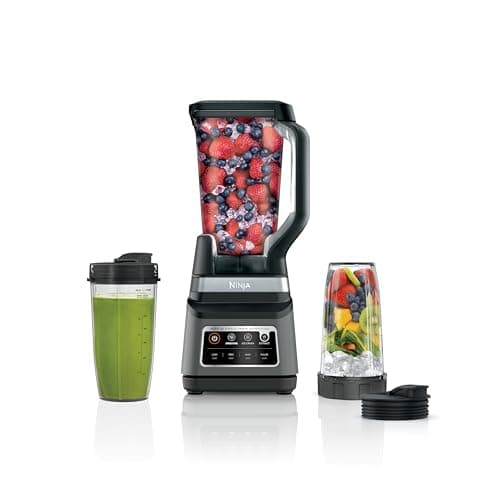
Here is the finding before the list: across the eighteen machines we track, there is essentially nothing between the mid-$100s and the high $300s. A $300 budget does not buy you a $300 blender — it buys a $130 one with $170 left over, or a premium single-serve machine, or the first installment on a tier you cannot quite reach yet. The best full-size machine you can actually buy in this bracket is the Ninja Professional Plus DUO BN751, and the best thing to do with the remaining money is usually not another blender.
About the number in the title.Our prices come live from Amazon and they move constantly. We cannot promise every machine below sits under the heading figure at the moment you read this, and a page that makes that promise is either checking by hand daily or quietly hoping you will not notice. The live price beside each pick is the authority — if it disagrees with the heading, believe the price. Where our last check is more than 48 hours old the number disappears rather than going stale, because a missing price is more useful than a wrong one.
Why this bracket has a hole in it
Blenders are not priced on a smooth curve. There are two engineering answers in this category and a cliff between them.
Below the cliffsits the mainstream full-size machine: a 1,000-1,200 W motor, a plastic jar of around 64 oz usable, preset programs, no tamper, no fully variable speed dial, and a one-year warranty. Ninja, NutriBullet and Oster all build essentially this machine, and adding money inside the band buys accessories rather than capability.
Above the cliffsits the buy-once machine: a nameplate rating around 11.5 amps, a tall narrow jar, a tamper, a genuinely variable dial, and a warranty of two to seven years that covers parts, labor and in Vitamix’s case shipping. That combination is what finishes nut butter and smoothie bowls, and nobody sells it for $250.
The band in between is filled, industry-wide, by machines that look like the second thing and are specified like the first. When a roundup tells you a $250 blender is “nearly a Vitamix”, check whether it is quoting a peak wattage against a nameplate amperage. That comparison is not a comparison, and the wattage guide explains exactly why.
How this page is ranked.Published motor rating, published usable capacity, the manufacturer’s own warranty document, and the annual running cost derived from those figures — specification-based judgments from primary sources, not bench tests. The method is here.
Running cost assumes 3 minutes a day, 365 days a year at 18.34¢ per kWh (US EIA, Electric Power Monthly — average residential price, US total, retrieved September 2026). Motor figures are in each manufacturer’s own words.| Machine | Form factor | Published capacity | Warranty | Cost / year |
|---|
| Ninja Professional Plus DUO BN751 | Full-size pitcher + cups | 64 oz max liquid | 1 year | $4.02 |
|---|
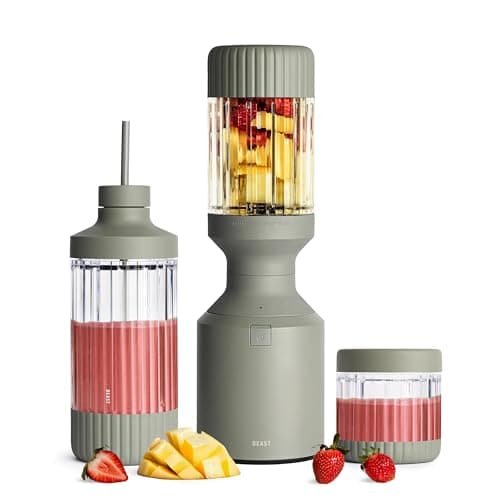
| Beast Mega 1200 | Personal, single vessel | 1000 mL (33 oz) | 2 years | $4.02 |
|---|
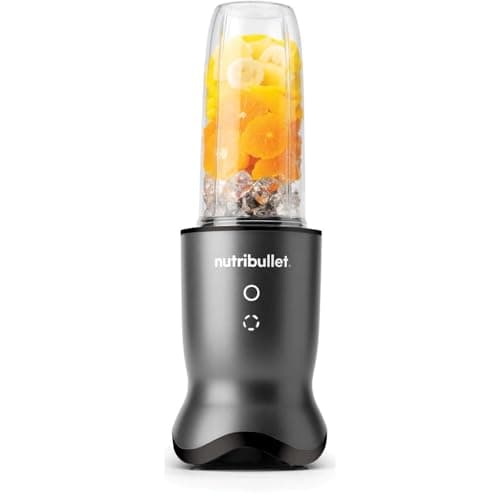
| NutriBullet Ultra (1200 W) | Personal, two cups | 24 oz and 32 oz | 1 year; 5 on the blade | $4.02 |
|---|
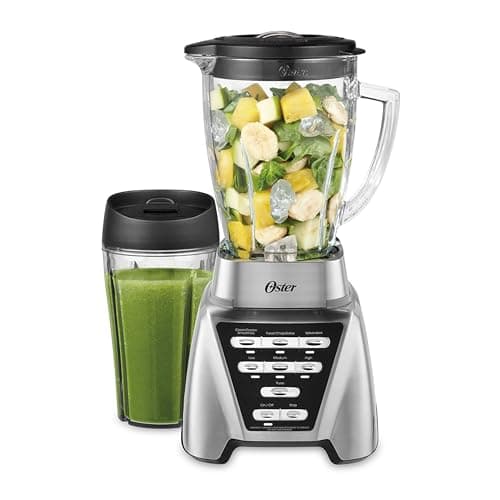
| Oster Pro 1200 with glass jar | Full-size, glass jar | Not published — page withdrawn | 3 years | Not computable |
|---|
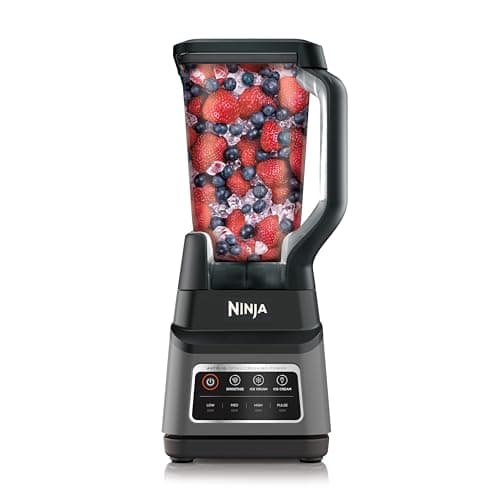
| Ninja Professional Plus BN701 | Full-size pitcher | 64 oz max liquid | 1 year | $4.02 |
|---|
The ranking
1. Ninja Professional Plus DUO BN751 — the most machine in the band
Within this bracket it is the largest amount of function you can put on one counter: a published 1,200 W continuous motor, 64 oz of stated maximum liquid, and single-serve cups on the same base. It covers the two jobs a household actually has — a batch and a single serving — without a second appliance.
It does not pretend to be a premium machine, and neither do we. There is no tamper and no variable dial, and the warranty is one year. What it is, is the ceiling of the mainstream tier, comfortably inside a $300 budget with most of the budget intact.
2. Beast Mega 1200 — the most honest spec sheet under $300
The most expensive machine we rank below $300, and the only brand in our catalog that publishes blendingcapacity separately from total vessel volume — 1000 mL, stated as such. That is the honest way to state a number, because nobody fills a blender to the brim, and it is the reason this machine ranks above cheaper ones with bigger headline figures. Two years of warranty in a class where one is standard, and Beast quotes a horsepower equivalent alongside the 1200 W rather than a peak number.
The limitation is size, and it is a hard one: 33 oz is one generous serving. This does not replace a pitcher, so if the household is more than one person it is an addition to your kitchen rather than the answer for it. Full detail in the Beast Mega review.
3. NutriBullet Ultra — five years on the part that breaks
1,200 watts and two cup sizes, with one year on the machine and five on the Ultra Rapid Extractor blade. The blade assembly and its gasket are where bullet blenders actually fail, so that split is more valuable than a flat one-year term on everything.
Ignore the quietness positioning. NutriBullet markets it as their quietest single-serve blender and publishes no decibel figure to support it; no manufacturer in this category publishes one. Paying a premium for an unverifiable claim is the specific thing this site exists to talk you out of.
4. Oster Pro 1200 with glass jar — the warranty play
Three years of cover and a glass jar, well under half the budget. If you want the longest paper protection available under $300 on a full-size machine, this is it.
We rank it below the Ninja because Oster has withdrawn this model’s product page, so its motor rating and capacity cannot be sourced to a live manufacturer document and we publish neither. A long warranty on a delisted machine also carries parts risk, and Oster’s remedy is replacement rather than repair.
5. Ninja Professional Plus BN701 — the one that makes the point
It is last here not because it is worse than the machines above it — it shares the DUO’s motor and jar exactly — but because it is the argument. This machine costs about a third of the bracket and gives up nothing on the full-jar side. If you take one thing from this page: a $300 budget spent on the BN701 leaves you enough for a stick blender and a set of decent knives, and you will use all three.
Two better things to do with $300
Split it across form factors.A full-size pitcher blender and an immersion blender do genuinely different jobs, and neither substitutes for the other. A stick blender purees soup in the pan you cooked it in, which no jar blender should be asked to do — the reasons are in blending hot liquids safely. A BN701 plus a Braun MultiQuick 7 covers more of a real kitchen than any single machine at this price, and the Braun carries three years of US warranty against the Ninja’s one.
Or wait, and buy the tier above.If your reason for having a $300 budget is nut butter, smoothie bowls or a machine you intend to own for a decade, no amount of spending inside this bracket gets you there. The features that do — a tamper, a truly variable dial, a warranty measured in years rather than a year — start at the next tier. The honest advice is to keep the money and read is a Vitamix worth it before you spend it, because for a lot of people the answer there is also no.
The short version.Nothing is engineered specifically for $300. Buy the DUO if you want one machine doing two jobs; buy the Beast Mega if you blend for one person and value published, honest capacity; buy the BN701 and spend the rest elsewhere if you are being practical. Do not buy something in this band because it looks premium — look at whether the wattage is peak or continuous first.
How to check a $300 blender is not a $130 blender in a heavier body
Four questions, all answerable from the manufacturer’s own page in about two minutes. They are the same four we use, and they are the reason our picks in this bracket are cheaper than the bracket allows.
1. Is the wattage peak or continuous?A machine publishing “1,400 watts peak” and nothing else is telling you what it draws for the first second. Ninja publishes both figures for the BN701 and BN751, which is why we can compute a running cost for them. Where only a peak number exists, look for the rating plate amperage in the manual instead — amps times 120 volts is the real continuous draw.
2. Is the capacity total volume or usable liquid?A 72 oz jar with a 64 oz maximum liquid line is a 64 oz blender. Beast is the only brand in our catalog that states blending capacity separately as a matter of course; Ninja publishes both figures for its pitchers. If a page gives you one number with no qualifier, assume it is the brim.
3. What does the warranty document say, not the product page?These disagree more often than you would expect. The clearest case in this category is Blendtec: the widely repeated eight-year term belongs to the Designer and Professional lines, while the Classic 575’s own schedule is two years. We tabulate every one of them in blender warranties compared.
4. Is there a tamper, and is the dial genuinely variable? This is the single cleanest dividing line between the mainstream tier and the premium one. Presets are not variable speed. A machine with ten preset speeds and no tamper handles a thick, low-liquid load exactly as badly as a machine with three.
Run those four checks on anything you are tempted by in this bracket. In our experience of the published documents, the ones that pass are either well under $150 or well over $350, which is the finding this whole page rests on.