Buy the Hamilton Beach Personal Blender with Travel Lid (51172). It is for the person who wants one drink, blended in the vessel they will drink it from, for the least money anyone in this category charges — and it is the only machine in the bracket backed for three years rather than one. It is also, unusually, both our top pick and the budget pick: nothing here is cheaper, and nothing here is better documented on the things that matter at this price. If the machine has to work away from a socket, buy the Ninja Blast BC151 instead. Live prices and the date they were checked sit in the table above; the under-$50 line on this page is enforced by that price layer, not typed into the copy.
Who each one is for, in one line
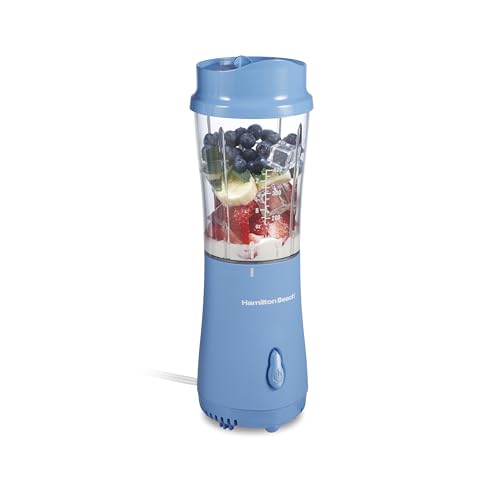
- Hamilton Beach 51172— for one modest drink at the lowest price in this catalog, on mains power, with three years of cover.
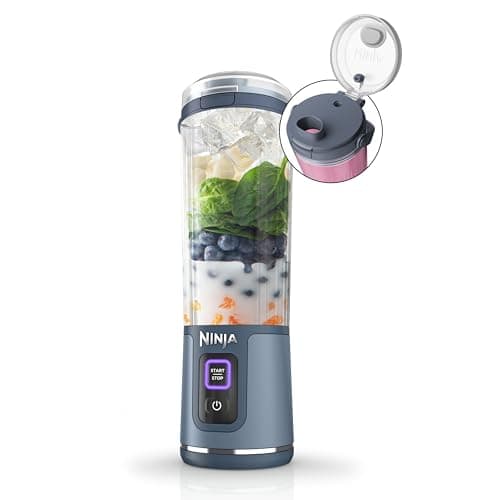
- Ninja Blast BC151— for blending away from a socket: the largest vessel in the bracket and a USB-C rechargeable base.
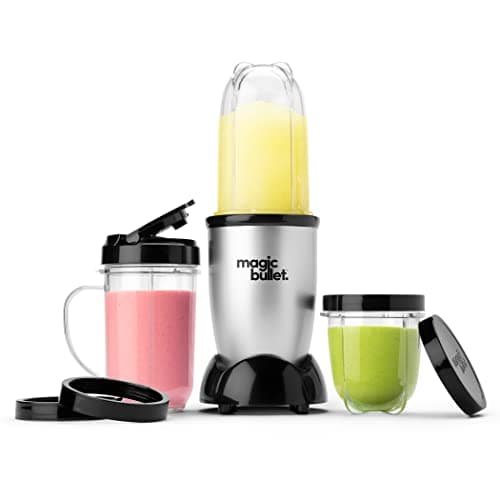
- Magic Bullet 11-piece set— for small jobs rather than smoothies: dressings, dips, chopping, a soft shake, with a cup for each.
The criteria, before the picks
A personal blender is a narrower product than a blender, and at this price the things that separate them are not the things the boxes shout about. Here is what this page ranked on, in order, and why.
1. Is there a published specification at all? This sounds like a strange first criterion until you try to fill in a comparison table for this bracket. It is the one thing a reader cannot check for themselves without reading three manufacturer sites, and it is where this page earns its keep.
2. Mains or battery. A battery blender trades motor power for the ability to leave the house, and that is physics rather than branding. If you blend at a worktop, a corded machine at the same price gives you more capability; if you blend at a desk or in a car, it does not matter how much power you gave up.
3. Warranty term, read from the right document. One year is the norm in this class. Three is not, and in this bracket the longest term belongs to the cheapest machine, which inverts what you would assume.
4. Is the vessel the drinking cup, and does the lid come with it? The entire point of this format is that you blend and leave. A cup without a lid is a cup.
5. What is dishwasher safe, stated in writing.Not implied by a photograph of a dishwasher — stated, part by part.
What this page deliberately did not rank on is a frozen-fruit test, because we have not run one and we do not claim to. Our method, including what disqualifies a pick, is on how we pick.
Every machine in this bracket is missing half its spec sheet
This is the finding, and it is checkable in three clicks. Magic Bullet publishes a 250 W motor base and then publishes no ounce figure for any of its three cups— a tall cup, a short cup and a party mug, all unquantified. Hamilton Beach does the exact opposite: it publishes a 14 oz jar, the dimensions, the blade material and the warranty, and no wattage anywhere on the product page. The 300 peak-watt figure you will see attached to that model lives in retailer listing titles, not on hamiltonbeach.com, so we do not print it as a specification.
And SharkNinjamanages to do both and neither: its specification table for the Blast states the capacity (makes up to 18 oz) and a 7.4 V USB-C rechargeable base, and then fills in both the wattage and the peak-wattage fields with 0 watts. It reads like a data-entry failure. It is also accidentally the most honest entry on this page, because a battery motor has no meaningful mains wattage and most rivals publish one anyway.
The practical consequence: you cannot rank this bracket on power, because the numbers to do it with do not exist. Anybody who has ranked these three by wattage got at least two of the figures from a retailer. Blender wattage explained covers why peak, continuous and unqualified watt figures are not interchangeable even when they are published.
Why the cheapest machine wins
Three reasons, all documented. The first is the warranty: Hamilton Beach backs the 51172 with three years limited, against one year on the Blast and one year on the Magic Bullet — and the Magic Bullet’s is administered under NutriBullet’s terms, which exclude cups and accessories, the parts that actually break on this format. Three years on the least expensive machine in the catalog is the single most favorable warranty-per-dollar number on this entire site.
The second is that it is corded. Both of the obvious alternatives at this price are compromises on motor power — the Blast because it runs off a battery, the Magic Bullet because 250 W is a quarter of a mainstream bullet blender. A mains machine at twenty dollars is not a powerful blender, but it is not fighting a battery either.
The third is the cleaning statement. Hamilton Beach commits in writing that the blending jar, the blades and the drinking lid are all dishwasher safe, and that the jar carries measuring lines so a recipe needs no separate cup. Those are small things that decide whether a cheap machine gets used twice a week or once a month. Easiest blenders to clean ranks the whole catalog on exactly this, and can you put a blender in the dishwasher is the per-part answer across eight manufacturer care statements.
Its honest limits: 14 oz is the smallest capacity in this catalog, it is one modest drink and will not stretch to two, and Hamilton Beach sells a replacement jar with blades and a replacement drinking lid separately — which tells you plainly which parts are expected to wear out. If you need two servings, best blenders for two people is the right page and none of these three is on it.
When to pay more for the cordless one
The Ninja Blast BC151exists for one requirement: there is no socket. If that is genuinely your situation — a desk, a gym bag, a car, a dorm with one outlet behind a bed — it is the right buy in this bracket and nothing else here competes, because the other two need a wall.
What you get for the extra money over the Hamilton Beach: the largest vessel in the bracket at 18 oz, which is also the cup you drink from; USB-C chargingrather than a proprietary brick, which matters more than it sounds in a drawer full of cables; and Ninja’s blade geometry, which handles soft frozen fruit better than a battery machine has any right to.
What you give up: a year of warranty against three, and any ability to compare it on power, because the published figure is zero. A 7.4 V battery is also half the voltage of the other cordless machine in this catalog, which is a real difference rather than a marketing one. Best portable blenders ranks the cordless format on its own terms, and alternatives to a Ninja Blast is the page for anyone who has decided the Blast is nearly right but not quite.
About the 250-watt machine, plainly
The Magic Bullet is on this page because it is a genuine option under $50 and because it is the only machine here whose maker publishes a motor figure at all. It is very good at the jobs it was built for: vinaigrettes, dips, chopping small quantities, a soft milkshake. Eleven pieces means a cup for most small tasks without washing in between.
It is also 250 watts— a quarter of a mainstream bullet blender and a sixth of a full-size machine. It will not crush ice and it will not blend frozen fruit, and buying it as a smoothie machine is the most common mistake in this entire category. If frozen fruit is in your drink, this is not your machine. Our Magic Bullet review is the long version, and NutriBullet vs Magic Bullet prices out what doubling the spend buys.
One machine that should be here and is not
The NutriBullet 600would normally be the obvious fourth pick in this bracket — it is the only machine in the catalog with a genuinely small 18 oz short cup alongside a 24 oz tall one, and it publishes a plain 600 W figure. It is not ranked here because the price layer returned no buyable offer for itwhen this page was written: 27 of the catalog’s 28 listings came back with a live price and that was the one that did not.
We will not rank a pick a reader cannot buy, and we will not quote the price it used to be. If that machine comes back in stock it is a strong option at the top of this bracket, and our NutriBullet 600 review stands. For now, the band is three machines.
What these cost to run for a year
Only one of the three publishes a figure to calculate with. At 18.16¢ per kWhand this site’s standard assumption of 3 minutes a day, 365 days a year, the Magic Bullet’s 250 W works out at about $0.83a year. The Hamilton Beach has no published wattage and the Ninja Blast publishes zero, so neither gets a running-cost line — we would rather leave two gaps than invent two numbers. For context, every machine in this catalog lands between about $0.83 and $5.97 a year, which is to say electricity is never the reason to pick one blender over another. What a blender costs to run shows the arithmetic so you can substitute your own rate.
What $50 does not buy, in any brand
Be clear-eyed about the ceiling. No machine in this bracket has a tamper, a variable speed dial, or the headroom to blend a cup packed with frozen fruit and no added liquid. That load forms a frozen plug above the blade and the motor spins air underneath it, and the response that works is more liquid and a smaller load — not a longer run at full speed, which is how motors at this price die.
Can you use a blender without liquid explains the mechanism, do you have to thaw frozen fruit before blending is the practical workaround, and can personal blenders handle ice is the honest answer for this exact format. One safety line that applies to all three: never blend hot liquid in a sealed cup, because a cup that screws onto a blade is a pressure vessel — blending hot liquids safely has the method.
When to spend a little more instead
If the honest answer is that you want a real smoothie with frozen fruit in it every morning, the next bracket is where that becomes comfortable rather than careful: best personal blenders under $100 is the same format with 600 to 1,200 published watts in range. If you would rather have a jar than a cup, best blenders for smoothies under $50 spends the same money on a 40 oz glass jar, and best blenders under $50 is this band across every format at once.
What we have not done
We have not tested these machines. We own none of them, we have blended nothing in any of them, and we have run no timed trials. Every capacity, dimension, blade material, cleaning statement and warranty term above is read off the manufacturer’s own product page or warranty document, cited in full below — and where a maker publishes nothing, which on this page is most of the interesting part, we say so rather than borrowing a retailer’s figure. Prices come live from Amazon with the date they were checked, which is also what enforces the under-$50 line here.