Skip to content
BasketBlade

HUB 01 · Best Blenders

The Best Lightweight Blenders Under $100

Most blender listings in this bracket will tell you the wattage and not the weight. Five machines under $100 ranked on a weight their own manufacturer publishes - 2.4 lbs to 8.78 lbs - with the three popular ones that had to be left off because no maker publishes a figure for them.

By Stephen V.Updated How we pick
#ad

We earn a commission if you buy through our links. It does not change the price you pay, and it does not decide our picks — our selection criteria are published in full. How this works.

The short answer

Quick picks

#ProductBest forScorePrice
01
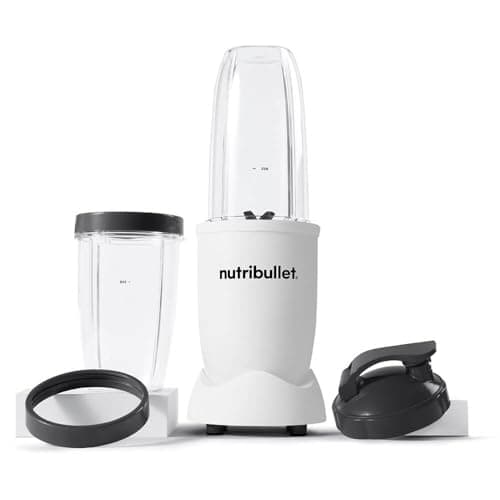
NutriBullet NutriBullet Pro (900 W)
NutriBullet Pro (900 W)

The default bullet blender, and a good one. Note that NutriBullet's own product page contradicts itself about which cups are in the box.

Everyday shakes
7.4
$79.99Amazon
02
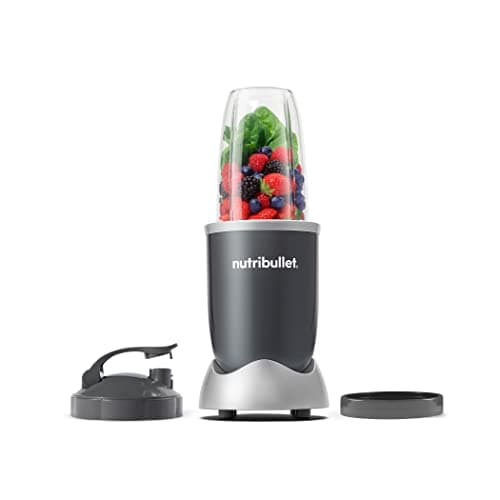
NutriBullet NutriBullet 600
NutriBullet 600

The entry point, and the only machine here that ships a genuinely small cup. 600 watts is enough for the job it is actually bought for.

One modest shake
7.1
$59.96Amazon
03
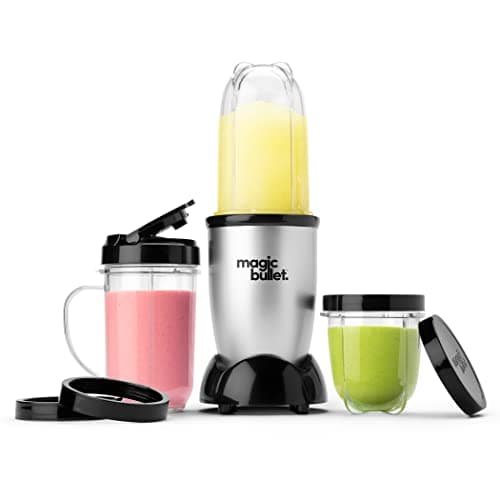
Magic Bullet Magic Bullet 11-piece set
Magic Bullet 11-piece set

250 watts and a very low price. It is a chopper and a shake-maker, and treating it as a blender is where the disappointment comes from.

Very small jobs
5.4
$37.81Amazon
04
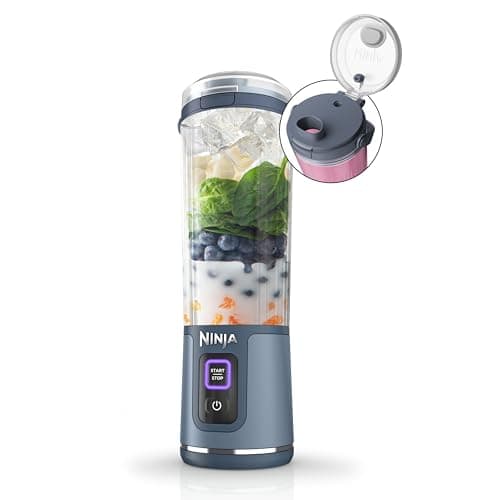
Ninja Ninja Blast BC151
Ninja Blast BC151

The cheapest way to blend away from a socket. Ninja's own spec table lists its wattage as zero, which is a data-entry failure but an accidentally honest one.

The cheapest portable
5.4
$39.99Amazon
05
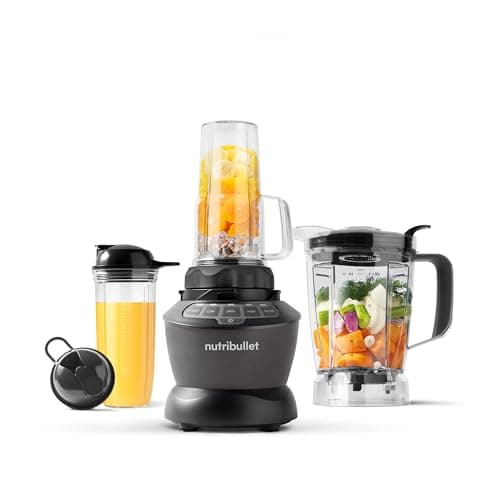
NutriBullet NutriBullet 1200 W Blender Combo
NutriBullet 1200 W Blender Combo

A 64 oz pitcher and two single-serve cups on one 1200 W base — the cheapest honest way to cover both jobs with one motor.

Pitcher and cups, one base
7.5
$99.99Amazon

#ad · Prices pulled live from the Amazon Product API, last checked November 1, 2026. Where we have no verified live price we show none — we would rather leave a gap than print a number that has gone stale. Scores are our own, compiled from published specs; they are not test results.

Buy the NutriBullet Pro. At a published 4.7 lbscarrying a 900-watt motor it has the best power-to-weight ratio of anything under $100 that publishes a weight at all — roughly 190 watts per pound, against 99 for the NutriBullet 600 and 60 for the Magic Bullet. One thing to know before you buy it: nutribullet.com now marks the Pro discontinued, replaced by the nutribullet Turbo. It is still stocked and still priced, but the supply is finite and the warranty is one year.

Two of the five picks here are discontinued by their own manufacturer. NutriBullet’s product pages for the Pro 900 and the 600 both carried a discontinued notice when we read them on 1 November 2026 — the Pro says it is replaced by the nutribullet Turbo, the 600 by the 700 W Personal Blender. Both machines are live, stocked and priced at retail, which is why they are still ranked. But a one-year warranty on a model the maker has stopped making is worth less than the same warranty on one it has not, and nobody else writing about this bracket seems to mention it. If that matters to you, the only in-production machine on this page with a real pitcher is the NutriBullet 1200 W Combo, at nearly twice the weight.

Why this page ranks on weight, and what that actually buys you

“Lightweight” is one of the most-used words in blender marketing and one of the least-published numbers. Go through the bracket under $100 and you will find wattage on every listing, jar capacity on most, cord length on a surprising number — and a product weight on fewer than half. That gap is the entire reason this page exists, because weight is not a cosmetic spec in a blender. It decides four concrete things:

  • Whether it lives on the counter or in a cupboard. A machine you have to lift out and lift back is a machine you use less. The honest threshold is roughly the weight of a full kettle: above that, most people leave it out, and then the footprint matters more than the mass.
  • Whether one hand can move it.Every machine on this page can be carried one-handed. The NutriBullet Combo, at 8.78 lbs with a 64 oz pitcher on top, mostly cannot be moved one-handed while assembled.
  • Whether it travels. A dorm move, an RV, a rental, a holiday let. Under five pounds goes in a duffel bag; under three pounds goes in hand luggage.
  • Whether it stays put under load. This is the one that cuts the other way. A light base on a smooth worktop walks when a thick mixture catches. Mass is a feature in a blender as well as a cost, and the lightest machine here is light precisely because there is not much motor in it.

So the ranking below is not simply weight ascending. It is ordered by what the weight buys you — power per pound first, then capacity per pound, with the genuinely tiny machines placed according to what they can and cannot blend rather than according to how little they weigh. The full method is on how we pick.

The published weights, in one place

Every figure here comes from the manufacturer’s own product page, read on 1 November 2026. Nothing is weighed by us, nothing is taken from a retailer listing, and nothing is estimated.

  • Ninja Blast BC151 — 2.4 lbs.The lightest machine in this entire catalog. It is also cordless, and SharkNinja’s specification table lists its wattage as zero.
  • Magic Bullet 11-piece — 4.14 lbs.The lightest corded machine here, in a base measuring 4.01 x 4.48 x 11.61 inches. Also the least powerful corded machine here, at 250 W.
  • NutriBullet Pro — 4.7 lbs. Half a pound more than the Magic Bullet for 3.6 times the wattage. This is the trade the rest of the page is measured against.
  • NutriBullet 600 — 6.04 lbs. Heavier than the Pro for 300 fewer watts, which is the one result in the table that looks wrong and is not: the 600 ships two cups and a differently shaped base.
  • NutriBullet 1200 W Combo — 8.78 lbs.The heaviest here by a wide margin, and the only one with a 64 oz pitcher. Weight per ounce of capacity, it is actually the most efficient machine on the page.

Power per pound, worked out from those same published figures: Pro 191 W/lb, Combo 137 W/lb, 600 99 W/lb, Magic Bullet 60 W/lb. The two cordless-adjacent outliers cannot be included in that sum at all, because no wattage is published for them.

The three machines we could not rank, and why

This is the part most roundups leave out. Three of the most popular machines in this price bracket do not appear in the ranking above, and in every case the reason is the same: no manufacturer weight.

  • Hamilton Beach Power Elite.Hamilton Beach publishes more about this machine than most brands publish about machines costing ten times as much — 700 peak watts, a definition of what “peak” means, the true rating-plate draw of 3.7 A, a 40 oz glass jar, dimensions of 14.7 x 8.7 x 6.5 inches and a three-year warranty. It does not publish a weight. We are not going to invent one, and the glass jar means a published base weight would understate the assembled figure anyway. It is still the best-documented budget blender in this catalog, and it is linked below for exactly that reason.
  • Ninja Professional BL610 and Professional Plus BN701. Both sit in or near this bracket and both are genuinely popular. No manufacturer-published product weight could be retrieved for either on 1 November 2026, so neither can be placed in a weight ranking. Their motor, pitcher and warranty figures are cited from SharkNinja on their own review pages; weight is simply not a figure we have.

A weight you read for any of those three on another site came from a retailer field, a box, or a guess. Any of those might be right. None of them is a specification, and this site does not print numbers it cannot point at a document for.

What a light blender costs to run

Almost nothing, and the arithmetic is the same across the whole bracket. At 18.16¢ per kWh and the site’s standard assumption of 3 minutes a day, 365 days a year, the 900 W Pro costs about $2.98 a year in electricity, the 600 about $1.99, and the 250 W Magic Bullet about $0.83. The 1200 W Combo, the heaviest and most powerful machine here, costs about $3.98. The gap between the cheapest and the dearest to run is under a dollar a year, which is the same conclusion every power argument in this category reaches once you do the sum: what a blender actually costs to run shows the full working, including how to substitute your own rate.

The two cordless machines have no running-cost figure, because neither maker publishes a wattage and we will not reverse-engineer one from a battery voltage.

Weight is not the only reason a machine feels light

Two things make a blender feel heavier than its spec sheet says, and both are worth knowing before you choose on mass alone.

The jar is usually most of the weight when it is full.A 64 oz pitcher of smoothie is four pounds of liquid before you count the pitcher. That is why the blender-for-an-older-cook question lands somewhere completely different from this page — the best blenders for seniors ends up recommending a stick blender used in the pot, because the lightest full-size jar is still a two-handed lift once there is anything in it. On a bullet blender the vessel is the serving, which caps that problem at about a pound and a half.

Footprint and height are separate problems from weight.A 4.7 lb machine that stands 15.94 inches tall does not fit under a standard US wall cabinet with the cup on, and a light machine you have to tip to store is no easier to live with than a heavy one that stands up. The best blenders for small kitchens ranks the same bracket on published height and footprint instead, and the answers are different.

Who should ignore this page entirely

If you blend frozen fruit without much liquid, or you blend for more than one person, weight is the wrong criterion and every machine on this page is a compromise. The honest advice is to accept a heavier machine with a longer warranty and more motor: the best blenders under $100 ranks the same price tier on warranty and published power, and the $150 tier is where glass jars and three-year warranties start. And if the real requirement is blending away from a socket rather than carrying something light, the best portable blenders is the page for that, with the battery figures stated rather than implied.

What we have not done

We have not weighed any of these machines. We own none of them, we have not blended in them, and we have run no timed tests. Every weight, dimension and cord length above is read off the manufacturer’s own published specification block on the date stated, and every figure we could not find is named as missing rather than filled in. That is the whole method, and how we pick sets it out in full.

In detail

The picks, in full

01
NutriBullet NutriBullet Pro (900 W)

Everyday shakes

NutriBullet Pro (900 W)

Blend-and-go cupCups not covered by warranty
7.4/10

The default bullet blender, and a good one. Note that NutriBullet's own product page contradicts itself about which cups are in the box.

Warranty
3.5
Frozen
7.5
Convenience
9.5
Cleaning
8
Value
8.5

What it gets right

  • Inverted cup design puts gravity on the blades' side, which is genuinely why bullet blenders handle frozen fruit better than their wattage suggests
  • You drink from the vessel you blended in — the entire reason to own one
  • Replacement cups, lids and blade assemblies are widely sold, which matters because the gasket is the usual failure
  • 900 W is real power for a single serving

What it doesn't

  • One-year warranty, and it explicitly excludes the cups and accessories — the parts that actually fail
  • Two 32 oz cups and nothing smaller, so a single modest shake is blended in a vessel bigger than it needs
  • Sealed cup: not for hot liquid, and the manual says so

What it costs to run

About $2.98 a year in electricity, at 3 minutes a day, 365 days a year and 18.16¢ per kWh.

NutriBullet publishes '900 watts of power' with no peak or continuous qualifier, and lists a 900 W motor base in the box contents. We take it at face value and note the absence of a qualifier. The full arithmetic is published.

Skip this if…

…you make anything thick — nut butter, low-liquid smoothie bowls, dough. The narrow cup gives a thick mixture nowhere to move and the motor nowhere to cool.

$79.99on Amazon

$99.9920% off

Price last checked November 1, 2026. Prices move constantly — Amazon's at checkout is the one that counts.

#ad · we may earn a commission from this link to NutriBullet Pro (900 W)

02
NutriBullet NutriBullet 600

One modest shake

NutriBullet 600

18 oz cup — genuinely small1-year warranty
7.1/10

The entry point, and the only machine here that ships a genuinely small cup. 600 watts is enough for the job it is actually bought for.

Warranty
3.5
Frozen
5.5
Convenience
9
Cleaning
8.5
Value
9

What it gets right

  • The 18 oz short cup is the only properly single-serving vessel in this list; everything else starts at 22 oz and goes up
  • 600 W is enough for banana, yogurt, powder and a handful of frozen berries, which is what most people actually make
  • Cheapest way into the NutriBullet accessory ecosystem, where replacement cups and blades are easy to find
  • Small enough to leave out on a worktop without it dominating

What it doesn't

  • 600 W is the least power here and it shows on a cup packed with frozen fruit
  • One-year warranty
  • No variable speed — it runs at one speed and you control it by how long you press

What it costs to run

About $1.99 a year in electricity, at 3 minutes a day, 365 days a year and 18.16¢ per kWh.

NutriBullet publishes 600 W with no peak or continuous qualifier. The full arithmetic is published.

Skip this if…

…you blend mostly frozen fruit with little liquid — at 600 watts in a narrow cup, that load stalls, and pulsing it repeatedly is how the motor gets cooked.

$59.96on Amazon

Price last checked November 1, 2026. Prices move constantly — Amazon's at checkout is the one that counts.

#ad · we may earn a commission from this link to NutriBullet 600

03
Magic Bullet Magic Bullet 11-piece set

Very small jobs

Magic Bullet 11-piece set

Cheapest hereNo capacity published
5.4/10

250 watts and a very low price. It is a chopper and a shake-maker, and treating it as a blender is where the disappointment comes from.

Warranty
3.5
Frozen
2.5
Convenience
8.5
Documentation
4
Value
8.5

What it gets right

  • The lowest price of any machine in this catalog by a wide margin
  • Genuinely good at the small jobs it is built for: dressings, dips, chopping small quantities, a soft shake
  • Eleven pieces means a cup for most small tasks without washing between them
  • Covered by the same NutriBullet warranty administration, which is a real service operation

What it doesn't

  • 250 W. That is a quarter of a mainstream bullet blender and a sixth of a full-size machine — it will not crush ice and it will not blend frozen fruit
  • Magic Bullet publishes no capacity figure for any of the cups it ships, which is unusual and unhelpful
  • One-year warranty

What it costs to run

About $0.83 a year in electricity, at 3 minutes a day, 365 days a year and 18.16¢ per kWh.

Magic Bullet publishes a 250 W motor base, with no peak or continuous qualifier. The full arithmetic is published.

Skip this if…

…you want to make smoothies with frozen fruit — at 250 watts this is a chopper that also makes milkshakes, and buying it as a blender is the most common mistake in this category.

$37.81on Amazon

$39.995% off

Price last checked November 1, 2026. Prices move constantly — Amazon's at checkout is the one that counts.

#ad · we may earn a commission from this link to Magic Bullet 11-piece set

04
Ninja Ninja Blast BC151

The cheapest portable

Ninja Blast BC151

USB-C chargingWattage listed as zero
5.4/10

The cheapest way to blend away from a socket. Ninja's own spec table lists its wattage as zero, which is a data-entry failure but an accidentally honest one.

Warranty
3.5
Portability
9
Frozen
3.5
Documentation
2.5
Value
8.5

What it gets right

  • Among the cheapest cordless blenders from a brand with a real service operation behind it
  • USB-C rather than a proprietary charger
  • 18 oz is a sensible single serving and the vessel is the drinking cup
  • Ninja's blade geometry handles soft frozen fruit better than the price suggests

What it doesn't

  • SharkNinja's own specification table lists the wattage as 0 watts and the peak wattage as 0 watts — no usable power figure is published for this machine at all
  • One-year warranty
  • 7.4 V is half the voltage of the Beast GO's battery, and battery blenders are already the least powerful category here

What it costs to run

Ninja publishes no usable wattage for this machine, so we do not show a running-cost figure for it. Here is the method we would have used.

Skip this if…

…you want to compare it on power — Ninja publishes no meaningful wattage for it, so any power claim you read about this machine came from somewhere other than the manufacturer.

$39.99on Amazon

$69.9943% off

Price last checked November 1, 2026. Prices move constantly — Amazon's at checkout is the one that counts.

#ad · we may earn a commission from this link to Ninja Blast BC151

05
NutriBullet NutriBullet 1200 W Blender Combo

Pitcher and cups, one base

NutriBullet 1200 W Blender Combo

Pitcher + two cups1-year warranty
7.5/10

A 64 oz pitcher and two single-serve cups on one 1200 W base — the cheapest honest way to cover both jobs with one motor.

Warranty
3.5
Versatility
9
Frozen
7.5
Capacity
8.5
Value
9

What it gets right

  • One 1200 W base covers a family pitcher and two single-serve cups, at less than the price of most standalone full-size machines
  • 64 oz pitcher is genuine batch capacity, not a token one
  • NutriBullet publishes a plain unqualified watt figure rather than a peak number
  • Cups and blades are the standard NutriBullet parts, which are easy to replace

What it doesn't

  • One-year warranty, and NutriBullet's terms exclude cups and accessories
  • No tamper, so thick low-liquid mixtures in the big pitcher mean stopping and scraping
  • Two vessel systems is more to store than a single-jar machine

What it costs to run

About $3.98 a year in electricity, at 3 minutes a day, 365 days a year and 18.16¢ per kWh.

NutriBullet publishes 1200 W with no peak or continuous qualifier. The full arithmetic is published.

Skip this if…

…you will only ever use the pitcher — you are paying for cups you will store in a cupboard, and a single-jar machine at the same price gives you a longer warranty.

$99.99on Amazon

$129.9923% off

Price last checked November 1, 2026. Prices move constantly — Amazon's at checkout is the one that counts.

#ad · we may earn a commission from this link to NutriBullet 1200 W Blender Combo

How to choose a light blender without being sold a number

1. Decide whether you are optimizing for carrying or for storing

These pull in opposite directions. Carrying favors the lowest mass, which means the Ninja Blast at 2.4 lbs or the Magic Bullet at 4.14 lbs. Storing favors the smallest assembled shape, and the two are not the same machine: the Magic Bullet base is 4.01 inches square, which is the smallest footprint in the catalog, while the NutriBullet Pro is lighter per watt but stands nearly 16 inches tall with the cup fitted. Work out which of the two actually annoys you about your current blender before shopping on either.

2. Convert the wattage into watts per pound

It takes ten seconds and it is the single most useful thing you can do in this bracket. A 900 W machine at 4.7 lbs and a 250 W machine at 4.14 lbs are half a pound apart and a world apart in what they will blend. Divide the published wattage by the published weight, and if either number is missing, treat the machine as unknown rather than as good. Blender wattage explained covers why a “peak” watt figure should be discounted before you do that sum at all.

3. Check whether the model is still made

This bracket turns over fast, and a discontinued model is not automatically a bad buy — it is often the best value on the shelf, because the replacement carries the new price. What changes is the risk profile: spare cups, gaskets and blade assemblies get harder to find, and on a one-year warranty you are the one carrying that. Both NutriBullet machines on this page are in that position right now. The Magic Bullet and the Combo are not. Checking takes one visit to the manufacturer’s own product page, and the discontinued notice is usually at the top of it.

4. Weigh the vessel, not just the base

The published figure is almost always the whole product as boxed, but what you lift every day is the full vessel. On a bullet blender that is a cup of smoothie, about a pound. On a 64 oz pitcher machine it is four pounds of liquid plus the pitcher, and the base never leaves the worktop. If the thing you find heavy is the jar rather than the machine, a lighter base does not help you and a smaller vessel does.

5. Accept that light means less motor

There is no machine under $100 that is both genuinely light and genuinely powerful, because the weight in a blender mostly is the motor. The lightest machine here publishes no wattage at all; the most powerful is the heaviest. Every pick on this page is a position on that curve, and the useful question is not “which is lightest” but “what is the least motor that does the job I actually do.” For frozen fruit with little liquid, the answer is not on this page — the best blenders for frozen fruit is where it is.

6. A note on stability

A light base plus a smooth worktop plus a thick mixture equals a machine that walks. Bullet blenders are mostly immune because you press down on them to run them, which is an underrated design virtue. A light full-size pitcher machine is not immune, and there is no published number for it — this is one of the few places where a specification sheet genuinely cannot help you, and the only honest thing to say is that mass is part of what keeps a blender still.
How we picked

Blenders we claim to have tested: 0

Every site in this category tells you they blended twenty smoothies. We have not blended any, and we say so. Here is what we do instead: read the manufacturer's manual and spec sheet, record the published motor rating, jar capacity and warranty term, verify the warranty against the manufacturer's own warranty document, work out what the machine costs to run for a year and show the arithmetic, and cite all of it so you can check the work. Prices come live from Amazon's API and disappear rather than go stale.

The scores above are judgments from that documented research — not test results. The full rubric, including what disqualifies a product, is published in full.

Questions

Frequently asked

What is the lightest blender under $100?

Of the machines whose makers publish a weight, the Ninja Blast BC151 at a published 2.4 lbs. It is cordless, makes up to 18 oz, and SharkNinja’s own specification table lists both its wattage and its peak wattage as zero — so it is the lightest, and also the one with no published power figure of any kind. The lightest corded machine is the Magic Bullet at 4.14 lbs, with a 250 W motor base.

How much does a blender weigh?

Under $100, between about 2.4 lbs and about 8.78 lbs based on the five machines in this catalog whose manufacturers publish the figure. A cordless personal blender is 2 to 3 lbs, a bullet blender is 4 to 6 lbs, and a full-size pitcher machine starts around 8.78 lbs and goes up. Plenty of popular blenders publish no weight at all — the Hamilton Beach Power Elite publishes full dimensions and no mass — so if you need the number, check the manufacturer page before you buy rather than a retailer field.

Is a lighter blender worse at blending?

Usually, yes, and for a mechanical reason rather than a marketing one: in a blender most of the weight is the motor. Across the five machines here, power per published pound runs from 191 W/lb down to 60 W/lb, and the lightest machine publishes no wattage at all. A light base is also easier to shift on the worktop when a thick load catches. None of that makes a light machine a bad buy — it makes “light” a trade you should make deliberately.

Is the NutriBullet Pro discontinued?

nutribullet.com’s own product page for the Pro carried a discontinued notice when we read it on 1 November 2026, naming the nutribullet Turbo as its replacement. The same is true of the NutriBullet 600, replaced by the 700 W Personal Blender. Both are still sold and priced at retail, and the one-year warranty still applies — but spare cups and blade assemblies get harder to source over the life of a discontinued model, and NutriBullet’s warranty excludes cups and accessories anyway.

Which lightweight blender can handle frozen fruit?

Of the machines on this page, the NutriBullet Pro at 900 W and the NutriBullet 1200 W Combo are the only two with enough published power to make a habit of it, and both want liquid added. The Magic Bullet at 250 W will not do it, and neither cordless machine will — both makers decline to publish a wattage for their battery models, which tells you most of what you need to know. Thawing frozen fruit before blending is the free fix if your current machine is struggling.

Is a light blender good for travel or an RV?

Weight is only half the question away from a kitchen; the other half is what the machine draws. A cordless blender needs no inverter at all, while a 1200 W mains machine needs more continuous inverter capacity than many vans carry. The best blenders for RVs and van life ranks the same machines on published electrical draw instead of on mass, which is the criterion that actually decides it off-grid.

Keep reading

Receipts

Sources

We do not run a testing lab and we do not pretend to. Specifications come from the manufacturer's own published documents and from published standards; prices come from the live Amazon API. Where a figure is not published, the page says “not published” rather than guessing. Read the full method.