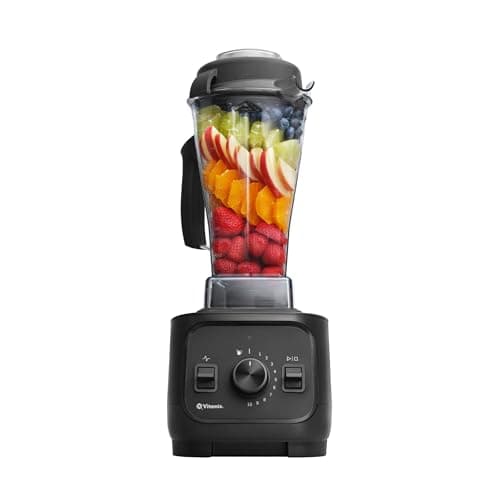
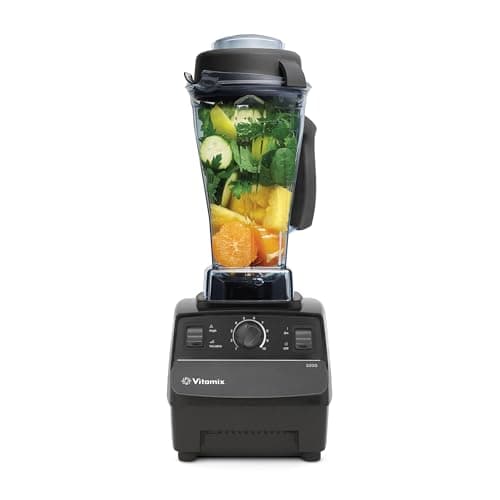
The Vitamix 5200is the pick for hummus, and it is not close. A smooth hummus is a thick paste of chickpeas, tahini and a little liquid, and the difference between the restaurant texture and the grainy home version is whether the blades can keep working the whole mass rather than clearing a pocket and spinning in it. The tamper is what keeps it working, and the variable dial is what lets you hold the speed where the paste moves without heating. For salsa, the job inverts: you want it stopped early, and the machines with a real pulse — the Vitamix VX1, the Ninja BN701 — or the 500 ml chopper on the Braun MultiQuick 7 do that better than the 5200 does.
Two jobs that pull in opposite directions
It is worth being clear about why one page covers both, because the buying logic is different. Hummus, pesto and any thick dip are a circulation problem: little liquid, a dense mass, and a motor that wants to clear a hole and spin in it. That is the same load as nut butter, and the same answer — a tamper, or a jar designed to fold the mass down, or a lot of stopping and scraping. Salsa is a control problem: tomatoes, onion and cilantro go from chunky to soup in a couple of seconds at full speed, so what you want is a pulse you can tap, a low speed you can select, and ideally a wide, short vessel that does not force everything through the blades at once.
The honest note that most roundups skip: for a chunky pico-style salsa, a food processor is the better tool, and a stick blender’s chopper is the next best. A blender jar is built to liquefy. That is why the fifth pick here is a hand blender with a chopper bowl, and why we link blender vs food processor rather than pretend a blender wins every version of this job.
What to look for
A tamper, for the thick dips
On hummus with the correct amount of liquid, a jar blender without a tamper stalls, cavitates, or forces you to thin the mix until it is no longer hummus. Both Vitamix machines ship a tamper. Blendtec relies on jar geometry and a blunt blade instead. Ninja relies on you and a spatula.
A pulse you can actually tap
The VX1 has a pulse switch; the 5200 does not, which is the one place the older machine loses here. Ninja’s BN701 has pulse. Blendtec’s presets run to a stop on their own, which is fine for hummus and wrong for salsa. The Braun’s trigger is variable with grip pressure, which is the most tactile control on the page.
A vessel shape that suits small batches
A batch of hummus is two to three cups; a batch of salsa is similar. A tall 64 oz container needs the blades covered to work, so very small batches sit below the blade line. The Braun’s 500 ml chopper is sized for exactly this; the Blendtec’s wide, short jar is the best-shaped full-size jar for it.
Cleaning after tahini and garlic
Tahini is oily and garlic lingers. The VX1 manual says its container is not dishwasher-safe and provides a self-cleaning program; the Ninja pitcher is dishwasher-safe per SharkNinja’s spec table; the Braun’s chopper bowl is a small bowl you wash in seconds. A blunt fixed blade, like Blendtec’s, is safer to wipe than a sharp removable one.
The ranking
1. Vitamix 5200 — silky hummus, every time
The tamper through the lid and the fully variable dial are the two tools this load needs, and they come with a 7-year full warranty and Vitamix’s published 2 HP, 11.5 A rating. Start low, tamper the mass into the blades, bring the dial up as it starts to move, and hold it until the texture goes from grainy to glossy. Pesto works the same way with the tamper doing the work the oil would otherwise have to do.
The deductions: no pulse switch, so salsa on the 5200 is done on the dial at speed one with a quick on-off, which is workable and not ideal; no self-clean program; and a tall container that wants a batch of at least a couple of cups. Skip it if your honest use is a smoothie a few times a week. See the 5200 review.
2. Vitamix VX1 — the same tamper, plus the pulse the 5200 lacks
For this page specifically, the VX1 arguably does the job better than the 5200: same 64 oz Classic container and tamper, plus a pulse switch that makes salsa a matter of tapping. Vitamix publishes 1,440 watts and 2.2 HP for it. The manual’s rules for thick loads apply — tamper in pushes of no more than 30 seconds, container no more than two-thirds full.
It is second on warranty: five years limited against seven full, and the container is hand-wash or self-clean only. At 19.6 inches with the container on, check your cabinet gap. Skip it if you wanted the container in the dishwasher. See the VX1 review.
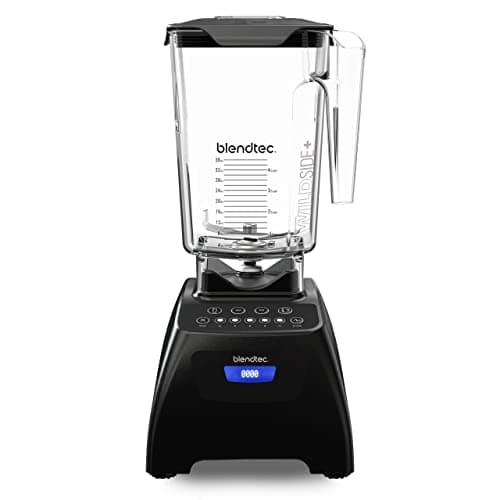
3. Blendtec Classic 575 — the best-shaped full-size jar for a dip
The WildSide+ jar is wide and short, which is the right shape for a small thick batch, and the blunt fixed blade is designed to fold a dense mass down without a tamper. 1,560 watts is the most published power here. For hummus, run a cycle and let it stop; the result is smooth without a tool through the lid. It is also the one full-size machine here that clears an 18-inch cabinet.
Third because the presets are wrong for salsa — a cycle that runs to completion is the opposite of what a chunky mix needs, so you are using the manual speed and watching it — and because the warranty on this model is two years, not the eight the internet repeats. See the Classic 575 review.
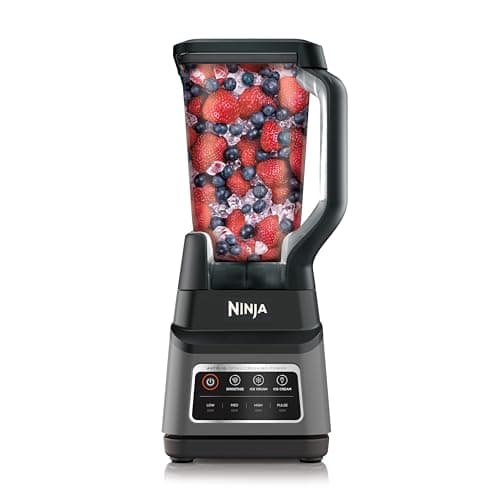
4. Ninja Professional Plus BN701 — the salsa machine on a budget
Pulse, a low speed, 1,200 watts continuous published as a plain figure, and a dishwasher-safe pitcher, at a fraction of the Vitamix price. For salsa it is excellent: tap the pulse three or four times and stop. For hummus it is the compromise on the page, because there is no tamper and a thick paste in a 72 oz pitcher means stopping and scraping the walls more than once. Thin it slightly and it gets there.
One-year warranty. Skip it if hummus and thick dips are the main reason you are shopping — that is the load Ninja’s own limitations in our catalog entry describe. See the BN701 review.
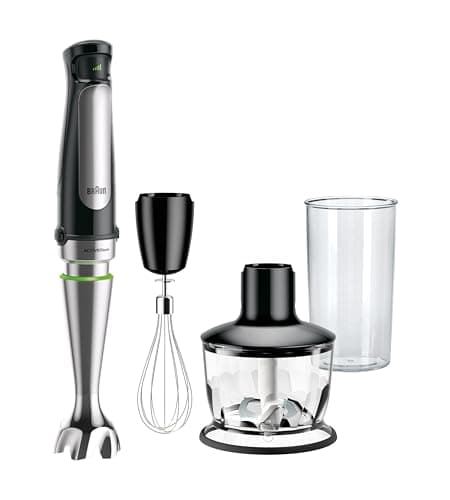
5. Braun MultiQuick 7 — the chopper is the right tool for chunky salsa
A stick blender with a 500 ml chopper attachment, 500 watts of input power, and three years of US warranty. For a chunky salsa, the chopper does what a blender jar cannot: a few pulses and the mix is diced rather than liquefied. For hummus, the stick itself in a tall narrow container works for a small batch, and the grip-pressure speed control is the most precise on the page.
Fifth because it is not a blender in the sense the other four are — it will not make a large batch of silky hummus without effort, and the chopper is small. Skip it if you want one machine for everything. See the MultiQuick 7 review.
Technique for hummus that is actually smooth
- Liquid first: lemon juice, a little of the chickpea cooking liquid, then tahini, then chickpeas. Liquid at the blades means the motor starts against something it can move.
- Start low. On a Vitamix, tamper the mass down while the dial is at the low end; bring it up only as the paste circulates.
- Run longer than feels necessary. The texture change from grainy to glossy happens late, and it is time under the blades, not speed, that gets there.
- Add water a tablespoon at a time, not a splash. A splash is how hummus becomes a sauce.
- Stop if the motor smells hot. The VX1 manual describes an overheat indicator and a 20-to-45-minute cool-down; every brand’s manual has an equivalent rule.