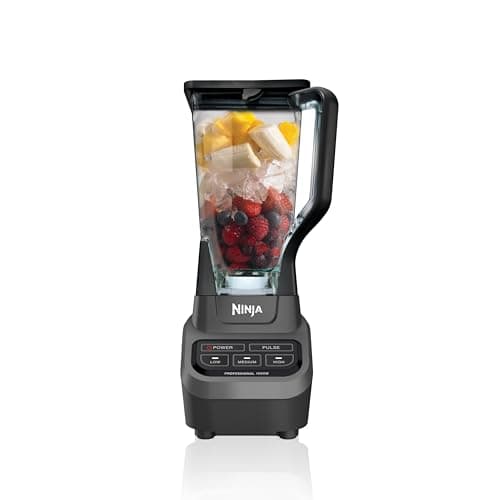
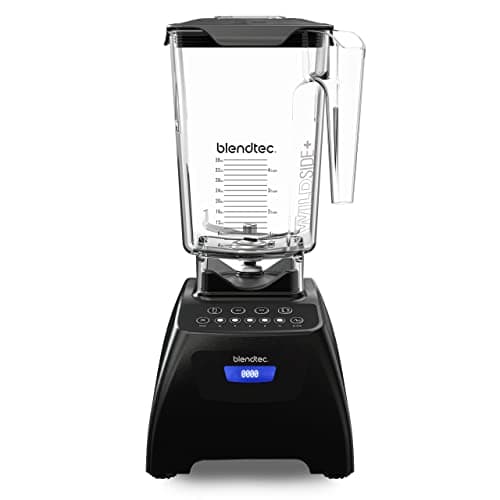
The closest alternative is the Blendtec Classic 575— for the buyer who wants Vitamix-class power and a jar that does not need a tamper: a published 1,560 watts, which is more than the 5200’s nameplate works out to, in a five-sided WildSide+ jar with blunt blades designed so you never open the lid mid-blend. The budget alternative is the Ninja Professional BL610, the cheapest machine here that handles the same loads, at a published 1,000 W. Both trade away the one thing nothing else in this catalog matches: the warranty.
What a Vitamix is actually known for
Three things, all of them documented rather than vibes, and it is worth being precise because the right alternative depends entirely on which one you need:
- A seven-year FULL warranty. Parts, labor and shipping in both directions on the 5200, with replacement parts published and sold so a failure afterwards is a repair rather than a write-off. This is the hardest thing on the list to replace: nothing else in this catalog comes close, and the honest answer is that if the warranty is why you want a Vitamix, you should buy a Vitamix.
- A fully variable speed dial.Not presets — a dial you hold at whatever speed a thick, low-liquid load needs. This is what makes nut butter, hummus and thick smoothie bowls workable rather than a fight.
- A tamper, in a tall narrow jar. The combination that defeats cavitation: when the load banks up the sides and the blades spin in air, you push it back down through the lid while the machine runs.
Note what is noton that list. Vitamix publishes no decibel figure for any household machine, publishes no watt figure for the 5200 at all (the specification table gives 120 V at 11.5 amps, which multiplies out to 1,380 W), and sells on “peak output horsepower”, which is a motor-stall measurement rather than a blending one. So “a Vitamix is more powerful” is the one claim on its reputation that the documents do not support against every rival here.
Who each alternative is for, in one line
- Blendtec Classic 575— for Vitamix-class power with no tamper needed: a published 1,560 W and a jar designed around blunt blades.
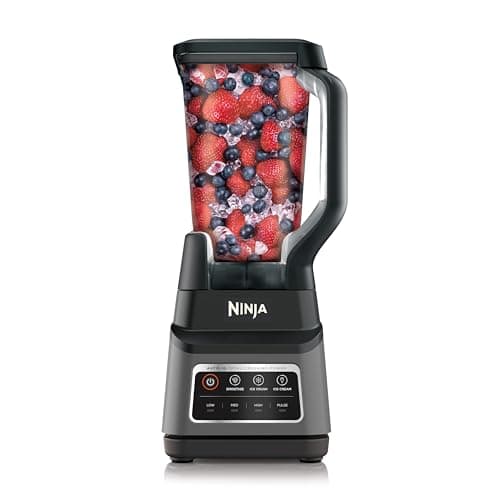
- Ninja Professional Plus BN701— for the biggest documented continuous motor per dollar: 1,200 W continuous, published, on a 72 oz pitcher.
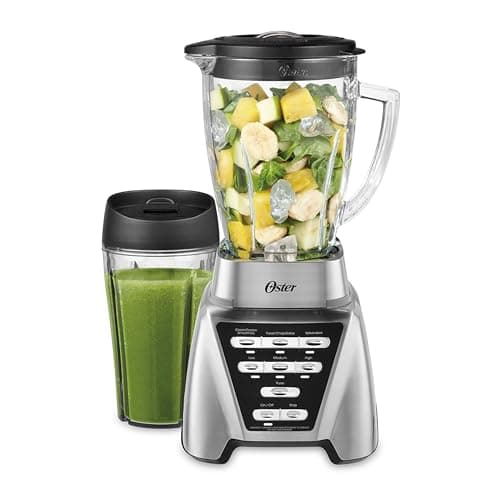
- Oster Pro 1200— for the longest warranty you can get cheaply: three years on a glass-jar machine, honored by replacement.
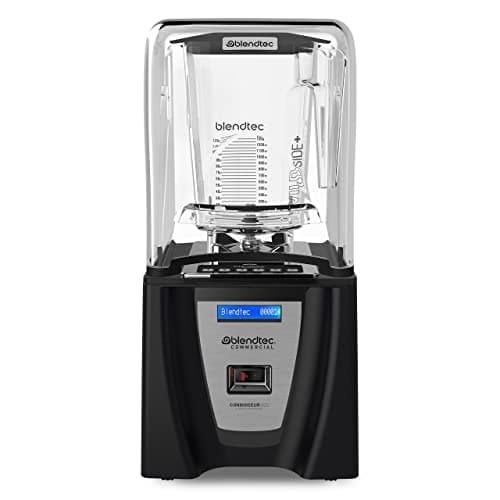
- Blendtec Connoisseur 825— for the buyer whose real requirement is duty cycle: 1,800 W, 15 amps, 150+ recommended daily blends and a warranty that does not exclude business use.
- Ninja Professional BL610— the budget alternative: the cheapest machine here that still blends the same loads.
Matching the alternative to the reason you wanted a Vitamix
If you wanted the power— the Blendtec Classic 575 publishes 1,560 W outright, and the Ninja BN701 publishes 1,200 W continuous alongside a 1,400 W peak. Both are directly comparable numbers; the 5200’s 1,380 W is arithmetic on a nameplate. On published figures, two of these cost a fraction of a Vitamix and are not behind it.
If you wanted the thick-mixture capability— this is where Blendtec is the genuine alternative and the Ninjas are not. The WildSide+ jar is a different answer to the same problem: wider, five-sided to break the vortex, with blunt blades, designed so a thick load folds in on itself without a tamper. A Ninja’s stacked blade tower and tall pitcher have no tamper and no equivalent trick, which is why our nut butter roundup does not lead with one.
If you wanted the warranty— buy the Vitamix. That is the honest answer and this page is not going to pretend otherwise. Among the alternatives, the best cover is three years (Oster, by replacement rather than repair) or two years parts and labor, residential use only (Blendtec Classic 575). The Ninjas are one year. Seven years full is a different category of promise, and blender warranties compared lays every document out.
If you wanted it for a business— then a household Vitamix was the wrong machine to start with, because its warranty is void for commercial use. The Connoisseur 825 is the alternative that answers the real question: 1,800 W at 15 amps, 50 preprogrammed cycles, a published 150+ recommended daily blends, a sound enclosure included and a three-year warranty written for trade use. The cafe roundup covers that tier properly.
One correction worth making, in Blendtec’s own words
Most of the internet credits the Classic 575 with an eight-year warranty. Blendtec’s own warranty schedule puts it at two years parts and two years labor, residential use only; the eight-year term belongs to the Designer and Professional lines. We mention it here because it is the most common reason someone picks the 575 as a Vitamix alternative, and it is not true. The 575 is still the best power-for-money alternative on this page — just not on the warranty.
What the alternatives cost to run
Within pennies of each other and of the Vitamix. At 18.16¢ per kWh and 3 minutes a day, 365 days a year: about $5.17 a year for the Blendtec 575, $3.98 for the Ninja BN701, $3.31 for the BL610 and $5.97 for the commercial Connoisseur 825 — against about $4.57 for the Vitamix 5200. Nobody should choose between these on electricity. The arithmetic.
The decision rule
Buy the alternative if you want blending performance. Buy the Vitamix if you want the warranty and the dial. That really is the whole of it: at this level the machines all blend, and what separates $100 from $450 is how long someone else carries the risk and how finely you can control the speed while they do.
If you are still weighing it, Ninja vs Vitamix and Blendtec vs Vitamix settle the two individual head-to-heads with the documents, best Vitamix blenders ranks the range if you decide to buy one after all, and is a Vitamix worth it asks the question without a sales pitch on either side.
What we have not done
We have not tested any of these machines, including the Vitamix. Nothing above is a performance claim from use: every wattage, amperage, jar figure, cycle count and warranty term is read off the manufacturer’s own product page or warranty document, all cited below. We have invented no fault for the Vitamix and no advantage for anything else.
How to choose a Vitamix alternative without regretting it
1. Name the one feature you actually wanted
Warranty, dial, or tamper. Almost nobody wants all three equally, and each points at a different machine. If you cannot name it, what you wanted was the reputation, and the honest cheapest route to that is a 1,200 W Ninja.
2. Compare published continuous figures only
A Blendtec’s 1,560 W, a Ninja’s 1,200 W continuous and a Vitamix nameplate’s 11.5 A × 120 V are comparable. “Peak output horsepower” and “peak watts” are not comparable with any of them. Blender wattage explained sets out which figure to trust.
3. Check whether the jar solves cavitation, since a tamper will not be included
A tall narrow jar without a tamper is the worst combination for thick mixtures. Either the jar is designed around the problem, as Blendtec’s WildSide+ is, or you should plan on stopping and scraping.
4. Price the warranty gap in money
Seven years full against one year limited is six years of risk you are taking on. Decide what that is worth to you in dollars rather than treating it as a footnote, because it is most of the price difference.
5. If it is for a business, buy commercial, not cheap
Household warranties on both Vitamix and Blendtec exclude commercial use, and Blendtec’s residential schedule even presumes commercial use above 3,000 cycles in a year. A cheaper household machine does not solve that; a commercial one does.
6. Do not buy on noise
Not one machine on this page publishes a decibel figure, and neither does Vitamix. Any noise comparison you read between these brands is someone’s impression, not a measurement.