HUB 07 · Guides
What Size Blender Do I Need?
The short answer: about 18-24 oz for one person, a 64 oz usable jar for a family, and a combo if you want both. The longer answer is why the capacity printed on the box is not the one you should buy on.
We earn a commission if you buy through our links. It does not change the price you pay, and it does not decide our picks — our selection criteria are published in full. How this works.
Size a blender to how many people you feed at once: roughly an 18–24 oz cup for a single serving, a 32 oz cup or small jar for one or two people, and a jar with about 64 oz of usable liquid for a family batch. If you need both a batch and single servings, a combo machine covers them on one base. The one number to ignore is the big one printed on the box.
Total volume is marketing; usable liquid is the spec
A “72 oz” pitcher does not make 72 oz of smoothie. Blending needs headroom above the liquid so the vortex has somewhere to go, so manufacturers publish a separate, lower max liquidfigure — the Ninja pitchers, for example, are 72 oz total but 64 oz max liquid. That max-liquid line is what you actually get, and it is the number to buy on. A few brands go further: Beast publishes usable blending capacity separately from total volume for exactly this reason. When a listing quotes only the big total, assume the working capacity is meaningfully smaller.
Size by who you are feeding
| You are making | Sensible size | Form factor |
|---|---|---|
| One shake, to go | 18–24 oz cup | Personal / bullet blender |
| One or two people | 32 oz cup or ~40 oz jar | Larger bullet, or small countertop |
| A family (3–4) | ~64 oz usable liquid | Full-size countertop pitcher |
| Batch + single servings | 64 oz pitcher + cups | Combo machine, one base |
One person: buy small on purpose
If you make one shake at a time, a big jar is a chore — more to wash, harder to store, and you blend a small amount in a vessel built for four. A single-serving cup is the right tool, and the genuinely small ones are rare: the NutriBullet 600 is the only machine in our catalog with an 18 oz short cup, where most “personal” blenders start at 24–32. Buying a right-sized cup is not a compromise; it is the correct match.
A family: buy usable capacity, and enough power to fill it
For three or four servings you want about 64 oz of usable liquid in one pass — the Ninja BN701 and the NutriBullet Combo both land there. And a bigger jar is a harder load: a full pitcher of frozen fruit is more mass to circulate than a small cup, so a family machine also needs a genuine full-size motor (roughly 1,000 W and up) or it bogs down. Capacity and power go together at this size. The full lineup is in the family-smoothie roundup.
Both jobs: a combo, not two machines
If you want a family batch and grab-and-go singles, a combo machine — a full pitcher plus single-serve cups on one motor base — covers both from one footprint, usually for less than buying two machines. The trade is more parts to store. See the two takes on it in NutriBullet Combo vs Ninja DUO.
The two sizing mistakes people make
Buying too big “to be safe.” An oversized jar you fill a third of the way blends badly — there is not enough volume for the blades to form a vortex — and it is more to clean and store. A blender that is a hassle is a blender that lives in a cupboard, which is the most expensive kind.
Buying a personal blender for a family.Running a 24 oz cup three or four times to feed a household is slower and messier than one pass in a jar, and it works the little motor hard. Match the vessel to the batch. The jar also has to physically fit: full-size machines are commonly 17–20 inches assembled against a standard 18-inch worktop-to-cabinet gap, so measure before you buy.
Rule of thumb. Count the largest number of servings you routinely make at once, then buy the smallest machine that does that batch comfortably on its usable-liquid figure. Bigger than that is cost, cleanup and cupboard space you will not get back.
The hardware
The hardware this guide is about
The products this guide refers to, with prices pulled live from Amazon and dated on every card. Full rankings live in the roundups linked above.
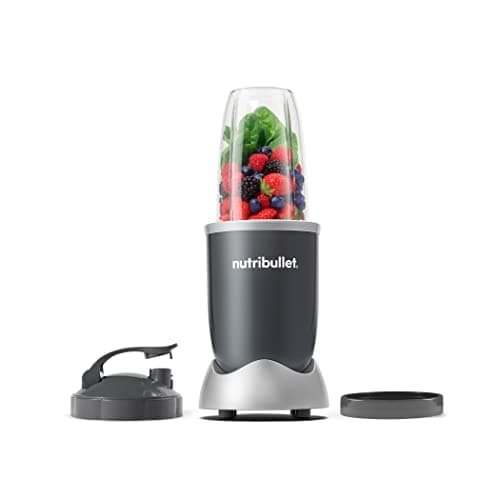
One modest shake
NutriBullet 600
The entry point, and the only machine here that ships a genuinely small cup. 600 watts is enough for the job it is actually bought for.
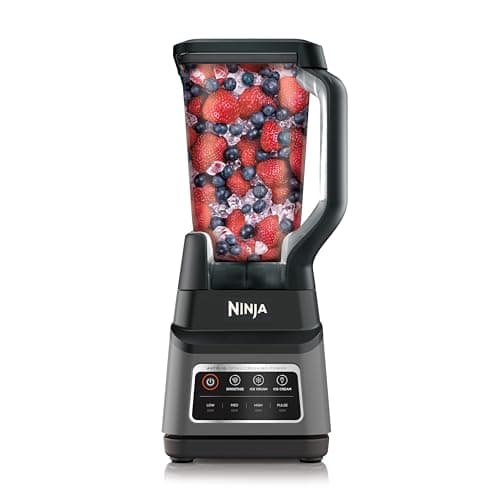
Most kitchens
Ninja Professional Plus BN701
The one brand here that publishes both a continuous and a peak wattage instead of only the flattering one. A large pitcher and real power for about a fifth of the premium price.
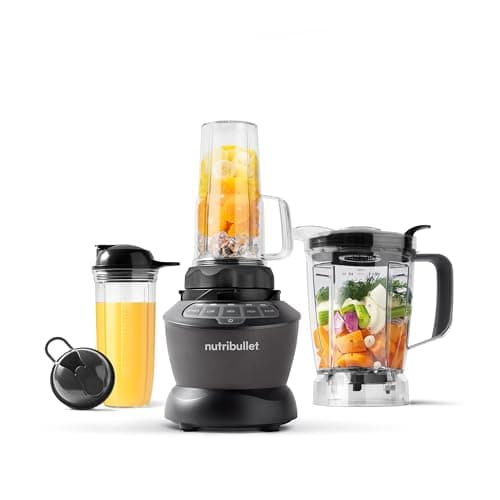
Pitcher and cups, one base
NutriBullet 1200 W Blender Combo
A 64 oz pitcher and two single-serve cups on one 1200 W base — the cheapest honest way to cover both jobs with one motor.
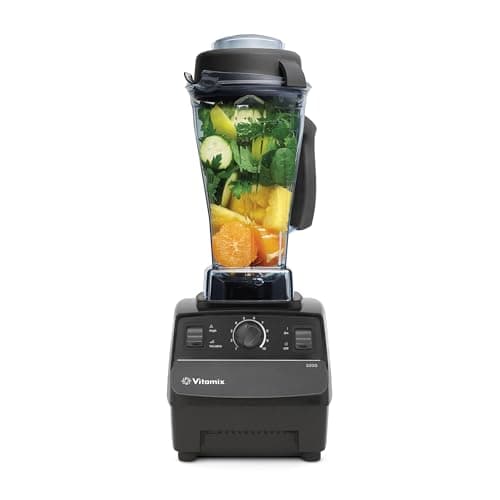
Buying once
Vitamix 5200
The seven-year warranty is the product. A machine with a fully variable dial, a tall narrow jar and a tamper, backed longer than almost anything else at any price.
#ad · As an Amazon Associate we earn from qualifying purchases.
Questions
Frequently asked
What size blender is best for a family of four?
About 64 oz of usable liquid capacity — the max-liquid line, which is lower than the total jar volume. That is a genuine four-serving batch in one pass. Pair it with a full-size motor so a full jar does not bog down.
Is a bigger blender always better?
No. An oversized jar filled a third of the way blends poorly and is more to clean and store. Buy the smallest machine that handles your usual batch on its usable-liquid figure.
What is usable capacity versus total capacity?
Total is the jar’s full volume; usable (or max liquid) is how much you can actually blend, which is lower because blending needs headroom. Always buy on the usable figure — it is the one that reflects real batches.
Keep reading
Related
- Best blenders for family smoothiesThe big-batch machines, ranked on usable capacity.
- The blender buying guideHow to choose without overbuying on power or size.
- Best personal blenders for protein shakesThe right-sized single-serve options.
- The blender gift guideSame sizing question asked on someone else's behalf, sorted by who you are buying for.
- Best blenders for small kitchensThe other half of fit: cabinet height and counter footprint.
- Best blenders for baby foodThe smallest-batch job of all, where a big jar is the wrong answer.
Receipts
Sources
- NutriBullet — 600-series product page
- SharkNinja — Ninja Professional Plus BN701 specification table
- NutriBullet — 1200 W full-size blender combo product page
- Vitamix — 5200 product page and specification table
We do not run a testing lab and we do not pretend to. Specifications come from the manufacturer's own published documents and from published standards; prices come from the live Amazon API. Where a figure is not published, the page says “not published” rather than guessing. Read the full method.