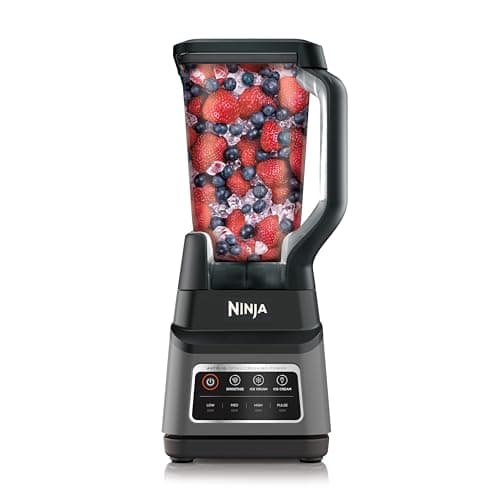
The case for the Ninja Professional Plus BN701 is that it publishes a continuous wattage as well as a peak one — which almost nobody else in this category does — puts a real motor behind a 72 oz pitcher, and does the everyday smoothie job for roughly a fifth of a premium machine’s price. The case against it is a one-year warranty and no tamper, which is exactly what the price difference to a Vitamix buys.
What this review is.Specification- and documentation-based, not hands-on. Nobody at Basket & Blade has used a BN701. Every figure below comes from SharkNinja’s own specification table or from arithmetic shown in full. Where Ninja publishes nothing, this page says so. The method is on how we pick.
The motor, and the candor that sets it apart
Ninja’s specification table publishes two figures: 1,200 watts continuous and 1,400 watts peak. That is genuinely unusual and worth crediting. Most brands publish the peak number alone, because it is bigger, and leave you to assume it is the number that does the work. It is not — peak is measured at the instant of maximum draw, while continuous is roughly what the motor pulls while it is actually blending. By publishing both, Ninja makes the machine comparable in a way its rivals do not, and the honest reading is that 1,200 W continuous is ample for frozen fruit, ice with liquid, and daily smoothies. The wattage guide explains why the continuous figure is the one that matters.
The pitcher and what it is for
Ninja publishes 72 oz total and 64 oz of maximum liquid, which is a genuine family batch in one go — the same usable liquid capacity as a Vitamix 5200. It is the right machine for feeding more than one person, and the Auto-iQ programs run and stop on their own, which is worth more than it sounds when you are doing something else in the kitchen. The catch that comes with the height: a full-size pitcher is tall, so measure your worktop-to-cabinet gap, because a machine stored in a cupboard gets used half as often.
The warranty is what the price difference is about
One year, limited. Set beside Vitamix’s seven, that gap is the clearest expression in the whole category of what you are and are not paying for. A warranty term is a company’s own actuarial judgment about its own motor, and one year against seven is a real statement — but it is only worth paying up for if you intend to own the machine long enough to use it. For a buyer who makes smoothies a few times a week and expects to replace a machine in five years anyway, one year is not the liability it looks like. The whole category’s terms are on the warranty comparison.
The limitation: no tamper
The BN701 ships without a tamper, and Ninja lists this as a limitation itself. For a drinkable smoothie it never matters. For nut butter, thick smoothie bowls or any low-liquid mixture, it matters constantly: without a tamper the load carves an air pocket and the blades spin inside it while the food sits above, so the job becomes stop, scrape, restart. If thick loads are a regular part of what you make, this is the wrong machine, and a tamper-equipped machine is the right one. The stacked blade tower is also more surfaces to wash than a single fixed blade.
Who should not buy this
Anyone who makes nut butter or thick bowls regularly — the missing tamper turns those into a fight. Anyone who wants a long warranty and intends to keep one machine for a decade; the money is better spent on a Vitamix. Anyone buying to make single servings to drink on the way out — that is a personal blender, and a 72 oz pitcher is the wrong tool for one cup.
The decision rule
Buy the BN701 if you want the best everyday full-size machine for the money, you make smoothies and frozen drinks with enough liquid, and you are not paying for a warranty you will not be around to use. If you are cross-shopping it against the obvious premium alternative, the head-to-head is on Ninja vs Vitamix; if a big pitcher against a short jar is the question, see Blendtec vs Ninja.
How we picked
Blenders we claim to have tested: 0
Every site in this category tells you they blended twenty smoothies. We have not blended any, and we say so. Here is what we do instead: read the manufacturer's manual and spec sheet, record the published motor rating, jar capacity and warranty term, verify the warranty against the manufacturer's own warranty document, work out what the machine costs to run for a year and show the arithmetic, and cite all of it so you can check the work. Prices come live from Amazon's API and disappear rather than go stale.
The scores above are judgments from that documented research — not test results. The full rubric, including what disqualifies a product, is published in full.