Buy the Ninja Professional Plus BN701. It is for the household that wants a full-size pitcher machine with real documented power: SharkNinja publishes 1,200 watts continuous and 1,400 watts peakfor it, which is unusual candor in this category, on a 72 oz pitcher holding 64 oz of liquid. The budget pick is the Ninja Professional BL610— the cheapest Ninja that still does a full-size job, at a published 1,000 W, with one real caveat covered below.
Who each one is for, in one line
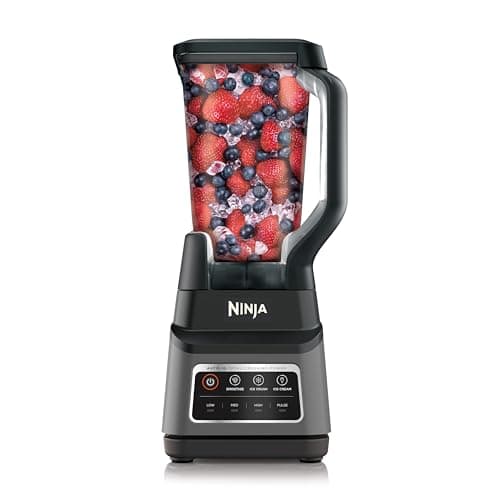
- Ninja Professional Plus BN701— for most kitchens: the best-documented motor in the range on a 72 oz pitcher.
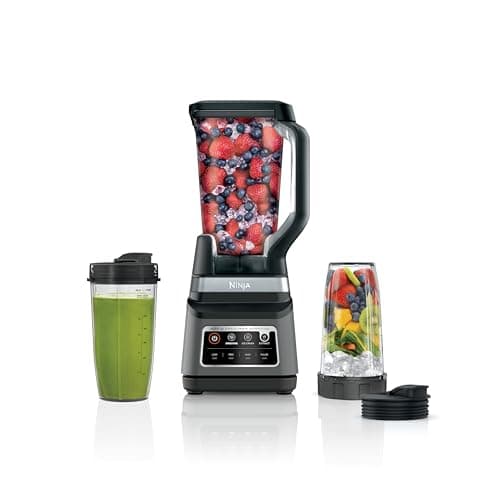
- Ninja Professional Plus DUO BN751— for the household that wants one base to do a family pitcher and single-serve cups.
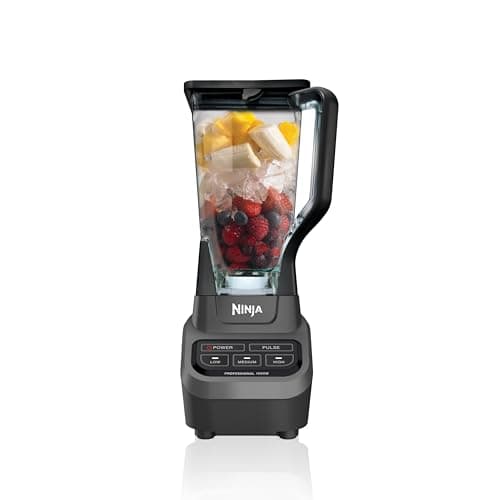
- Ninja Professional BL610— for spending as little as possible on a full-size machine, if you accept a model SharkNinja has delisted.
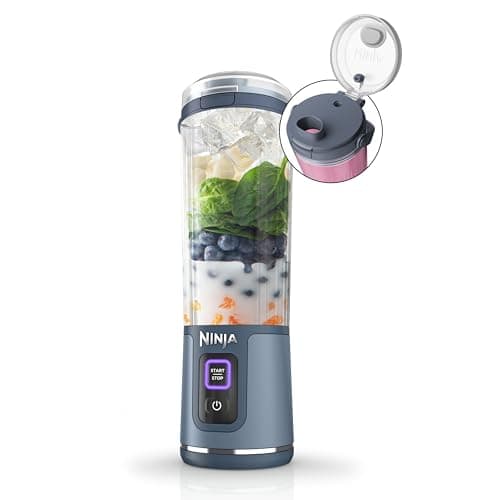
- Ninja Blast BC151— for blending away from a socket, in 18 oz portions. Not a kitchen blender and not sold as one.
Continuous watts versus peak watts, which is the whole Ninja question
Nearly every blender in this price class is marketed on a peak figure — the draw during the first seconds of operation, before the motor settles. Ninja is one of the few brands that publishes bothnumbers for its flagship machines, and the gap is instructive: the BN701 and BN751 are both 1,200 W continuous and 1,400 W peak. A 200-watt spread is modest; on other brands in this catalog it runs far wider. Hamilton Beach sells the Power Elite on “700 watts of peak blending power” while its own rating plate reads 3.7 A at 120 V — 444 W continuous, a 37% gap.
So when you compare a Ninja with anything else, compare the Ninja’s continuous figure with the other machine’s nameplate, not with its peak. Blender wattage explained works through why that is the only comparison that means anything.
The BL610 problem, stated plainly
The BL610 is the most recommended cheap Ninja on the internet and SharkNinja no longer publishes a product page for it. The two figures on this page come from the only manufacturer documents still live: the 1,000 W motor base sold as a replacement part for this model, and the 72 oz replacement pitcher listing BL610 compatibility — whose own in-box text says 71 oz on the same page. No warranty term is published for it either. Ninja states one year on every current blender page, but nothing is published for the delisted model, so we do not print a number for it.
That is not a reason to avoid it. A delisted model is often the best value on the shelf, because the replacement carries the new price. It is a reason to know what you are buying: no published warranty, and spare parts sourced from a replacement-part catalog rather than a product page. The full BL610 review goes through it, and BL610 vs BN701 is the decision most people are actually making.
Where the DUO fits
The BN751 is the BN701 with single-serve cups added to the same 1,200 W continuous base. If you make a family pitcher some days and one cup on others, it saves you owning two machines; if you only ever do one of those jobs, it is extra plastic to wash and store. BN701 vs BN751 settles it, and the NutriBullet Combo vs the Ninja DUO is the same question across brands.
What a Ninja costs to run for a year
At 18.16¢ per kWh and this site’s standard assumption of 3 minutes a day, 365 days a year, the 1,200 W continuous BN701 and BN751 cost about $3.98a year each in electricity, and the 1,000 W BL610 about $3.31. The Blast has no figure, because SharkNinja publishes none — its specification table lists both wattage and peak wattage as zero, and we will not reverse-engineer a number from a 7.4 V battery. What a blender costs to run has the working.
The one thing every Ninja on this page shares
A one-year limited warranty, where that is published at all. That is the shortest term of any brand in this catalog, and it is the honest cost of the price: Hamilton Beach gives three years on a $40 machine, Oster three years on its kitchen blenders, Vitamix seven to ten on its household range. Best blenders for daily use ranks the whole catalog on covered years, and no Ninja finishes near the top of it. If you blend twice a day, that matters more than 200 watts — and alternatives to a Ninja blender names the machines that fix the warranty without giving up the pitcher.
What we have not done
We have not tested these machines. Every wattage, pitcher size and warranty term above is read off SharkNinja’s own specification table or replacement-part listing, cited below, and where SharkNinja publishes nothing we say so instead of filling the gap. Prices come live from Amazon with the date they were checked.
How to pick a Ninja without being sold a peak number
1. Write down the continuous watts, not the number on the box
For the BN701 and BN751 that is 1,200 W. If a listing gives you only a peak figure, treat the machine as undocumented until you find the nameplate. The gap between marketing and rating plate runs to 37% elsewhere in this catalog.
2. Decide pitcher-only or pitcher-plus-cups before you look at prices
The BN701 and the BN751 share a motor. The only difference you are paying for is the cup system, and it is worth it exactly when you genuinely do both jobs.
3. Check whether the model still has a product page
This is specific to Ninja and it matters. The range turns over fast, and a delisted model loses its published specification and its published warranty before it loses its Amazon listing. Search the manufacturer’s site for the exact model number before you buy. If there is no page, you are buying on a replacement-part listing, which is what the BL610 entry above is built from.
4. Do not buy a cordless Ninja for kitchen work
The Blast makes up to 18 oz and publishes no wattage whatsoever. It is a genuinely good thing for a gym bag and a genuinely bad thing for a worktop. Best portable blenders is where that comparison belongs.
5. Price the warranty, then decide
One year is one year. If the machine is replacing one that died at eighteen months, buy on covered years rather than on watts: a 700 W Hamilton Beach with three years behind it is a different proposition from a 1,200 W Ninja with one. Hamilton Beach vs Ninja is that argument in full.