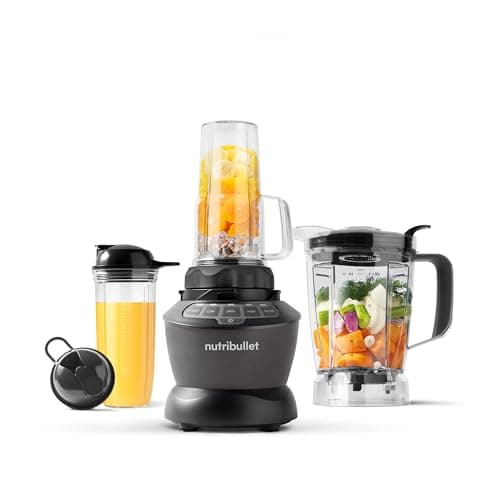
Nobody searching this wants to be told a Ninja is bad. It is not, and on one measure it is the most honest brand in this catalog: SharkNinja publishes 1,200 watts continuous and 1,400 watts peak for the Professional Plus, side by side, where almost every rival publishes the peak figure alone. The useful question is which of the three things a Ninja gives you — published power, a 72 oz pitcher, or a low price — you are trying to keep, and what you want to fix. For most people the answer is the NutriBullet 1200 W Blender Combo: the same job, the same money, a documented spec page.
What a Ninja is actually known for
- A continuous watt figure.1,200 W continuous alongside 1,400 W peak on the BN701 and BN751. That one habit makes the machine genuinely comparable to other brands, and it is why our running-cost tables can use a real number for a Ninja and have to do arithmetic for a Vitamix.
- A 72 oz pitcher, 64 oz of it usable for liquid.Family batch capacity at a price where rivals ship 40 oz.
- Auto-iQ timed programs that stop by themselves, so you are not standing over the jar.
- A low price— roughly a fifth of what the premium machines cost for the everyday smoothie job.
And the thing people most often want to fix: one year limited, which is the warranty on every current Ninja blender page and the shortest term of any brand we stock. There is a documentation gap too — the BL610, still the most widely recommended cheap Ninja on the internet, no longer has a SharkNinja product page at all. Its 1,000 W figure survives only on the listing for its own replacement motor base, and no warranty term is published for it anywhere. Our BL610 review goes through what is and is not still documented, and best Ninja blenders ranks the range if you decide to stay with the brand after all.
Match it like for like: the NutriBullet 1200 W Blender Combo
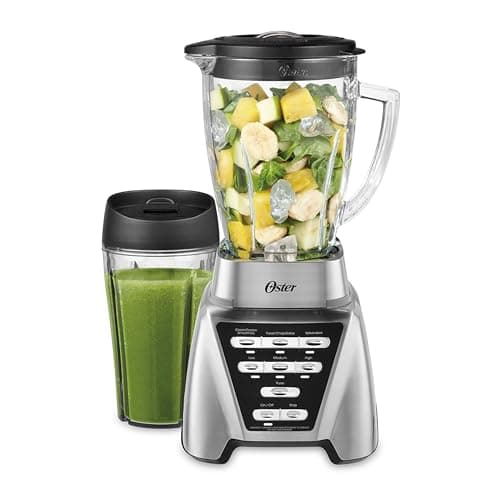
If what you like about the Ninja DUO is one motor base doing both the pitcher job and the single-serve job, this is the machine that does the same thing. NutriBullet publishes 1200 W— a plain figure with no peak qualifier — under a 64 oz pitcher, a 32 oz cup and a 24 oz handled cup, at a price that sits in the same band as a Professional Plus. The cups take a drinking lid, which is the entire reason to own the format.
Be clear about what it does not fix: NutriBullet’s warranty is also one year, and its terms explicitly exclude the cups and accessories. So this is a swap that buys you a documented product page, a plain watt figure and a second vessel system — not a longer piece of paper. If the paper is your problem, skip to the next two picks. NutriBullet Combo vs Ninja DUO is the head-to-head in full.
Fix the warranty: Oster, or Hamilton Beach on the smallest budget
Both of these triple Ninja’s term. Oster publishes three years on kitchen blenders, and the Pro 1200 pairs that with a glass jar at a mid-range price. The catch is documentation, and it is a real one on a site built around sourcing: Oster has withdrawn the product page for this exact model, so the “1200” in its name cannot be traced to a manufacturer document and we leave that spec cell empty rather than repeat the number other sites quote. Oster’s remedy is also replacement rather than repair, which on a delisted model is a question worth asking before you buy.
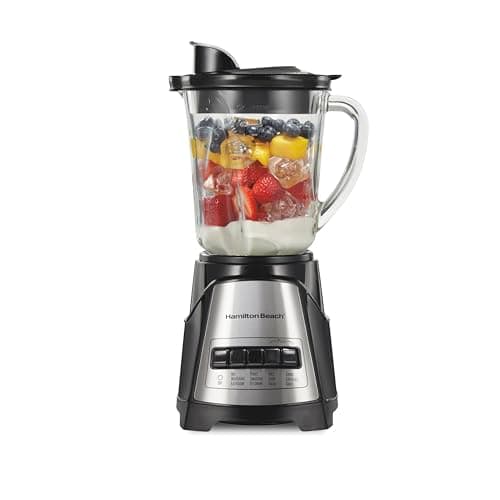
The Hamilton Beach Power Elite is the budget pick of this whole page and the most candid machine in the catalog about its own numbers. Hamilton Beach publishes 700 peak watts, defines peak in its own manual as the draw during the first seconds of operation, and prints the real rating plate — 120 V, 3.7 A max — next to it. That is a manufacturer telling you how to discount its own marketing figure. It carries three years in the US, five in Canada, and a 40 oz glass jar. What you give up is power: 3.7 amps is a fraction of a Ninja’s draw and it shows on a full jar of frozen fruit with no added liquid. Hamilton Beach vs Ninja and Oster vs Ninja settle each of those trades on their own.
Step up instead: Blendtec on power, Vitamix on paperwork
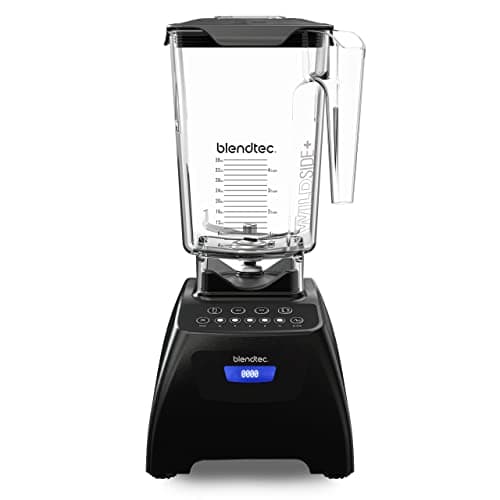
If leaving Ninja means spending more rather than less, there are two coherent reasons to do it. The Blendtec Classic 575 publishes 1,560 watts — more than any Ninja continuous figure — with a blunt fixed blade you cannot install wrong, preset cycles, and a short jar that clears a standard wall cabinet. Its warranty is two years parts and labor, residential use only, which is double Ninja’s and nothing like the eight years commonly misattributed to it. Blendtec publishes a maximum liquid fill of 36 oz for the WildSide+ jar and no total capacity, so if the 72 oz Ninja pitcher is what you need, this is a step down in documented capacity.
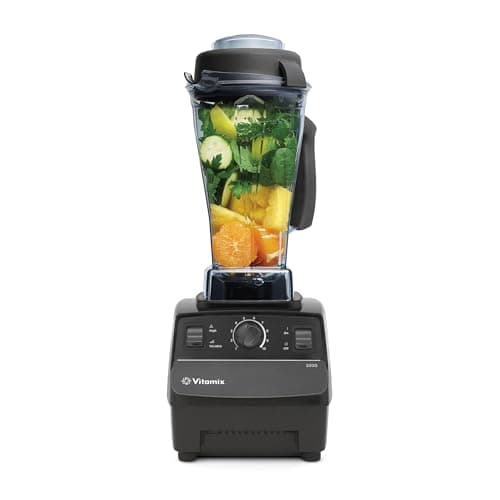
The Vitamix 5200 is the answer to the warranty question and almost nothing else: seven years, full— parts, labor and shipping both ways — a 64 oz container, a fully variable dial and a tamper in the box, which is the one tool that turns a stalled thick load into a blended one. Vitamix publishes no watt figure for the 5200 at all, only 120 V at 11.5 amps, so the comparison with a Ninja’s 1,200 W continuous rating has to be done with arithmetic rather than with two published numbers. Ninja vs Vitamix is one year against seven in full, and Blendtec vs Ninja is the power version of the same question.
What the swap costs you to run
Almost nothing, in either direction. At 18.16¢ per kWhand this site’s standard assumption of 3 minutes a day, 365 days a year, a 1,200 W Ninja and the 1200 W NutriBullet Combo both work out at about $3.98 a year. The Blendtec comes to about $5.17, the Vitamix 5200 to about $4.57 on its own nameplate arithmetic, and the Hamilton Beach to about $1.47 on its published rating plate. For the Oster we publish no running cost at all, because there is no manufacturer wattage left to base one on. What a blender costs to run shows the arithmetic and how to substitute your own rate.
Which alternative matches which reason for leaving
- “I want the same machine with a documented spec page.” NutriBullet 1200 W Blender Combo.
- “One year is not enough warranty.” Oster Pro 1200 or Hamilton Beach Power Elite at three years; Vitamix 5200 at seven, full.
- “I want to spend less than a Ninja.” Hamilton Beach Power Elite, and accept the power difference honestly.
- “I want more power than a Ninja publishes.”Blendtec Classic 575 at 1,560 W, with a smaller documented jar.
- “I hate washing the stacked blade tower.”Blendtec’s single blunt fixed blade, or the Hamilton Beach’s simpler assembly — the easiest blenders to clean ranks this on part count.
- “I only want single-serve cups.” Then you are shopping a different format: best bullet blenders and best NutriBullet blenders are the pages for that.
What we have not done
We have not tested any of these machines, Ninja included. We own none of them, we have blended nothing, and we have run no timed trials. Every watt figure, capacity and warranty term above — for the alternatives and for the Ninja machines they are being compared against — is read off the manufacturer’s own page, manual or warranty schedule, cited in full below. Where a manufacturer publishes nothing, this page says so instead of borrowing a retailer’s figure. Prices come live from Amazon and carry the date they were checked.
How to leave a brand without downgrading by accident
1. Write down which Ninja you were actually comparing
“A Ninja” spans a 1,000 W delisted BL610, a 1,200 W continuous Professional Plus and a cordless cup blender whose spec table lists its wattage as zero. The alternative that beats one of those loses to another. If it was a BN701 or BN751, you need 1,200 W continuous and 64 oz usable to match it — which on this page means the NutriBullet Combo.
2. Compare continuous watts with continuous watts
This is where most brand swaps go wrong. A 1,400 W peak figure and a 1,200 W continuous figure can describe the same motor, and a rival’s unqualified “1,500 W” may be either. Ninja and NutriBullet both give you a number you can use; Hamilton Beach tells you how to convert its peak figure; Vitamix gives you an amperage and no watts. Blender wattage explained is the full method.
3. Check usable liquid capacity, not jar size
Ninja publishes both for the Professional Plus: 72 oz total, 64 oz maximum liquid. Blendtec publishes a 36 oz maximum liquid fill and no total. Hamilton Beach ships 40 oz of glass. Those are not the same quantity measured three ways, and the “72 oz” on a box is the number least likely to describe what you can actually blend. What size blender do I need works through the sizing properly.
4. Read the remedy, not just the term
Three years of replacement on a delisted model and seven years of full repair with two-way shipping are very different promises, even though both are “the warranty”. Oster’s remedy is replacement; Vitamix’s seven-year term is full and covers labor and shipping; Hamilton Beach’s three years are the best term available at the bottom of the market. Blender warranties compared puts the documents side by side.
5. Decide whether you want a tamper or a jar shaped to avoid one
No Ninja ships a tamper, which is why thick low-liquid loads mean stopping and scraping. There are two fixes and they are opposites: a tall narrow jar with a tamper (the Vitamix 5200), or a jar shaped to fold the load back in with a blunt fixed blade (the Blendtec). The NutriBullet Combo, like the Ninja, has neither. What a blender tamper is used for explains the mechanism.
6. Do not pay for quiet, from anybody
Not one manufacturer on this page publishes a decibel figure for any machine on it — not Ninja, not NutriBullet, not Oster, not Hamilton Beach, not Blendtec, not Vitamix. If noise is your reason for switching, there is no published number on either side of the swap to justify it. Best quiet blenders sets out what can honestly be said.