HUB 07 · Guides
How Much Does a Blender Cost to Run?
A few dollars a year, whatever you buy. Here is the sum in full, with its source and its assumptions, so you can substitute your own electricity rate and your own habits and get your own answer.
We earn a commission if you buy through our links. It does not change the price you pay, and it does not decide our picks — our selection criteria are published in full. How this works.
A blender used for three minutes a day costs between one and five dollars a year in electricity. For a 1,000 watt machine it is $3.35 a year. That is the whole answer, and the useful conclusion follows immediately: running cost should not influence which blender you buy.
We publish it anyway, because across the publishers surveyed for this site not one showed the calculation, and knowing a number is small is as useful as knowing it is large. It stops power draw being sold to you as a virtue it does not deserve to be, and it removes a variable from a decision that has enough of them already.
The arithmetic
Three inputs, one multiplication:
a 1,000 W blender, 3 minutes a day, 365 days a year:
1000 ÷ 1000 = 1 kW
3 min × 365 days ÷ 60 = 18.25 hours a year
1 kW × 18.25 h = 18.3 kWh
18.3 kWh × $0.1834 = $3.35 a year
Where each input comes from
The wattageis whatever the manufacturer publishes, and that is less straightforward than it sounds — the numbers are not comparable across brands. Ninja publishes both a continuous and a peak figure. Hamilton Beach publishes a peak figure and then, in its own manual, defines peak as the draw during the first seconds of operation, while the rating plate on the same machine says 3.7 A. Vitamix publishes no watt figure at all for the 5200 — only horsepower and an 11.5 A nameplate rating. We use the figure that reflects what the motor actually draws while running, and say which one that is for every machine. There is more on why this matters in the guide to blender wattage.
The usage assumption is 3 minutes a day, 365 days a year. That is generous for most households, and deliberately so: an over-estimate that still comes out small is a more useful number than a flattering one. If you blend for one minute, divide by three.
The electricity rate is 18.34¢ per kWh, the US average residential price from US EIA, Electric Power Monthly — average residential price, US total, retrieved September 2026. Your rate is on your utility bill and is very probably different — rates vary by more than a factor of three between US states, which swings the figures below more than any difference between the machines does.
What each machine costs a year
Every wattage below is published by the manufacturer and cited on that product’s page. Where a manufacturer publishes no usable wattage, the row says so rather than carrying an estimate.
| Blender | Published power | kWh / year | Cost / year |
|---|---|---|---|
| Blendtec Classic 575 | 1,560 W | 28.5 | $5.22 |
| Vitamix 5200 | 1,380 W | 25.2 | $4.62 |
| Ninja Professional Plus BN701 | 1,200 W | 21.9 | $4.02 |
| NutriBullet 1200 W Blender Combo | 1,200 W | 21.9 | $4.02 |
| Beast Mega 1200 | 1,200 W | 21.9 | $4.02 |
| Ninja Professional Blender BL610 | 1,000 W | 18.3 | $3.35 |
| NutriBullet Pro (900 W) | 900 W | 16.4 | $3.01 |
| NutriBullet 600 | 600 W | 10.9 | $2.01 |
| Braun MultiQuick 7 MQ7035X | 500 W | 9.1 | $1.67 |
| Hamilton Beach Power Elite Wave Action | 444 W | 8.1 | $1.49 |
| Breville Control Grip BSB510XL | 280 W | 5.1 | $0.94 |
| Magic Bullet 11-piece set | 250 W | 4.6 | $0.84 |
The spread from the most expensive machine to the least is under four dollars a year. Put differently: the difference in running cost between the most powerful blender here and the cheapest one is roughly the price of a coffee, spread across twelve months.
The counter-intuitive part.A more powerful blender is not necessarily more expensive to run, because it finishes sooner. A 1,500 W motor that clears a frozen load in forty seconds draws less total energy than a 500 W motor grinding at the same job for three minutes. The table above assumes identical run times for every machine, which quietly flatters the weak ones.
What actually costs money to own
If running cost is a rounding error, what is not? Three things, in order:
Replacement. A machine that dies at three years and gets replaced costs you the whole purchase price again. This is why warranty length is the number we weight most heavily — the gap between a one-year and a seven-year term dwarfs every electricity figure in the table above by two orders of magnitude.
Consumables.Gaskets, blade assemblies, cups and jars. On personal blenders in particular the gasket is the usual cause of death, and it is normally excluded from the warranty — NutriBullet’s terms exclude cups and accessories explicitly. Check that spare parts are sold at all before you buy; a machine with no parts listing has been designed as disposable.
Not using it. The most expensive blender is the one in the cupboard. That is usually a height problem — full-size machines are commonly 17 to 20 inches assembled against a standard 18-inch worktop-to-cabinet gap — or a cleaning problem. Both are worth more attention than wattage.
Redoing this with your own numbers
Take the wattage from your machine’s rating plate — the sticker on the underside, which is the real figure rather than the marketing one. Take your rate from your utility bill in cents per kWh. Then:
If your answer is a surprise, it is almost always the minutes. Three minutes a day is a lot of blending; most people do closer to one.
What this figure is not
It is a computation from published specifications, not a measurement. We have not put a meter on any of these machines — we do not own them, and we say so on every page. What makes the number worth publishing is that every input is public and the sum is shown, so you can check it, argue with the assumption, or substitute a better one. That is a different kind of confidence from a lab reading, and on this particular question it is enough.
The hardware
The hardware this guide is about
The products this guide refers to, with prices pulled live from Amazon. Prices last checked October 18, 2026. Where we have no verified live price we show none rather than a stale number. Full rankings live in the roundups linked above.
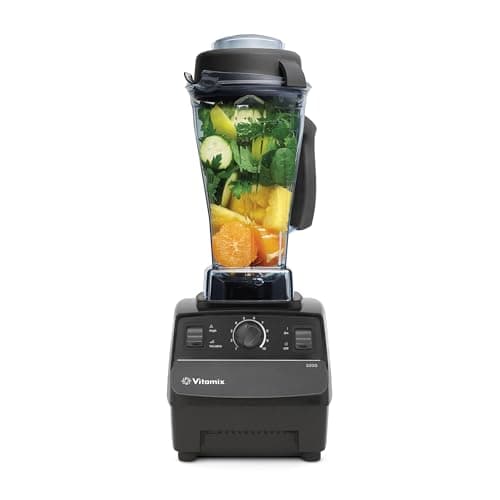
Buying once
Vitamix 5200
The seven-year warranty is the product. A machine with a fully variable dial, a tall narrow jar and a tamper, backed longer than almost anything else at any price.
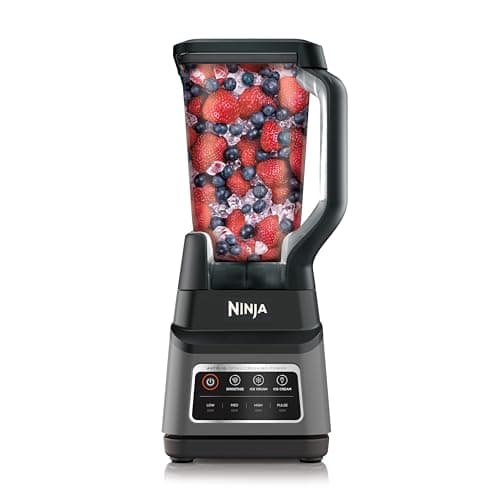
Most kitchens
Ninja Professional Plus BN701
The one brand here that publishes both a continuous and a peak wattage instead of only the flattering one. A large pitcher and real power for about a fifth of the premium price.
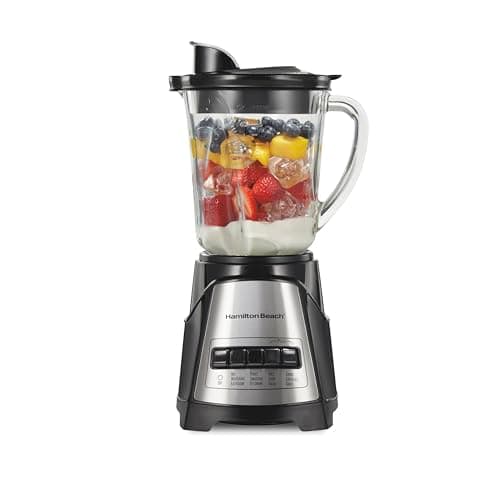
The smallest budget
Hamilton Beach Power Elite Wave Action
The cheapest machine here and the most honest about its own numbers: Hamilton Beach defines what its peak wattage means and prints the real nameplate amperage next to it.
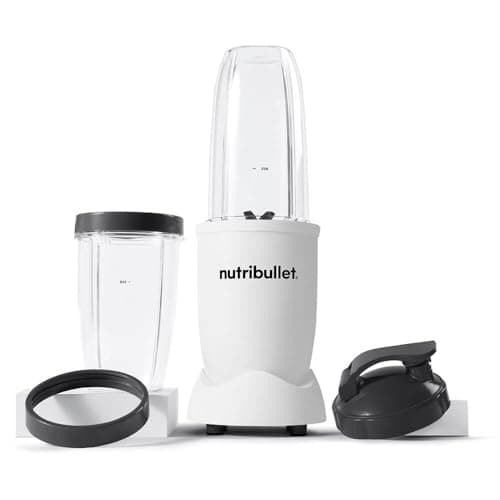
Everyday shakes
NutriBullet Pro (900 W)
The default bullet blender, and a good one. Note that NutriBullet's own product page contradicts itself about which cups are in the box.
#ad · As an Amazon Associate we earn from qualifying purchases.
Questions
Frequently asked
How many watts does a blender use?
Published ratings in this catalog run from 250 W for a Magic Bullet to 1,560 W for a Blendtec Classic 575. But the figures are not comparable across brands: some publish continuous draw, some publish peak draw measured in the first seconds, and Vitamix publishes horsepower and a nameplate amperage instead of watts at all. Always check which one you are reading.
Does a more powerful blender cost more to run?
Barely, and not necessarily. A stronger motor draws more while it runs but usually finishes sooner, so the total energy converges. Across every machine here the whole spread is under four dollars a year at 3 minutes a day, 365 days a year.
What electricity rate did you use?
18.34¢ per kWh, the US average residential price from the EIA Electric Power Monthly, retrieved September 2026. Your own rate is on your bill and rates vary by more than three times between states — that variation moves these numbers far more than the choice of blender does.
Did you measure these figures with a power meter?
No. Every figure here is computed from the motor rating the manufacturer publishes, using the arithmetic shown in full above. We do not own these blenders and we do not claim to have tested them. Our full method is published, including what we do instead.
Should running cost affect which blender I buy?
No, and that is the practical value of working it out. At a few dollars a year the difference between machines is negligible. Spend the attention on warranty length, whether the jar fits under your cabinets, and whether the thing is easy enough to clean that you will keep using it.
Does it cost more to run a blender every day?
Proportionally yes, and in absolute terms barely. Daily use is exactly the assumption behind every figure on this page — three minutes a day, 365 days a year — so the numbers above already are the daily-use answer, and the spread across our whole catalogue is under four dollars a year. The machines ranked for that pattern, on covered years rather than watts, are onbest blenders for daily use. Electricity is the smallest variable in a blender purchase, which is the point of publishing it.
Keep reading
Related
- What blender wattage actually meansWhy the number on the box is not comparable between brands.
- Blender warranties comparedThe cost that actually matters, tabulated with every term linked to its source.
- The best blenders, rankedEvery form factor, with a running-cost column no competitor publishes.
- How much does a blender cost?The other cost question: the sticker price, bracket by bracket.
Receipts
Sources
- US EIA, Electric Power Monthly — average residential price, US total
- Vitamix — 5200 specification table (2 HP, 11.5 A nameplate)
- SharkNinja — BN701 specification table (1,200 W continuous / 1,400 W peak)
- Hamilton Beach — Power Elite use and care manual (peak-power definition and 3.7 A rating plate)
- Blendtec — Classic 575 product page (1,560 W)
We do not run a testing lab and we do not pretend to. Specifications come from the manufacturer's own published documents and from published standards; prices come from the live Amazon API. Where a figure is not published, the page says “not published” rather than guessing. Read the full method.