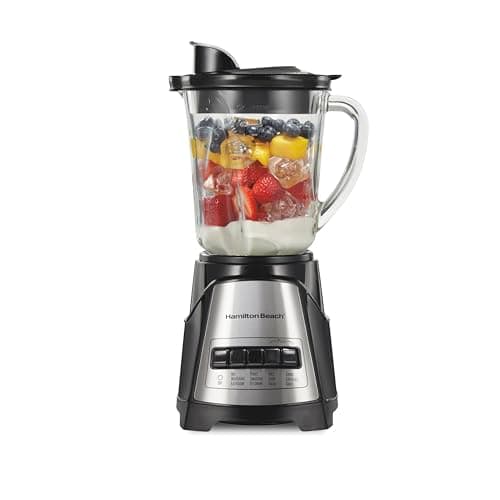
Buy the Hamilton Beach Power Elite Wave Actionif a glass jar is the thing you came for. It is the cheapest machine in our catalogue, it publishes a 40 oz glass jar on its own product page, and it is covered for three years in the US — triple what Ninja and NutriBullet offer at several times the price. It is also genuinely low-powered, so if your blend involves frozen fruit with little liquid, the honest answer is that you cannot have both glass and that blend: buy the Vitamix 5200 and accept plastic.
Here is the finding that shapes this page, and it is a fact about the catalogue rather than an opinion. Of the twenty blenders we hold verified listings for, exactly two publish a glass jar— the Hamilton Beach Power Elite and the Oster Pro 1200. Both are budget or mid-range full-size machines. Both carry three-year warranties, which puts them among the three longest-covered non-Vitamix machines we rank. And not one premium blender in the catalogue ships glass at all: not Vitamix, not Blendtec, not Ninja’s professional line, not any bullet blender.
We are not going to invent a third glass machine to pad this list out to five. So the ranking below puts the two glass jars first, then names the best plastic-jar machines for each of the three reasons people actually want glass. If glass is a hard requirement, read the first two entries and stop.
Why the expensive machines all use plastic
Two reasons, and neither is cost-cutting.
The first is weight. A premium blender’s jar is tall and narrow, because that geometry is what creates a vortex deep enough to pull food back into the blade. A 64 oz tall glass jar, full, is a two-handed lift that you then have to pour accurately. The Hamilton Beach gets away with glass partly because its jar holds 40 oz rather than 64 — its own con, as we list it, is that 40 oz is small for a family batch.
The second is thermal shock. Glass objects to sudden temperature change, and the premium machines are the ones sold on blending hot soup through friction heating. A jar that may go from a frozen load to a near-boiling one is a jar the manufacturer would rather make from something that does not crack. If hot liquid is part of your plan, read blending hot liquids safelybefore you make glass a requirement — the sealed-vessel warning there is the serious one.
What you give up with plastic is real but narrow: it hazes over years of ice and dry grinding, and it can hold odour from garlic, onion and spice. What you gain is a jar you can lift, drop without consequence, and replace as a catalogue part. We weigh the two materials against each other properly, with no machine ranking in the way, on glass vs plastic blender jars.
Which reason do you want glass for?
Nearly everyone asking this question wants glass for one of three reasons, and two of them have a better answer than glass.
- “Plastic holds smells.”True, and glass solves it completely. This is the reason to buy one of the top two picks. It is also the reason a sealed single-serve cup works — you wash it immediately and it never sits with yesterday’s blend in it.
- “My old jar went cloudy.”Also true, and glass solves it — but so does buying a machine whose maker sells replacement containers. Clouding comes mostly from ice and dry grinding, so if the haze came from milling, the fix is a second container rather than a different material; the dry-grinding ranking covers which maker publishes one.
- “I would rather not blend hot food in plastic.” A reasonable preference, and here glass is the worsechoice for the hot job because of thermal shock. The better answer is not to put hot food in a jar at all — blend it in the pan with a stainless stick blender. That is the Braun MultiQuick 7 MQ7035X on best immersion blenders for soup.
Who each pick is for
- Hamilton Beach Power Elite Wave Action — for the person who wants a glass jar, a three-year warranty and the smallest possible outlay, and whose blending is soft: banana, yogurt, protein powder, cooked vegetables. The glass-jar pick.
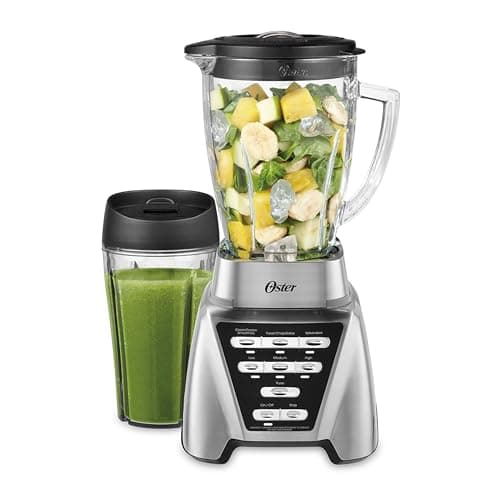
- Oster Pro 1200 with glass jar —for the person who wants glass with more motor behind it and will accept a delisted model. Oster still publishes a three-year term; it does not still publish this machine’s specification page.
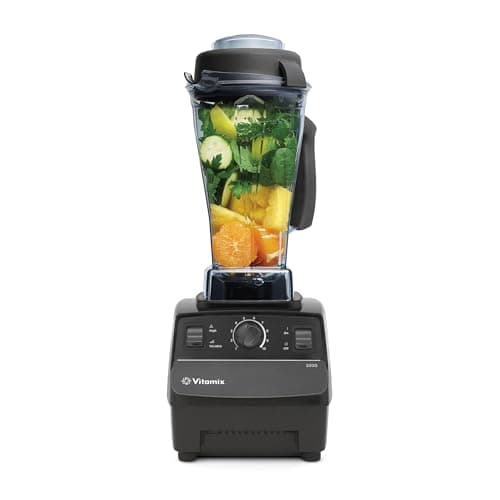
- Vitamix 5200 —for the person whose real requirement was “a jar that lasts” rather than “glass”. Plastic, seven years full, replacement containers sold as catalogue parts.
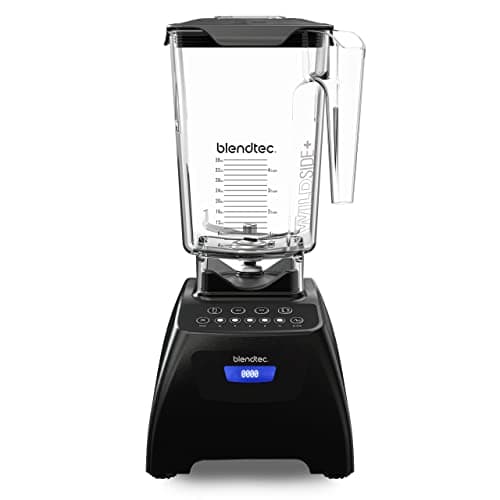
- Blendtec Classic 575 — for the person who wanted glass for cleaning reasons: its blunt wing blade is fixed and does not come apart, so there is no blade collar to unscrew and scrub.
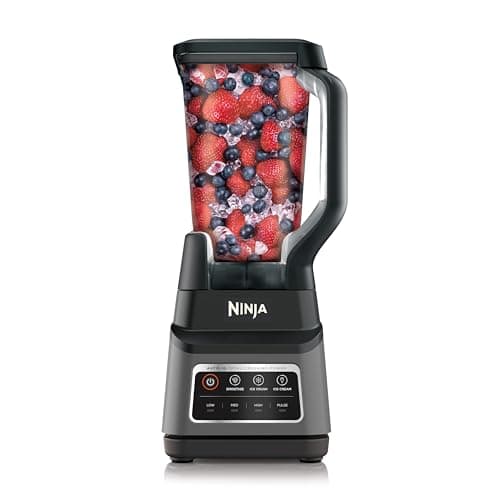
- Ninja Professional Plus BN701 —for the person who wanted glass for capacity and durability and will trade both for 64 oz of usable volume at a budget price. The one-year term is the cost of that trade.
The five, side by side
Manufacturer figures only. Every cell traces to the source list at the foot of this page; where a maker publishes nothing, the cell says so rather than carrying an estimate. | Jar material published | Capacity | Published motor | Warranty |
|---|
| Hamilton Beach Power Elite Wave Action | Glass | 40 oz | 700 W peak; 3.7 A on the rating plate | 3 years US; 5 in Canada |
|---|
| Oster Pro 1200 with glass jar | Glass | Not verifiable — Oster’s page for this model is gone | Not verifiable — page returns HTTP 410 | 3 years, replacement rather than repair |
|---|
| Vitamix 5200 | Plastic | 64 oz, tall and narrow | 2 HP; 11.5 A at 120 V. No watt figure published | 7 years, full |
|---|
| Blendtec Classic 575 | Plastic | Wide and short, blunt fixed wing blade | 1,560 W peak | 2 years |
|---|
| Ninja Professional Plus BN701 | Plastic | 72 oz total, 64 oz max liquid | 1,200 W continuous; 1,400 W peak | 1 year limited |
|---|
The Oster problem, stated plainly
The Oster Pro 1200 is the only glass-jar machine in the catalogue with real motor behind it, and we still rank it second rather than first, because of something we can demonstrate: Oster’s own product page for this exact model returns HTTP 410 Gone. The model is delisted. That means the “1200” in its name is not a figure we can trace to a manufacturer document, so we leave the motor and capacity cells above empty rather than repeating numbers other sites quote.
It matters more here than it would elsewhere, because glass breaks. A glass-jar machine whose maker has withdrawn the product page is a machine whose replacement jar you may not be able to buy in year two — and the published remedy under Oster’s three-year term is replacement rather than repair, so a warranty claim gets you a different blender rather than a new jar for yours. The full argument is on the Oster Pro 1200 review.
What we are not going to tell you
We have not dropped, thermally shocked or broken any of these jars, and we publish no breakage rate, no impact figure and no temperature limit for any of them, because no manufacturer publishes one. The material claims above are read off each maker’s own product page; the reasoning about weight and thermal shock is stated as reasoning, not as a test result. Our method is published in full, including what we refuse to claim.
Four checks before you buy a glass-jar blender
1. Weigh the jar in your head, full
Forty ounces of smoothie plus a glass jar is a real weight, and it is a weight you lift while tipping it. If anyone in the house has weak grip or wrist pain, glass is the wrong material regardless of every other argument — and the machines chosen for that reader are on best blenders for seniors.
2. Check that the maker still sells the jar
This is the glass-specific version of the parts question. A plastic jar that cracks is annoying; a glass jar that breaks ends the machine unless a replacement exists. Search the brand’s parts catalogue for a replacement container before you buy, and treat a delisted model as a one-jar machine.
3. Match the motor to the actual blend, not to the jar
Both glass machines here are modestly powered, and that is not a coincidence — glass lives at the budget end of the category. If you blend frozen fruit without added liquid, no glass-jar machine in this catalogue will do it well, and the skip line on our top pick says so in those words. Decide which constraint is real: the material, or the blend.
4. Decide whether you are solving odour or solving haze
They are different problems with different cheapest fixes. Odour is solved by glass, or by washing a sealed cup straight after use. Haze is solved by glass, or by buying a machine whose maker sells a second container for the abrasive jobs. Only one of those problems is worth giving up motor power for, and only you know which one you have. The technique that prevents both is on how to clean a blender; the hardware ranking is on the easiest blenders to clean.