HUB 07 · Guides
Making Nut Butter in a Blender
The single most demanding thing you can ask of a domestic blender: a thick, barely-moving load run for minutes, with the motor near stall and cooling airflow at its worst. This is the one job where an expensive machine genuinely earns its price.
We earn a commission if you buy through our links. It does not change the price you pay, and it does not decide our picks — our selection criteria are published in full. How this works.
You can make nut butter in a high-power countertop blender with a tamper. You can do it with difficulty and in small batches in a mid-range machine. You cannot sensibly do it in a personal blender — the narrow cup gives the mixture nowhere to move and the motor nowhere to cool, and attempting it is one of the more reliable ways to kill one.
Why this is the hardest job in the kitchen
Everything else a blender does involves liquid. Liquid carries ingredients onto the blades, carries heat away from the load, and lets the motor spin at something near its designed speed. Nut butter has no liquid in it at all.
What that means mechanically: the blades meet resistance instead of flow, so the motor drops toward stall speed. A motor near stall draws heavily and converts most of that draw into heat rather than rotation. At the same time the cooling fan — which is on the same shaft — is turning slowly, so airflow is at its worst exactly when the heat is at its highest. Then you ask it to hold that state for several minutes.
Ice, by comparison, is a series of brief impacts in a jar that still contains air and usually liquid. It blunts blades over time, but it does not cook a motor. Nut butter does. This is why a machine perfectly happy crushing ice can fail at almonds — and why the same almonds with four cups of water added are one of the easiest loads a blender sees, ranked separately in best blenders for nut milk.
What actually makes it possible
A tamper, more than watts
The mixture will not feed itself onto the blades. Something has to push it down while the machine runs, and a tamper is a rod sized to reach the blades without touching them. This is the difference between a machine that can do it and one that cannot, and it matters more than the wattage figure on the box. It is also why a jar sold with a tamper is usually a manufacturer being honest about needing one.
A jar shaped to keep a thick load moving
A tall narrow container keeps a thick mass in contact with the blades. A wide low one lets it climb the walls and sit there. This is the same geometry argument that decides frozen fruit performance, just at the extreme end of it.
Thermal protection you will probably meet
Many machines have a cut-out that stops the motor when it gets too hot. Meeting it halfway through a batch is not a fault — it is the machine correctly refusing to destroy itself. Stop, let it cool, and either continue in a smaller batch or accept that the machine is telling you something.
The method
- Roast the nuts first, and use them warm. Warm nuts release their oil far more readily, and the oil is what turns the mass from crumbs into butter. This is the single biggest lever in the whole process and it costs ten minutes in an oven.
- Work in a small batch. Enough to cover the blades and no more. A big batch is not faster; it is a stall waiting to happen.
- Start on low, and go up gradually. The mixture passes through a crumb stage and a ball stage before it becomes butter, and each stage wants a different speed.
- Use the tamper continuously. Not occasionally. The job is to keep the mass fed onto the blades for the entire run.
- Stop when it is smooth, not when it is hot.Over-running heats the oil and changes the flavor, and the extra minute is bought at the motor’s expense.
If it seizes into a ball, that is normal. It happens between the crumb stage and the butter stage, when the oil has started to release but not enough of it has. Keep going with the tamper and it passes. Adding oil at this point works but changes what you end up with — a tablespoon of neutral oil is a legitimate shortcut, not a failure, and it is far kinder to the motor than another two minutes at stall.
What this means for what you should buy
Nut butter is one of only three situations that genuinely justify paying premium-machine money, alongside regular hot work and a decade-long ownership horizon. If you will make it more than a few times a year, buy a machine with a tamper and a long warranty and stop reading. If you will not, this job should not be in your decision at all — our buying guide is written around not overbuying for exactly this reason.
And if you want nut butter from a machine you already own that cannot manage it: a food processor does this job well, because it cuts in air rather than moving things through liquid. That is not a consolation prize, it is the correct tool. The full comparison is here.
The hardware
The hardware this guide is about
The products this guide refers to, with prices pulled live from Amazon. Prices last checked October 19, 2026. Where we have no verified live price we show none rather than a stale number. Full rankings live in the roundups linked above.
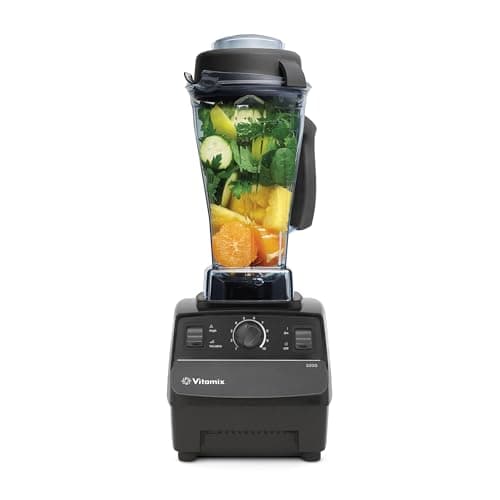
Buying once
Vitamix 5200
The seven-year warranty is the product. A machine with a fully variable dial, a tall narrow jar and a tamper, backed longer than almost anything else at any price.
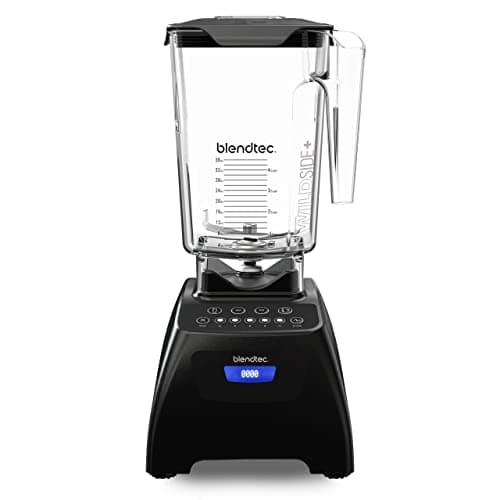
Cabinet clearance
Blendtec Classic 575
A 1,560-watt motor and a blunt, unremovable blade, in a jar short enough to fit under a cabinet. The warranty is two years, not the eight years the internet keeps repeating.
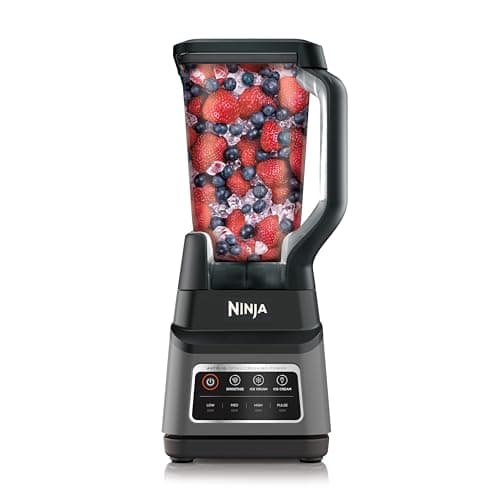
Most kitchens
Ninja Professional Plus BN701
The one brand here that publishes both a continuous and a peak wattage instead of only the flattering one. A large pitcher and real power for about a fifth of the premium price.
#ad · As an Amazon Associate we earn from qualifying purchases.
Questions
Frequently asked
Can you make peanut butter in a NutriBullet?
Not sensibly. The narrow cup that makes a bullet blender good at single-serve smoothies gives a thick mass nowhere to circulate, and there is no tamper to feed it onto the blades. Running one at stall for minutes is a reliable way to overheat the motor.
Why does my nut butter turn into a ball and stop moving?
That is the normal intermediate stage: enough oil has released to bind the crumbs, but not enough to make it flow. Keep working it with the tamper and it passes. A tablespoon of neutral oil shortcuts it, and is much kinder to the motor than another two minutes at stall.
Is a food processor better than a blender for nut butter?
For most kitchens, yes. A food processor cuts in air rather than moving food through liquid, which is exactly what this job needs, and it does not fight the same stall problem. A high-power blender with a tamper does it faster and smoother; anything below that, a processor wins.
Will making nut butter void my warranty?
Not by itself, if the manual lists it as a supported use — many do, and machines sold with tampers generally are designed for it. What does cause trouble is repeatedly running past a thermal cut-out. Check your own manual: terms differ, and they differ far more between brands than most buyers realize.
Can the same blender grind dry grain, spices or coffee?
Sometimes, and it is a different technique with a different winner, because dry work has no liquid to carry the solids back into the blade and a tamper stops helping entirely. The ranked answer is on best blenders for grinding grains and spices, and the coffee-specific version is on can you grind coffee in a blender.
Keep reading
Related
- Blender vs food processorWhy a processor is often the right tool for this job, and what each one is for.
- The best high-power blendersThe machines with the tamper and the warranty to take this kind of load.
- Best blenders for nut butterThe ranked machines for this exact job, from the tamper down.
- The blender buying guideNut butter is one of only three things that justify a premium machine.
- Best blenders for nut milk and oat milkThe same nuts with water added — a far easier load.
- Can you grind coffee in a blender?The same hard, oily beans stopped well short of a paste.
Receipts
Sources
- Vitamix — 5200 specification page (tamper and container geometry)
- Blendtec — Classic 575 product page (motor rating and jar design)
- SharkNinja — BN701 specification table
We do not run a testing lab and we do not pretend to. Specifications come from the manufacturer's own published documents and from published standards; prices come from the live Amazon API. Where a figure is not published, the page says “not published” rather than guessing. Read the full method.