HUB 07 · Guides
How to Clean a Blender
Warm water, a drop of soap, twenty seconds on a low speed - immediately, not later. That covers nearly everything. The rest of this page is stains, smells, and the part underneath the blades that eventually needs proper attention.
We earn a commission if you buy through our links. It does not change the price you pay, and it does not decide our picks — our selection criteria are published in full. How this works.
Fill the empty jar about a third with warm water, add one drop of dish soap, put the lid on and run it on a low speed for twenty seconds. Pour it out, rinse, and stand it upside down to drain. Done immediately after use, that is the whole job for ninety percent of what a blender ever holds — and it is the single habit that keeps a gasket working.
Why immediately is the entire trick
Smoothie residue is mostly water, sugar and plant fiber. Wet, it rinses away in seconds. Dry, it becomes a varnish that grips the underside of the blade assembly and the thread the jar screws into — the two places a brush cannot reach and a dishwasher jet is aimed away from.
That matters more than tidiness. The gasket sealing the blade assembly to the jar is a rubber ring compressed against a flat face; dried residue on that face is what stops it seating, and a gasket that does not seat is a blender that drips. Almost every leak we describe in why is my blender leaking starts as a cleaning problem rather than a manufacturing one.
The self-clean cycle, properly
- Empty the jar. Do not add water to a jar with contents still in it.
- Fill about one third with warm — not boiling — water.
- Add a single drop of dish soap. More produces foam, which cushions the blades and cleans worse.
- Lid on, and start on the lowest speed. A full jar of soapy water at high speed goes over the top.
- Run twenty to thirty seconds, working up to a medium speed if the machine is stepped.
- Pour out, rinse with clean water, and stand upside down to drain.
Boiling water is a bad idea for two reasons: it can shock a cold glass jar, and in a sealed jar it produces steam pressure — the same hazard as blending hot soup, which is set out in blending hot liquids safely. Warm water does the job.
Never put the motor base in water.Wipe it with a damp cloth and dry it. This sounds obvious and is the most common way a blender is destroyed — usually by someone rinsing the base because a spill ran down the side of it.
Stains, smells and the film that will not shift
Orange plastic.Carrot, turmeric, sweet potato and tomato stain plastic permanently. A paste of bicarbonate of soda and water, left on the stain for twenty minutes and then run through a self-clean cycle, lifts recent marks. Old ones do not come out, and no amount of scrubbing changes that — it is the reason a glass jar is worth preferring if you cook with color. Hamilton Beach’s Power Elite is the glass-jar option we track.
Smells. Garlic and onion in a plastic jar are the usual culprits. Blend a jar of warm water with a tablespoon of bicarbonate of soda, leave it standing for an hour, then rinse. Repeat rather than escalating to anything stronger; bleach in a food vessel is not worth it.
Cloudiness.A white haze on a plastic jar is usually mineral scale from hard water rather than dirt. Blend warm water with a couple of tablespoons of white vinegar, leave it ten minutes, then rinse thoroughly. If it does not shift, it is micro-scratching from a dishwasher or an abrasive sponge, and it is permanent — cosmetic only.
The part that eventually has to come apart
On most full-size blenders the blade assembly unscrews from the base of the jar, and underneath it is a rubber gasket sitting in a recess. That recess collects everything the self-clean cycle cannot reach, and once every month or two it genuinely needs attention.
Take the assembly out, lift the gasket off, wash both by hand in warm soapy water, dry them completely, and reseat the gasket flat in its groove before screwing the assembly back on. Two cautions: the blades are sharp even when blunt-edged by design, so handle the assembly by its collar; and check that the gasket is not stretched, hardened or nicked, because a tired gasket is the most common cause of a leak and costs a few dollars to replace.
Bullet-blender cups follow the same principle — the blade unit unscrews from the cup and there is a gasket inside it. NutriBullet sells replacement cups, lids and blade assemblies, and their warranty explicitly excludes cups and accessories, so treat them as consumable parts rather than covered ones.
Dishwasher or not
Follow your manual, because manufacturers genuinely differ and the manual governs. As a general shape: glass jars and detached blade assemblies are usually dishwasher-safe; plastic jars often are on the top rack only, and repeated hot cycles are what causes the clouding described above; motor bases and any part with electrics never are.
A stick blender is the easiest thing in the category to clean, and it is a genuine advantage of the format: run the shaft in a jug of warm soapy water for a few seconds, rinse, done. Where the shaft detaches, the wet part goes in the sink and the electrical part stays dry — which is one of the checks in how to choose an immersion blender.
The maintenance that is not cleaning.Two things worth doing every few months: check that the jar’s coupling and the base’s drive are not worn round, and check the gasket. Both are cheap parts and both, left alone, turn into a machine you replace. Whether the manufacturer publishes those parts at all is worth knowing before you buy — several of the machines we cover have had their product pages withdrawn entirely.
The hardware
The hardware this guide is about
The products this guide refers to, with prices pulled live from Amazon and dated on every card. Full rankings live in the roundups linked above.
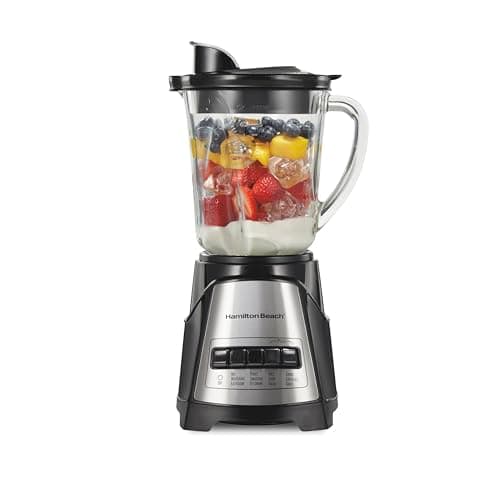
The smallest budget
Hamilton Beach Power Elite Wave Action
The cheapest machine here and the most honest about its own numbers: Hamilton Beach defines what its peak wattage means and prints the real nameplate amperage next to it.
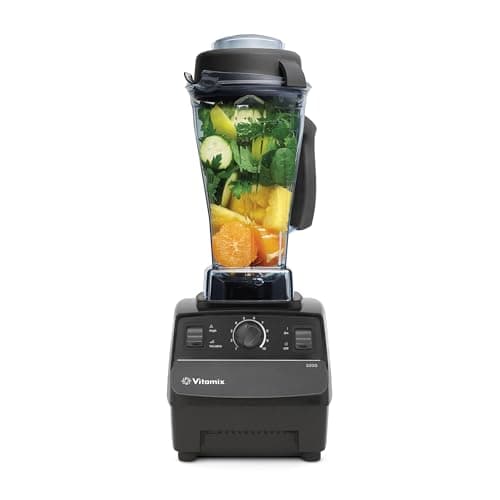
Buying once
Vitamix 5200
The seven-year warranty is the product. A machine with a fully variable dial, a tall narrow jar and a tamper, backed longer than almost anything else at any price.
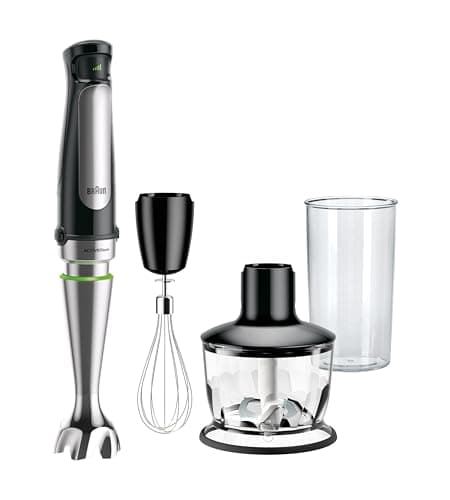
Soup, most weeks
Braun MultiQuick 7 MQ7035X
Three years of US warranty on a hand blender — triple what most rivals offer — and Braun publishes an input-power figure rather than a peak number.
#ad · As an Amazon Associate we earn from qualifying purchases.
Questions
Frequently asked
How do you clean a blender quickly?
Fill the empty jar a third with warm water, add one drop of dish soap, run it on a low speed for twenty seconds, then rinse and stand it upside down to drain. Do it immediately after use — wet residue rinses away, dried residue does not.
Can you put a blender jar in the dishwasher?
Usually, but check your manual, which governs. Glass jars and detached blade assemblies generally go in; plastic jars often top-rack only, and repeated hot cycles are what causes clouding. The motor base never goes in water at all.
How do you get the smell out of a blender?
Blend warm water with a tablespoon of bicarbonate of soda, leave it standing in the jar for an hour, then rinse. Repeat rather than moving to anything harsher. Plastic holds garlic and onion far more stubbornly than glass.
How often should you take a blender apart to clean it?
Every month or two, if the blade assembly unscrews. Residue collects in the recess under the gasket where a self-clean cycle cannot reach, and that surface is exactly what the gasket has to seal against.
Can you use boiling water to clean a blender?
Don’t. It can shock a cold glass jar, and in a sealed jar it creates steam pressure — the same hazard as blending hot soup. Warm water with one drop of soap cleans just as well.
Keep reading
Related
- All blender guidesThe hub, with cost, safety and buying guides.
- Why is my blender leaking?Where a skipped cleaning routine usually ends up.
- Blending hot liquids safelyWhy boiling water in a sealed jar is a bad idea, cleaning included.
- Hamilton Beach Power Elite reviewThe glass-jar machine that sidesteps staining entirely.
- Glass vs plastic blender jarsWhy odor and clouding are a plastic problem and what to do about it.
Receipts
Sources
- Hamilton Beach — Power Elite blender product page
- Hamilton Beach — Power Elite use and care manual (PDF), rating plate and peak-power definition
- Vitamix — 5200 product page and specification table
- Braun Household — MultiQuick 7 MQ7035X product page
- NutriBullet — Pro product page
- NutriBullet — warranty terms
We do not run a testing lab and we do not pretend to. Specifications come from the manufacturer's own published documents and from published standards; prices come from the live Amazon API. Where a figure is not published, the page says “not published” rather than guessing. Read the full method.