Buy the Ninja Professional Plus BN701. Under $100 it is for the household that wants a full-size pitcher, and it is the only Ninja in the band — arguably the only machine of any brand in the band — whose maker publishes 1,200 watts continuousalongside the 1,400 peak figure, which is what makes it genuinely comparable to anything else. The budget pick is the Ninja Blast BC151: the cheapest Ninja on this page and a cordless one, bought for portability rather than power. Live prices with the date they were checked are in the table above.
Who each one is for, in one line
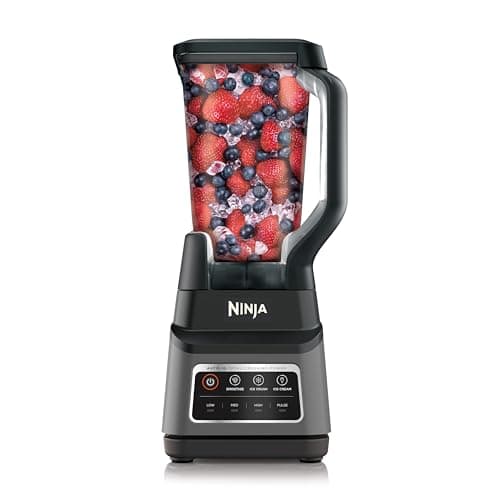
- Ninja Professional Plus BN701— for a family pitcher, with the one continuous watt figure in the Ninja range under $100.
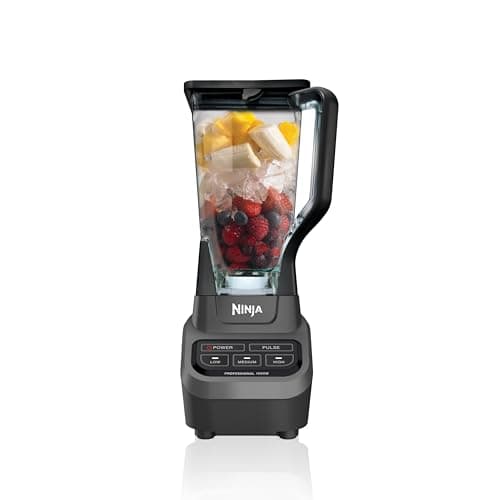
- Ninja Professional Blender BL610— for spending the least on a full-size jar, if you can accept that SharkNinja no longer publishes a page for it.
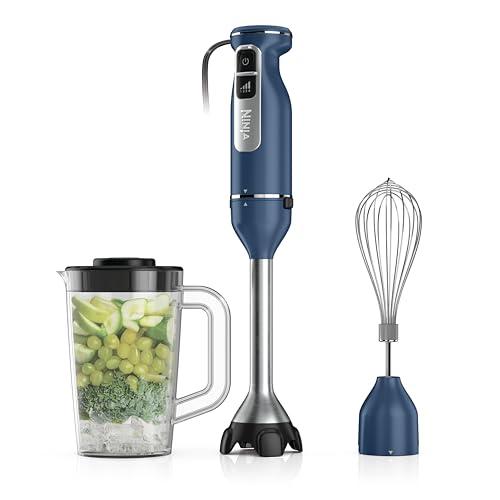
- Ninja Power Duo CI201— for soup and whipping in the pot: the only machine here that ships a whisk head and a 4-cup vessel together.
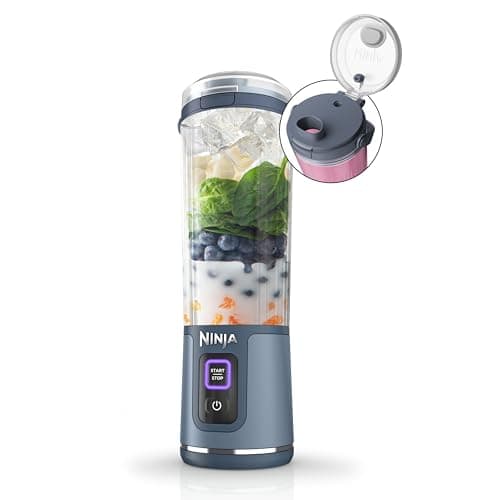
- Ninja Blast BC151— the budget pick: the cheapest way to blend away from a socket, from a brand with a real service operation behind it.
The same brand publishes three different kinds of wattage
This is the fact worth the page. On the BN701 SharkNinja publishes 1,200 watts continuous and 1,400 watts peak— two figures, labeled, which almost nobody in this category does. On the Power Duo CI201 it publishes 750 peak watts and no continuous figure at all, which is the opposite convention on a machine sold by the same company in the same year. On the Blast BC151 its own specification table lists the wattage as 0 watts and 0 peak watts, with a 7.4 V USB-C rechargeable base as the only power figure given. And on the BL610 there is no live page at all; the 1,000 W number comes from SharkNinja’s own replacement-motor-base listing.
None of that is a reason to avoid Ninja. It is a reason to stop comparing Ninja models to each other on watts, because the brand is not using one definition. Blender wattage explained is why peak and continuous are not interchangeable, and best Ninja blenders ranks the brand across every price, not just this band.
Every Ninja here carries one year
One year limited, across the whole range: the BN701, the CI201 and the BC151 all state it, and the delisted BL610 has nothing published at all — Ninja writes one year on every current blender page, but there is no live document for that model to point at. That is the brand’s consistent position and the single clearest reason to look elsewhere if warranty length is how you choose.
The comparison that makes this concrete: on the stick-blender side, the CI201 costs about what a Braun MultiQuick does and Braun writes three years in the US. On the pitcher side, the Hamilton Beach Power Elite costs half the BN701 and writes three years too. Blender warranties compared has every term in this catalog, and best immersion blenders under $100 is where the CI201 is ranked against those Brauns directly.
Three formats, one price band
What makes this band unusual is that it crosses the whole catalog. Under $100 Ninja will sell you a 72 oz countertop pitcher, a 9-inch immersion wand with a whisk, or a cordless 18 oz cup. Those are not competing products; they are three different kitchen jobs, and the mistake to avoid is buying the cheapest one and expecting it to do the first one’s work.
The CI201 is the interesting outlier. It is the only machine in its bracket that ships a RapidWhisk head anda 4-cup blending vessel with a lid, Ninja publishes four speeds, a 9-inch arm, a 4.41 lb weight and a full dimension set, and it sells PanProtect with SplatterShield as a specification — worded as “designed for scratch-free blending* and to prevent splatters”, with the asterisk reading “(*When used as directed.)”. We quote the asterisk because Ninja printed it. Best immersion blenders for soup is the job it is really for.
What these cost to run for a year
At 18.16¢ per kWh and 3 minutes a day, 365 days a year, the BN701 works out at about $3.98 a year on its published continuous figure and the BL610 at about $3.31 on its replacement-part figure. The CI201 comes out at about $2.49, but that is its peakrating because Ninja publishes no continuous one, so the real figure is lower — we use 750 because it is the only number Ninja gives. The Blast has no wattage at all and therefore no running-cost line. What a blender costs to run shows the arithmetic.
Which Ninja to skip
Skip the BN701 if you make nut butter or thick low-liquid bowls: no tamper, and one year of cover under that kind of load. Skip the BL610 if documented specifications matter to you — it is the one machine in this catalog whose manufacturer has withdrawn its page. Skip the CI201 if warranty length is your criterion, because Braun offers three years on the same kind of tool for similar money. Skip the Blast if you want to compare it on power, because Ninja publishes none: any wattage you read about that machine came from somewhere other than the manufacturer.
And if what you want is simply the best machine at this price regardless of badge, best countertop blenders under $100 puts the BN701 up against the three-year-warranty machines from Oster and Hamilton Beach.
What we have not done
We own no Ninja machines and we have blended nothing. Every figure above is read off SharkNinja’s or Ninja’s own specification table, replacement-part listing or warranty statement, cited below — including the zero-watt entry and the withdrawn page, both of which we report rather than paper over. Prices come live from Amazon with the date they were checked, and that is also what enforces the under-$100 line here.
How to pick a Ninja under $100
1. Pick the format before the model
Pitcher, stick or cordless cup. These are three jobs, and under $100 Ninja sells all three. Decide which one your kitchen actually needs and the model nearly chooses itself.
2. Check which watt figure you are being shown
Continuous on the BN701, peak-only on the CI201, zero on the Blast, a replacement-part listing on the BL610. Peak is an upper bound and continuous is a working draw; they are not the same number and Ninja does not pretend they are.
3. Assume one year, and price accordingly
Every current Ninja blender page in this catalog states one year limited. If you want three, you are shopping Braun on the stick side or Hamilton Beach and Oster on the pitcher side.
4. On the pitcher machines, plan for no tamper
Neither the BN701 nor the BL610 ships one, and the stacked blade tower is more surfaces to wash than a single fixed blade. Thick loads mean stop, scrape, restart. What a blender tamper is used for explains the tool you are not getting.
5. On the cordless one, read the capacity not the power
The Blast makes up to 18 oz and runs off a 7.4 V battery — half the voltage of the other cordless machine in this catalog. Battery blenders are the least powerful category here by physics, not by brand. Best portable blenders ranks them against each other.
6. Remember Auto-iQ is a convenience, not power
The preset programs on the BN701 stop by themselves, which matters when you are doing something else. They do not make the motor stronger, and a fully variable dial would be more useful on a thick load than any preset. What pulse does on a blender is the manual half of that trade.