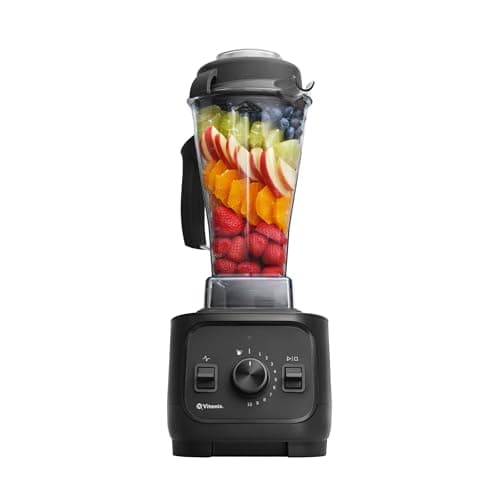
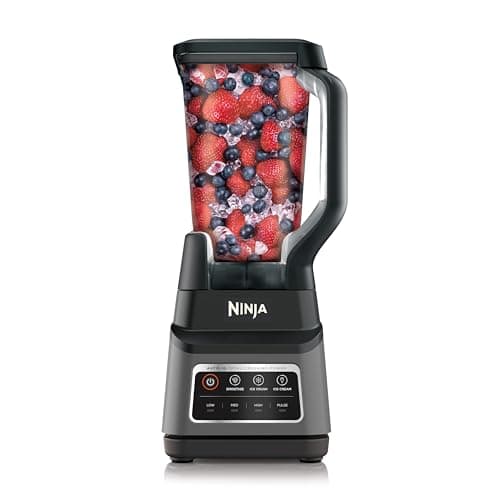
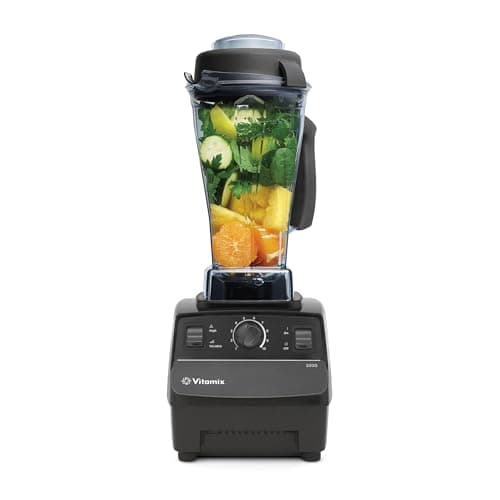
Buy the Vitamix 5200. Under $500 it is for the household that intends to own one blender for the next decade: a fully variable dial, a tall narrow 64 oz jar, a tamper in the box, and a seven-year full warrantycovering parts, labor and shipping both ways — more covered years per dollar than anything else in the bracket. The budget pick is the Ninja Professional Plus BN701, and it is here as a serious recommendation rather than a courtesy: it publishes 1,200 W continuous, which is more documented power than any Vitamix on this page, for roughly a quarter of the money. What it does not have is the warranty.
Who each one is for, in one line
- Vitamix 5200— for buying once: the longest full warranty per dollar under $500.
- Vitamix VX1— for the first Vitamix, with the same 64 oz jar and tamper and a watt figure that is actually published.
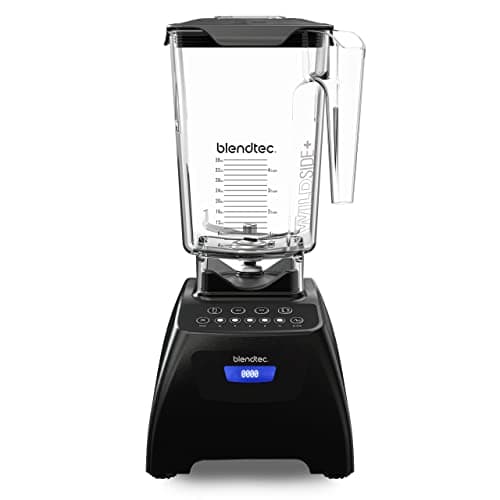
- Blendtec Classic 575— for a low cabinet and a blunt-blade jar you never have to tamper, if two years of cover is enough.
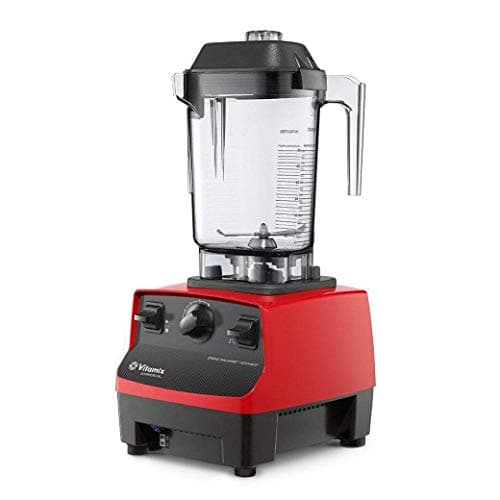
- Vitamix Drink Machine Advance— for a counter doing repeat drinks, with a warranty written for business use rather than voided by it.
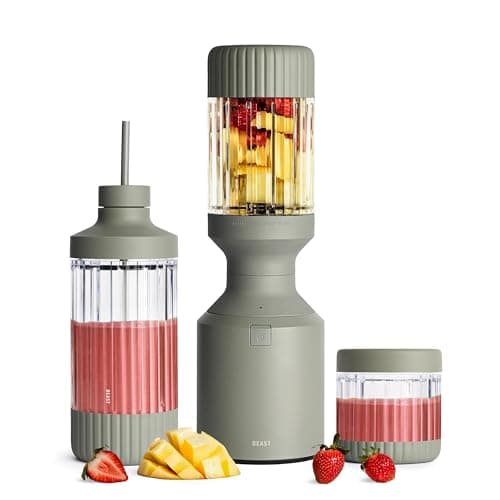
- Beast Mega 1200— for a single-serve habit in the middle of this bracket, with a published vessel capacity and two years of cover.
- Ninja Professional Plus BN701— the budget pick: the most published continuous power on the page, for the least money and the shortest warranty.
What changes at this price, and what does not
What changes is the warranty. It is the only thing in this category that scales cleanly with price, and under $500 the ladder is steep:
- Vitamix 5200 — seven years, FULL. Parts, labor and two-way shipping. Vitamix also publishes and sells replacement parts, so a failure in year eight is a repair rather than a write-off.
- Vitamix VX1 — five years, LIMITED. Parts, labor and standard two-way shipping, original owner only.
- Blendtec Classic 575 — two years parts, two years labor, residential use only.This is worth stating loudly, because most of the internet credits the 575 with eight years. Blendtec’s own warranty schedule puts the eight-year term on the Designer and Professional lines, not this one. Reading the document is the whole job.
- Beast Mega 1200 — two years, household use.
- Drink Machine Advance — three years on motor base parts, one year on labor, with the blade assembly and container at one year. Shorter in shape than the household terms, and the correct trade for a machine a business will run forty times a day, because household Vitamix warranties are void for commercial use.
- Ninja BN701 — one year limited.
What does not change is how well it blends a smoothie.That is the honest part. A 1,200 W Ninja and a 1,380 W Vitamix both turn frozen fruit into a drink, and nobody drinking it could tell you which machine made it. The differences at this price are duration, repairability, speed control and the jar — not whether the smoothie comes out. The full method is on how we pick.
The horsepower problem in this bracket
Every expensive blender here is sold on horsepower and most of them publish no watt figure at all. The 5200 is “2 HP” with a specification table reading 120 V at 11.5 amps and no watts; the Drink Machine Advance is “2.3 peak output horsepower” at 11.5 A. Peak output horsepower is a motor-stall figure, measured where the motor is about to fail rather than where it blends, so it is not comparable with the continuous wattage a Ninja or a Beast publishes.
Where we quote watts for a Vitamix on this page, it is amps × volts off the manufacturer’s own nameplate — 11.5 A × 120 V = 1,380 W for the 5200 — shown as arithmetic so you can check it rather than presented as a published spec. The VX1 is the exception: Vitamix publishes 1,440 W for it outright. Blender wattage explained works through why peak numbers should be discounted before any comparison.
Why there is no “under $1,000” page next to this one
Because it would rank the same machines. There is nothing in this catalog priced between roughly $500 and roughly $1,100 — above this bracket the next machines are commercial units at two to three times the money. An “under $1,000” roundup would therefore be this page with a different number in the title, which is not a page worth having. If your budget genuinely runs to four figures, the honest next step is the commercial machines, where you are buying duty cycle and NSF-grade construction rather than a better smoothie.
What these cost to run for a year
Almost nothing, and the spread is pennies. At 18.16¢ per kWhand this site’s standard assumption of 3 minutes a day, 365 days a year: about $4.57 a year for the 5200 and the Drink Machine Advance, $4.77 for the VX1, $5.17 for the Blendtec 575, and $3.98 for the BN701 and the Beast Mega. The most expensive machine on this page to run costs about thirty cents a year more than the cheapest. The full arithmetic, and how to redo it with your own rate.
Who should spend less
Anyone whose honest use is a smoothie four times a week. The warranty is most of what you are paying for in this bracket, and a hundred-dollar machine makes that smoothie indistinguishably well: the best blenders under $100 and under $200 rank those brackets properly, and under $300 is the rung immediately below this one. What a blender costs sets out what each tier actually buys, and is a Vitamix worth it asks the question this page is the expensive answer to.
What we have not done
We have not tested these machines. We own none of them and we have blended nothing in them. Every amperage, watt figure, jar capacity and warranty term above is read off the manufacturer’s own product page or warranty document, cited below; every figure derived by arithmetic is shown as arithmetic. Prices come live from Amazon with the date they were checked, and where there is no verified live price you see none rather than a stale number.
How to spend up to $500 on a blender
1. Work out the price per covered year before anything else
Divide the price by the warranty term and the bracket reorders itself. Seven years of full cover is a different product from two years of residential-only cover, even when the two machines blend identically — and in this bracket they mostly do. This single sum is why the ranking above is not in price order.
2. Read the word in front of “warranty”, then read the exclusions
“Full” means parts, labor and shipping. “Limited” means read the document. “Residential use only” means a home business voids it. “Motor base parts” means the container and blade are covered for a year regardless of the headline number. All four phrasings appear on this page.
3. Measure the gap under your wall cabinet
A 64 oz jar on a full-size base stands around 19 to 20 inches, which does not fit under a standard US wall cabinet. If you have one, you want a low-profile jar — which in this catalog means the Blendtec 575 in this bracket, or an Ascent-series Vitamix just above it. Best blenders for small kitchens ranks on published height and footprint.
4. Decide between a dial and presets honestly
A variable dial is what makes thick, low-liquid mixtures workable, because you can hold the machine at the speed the load needs. Presets are what make a repeated drink identical every time with no attention. Neither is better; they suit different people, and the price is the same.
5. Check whether a tamper is in the box, or whether the jar needs one
Vitamix includes a tamper and the tall narrow jar needs it. Blendtec’s WildSide+ jar takes the other approach: a wider jar with blunt blades and a fifth side to break the vortex, designed so you never open the lid. Both solve the same problem. What you should not buy is a tall jar with no tamper.
6. Do not buy a commercial machine for a home kitchen
It looks like more machine for the money and it is less promise for the money: 48 oz instead of 64, fixed programs instead of a dial, and three years of motor-base parts instead of seven years full. It is the right buy if you are selling the drinks and the wrong one if you are drinking them.