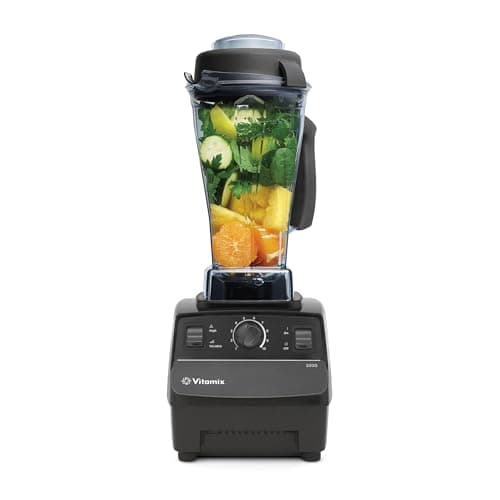
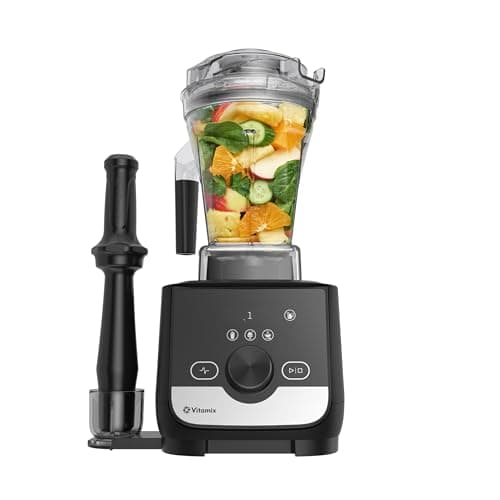
Buy the Vitamix Ascent X3 if you are going to use a blender every day and you can afford it: ten years of full warranty is the longest covered term in our catalogue, and daily use is the one pattern where that term stops being a talking point and starts being the product. If that is more than you want to spend, the Vitamix 5200 makes the same argument for less, with a seven-year full term and a bigger jar. If your daily job is soup or sauce rather than frozen fruit, skip every pitcher here and buy the Braun MultiQuick 7 instead.
Almost every best-blender list treats daily use as a reason to buy more motor. It is not. A machine that can crush ice can crush ice on day one and on day two thousand — what gets consumed over two thousand days is the drive coupler, the bearing, the jar seal, and whether anyone will still sell you those parts. So this ranking is built on covered years, remedy type and parts availability, with power treated as a threshold rather than a score.
Why daily use changes the specification that matters
Warranty terms are quoted in years, but the thing being used up is cycles. A seven-year term on a blender used twice a month covers roughly 170 blends. The same seven years on a blender used every morning covers around 2,550. That is the same promise sold at two very different levels of risk to the manufacturer, and it is why a long term is worth paying for mainly if you are the second kind of buyer.
It also means the word in front of the number does the heavy lifting. Vitamix publishes a fullwarranty on both machines here: parts, labour and shipping in both directions. Oster’s published remedy on its kitchen blenders is replacement rather than repair, which on a daily-use machine means you eventually get a different blender rather than yours fixed. Those are not the same product even when the number of years looks similar. We take that distinction apart properly on blender warranties compared.
The second thing that changes is thermal. Nobody selling a household blender publishes a duty cycle — we checked the whole catalogue again for this page and not one brand states a blends-per-hour or blends-per-day figure. That is a real gap in what the industry discloses, not something we are going to fill with a guess. What we can say is that daily use means consecutive blends more often, and consecutive blends are what trip a thermal cutout. The machines with genuine headroom over your actual job are the ones that never get near it.
Daily use is the only time the running cost is a real number
Every annual electricity figure on this site assumes 3 minutes a day, 365 days a year, at 18.34¢ per kWh (US EIA average, retrieved September 2026). On most of our pages that is a modelling assumption which overstates what a casual owner spends. On this page it is simply the question you asked. So these are your numbers, not a scenario:
- Vitamix Ascent X3 — $5.02a year, from a published 1,500 W rating.
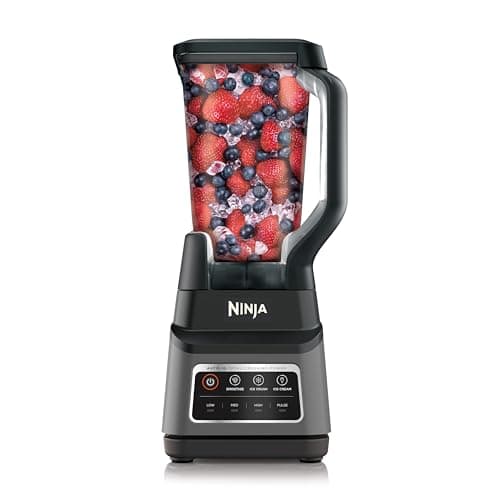
- Ninja Professional Plus BN701 — $4.02a year, from a published 1,200 W rating.
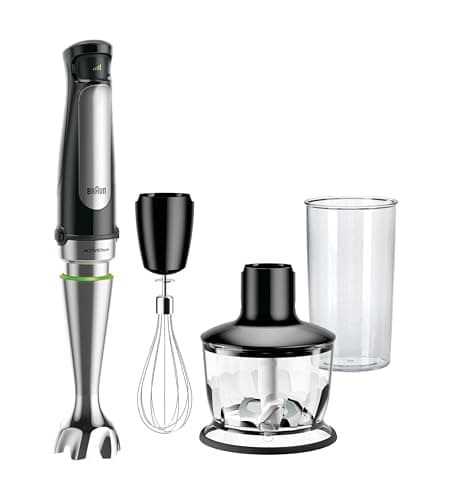
- Braun MultiQuick 7 MQ7035X — $1.67a year, from a published 500 W rating.
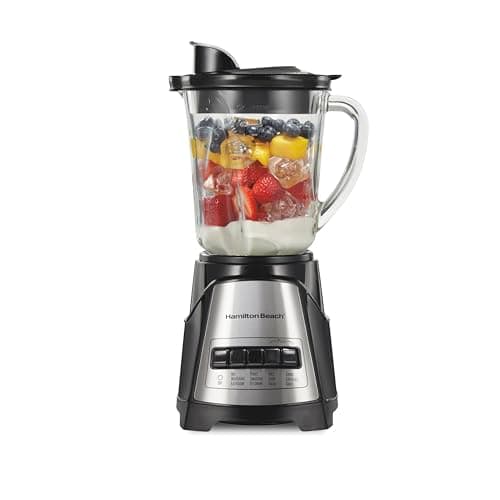
- Hamilton Beach Power Elite Wave Action — $1.49a year, worked from the 3.7 A rating plate in its own manual rather than from the 700 “peak” watts on the box.
- Vitamix 5200— Vitamix publishes 2 HP and 11.5 A at 120 V for this machine and no watt figure at all, so the honest answer is that the arithmetic cannot be done the same way. At the plate amperage it draws more than the X3.
The spread between the most and least expensive machine to run, for someone blending every single day, is under four dollars a year. That is exactly why we publish it: the electricity is noise, the warranty is the money, and anyone selling you a blender on its efficiency is selling you a rounding error. The full arithmetic, with the division shown, is on how much a blender costs to run.
Who each pick is for
- Vitamix Ascent X3 — for the person who blends daily, intends to keep one machine for a decade, and wants the longest full term anyone in this catalogue publishes. Also the only full-size pick here that clears a standard wall cabinet.
- Vitamix 5200 —for the daily blender who wants the same full-term promise and the larger 64 oz jar, and would rather spend the difference on groceries. Seven years instead of ten.
- Hamilton Beach Power Elite Wave Action —for the person whose daily blend is soft — banana, yogurt, protein powder, no ice — who wants three covered years for the least money and a glass jar that will not cloud over a few thousand washes.
- Braun MultiQuick 7 — for the daily soup, sauce or baby-food cook. Three covered years, nothing to wash but a shaft, and no pitcher to find cupboard space for.
- Ninja Professional Plus BN701 — for the person who wants the most capable machine per dollar today and has decided a one-year term is an acceptable trade. It is the most popular answer to this question, and it is ranked last here for exactly one reason.
The five, side by side
Manufacturer figures only. Every cell traces to the source list at the foot of this page; where a maker publishes nothing, the cell says so rather than carrying an estimate. Annual cost assumes 3 minutes a day, 365 days a year at 18.34¢ per kWh. | Covered term | Remedy published | Published motor | Cost per year |
|---|
| Vitamix Ascent X3 | 10 years | Full — parts, labour, shipping both ways | 1,500 W | $5.02 |
|---|
| Vitamix 5200 | 7 years | Full — parts, labour, shipping both ways | 2 HP; 11.5 A at 120 V. No watt figure published | Not comparable — no published watt rating |
|---|
| Hamilton Beach Power Elite Wave Action | 3 years US; 5 in Canada | Per Hamilton Beach’s published blender terms | 700 W peak; 3.7 A on the rating plate | $1.49 |
|---|
| Braun MultiQuick 7 MQ7035X | 3 years | Per Braun Household’s published term by product type | 500 W | $1.67 |
|---|
| Ninja Professional Plus BN701 | 1 year | Per SharkNinja’s published terms | 1,200 W | $4.02 |
|---|
The parts question nobody asks before buying
On a daily-use machine the first thing to fail is almost never the motor. It is the drive coupler — the small splined part between motor and blade, deliberately made of something softer than both so that it shears instead of the expensive components. On a weekly blender you may never meet it. On a daily blender you eventually will.
So the question that matters is whether the brand sells you one. SharkNinja publishes individual replacement parts for this generation of Ninja — we cite its own parts listings elsewhere on this site for the BL610’s motor base and its 72 oz pitcher — and Vitamix sells containers, blade assemblies and couplers as catalogue items. A brand that sells you only whole machines has made the repair decision for you. That is the strongest argument against the delisted Oster in our catalogue for this particular reader, and we make it on the Oster Pro 1200 review.
The symptom worth learning is a smell. A sheared or slipping coupler smells of hot rubber, and the blade stops turning while the motor still runs. If that happens, stop and read why your blender smells like burning before you order anything, because the fix is usually a part rather than a machine.
What daily use does to the jar
A jar washed 365 times a year ages faster than the motor under it. Plastic hazes, holds odour and picks up scratches from ice; glass does none of those, and is heavy and breakable instead. For a soft daily blend, glass is the better long-term buy, and it is a real reason the Hamilton Beach outranks more powerful machines here. For a frozen daily blend, a plastic jar you can replace beats a glass one you cannot lift. We argue the materials properly on glass vs plastic blender jars, and if cleaning is the part of daily ownership you dread, the hardware answer is on the easiest blenders to clean.
What we are not going to tell you
We have not run any of these machines for a year, a month or a morning. We publish no failure rate, no mean time to failure and no “still going after 500 smoothies” claim, because we have no such data — and neither does anyone who is telling you otherwise. What we can do is read every warranty document, record the term and the remedy, check which brands publish replacement parts, and do the electricity arithmetic in public at a rate you can substitute your own figure into. The method is published in full, including what disqualifies a product.
Five checks before you buy a blender you will use every day
1. Read the word in front of the number of years
“Full” means parts, labour and freight. “Limited” means read the exclusions. “Replacement” means you will not get your machine back. On a daily-use purchase this single word is worth more than any number on the box — and brands know it, which is why the number goes in the marketing and the word stays in the document.
2. Check that someone sells the coupler
Search the brand’s own parts catalogue for your exact model before you buy. A six-dollar part available in year four is the difference between a long-lived machine and a landfill machine, and availability has almost nothing to do with purchase price — it tracks whether the brand still lists the model at all. A delisted model is a parts gamble no matter how good the warranty looks on paper.
3. Buy enough headroom that the daily job is easy
Not maximum power — headroom. A machine working at its limit every morning runs hot, and heat is what ages a motor. If your daily blend is frozen fruit with little liquid, the 444 W machine on this page is the wrong buy at any warranty length, and we say so in its own skip line. If your daily blend is a banana and some milk, 1,500 W is money spent on nothing. Match the machine to the actual morning.
4. Decide whether you are washing a jar or a shaft
This is the most underrated daily-use question on the list. A pitcher means a jar, a lid and a blade assembly, every day. A stick blender means a shaft under the tap. Over a year that difference is measured in hours, and it is why a 500 W Braun outranks machines with three times the motor for the daily soup cook. The general case is on blender vs immersion blender.
5. Work out your own electricity figure, then ignore it
Take the published wattage, divide by 1,000, multiply by the hours you will genuinely run it in a year, multiply by your own rate. You will get a number between one and six dollars. Then make the decision on warranty and parts, which is where the real money is. We publish the running cost on every page precisely so readers can see how small it is, rather than having to take our word for it.
And the honest alternative
If your daily blend is a single serving you drink from the cup, a full-size pitcher is the wrong shape and the wrong amount of washing up. The sealed single-serve machines are built for exactly that pattern — shorter warranties, far less work — and the ranking for them is on best personal blenders for smoothies.