HUB 07 · Guides
Is a Vitamix Worth It?
For a four-times-a-week smoothie, honestly no - a machine a fifth of the price makes it indistinguishably well. A Vitamix is worth it for buying once and for thick, difficult loads. Here is how to tell which buyer you are.
We earn a commission if you buy through our links. It does not change the price you pay, and it does not decide our picks — our selection criteria are published in full. How this works.
Straight answer: if your blending is a smoothie a few times a week, a Vitamix is not worth it — a machine a fifth of the price makes that smoothie indistinguishably well. It is worth it for two specific buyers: someone who wants to buy once and stop replacing blenders, and someone who regularly makes thick, difficult loads a cheaper machine fights. The question is which of those you are, and the honest default is that most people are the first kind, not the second.
What the premium actually buys
Three things, and it is worth being precise, because the fandom tends to blur them. Using the Vitamix 5200 as the reference point:
A seven-year full warranty.This is the load-bearing fact. “Full” means parts, labor and two-way shipping, and seven years is a manufacturer’s written estimate that its motor will last that long — backed by an obligation to pay when it does not. Vitamix also publishes and sells replacement parts, so a failure in year eight is a repair, not a write-off. Against the one-year warranty that Ninja and NutriBullet offer, this is the clearest single thing the money buys. See the warranty comparison.
A fully variable dial and a tamper. Not presets — a continuously variable speed you ramp by hand, plus a tamper to push a thick load back onto the blades while it runs. This is the combination that finishes nut butter, low-liquid smoothie bowls and other thick mixtures that stall wider jars with bigger motors. If those loads are your routine, this is a real capability difference, not a luxury.
Not more power on paper — Vitamix publishes no watt figure at allfor the 5200, only 2 HP and an 11.5 A nameplate. You are not buying a bigger headline number; you are buying control, build and warranty. The full review works through the specification in detail.
When it is genuinely worth it
You want to buy once. If replacing a dead blender every couple of years annoys you more than the price, the seven-year term (ten on the Ascent line) is the whole argument, and it is a good one. Over a decade, a machine you repair beats three machines you bin.
You make thick loads often. Nut butter, low-liquid bowls, dough-like mixtures, big batches of thick soup — the dial-and-tamper combination turns these from a stop-scrape-restart chore into one pass. A cheaper machine can be coaxed through them; a Vitamix is not fighting you.
When it is a waste
Your honest use is an everyday smoothie.Frozen fruit, liquid, powder, a few times a week — this is the job a $100 machine does just as well. The Ninja BN701 publishes a 1,200 W continuous motor and 64 oz of capacity, makes that smoothie beautifully, and costs a fraction of the price. What you give up is the warranty and the tamper, neither of which an everyday smoothie needs. Paying a premium for capability you will not use is exactly what this site exists to talk you out of.
Running cost is not part of the argument either way. A Vitamix costs about $4.62 a year to run and the Ninja about $4.02 — a rounding error, and not a reason in either direction (the arithmetic is here).
The decision. Buy the Vitamix if you want to stop buying blenders, or if thick, difficult loads are your normal. Buy a good mid-range machine if you make everyday smoothies and would rather keep the difference — it will make them just as well. Be honest about which describes you; the premium is only worth it for the buyer who actually uses what it provides.
The middle path
If you like the idea of buy-once but not the Vitamix price, warranty length is the spec to shop on, and a few machines split the difference — three years from Hamilton Beach and Oster, two from Beast — without the premium. It is covered across the high-power roundup and Ninja vs Vitamix, which is the same question framed as a head-to-head.
The hardware
The hardware this guide is about
The products this guide refers to, with prices pulled live from Amazon and dated on every card. Full rankings live in the roundups linked above.
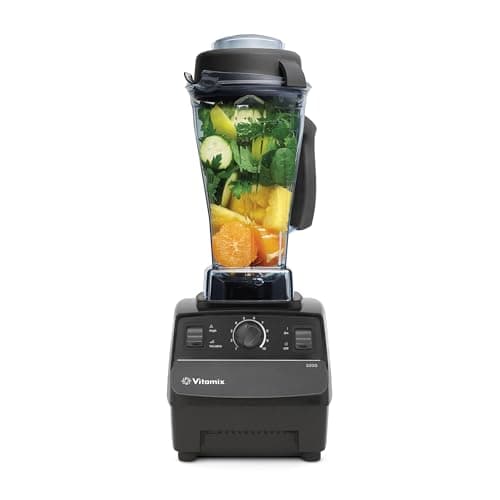
Buying once
Vitamix 5200
The seven-year warranty is the product. A machine with a fully variable dial, a tall narrow jar and a tamper, backed longer than almost anything else at any price.
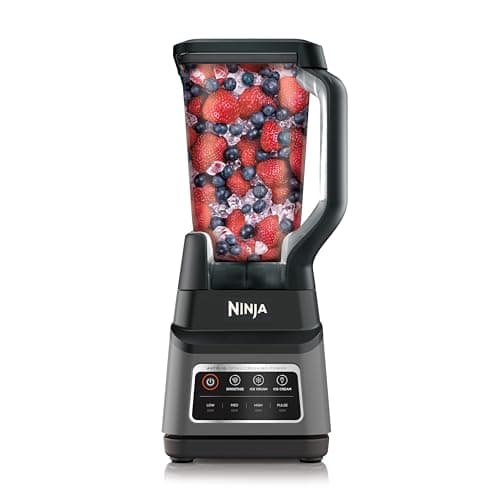
Most kitchens
Ninja Professional Plus BN701
The one brand here that publishes both a continuous and a peak wattage instead of only the flattering one. A large pitcher and real power for about a fifth of the premium price.
#ad · As an Amazon Associate we earn from qualifying purchases.
Questions
Frequently asked
Is a Vitamix worth the money?
For buying once — a seven-year full warranty and repairable design — or for regularly making thick loads like nut butter, yes. For an everyday smoothie a few times a week, no: a machine a fifth of the price makes it just as well.
What does a Vitamix do that a cheap blender can't?
Its fully variable dial and included tamper keep thick, low-liquid loads circulating onto the blades, so it finishes nut butter and smoothie bowls that stall cheaper jars. It also carries a far longer warranty. For thin smoothies, a cheap machine matches it.
Is a Vitamix more powerful than a Ninja?
Not in a way you can read off a spec sheet — Vitamix publishes no watt figure for the 5200, only horsepower and a nameplate amperage, while Ninja publishes 1,200 W continuous. The Vitamix advantage is control, build and warranty, not a bigger headline number. See Ninja vs Vitamix.
Keep reading
Related
- Ninja vs VitamixThe same question as a head-to-head: 1 year against 7.
- Vitamix 5200 reviewWhat the machine publishes, and the number that justifies the price.
- Vitamix VX1 reviewThe cheaper way into the brand: the 5200's jar with a five-year limited warranty.
- Blender warranties comparedWhere the seven-year term sits against the field.
- Vitamix 5200 vs NutriBullet ProThe cheapest way out of the Vitamix question: decide the form factor first.
- Black Friday & Cyber Monday blender deals 2026The 5200's documented discount record, and the reconditioned route that needs no calendar.
- Vitamix VX1 vs 5200Once the brand is decided, which of the two 64 oz machines to buy.
Receipts
Sources
- Vitamix — 5200 product page and specification table
- Vitamix — 7-Year Full Warranty terms
- SharkNinja — Ninja Professional Plus BN701 specification table
- US EIA, Electric Power Monthly — average residential price, US total
We do not run a testing lab and we do not pretend to. Specifications come from the manufacturer's own published documents and from published standards; prices come from the live Amazon API. Where a figure is not published, the page says “not published” rather than guessing. Read the full method.