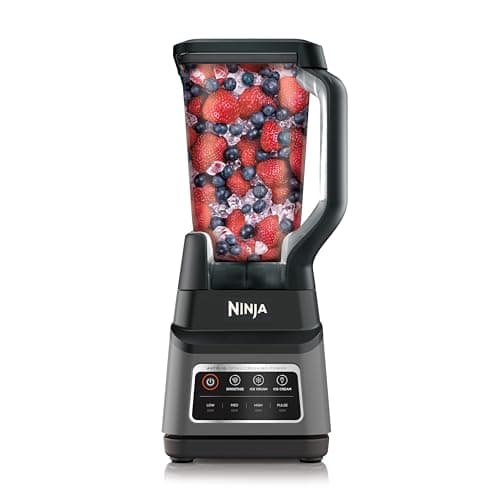
You probably got here from a comparison page, having decided that a $500 blender is not worth it to you. That is usually the right call, and the answer to the question you are now asking is the Ninja Professional Plus BN701: 64 oz of usable liquid capacity, a published 1,200 W continuous motor, and programs that stop by themselves. Buy it unless one of the four situations below is yours.
About the number in the title.Our prices come live from Amazon and they move constantly. We cannot promise every machine below sits under $200 at the moment you read this, and a page that makes that promise is either checking by hand daily or quietly hoping you will not notice. The live price beside each pick is the authority — if it disagrees with the heading, believe the price. Where our last check is more than 48 hours old the number disappears rather than going stale, because a missing price is more useful than a wrong one.
What the extra money buys over the sub-$100 bracket
Three real things, and it is worth being precise about them because this is the bracket where overbuying starts. You get more published capacity, usually a genuine 64 oz of usable liquid rather than a 40 oz jar. You get better documentation, which sounds like a reviewer’s complaint until you are trying to work out whether the wattage on the box is peak or continuous. And on a couple of machines you get a two- or three-year warranty instead of one.
What you still do not get is a tamper or a fully variable speed dial. Those are the features that make thick, low-liquid mixtures workable, and they remain on the far side of this price line. If nut butter or smoothie bowls are your main job, no machine on this page will satisfy you and you should go back to the main ranking and read the case for spending more.
Running cost assumes 3 minutes a day, 365 days a year at 18.34¢ per kWh (US EIA, Electric Power Monthly — average residential price, US total, retrieved September 2026). Motor figures are in each manufacturer’s own words.| Machine | Form factor | Published motor | Warranty | Est. cost / year |
|---|
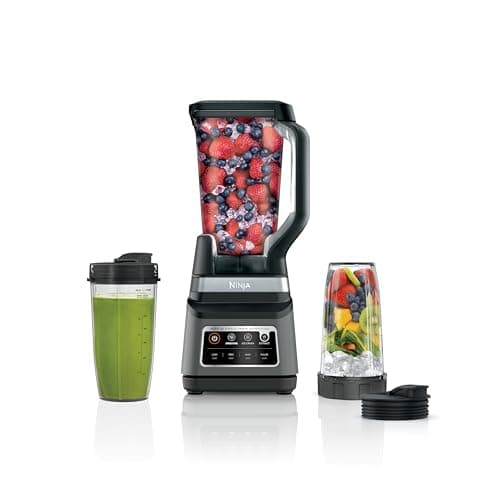
| Ninja Professional Plus BN701 | 72 oz pitcher, 64 oz max liquid | 1,200 W continuous; 1,400 W peak | 1 year limited | $4.02 |
|---|
| Ninja Professional Plus DUO BN751 | 72 oz pitcher plus single-serve cups | 1,200 W continuous; 1,400 W peak | 1 year limited | $4.02 |
|---|
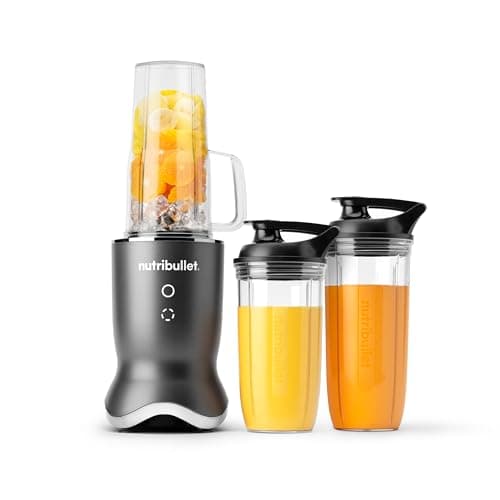
| NutriBullet Ultra (1200 W) | 24 oz and 32 oz cups | 1,200 W, unlabeled | 1 year; 5 years on the blade | $4.02 |
|---|
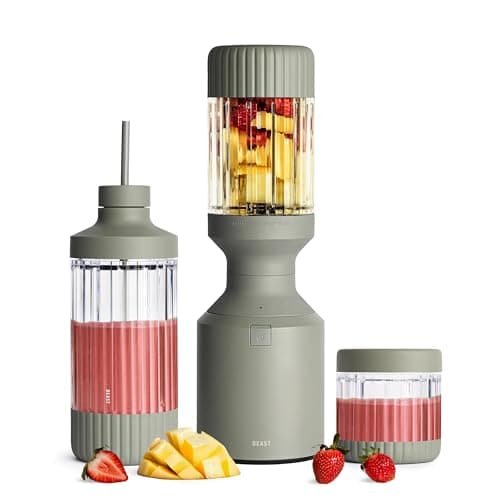
| Beast Mega 1200 | 1000 mL (33 oz) vessel | 1,200 W, stated as 1.6 hp equivalent | 2 years | $4.02 |
|---|
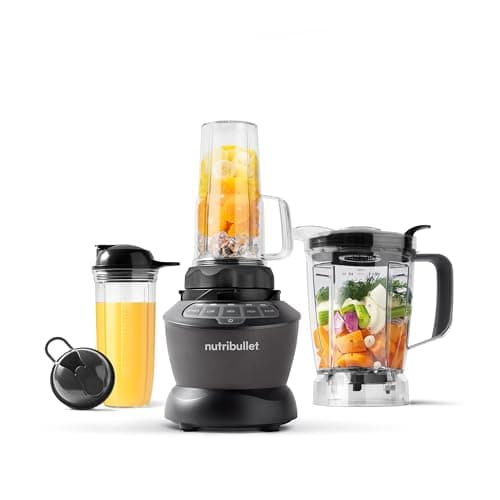
| NutriBullet 1200 W Blender Combo | 64 oz pitcher, 32 oz and 24 oz cups | 1,200 W, unlabeled | 1 year | $4.02 |
|---|
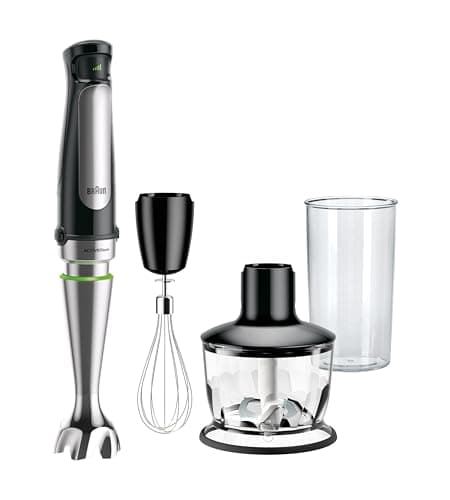
| Braun MultiQuick 7 MQ7035X | Hand blender, 500 ml chopper | 500 W input power | 3 years (US) | $1.67 |
|---|
That table contains an accidental demonstration worth pausing on. Five of these six machines publish exactly 1,200 watts, so five of the six running-cost cells are the same figure to the cent. If running cost were a meaningful way to separate blenders, this page would be unusable. It is not, and that is the point of printing the column: it tells you which decisions the number cannot make for you.
Ninja Professional Plus BN701 — 1200 W ÷ 1,000 = 1.200 kW
1.200 kW × 18.25 hours a year = 21.90 kWh
21.90 kWh × 18.34¢ per kWh = $4.02 a year
The one machine that differs is the hand blender, at half the draw and roughly half the annual cost, and even that difference is under two and a half dollars a year. Substitute your own rate on the cost guide if you want to check it.
The ranking
1. Ninja Professional Plus BN701
The most machine in this bracket, and the one whose numbers you can actually trust, because Ninja publishes 1,200 W continuous alongside 1,400 W peak. Almost nothing else in our catalog does that, and it is what makes this machine genuinely comparable with anything else. Seventy-two ounces total and 64 oz of usable liquid is a family batch in one go, and the Auto-iQ programs stop on their own, which matters more than it sounds when you are doing something else in the kitchen.
One year of warranty against a Vitamix’s seven is the clearest single expression in this whole category of what the price difference actually buys. There is no tamper, so a thick low-liquid load means stopping and scraping, and the stacked blade assembly is more surfaces to wash than a single fixed blade. If either of those is a daily annoyance for you, this is the wrong price bracket entirely.
2. Ninja Professional Plus DUO BN751
The same motor, the same pitcher and the same one-year warranty, with single-serve cups added. Whether it is worth the difference is a question about your habits and nothing else: if you will genuinely use the cups, this replaces two machines with one base and one footprint, and the cups take a drinking lid, which is the whole point of owning a personal blender. If the cups end up in a cupboard, you paid a premium for a BN701. It is second rather than first because that is a real risk and only you can price it.
3. NutriBullet Ultra
Twelve hundred watts is the most power in the personal-blender class here, and the warranty split is genuinely useful: one year on the machine but five years on the Ultra Rapid Extractor blade, which is a common failure point. Two cup sizes come in the box and NutriBullet’s page is consistent about it, which the Pro’s is not.
It is marketed as NutriBullet’s quietest single-serve blender and no decibel figure is published behind that claim — not by NutriBullet and not by anyone else we could find. If quietness is why you are considering it, there is nothing to verify. Paying a premium for an unverifiable claim is exactly the purchase this site exists to talk you out of.
4. Beast Mega 1200
Two years of warranty in a class where one is standard, a 1,200 W motor that Beast states as a 1.6 horsepower equivalent rather than a peak figure, and a ribbed vessel designed to disrupt the vortex — which is the mechanism that stops a smooth spin doing nothing to a frozen load. Beast is also the only brand in our catalog that publishes usable blending capacity separately from total vessel volume, which is the honest way to state it since you cannot fill a blender to the brim.
Thirty-three ounces is one generous serving, not a batch. This does not replace a pitcher, and refilling a personal blender three times is worse than owning a full-size machine. It is also substantially more expensive than the mainstream bullet blenders it competes with.
5. NutriBullet 1200 W Blender Combo
A 64 oz pitcher and two cups on one 1,200 W base, usually for less than a standalone full-size machine. It appears on both this page and the under-$100 one, which tells you where its price tends to sit and why it is worth watching. It ranks fifth here because in this bracket its one-year warranty and the exclusion of cups and accessories from that warranty look less generous next to Beast’s two years and Braun’s three, and because the Ninja pitcher is larger.
6. Braun MultiQuick 7 MQ7035X
It is last only because it is not the machine most people arrive on this page looking for, and it is on the page because for one job it beats everything above it. Three years of US warranty on a hand blender is triple the norm, and Braun publishes 500 W as input power rather than a peak marketing figure, which is the more conservative and more useful number. Variable speed responds to grip pressure, so you modulate mid-blend without reaching for a dial over a hot pan.
If most of what you blend is soup, this is your machine and the pitcher blenders above are a detour. Note that Braun’s printed manual guarantee is marked “For UK Only” at two years; the three-year term is the US one, from Braun’s own knowledge base, and the discrepancy on the box is confusing. It will not crush ice, make nut butter, or blend a frozen load, whatever its wattage suggests.
The four situations where the BN701 is not your answer
You want the cups too. Take the BN751 if you will use them, or the NutriBullet Combo if you want to spend less and can live with a smaller pitcher and a shorter list of published figures.
You only ever blend one serving. A 72 oz pitcher washed daily for a single shake is a chore you will stop doing. The Beast Mega 1200 or the NutriBullet Ultra are the right shape, and the Beast carries double the warranty.
Most of what you blend is hot. Buy the Braun and read the hot-liquid safety guide before you blend anything hot in a sealed jar, because that is a pressure problem rather than a heat problem and it has genuinely injured people.
You make nut butter or smoothie bowls. Nothing here has a tamper. This is the one job where a premium machine earns its price honestly, and no amount of wattage on this page substitutes for a tall narrow jar and a tamper. Read the Ninja against Vitamix comparison again with that specific job in mind, because it may change the answer you arrived with.
Two capacity figures worth checking before you buy
Capacity is quoted two different ways in this category and the difference is not small. Ninja publishes 72 oz total and 64 oz maximum liquid for the BN701 and BN751 pitchers, which is the responsible way to state it — you cannot fill a blender to the brim, because the contents have to move. Most brands publish only the larger number. Beast is the only company in our catalog that separates usable blending capacity from total vessel volume as a matter of course, which is why its 33 oz vessel looks smaller on paper than machines that are not actually bigger in practice.
The practical consequence is that comparing a 72 oz pitcher against a 64 oz one is frequently comparing a total against a working figure. Where a manufacturer publishes both, we print both. Where a manufacturer publishes only a total, the honest reading is that your real batch is meaningfully smaller than the number on the box, and you should discount it before deciding whether the jar is big enough for your household.
Then measure the gap between your worktop and the underside of your wall cabinets. A full-size machine is commonly 17 to 20 inches tall assembled and standard US cabinet clearance is 18 inches, which is how people end up storing a perfectly good blender in a cupboard and using it half as often. Measure with the lid on, not the base alone.
A note on what one year of warranty means
Four of the six machines on this page carry a one-year term. That is not a defect disclosure, it is a commercial position: high-volume brands with strong names can afford a shorter term than brands competing on value, which is why the cheapest machine in our whole catalog carries three years and the most heavily marketed ones carry twelve months. Read it as information about what the manufacturer will commit to in writing, not as a prediction about your particular unit. Every term we have verified sits in one table on the warranty comparison page, including the two-year Blendtec figure that most of this category still prints as eight.