Buy the NutriBullet 600if the blender is for drinks. It is the only machine in our whole catalog that ships a genuinely single-serving vessel — an 18 oz short cup, alongside a 24 oz tall one — and everything else in the personal-blender class starts at 22 oz and climbs. 600 watts is enough for banana, yogurt, powder and a handful of frozen berries, which is what one person actually makes. If you also cook for yourself, the NutriBullet Comboputs a 64 oz pitcher and two cups on one base, and the Hamilton Beach Power Eliteis a 40 oz glass jug with a three-year warranty at the lowest price here. The Beast GO Cordless is for the one-person kitchen with no spare socket or no spare worktop.
Why living alone changes the specification sheet
A blender bought for a household is sized for the biggest thing it will ever make. A blender bought for one person is used by one person, every time, and that inverts two assumptions.
The first is capacity. A 64 oz pitcher holding a 14 oz drink is not a flexible machine, it is a bad blend: a wide jar with a small load gives the blade a cavity to spin in and the mixture nothing to be pushed against. Under-filling a big jar is a worse result than filling a small one, and it is the commonest reason a powerful blender disappoints its owner.
The second is washing-up, which decides whether you keep using the thing. One person washes the blender every single time it is used, with nobody to share the job. A machine where the vessel is also the cup you drink from removes a decanting step and halves the washing, which is why bullet blenders took over this segment and not because of their motors.
The real question: drinks, or drinks and cooking?
This is the fork, and it is worth being honest with yourself about it before you spend. If you want smoothies, shakes and protein drinks, buy small and buy the cup you drink from. If you cook for yourself — a batch of soup for the week, a sauce, a dressing, hummus — a cup is the wrong vessel and you want a jug, even a modest one.
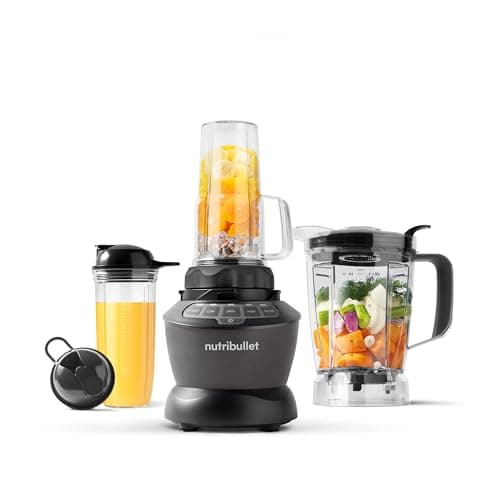
The expensive mistake is buying a family pitcher for a one-person household because it looked like more machine for the money. The cheap mistake is buying a 17 oz cup and then wanting soup. One machine here is the hedge: a combo that puts both vessel types on one motor base and one footprint.
Who each pick is for
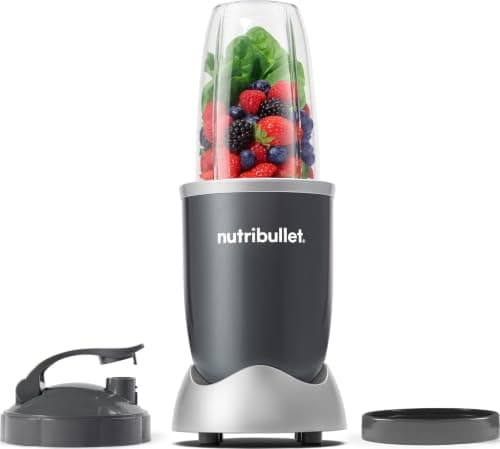
- NutriBullet 600 —for one person making one drink. The 18 oz short cup is the only properly single-serving vessel in our catalog; 600 W is real power for that volume; it is the cheapest way into the NutriBullet parts ecosystem, where replacement cups, lids and blade assemblies are easy to find. One year of warranty, and it will stall on a cup packed with frozen fruit and no liquid.
- NutriBullet 1200 W Blender Combo —for the person who blends and cooks. A 64 oz pitcher, a 32 oz cup and a 24 oz handled cup on one 1,200 W base, which is two appliances in one footprint at less than most standalone full-size machines. One year, and NutriBullet’s terms exclude the cups.
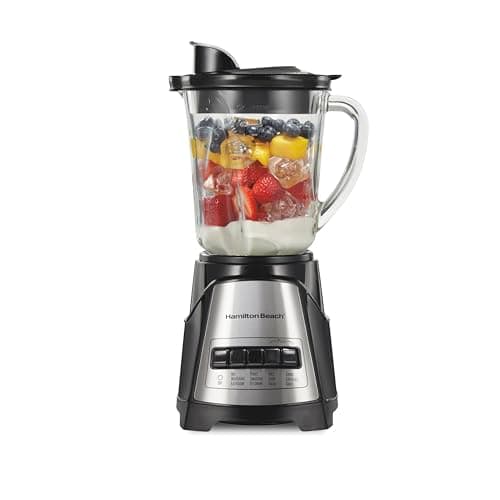
- Hamilton Beach Power Elite Wave Action —for the person who wants a jug, wants glass, and wants to spend as little as possible. A 40 oz glass jar is a sensible size for one, glass does not cloud or hold smells, and three years in the US is triple what Ninja and NutriBullet offer at several times the price. The honest limit is power: the rating plate says 3.7 A.
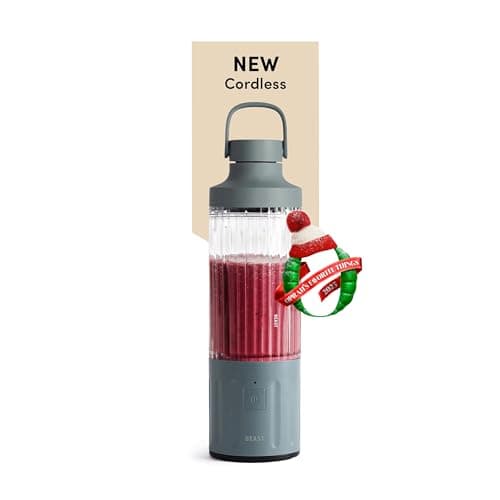
- Beast GO Cordless —for the one-person kitchen where worktop space or a free socket is the actual constraint, or where the blender needs to travel. Beast publishes a 500 mL (17 oz) blending capacity separately from the 670 mL total, 13 cycles of 30 seconds per charge, and two years of warranty — unusually concrete figures for a portable. It publishes no wattage at all, which is the trade.
The four, side by side
Manufacturer figures only, with the qualifier each maker uses. Where a maker publishes no power figure, the cell says so rather than carrying one from elsewhere. | Published power | Vessels | Jar material | Warranty |
|---|
| NutriBullet 600 | 600 W, no qualifier published | 24 oz tall cup, 18 oz short cup | Plastic | 1 year |
|---|
| NutriBullet 1200 W Blender Combo | 1,200 W, no qualifier published | 64 oz pitcher, 32 oz cup, 24 oz handled cup | Plastic | 1 year; cups excluded |
|---|
| Hamilton Beach Power Elite Wave Action | 700 W peak, defined in the manual; 3.7 A max on the rating plate | 40 oz jar | Glass | 3 years US; 5 in Canada |
|---|
| Beast GO Cordless | Not published — 11.1 V 3-cell battery only | 670 mL total; 500 mL (17 oz) blending capacity | Plastic | 2 years |
|---|
What one person’s blender costs to run
At 18.34¢ per kWh (US EIA, Electric Power Monthly — average residential price, US total, retrieved September 2026) and 3 minutes a day, 365 days a year: about $2.01 a year for the NutriBullet 600, $4.02 for the Combo, and $1.49for the Hamilton Beach — using the 444 W we derive from its 3.7 A rating plate rather than the 700 W peak figure, because the running cost depends on what the motor draws for three minutes rather than for the first second. We publish no figure for the Beast GO: with no wattage published there is nothing to multiply, and a battery machine’s draw is set by its charger. One person blending once a day is at the low end of these numbers, which are small enough to be irrelevant either way — the running-cost guide shows the arithmetic so you can redo it at your own rate.
The one specification to stop looking at
Watts. For one serving, the power differences on this page are mostly theatre: 600 W in a narrow 18 oz cup does more useful work on a small drink than 1,200 W in a 64 oz pitcher does, because the cup geometry forces the load through the blade and the pitcher lets it sit above the vortex. Power only becomes the binding constraint on a specific load — frozen fruit with very little liquid — and there the right move is usually more liquid rather than more machine. Blender wattage explained sets out why the number is as unhelpful as it is prominent, and what size blender do I need does the volume arithmetic properly.
What we are not telling you
We have not blended anything in any of these four machines. No test, no texture score, no seconds-to-smooth figure, no award. The ranking is built from published vessel capacities — including the two cases where a maker usefully publishes blending capacity separately from total volume — the jar material each maker states, the power figure each brand publishes with the qualifier it actually uses, and four warranty documents read in full. Our method is published in full, including what disqualifies a pick.
Four checks before you buy a blender for one
1. Measure the drink you actually make
Fill the glass you normally use with water and pour it into a measuring jug. Most people are between 12 and 20 oz, and almost nobody is at 32. Buy a vessel close to that number rather than well above it — a cup appropriately full blends better than a jar barely covered.
2. Decide whether soup is on the list
A cup is the wrong vessel for hot food and most sealed cups are explicitly not for hot liquid. If you cook for yourself and want to blend a batch of soup, buy a jug or a combo and read blending hot liquids safelybefore the first attempt. A stick blender is the other good answer here, and often the better one — see the immersion blender buying guide.
3. Count the parts you will wash every time
One person does all of the washing-up. A cup plus a blade is two items; a pitcher plus a lid plus a stacked blade tower is four or five, every single use. That difference is the main reason a blender ends up in a cupboard, and it belongs in the decision rather than in the regret.
4. Weigh the warranty against the price, not against the brand
The cheapest machine on this page carries the longest warranty, which is not a coincidence and is worth noticing: Hamilton Beach gives three US years where NutriBullet gives one. If you are spending very little, warranty length is the one specification you can get for free. The full cross-brand picture is on blender warranties compared.