HUB 03 · Personal Blenders
Can personal blenders handle ice?
The answer depends less on the wattage than on what else is in the cup, and the reason is geometry rather than power.
We earn a commission if you buy through our links. It does not change the price you pay, and it does not decide our picks — our selection criteria are published in full. How this works.
Mixed with liquid, or blended alongside frozen fruit, usually yes. A cup packed with nothing but ice cubes, usually not. The inverted cup helps more than the wattage does, but a narrow cup is also why a solid load of ice jams instead of circulating.
Why the inverted cup is genuinely an advantage
A bullet-style personal blender is loaded upside down. You fill the cup, screw the blade assembly onto the open end, then flip the whole thing over onto the motor base. The blades end up at the top of the cup as you filled it and at the bottom as it runs — which means everything in the vessel is sitting on top of the blades, held there by gravity, for the entire blend.
Compare that with a full-size jar. In a countertop blender the blades sit at the bottom of a tall vessel and have to generate enough flow to pull material down from above. When they cannot, you get cavitation: the blades spin inside a pocket of air while a bridge of frozen material sits above them, untouched, and the machine sounds like it is working while nothing happens. That is why full-size blenders ship tampers.
A personal blender cannot cavitate the same way, because gravity is doing the job the tamper does. This is the real reason bullet blenders handle frozen loads better than their modest wattage suggests, and it is why a 900 W cup blender can be perfectly satisfactory with frozen berries while a 700 W countertop machine struggles with the same fruit.
Why the same cup then works against you
The advantage runs out the moment the load stops being able to move. A personal blender cup is narrow, and narrow is what makes the vortex tight. Fill that narrow space with rigid, irregular, non-compressible objects — which is exactly what ice cubes are — and they wedge against each other and against the cup wall. The blades then have to shear through a static mass rather than a circulating one.
Three things make this worse than it would be in a jug:
- There is no tamper and there cannot be one. The cup is sealed by the blade assembly and inverted on the base. There is no opening to push anything through, so the standard remedy for a jammed load is unavailable.
- You cannot see it or reach it mid-blend. Fixing a jam means stopping, lifting the cup off the base, turning it over, unscrewing the blade, and stirring — at which point you have restarted the process four times and the machine has taken four starts under load, which is the hardest moment for any motor.
- The vessel is small, so there is no space to redistribute. In a 64 oz jar an ice jam can break and the pieces have somewhere to go. In a 24 oz cup the pieces have nowhere to go but back into the same wedge.
None of this is fixed by buying more watts. A more powerful motor drives the blades harder into a load that still is not moving, and the result is heat in the motor and a duller blade rather than crushed ice.
What actually works
Liquid first, and enough of it.Ice needs something to move through. A cup with liquid in it circulates; a cup of dry cubes does not. This is the single change that turns “it will not crush ice” into “it crushes ice fine” on the same machine.
Beyond that: keep ice to a minority of what is in the cup rather than the bulk of it. Mix it with frozen fruit rather than running cubes alone — frozen fruit is softer than water ice and breaks down first, creating the slush that lets the rest circulate. Use smaller cubes or crushed ice if you have the choice, because surface area is what the blade is working on. And do not fill to the rim: a blender needs headroom to establish flow at all, which is why Beast publishes a 500 mL blending capacity for a 670 mL vessel rather than quoting one number.
Use short pulses rather than one long run. A pulse lets the load drop and resettle between bursts, which is how a jammed mass gets broken up without the motor sitting at near-stall. Holding the button down against a stuck load is the failure mode: the motor is drawing heavily, the blades are not moving material, and nothing is cooling.
One more thing that costs nothing: let ice out of the freezer for a minute or two before it goes in. Ice straight from a cold freezer is harder and more brittle than ice that has sat on the counter and started to glaze, and the glazed surface is what lets cubes slide past each other instead of locking together. The same logic applies to frozen fruit taken from the back of a deep freezer. It is a small effect, but it is free, and in a sealed cup you cannot intervene once the machine is running — which makes everything you do before you press the button worth more here than it would be with a jug and a tamper.
Cordless portables are a different and weaker case
Everything above assumes a mains-powered machine. Battery-powered portables are a meaningfully weaker proposition for ice, and the documentation makes it hard to say by how much.
Beast publishes no wattage for its cordless model at all — only a 3-cell, 11.1 V battery. SharkNinja’s specification table for the Ninja Blast lists the wattage as 0 watts and the peak wattage as 0 watts, which is a data-entry failure but leaves the same practical gap: there is no manufacturer power figure for either machine. Since watts are volts times amps and neither brand publishes a current draw, nobody can compute one either.
What can be said is directional and honest: a motor running off a small lithium pack delivers substantially less than one plugged into a wall socket, and ice is the most demanding thing you can put in front of it. Treat a cordless portable as a machine for soft fruit, powder and liquid, with a little ice in plenty of liquid at most. The full picture on both machines is in the portable blender roundup.
What repeated ice-crushing does to the machine
Ice is the hardest thing a domestic blender will ever meet, and crushing it dry is the fastest way to blunt a blade and stress the coupling between the motor and the blade assembly. On a personal blender there is a second cost: the sealed cup means a jammed load keeps the motor near stall with poor airflow, and a small motor run repeatedly in that state is a motor with a short life.
This is where the warranty terms in this category become directly relevant rather than abstract. NutriBullet covers the machine for one year and excludes cups and accessories. Beast covers its machines for two years in the US and Canada for household use. Ninja covers the Blast for one year. If ice is going to be a regular part of what you blend, the length of that term and the availability of replacement blade assemblies are worth more attention than another three hundred watts. The full table is in the warranty comparison.
When a personal blender is the wrong tool for ice
If what you want is a pitcher of frozen margaritas, a slushy drink for several people, or crushed ice as an ingredient in volume, this is not the category. A personal blender makes one drink in a narrow sealed cup with no tamper, and none of those constraints get better with a bigger motor. A full-size machine with a tall jar and a tamper is built for exactly that job — see the high-power roundup or, if the budget is the constraint, the under-$100 list, where several machines handle ice with liquid perfectly well.
If what you want is one iced drink a day in a cup you take with you, a personal blender is the right tool and the advice above is all it needs. The machines listed below are the ones referred to on this page.
The hardware
The hardware this guide is about
The products this guide refers to, with prices pulled live from Amazon. Prices last checked October 18, 2026. Where we have no verified live price we show none rather than a stale number. Full rankings live in the roundups linked above.
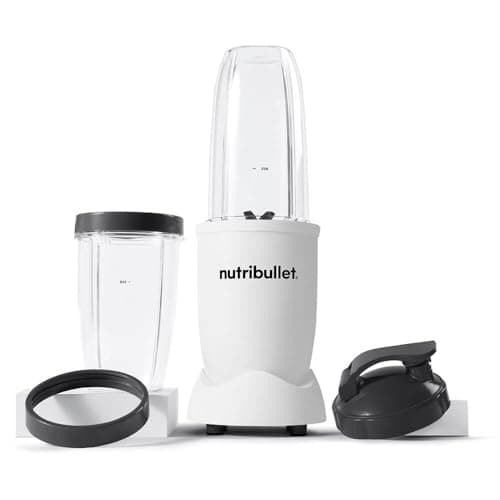
Everyday shakes
NutriBullet Pro (900 W)
The default bullet blender, and a good one. Note that NutriBullet's own product page contradicts itself about which cups are in the box.
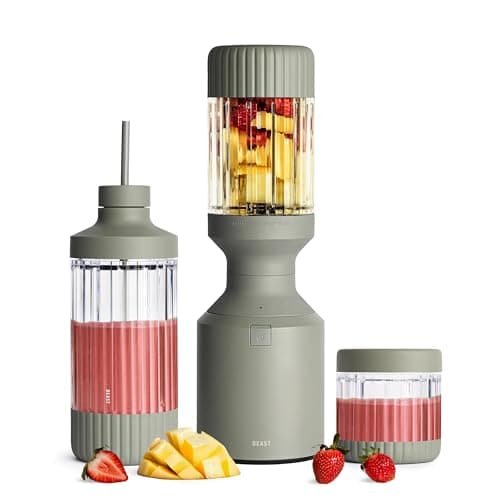
Honest capacity figures
Beast Mega 1200
Two years of warranty in a class where one is standard, and the only brand here that publishes usable blending capacity separately from total vessel volume.
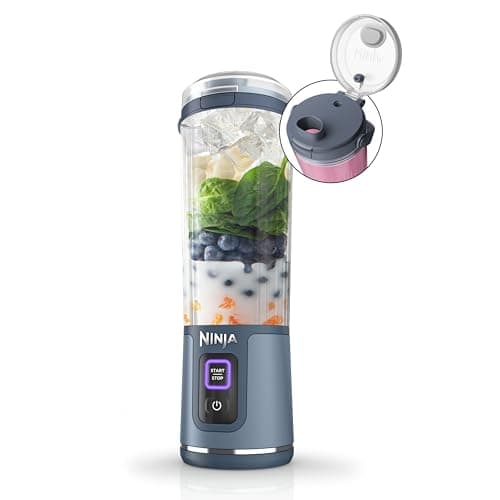
The cheapest portable
Ninja Blast BC151
The cheapest way to blend away from a socket. Ninja's own spec table lists its wattage as zero, which is a data-entry failure but an accidentally honest one.
#ad · As an Amazon Associate we earn from qualifying purchases.
Questions
Frequently asked
Will a NutriBullet crush ice?
With liquid in the cup, generally yes. A cup of nothing but ice cubes, generally no — the cubes wedge against each other in a narrow vessel and the blades shear at a static mass instead of a circulating one. There is no tamper on a sealed inverted cup, so the usual remedy is not available to you.
Do more watts help with ice in a personal blender?
Less than you would expect. The limiting factor in a jammed cup is that the load is not moving, and a stronger motor drives the blades harder into a mass that is still stuck. Liquid, smaller ice, and short pulses change the outcome far more than the difference between 600 W and 1,200 W does.
Should I use crushed ice or cubes?
Crushed or smaller cubes, if you have the choice. Blades work on surface area, and smaller pieces both present more of it and pack less rigidly against the cup wall. Blending ice together with frozen fruit also helps, because the fruit breaks down first and creates the slush the rest of the load needs in order to circulate.
Can a portable, battery-powered blender crush ice?
Poorly. Neither Beast nor SharkNinja publishes a wattage for its cordless model — Beast gives only an 11.1 V battery, and SharkNinja’s specification table for the Blast reads 0 watts and 0 peak watts — so no manufacturer figure exists to judge them by. A battery motor delivers far less than a mains one; treat these as machines for soft fruit, powder and liquid.
Does crushing ice void a blender warranty?
Not by itself on these machines, but the terms are short and the exclusions matter. NutriBullet covers the machine for one year and excludes cups and accessories entirely; Beast covers two years for household use; Ninja covers the Blast for one year. Repeated dry ice-crushing stresses the blade assembly and the coupling, which is exactly where those exclusions bite.
Should I thaw frozen fruit before using a personal blender?
Usually not — thawing gives away the thick texture that was the reason to use frozen fruit in the first place. In a sealed cup the fix is almost always filling it less and adding liquid rather than warming anything up. The full answer, including the machines where a dry frozen load genuinely will stall, is ondo you have to thaw frozen fruit before blending.
What is the best blender for ice if I can spend under $100?
A full-size pitcher with a tall blade assembly beats a cup once the batch grows, though the narrow cup is still the reason a bullet blender punches above its wattage on cubes. The best ice crushing blenders under $100 ranks both form factors against each other at that ceiling.
Keep reading
Related
- Best personal blenders for protein shakesFive single-serve machines ranked on cup, cleaning and warranty rather than wattage.
- Best portable blendersThe two cordless machines, and why neither manufacturer publishes a power figure.
- Best personal blenders for smoothiesThe single-serve ranking for frozen fruit and greens, where this ice limit does most of the deciding.
- Best high-power blendersIf ice in volume is the job, a tall jar and a tamper is the answer, not a bigger cup motor.
Receipts
Sources
- NutriBullet — Pro product page
- NutriBullet — warranty terms
- Beast Health — Mega 1200 product page
- Beast Health — GO Cordless product page
- Beast Health — warranty terms
- SharkNinja — Ninja Blast BC151 specification table
We do not run a testing lab and we do not pretend to. Specifications come from the manufacturer's own published documents and from published standards; prices come from the live Amazon API. Where a figure is not published, the page says “not published” rather than guessing. Read the full method.