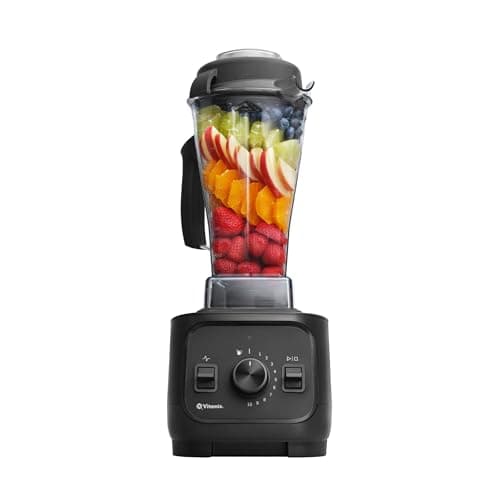
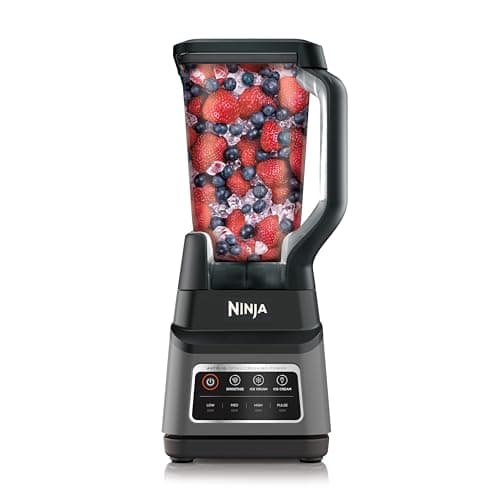
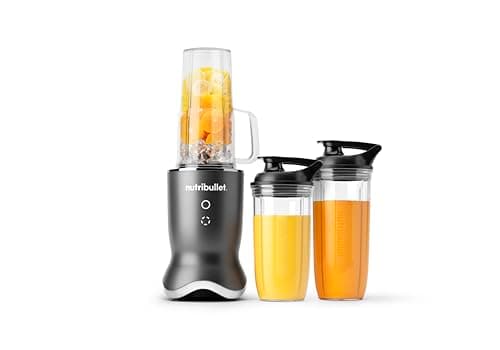
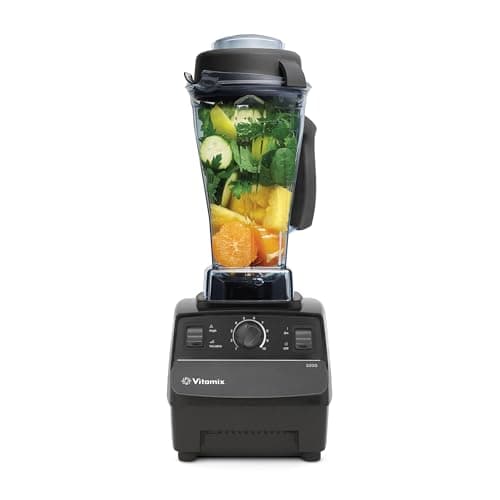
The Vitamix 5200is the pick. A nut milk is only as good as how finely the nuts are broken down before straining, because everything that stays in the bag is yield you paid for and did not get. Vitamix’s 2 HP motor and tall 64 oz container do a full batch — a cup of soaked almonds and four cups of water — in one go, and the 7-year full warranty means a weekly habit is not a gamble. The Ninja BN701 does the same batch size for a fraction of the price with a coarser grind; the NutriBullet Ultra is the one-glass answer.
What nut milk actually needs, and what it does not
This is a page where the motor matters and the tamper does not. A nut milk is mostly water — four parts to one — so there is no thick mass to push into the blades and no cavitation to fight. What the motor does is grind: the finer the nuts are broken down, the more of them passes through the strainer bag as milk instead of staying behind as pulp. That is the whole reason a more powerful machine makes a creamier, higher-yield milk from the same cup of almonds.
Oat milk inverts one part of that. Oats release starch when they are worked, and worked too long or too warm they release enough to make the milk slimy. The recipe answer is cold water and a blend of thirty to forty-five seconds, no more. The machine answer is a speed you can select and a blend you can stop, which every machine here has — the ones that run a preset cycle to completion are at a slight disadvantage.
What to look for
A published motor figure
Grind fineness tracks motor power more directly on this load than on almost any other. Vitamix publishes 2 HP and 11.5 A for the 5200 and 1,440 watts for the VX1; Ninja publishes 1,200 watts continuous; Blendtec publishes 1,560 watts unqualified; NutriBullet publishes 1,200 watts for the Ultra with no qualifier. Those are the numbers in the table, and we do not compare them as if they were measured the same way.
Container size against your batch
A standard batch is about five cups of liquid, which is 40 oz. A 64 oz container does it comfortably. Blendtec publishes a 36 oz maximum liquid fill for the WildSide+ jar, which means two runs. A 32 oz bullet cup is one glass, which is fine if that is what you drink.
A container that does not hold the smell
Almond milk sours quickly and oat milk leaves a film. Vitamix’s 5200 container is Tritan copolyester; the VX1 manual says its container is not dishwasher-safe and provides a self-cleaning program; the Ninja pitcher is dishwasher-safe per SharkNinja’s spec table. Rinse immediately, whichever you buy — the twenty-second rinse in how to clean a blender is the whole maintenance routine for this job.
The strainer, which is not a blender feature
The nut-milk bag or a fine sieve does the second half of the work and costs very little. No blender on this page removes the need for one, whatever a listing implies.
The ranking
1. Vitamix 5200 — the finest grind and the full batch
The 5200’s tall 64 oz container takes a full five-cup batch, the variable dial lets you run the almonds at full speed for a minute for maximum yield and the oats at a lower speed for forty seconds, and the motor is documented rather than marketed: 2 HP and 11.5 A on Vitamix’s own table. Seven years of full warranty is the longest term on the page by two years.
Deductions: no self-clean program, no published decibel figure, and a price that is hard to justify if nut milk is the only reason. Skip it if your honest use is a smoothie a few times a week. See the 5200 review.
2. Vitamix VX1 — the same container, a self-clean program, less money
Same 64 oz Classic container as the 5200, a published 1,440-watt figure, a pulse switch and — usefully for a job that leaves a film — a self-cleaning program on the dial. Five years limited warranty. For nut milk the two Vitamix machines are interchangeable; this one costs less and cleans itself.
Second because the warranty is limited rather than full and shorter by two years, and because the manual says the container is not dishwasher-safe. Skip it if you wanted the container in the dishwasher. See the VX1 review.
3. Ninja Professional Plus BN701 — the full batch for a fifth of the price
A 64 oz maximum liquid fill, 1,200 watts continuous published plainly, a low speed for oats and a dishwasher-safe pitcher. The grind is coarser than the Vitamix — expect a little more pulp in the bag and a little less milk in the jug — but for a household that wants a weekly batch without a premium-machine budget it is the obvious buy. One-year warranty.
Skip it if yield per cup of almonds is what you are optimizing, because that is the one place the motor difference shows. See the BN701 review.
4. Blendtec Classic 575 — the most published power, in two runs
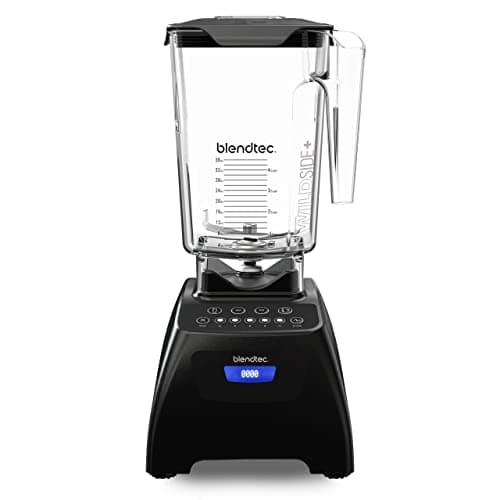
1,560 watts is the most power on the page and the blunt blade grinds almonds very fine. The reason it is fourth for this job is capacity: Blendtec publishes a 36 oz maximum liquid fill for the WildSide+ jar, so a standard batch is two runs. The preset cycles are also a mild disadvantage for oat milk, where you want to stop at forty seconds rather than let a cycle finish — use the manual control. Two-year warranty.
Skip it if you were buying it for the warranty. See the Classic 575 review.
5. NutriBullet Ultra — one glass, no pitcher to wash
1,200 watts in a 32 oz cup is plenty of grind for a single serving of almond or oat milk, and the appeal is that the cup is the vessel: blend, strain into a glass, rinse the cup. NutriBullet gives five years on the blade assembly, which is unusual in the class. It runs at one speed, which is fine for almonds and means watching the clock for oats.
Fifth because a 32 oz cup is one glass, not a week’s supply, and because the machine warranty is one year. Skip it if you bought it for the quietness claim, which NutriBullet publishes no decibel figure to support. See the NutriBullet Ultra review.
Method, for either milk
- Almonds: soak a cup overnight in the refrigerator, drain and rinse. Oats: do not soak, and use cold water.
- Four cups of water to one cup of nuts or oats, into the container liquid first.
- Almonds: run up to full speed for about a minute. Oats: a lower speed, thirty to forty-five seconds, and stop.
- Strain through a nut-milk bag or a fine sieve. Do not squeeze oat milk; let it drain.
- Rinse the container immediately. Refrigerate the milk; it is not shelf-stable.